
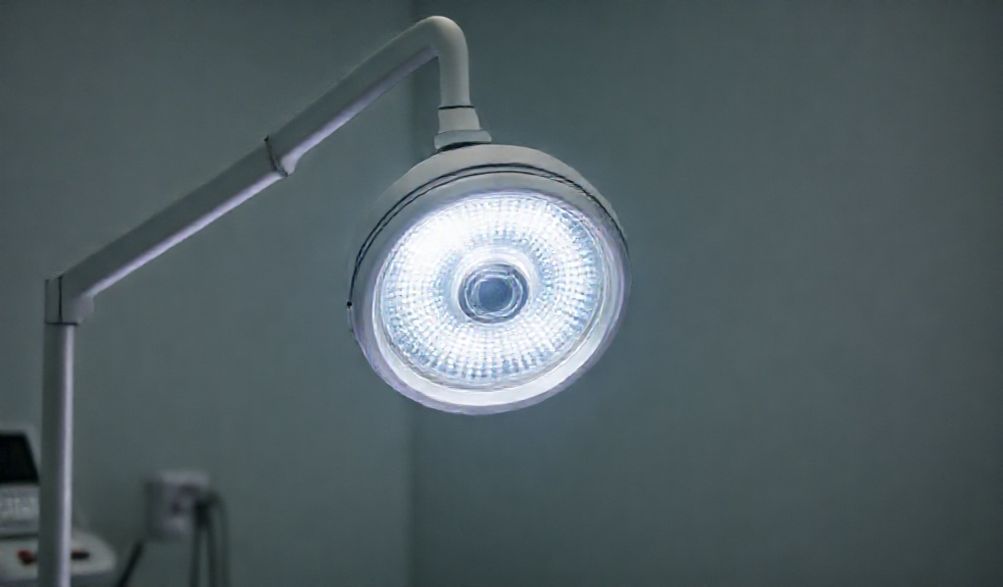
The Complete Guide to LED Examination Lamps: Benefits, Features & Selection
In the high-stakes world of medical and dental diagnostics, every detail matters. A subtle variation in tissue color, a faintly visible vein, or a minute crack in a tooth can be the difference between an early, successful intervention and a missed opportunity. Yet, one of the most fundamental tools for spotting these details is often taken for granted: the de examen versátil. What if the very source of illumination meant to reveal problems was, in fact, a contributor to diagnostic uncertainty? For decades, practitioners relied on halogen and fluorescent lamps, accepting their limitations as the cost of doing business. Today, a technological revolution is illuminating examination rooms, operating theaters, and dental operatories, offering unprecedented clarity, efficiency, and comfort. This guide provides authoritative, experience-based information to help medical professionals, procurement officers, and clinic managers make a critical upgrade. Whether you are researching to purchase, compare, or simply understand the profound advantages of modern lighting, we will illuminate the core benefits, dissect the key technical features, provide practical selection criteria, and outline essential maintenance for the cornerstone of visual diagnosis: the LED examination lamp.
Why LED Technology is Revolutionizing Medical Examination Lighting
The shift from traditional halogen bulbs to Light Emitting Diode (LED) technology is more than a simple bulb swap; it’s a fundamental enhancement of the diagnostic environment. LEDs have moved beyond consumer electronics to become the gold standard in medical illumination, delivering tangible improvements in clinical outcomes, operational costs, and workplace ergonomics.
Superior Illumination Quality for Accurate Diagnostics
The primary purpose of an exam lamp is to enable the human eye to see with precision. LED technology excels in this by mastering the quality, not just the quantity, of light.
- Color Rendering Index (CRI >90): This is arguably the most critical metric. CRI measures a light source’s ability to reveal the true colors of an object compared to natural daylight. A high CRI (90 and above is ideal for medical use) means tissues, blood, mucosa, and restorative materials are displayed in their authentic hues. This allows a physician to accurately distinguish between healthy and inflamed tissue, a dentist to perfectly match a composite shade, or a surgeon to identify a subtle bile duct. A low-CRI light can make healthy tissue appear pallid or mask the erythema of an infection.
- Consistent Color Temperature: LED lamps provide stable, adjustable color temperatures, typically in the 4000K to 5500K range—mimicking natural “daylight.” This consistency eliminates the yellow-orange tint of halogens or the greenish cast of some fluorescents, reducing eye strain for the practitioner and ensuring visual assessments are standardized and reliable from one procedure to the next.
Unmatched Energy Efficiency & Operational Cost Savings
The economic argument for LED examination lamps is compelling and immediate. Consider a typical 50-watt halogen head, which may draw 50W of power and last 1,000-2,000 hours. An equivalent or brighter LED head consumes 10-15W and boasts a lifespan of 50,000 hours or more.
A Simple Cost-Saving Scenario for a Dental Practice:
A 5-chair practice replaces five halogen units (150W total system draw each) with five LED units (30W total system draw each). Assuming 8 hours of daily use, 5 days a week:
- Halogen Annual Energy Cost: (5 lamps * 150W * 8hrs * 5days * 52wks) / 1000 = 1,560 kWh. At $0.15/kWh, that’s $234/year in electricity.
- LED Annual Energy Cost: (5 lamps * 30W * 8hrs * 5days * 52wks) / 1000 = 312 kWh. Cost: $46.80/year.
- Annual Savings on Energy Alone: $187.20.
Now, add the elimination of halogen bulb replacements ($50-$150 per bulb, multiple times per lamp over 5 years) and the drastic reduction in downtime and maintenance labor. Over a 5-year period, the Costo Total de Propiedad (CTP) of the LED system is often lower, despite a higher initial purchase price.
Enhanced Safety and Patient Comfort
LEDs are a “cool” light technology. They emit light directionally with minimal radiant heat in the beam. This eliminates the risk of accidental burns to patients, especially in sensitive areas like the oral cavity during long procedures, and prevents discomfort from a hot lamp head near the face. Furthermore, high-quality LED drivers provide flicker-free illumination, which significantly reduces practitioner eye fatigue and headaches during extended periods of focused work. The absence of harmful UV and IR emissions also protects both patient and practitioner from unnecessary radiation exposure.
Key Features to Evaluate When Choosing an LED Exam Lamp
Not all LED examination lamps are created equal. Beyond the basic technology, the design and engineering of the lamp system determine its real-world performance.
Optical System & Light Field Characteristics
The lamp head’s optics are its “brain.” Key characteristics include:
- Depth of Field & Homogeneity: A superior lamp provides a wide, deep field of evenly distributed light without bright “hotspots” or dim edges. This ensures consistent illumination whether you are examining a surface wound or working deep within a cavity, without constantly needing to refocus.
- Reducción de Sombras: Advanced reflector systems, such as multi-faceted or parabolic reflectors, are engineered to minimize the shadow cast by the practitioner’s head or hands. Some systems use multiple LED arrays at different angles to essentially “fill in” shadows, a critical feature for procedures requiring unimpeded vision.
- Focusability: The ability to smoothly adjust the beam from a wide flood to a concentrated spot is vital for adapting to different procedures, from a general exam to a focused minor surgery.
Mechanical Design, Flexibility, and Durability
The lamp’s “body” must be as reliable as its light. This is where many cheaper models fail.
- Articulation & Counterbalance: Look for multi-jointed arms with a full range of motion (reach, rotation, tilt). The counterbalance mechanism—whether spring, gas cylinder, or magnetic—should allow for smooth, effortless, and stable positioning with a single touch, holding its place precisely without drift or sag.
- Build Quality & IP Rating: The lamp should withstand daily use, cleaning, and occasional impact. Materials should be high-grade metals and polymers. An Ingress Protection (IP) rating (e.g., IP24) is crucial. It indicates the fixture’s resistance to dust and liquids, guiding safe cleaning and disinfection protocols without damaging internal electronics.
Advanced Control Systems & Ergonomics
Modern control systems enhance workflow and maintain sterility.
- Touch & Memory Controls: Touch-sensitive panels on the lamp head or a remote pendant allow for easy intensity adjustment. Memory buttons can recall pre-set light levels and positions for different procedures or practitioners.
- Sterile Interaction: For surgical environments, footswitches or touchless gesture controls enable adjustment without breaking the sterile field.
- Integración: Some high-end lamps offer integration with surgical microscopes, cameras, or room lighting systems, creating a seamless operational environment.
How to Select the Right LED Lamp for Your Specific Practice (Experience-Based Guidance)
Choosing the right lamp requires matching its capabilities to your clinical demands and physical workspace.
Matching the Lamp to the Medical Specialty
- Odontología: The priority is intraoral illumination. Lamps need exceptional shadow reduction for work in deep posterior cavities, high CRI for shade matching, and often a specific “through-the-mirror” lighting angle. Cool light is non-negotiable for patient comfort.
- General Practice/ENT/ Dermatology: Emphasis is on high CRI and homogeneous light for accurate assessment of skin tones, throat redness, and ear canals. A flexible arm for easy positioning around the patient is key.
- Surgery & Minor Procedures: Requiere intense, focused light with excellent depth of field and cavity penetration. Surgical lights often have larger diameters, higher lux output, and sophisticated color rendering to distinguish tissue types (some even offer adjustable color spectra).
- Veterinary/Equine: Demands robustness, extreme reach, and very high output to illuminate larger animals. Durability and resistance to environmental factors are paramount.
Practical Considerations for Installation & Workflow
- Opciones de Montaje: The choice depends on room layout and mobility needs.
- Montaje en Techo: Saves floor space, offers maximum reach and flexibility.
- Montaje en Pared: A cost-effective solution for smaller rooms or specific exam setups.
- Soporte de Pie: Provides ultimate portability between rooms.
- Track/Rail System: Ideal for operating rooms or large treatment areas, allowing multiple light heads to be shared or positioned with great flexibility.
- Number of Light Points: In a dental operatory or minor surgery room, a single high-quality light may suffice. For complex surgical fields, two or more lights from different angles are used to eliminate all shadows.
Navigating Procurement: Budget, Certifications, and Warranty
- Integración: Evaluate the purchase price against 5-10 years of energy, maintenance, and potential bulb replacement costs. The cheapest upfront option is often the most expensive long-term.
- Medical Device Certifications – Non-Negotiable: This is critical for patient and practitioner safety. Insist on products with relevant certifications:
- ISO 13485: International standard for quality management systems specific to medical devices.
- FDA Registration (Class I Medical Device): For the US market.
- CE Marking (MDD/MDR): For the European market.
These certifications ensure the device is designed, manufactured, and tested to stringent medical safety and performance standards.
- Garantía y Servicio: A strong warranty (3-5 years is common for premium lamps) reflects the manufacturer’s confidence. Investigate the availability and responsiveness of their technical service network.
Maintaining Optimal Performance and Safety
A well-maintained lamp ensures consistent performance and longevity.
Protocolos de Limpieza y Desinfección de Rutina
Siga siempre las instrucciones específicas del fabricante. Las pautas generales incluyen:
1. Power Off & Cool: Disconnect from power and allow to cool.
2. Limpieza Suave: Use a soft, lint-free cloth dampened with a mild detergent or manufacturer-approved disinfectant (often alcohol-based or quaternary ammonium compounds). Avoid abrasive cleaners, solvents, or spraying liquid directly onto the lamp—apply to the cloth first.
3. Focus on Surfaces: Wipe down the lamp head exterior, all arm segments, and the control panel. Pay attention to joints where debris can accumulate.
4. Dry Thoroughly: Ensure no moisture remains, especially near vents or joints.
Solución de Problemas Comunes
- Luz Atenuada: This is rarely the LED itself. Check connections first. If persistent, it is likely a failing power supply/driver—contact technical service.
- Stiff or Sagging Arms: Arms that don’t hold position usually indicate a failing counterbalance mechanism. This requires professional repair.
- Electrical Faults (Flickering, No Power): Do not attempt internal repairs. Check the power cord and outlet, then contact service immediately.
Preguntas Frecuentes (FAQ)
Q: Are LED examination lamps really worth the higher initial investment?
R: Absolutely. The return on investment is clear through dramatic energy savings (60-80% less consumption), the complete elimination of bulb replacement costs, and reduced maintenance downtime. More importantly, the clinical benefits—improved diagnostic accuracy, enhanced practitioner comfort, and increased patient safety—deliver value that far exceeds the initial cost differential.
Q: How does the Color Rendering Index (CRI) affect my examination?
R: A high CRI (≥90) is essential for accurate color perception. It allows you to see the true colors of tissues, blood, mucosa, and dental materials. This is critical for correctly diagnosing inflammation, assessing tissue viability, detecting jaundice, and performing aesthetic restorative work where shade matching is paramount.
P: ¿Puedo reemplazar mi antigua bombilla halógena por una bombilla LED?
R: It is strongly discouraged. So-called “retrofit” LED bulbs may not fit the existing reflector optics correctly, leading to poor light distribution and hotspots. They can cause overheating in housings not designed for LED thermal management, creating a fire risk and shortening the bulb’s life. For optimal, safe performance, invest in a complete lamp unit engineered for LED technology.
P: ¿Cuál es la vida útil típica de una lámpara de examen LED y qué falla primero?
R: Los propios diodos LED tienen una duración nominal de 50.000 a 100.000 horas, lo que equivale a décadas de uso normal. Los primeros componentes que suelen mostrar desgaste son las piezas mecánicas (muelles, articulaciones, rodamientos) o la fuente de alimentación/controlador electrónico. Por ello, la calidad de fabricación y una garantía sólida son tan importantes al seleccionar una lámpara.
P: ¿Qué importancia tienen las certificaciones de dispositivos médicos?
R: Son fundamentalmente importantes. Certificaciones como la ISO 13485, la FDA Clase I y el marcado CE no son meros sellos de marketing. Son garantías auditadas de que el producto ha sido diseñado y fabricado bajo un sistema de gestión de calidad riguroso para uso médico, lo que asegura su seguridad, fiabilidad y rendimiento en un entorno clínico. Nunca adquiera una lámpara para uso médico profesional que carezca de las certificaciones apropiadas.
Conclusión
Una lámpara de examen moderna LED examination lamp es mucho más que un simple dispositivo de iluminación; es una herramienta de diagnóstico fundamental que mejora directamente los resultados clínicos, protege el bienestar del profesional y aumenta la eficiencia de la consulta. La transición del halógeno al LED no es cuestión de si, sino de cuándo. Al tomar esta decisión crítica, priorice la necesidad clínica, la calidad verificada (a través de certificaciones) y el valor a largo plazo por encima del precio únicamente. La luz adecuada se convierte en una extensión de sus propios sentidos, revelando detalles con una claridad y consistencia que antes estaban ocultos.
Recomendación final: Siempre que sea posible, solicite una demostración en vivo o una unidad de prueba a un proveedor de confianza. Evalúe la lámpara en su propio entorno y con su flujo de trabajo. Observe cómo incide la luz, perciba la suavidad del movimiento y experimente la diferencia en confort visual. Consulte con especialistas establecidos en equipamiento médico y dental, quienes pueden proporcionar especificaciones detalladas, casos de estudio y orientación basada en evidencia adaptada a su especialidad. Ilumine su consulta con confianza y compruebe la diferencia que puede marcar una verdadera claridad.
p>