
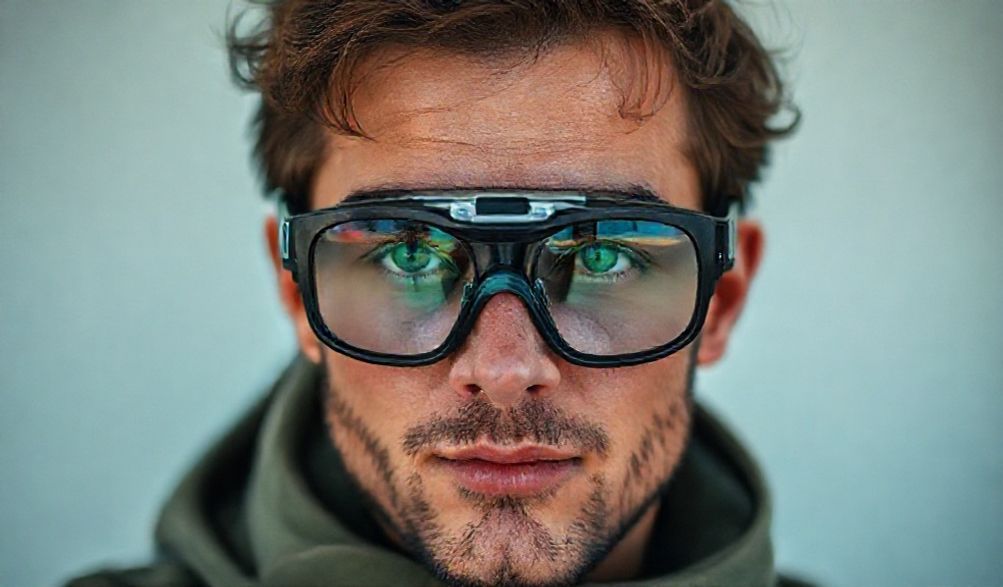
Ergo Loupes: The Ultimate Guide to Enhanced Vision, Posture, and Precision
For the dental surgeon navigating the intricate anatomy of a root canal, the jeweler setting a microscopic stone, or the electronics technician soldering connections finer than a human hair, the margin for error is zero. Precision is the currency of their craft. Yet, for decades, the very tools meant to enhance this precision—traditional magnification loupes—have come with a hidden, debilitating cost: the practitioner’s health. Chronic neck and back pain, debilitating headaches, and premature career burnout have been accepted as occupational hazards. But what if the tool designed to improve your work could also safeguard your well-being? Enter ergo loupes, the revolutionary optical systems that are redefining what it means to see clearly, work precisely, and practice sustainably.
This guide is not just a product overview; it’s an evidence-based resource drawn from the intersection of optical science, biomechanical research, and hard-won professional experience. We will dissect the engineering behind ergo loupes, validate their profound benefits with clinical rationale, and provide a step-by-step framework to help you make an informed investment in your most valuable asset—your ability to practice your craft, pain-free, for years to come.
What Are Ergo Loupes? Redefining Magnification for Health
At first glance, ergo loupes (or ergonomic loupes) may resemble their traditional counterparts. But this is a case where the internal engineering creates a fundamentally different outcome. Ergo loupes are not merely magnifiers; they are integrated posture-prescription systems. Their core mission is to deliver unparalleled visual clarity while enforcing a neutral, “heads-up” spinal posture. Where traditional loupes simply bring the work closer to your strained eyes, ergo loupes bring the work into your field of view without requiring you to hunch over it.
Core Design Principle: Declination Angle and Postural Alignment
The magic—and the science—lies in a key optical parameter: the declination angle. This is the engineered, downward tilt built into the optical barrels of the loupes. Imagine your head is perfectly upright, looking straight ahead. With traditional loupes, to see your work, you must flex your neck downward, often 20-40 degrees, collapsing your cervical spine. Ergo loupes, with their significant declination angle (typically 30-45 degrees), allow the light path from your work area to travel upward into your eyes while your head remains in a neutral position, aligned over your shoulders.
Think of it as the difference between looking down at your shoes and looking at a monitor placed at eye level. The latter is sustainable for hours; the former is a recipe for pain. This single feature transforms the loupe from a passive visual aid into an active postural coach.
Key Components of an Ergo Loupe System
Understanding the components demystifies the system:
-
The Optical Assembly: This is the heart. You’ll encounter two main types:
- Sistemas Galileanos: Lighter, more compact, and generally less expensive. They offer good depth of field and are excellent for entry-level users or those requiring lower magnification (typically up to 3.5x).
- Sistemas Prismáticos (Keplerianos): Use prisms to fold the light path, allowing for higher magnification (3.5x and above), a wider field of view, and superior image resolution. They are slightly heavier but are the gold standard for complex, detail-oriented procedures.
- Specifications: Magnification power (start lower, like 2.5x-3.5x), field of view (wider is better for situational awareness), and depth of field (critical for dentistry) are all custom-selected based on your work.
-
The Ergonomic Frame: Designed for all-day comfort. Features include ultra-lightweight materials (like titanium or advanced polymers), fully adjustable nose pads, and customizable temple arms to ensure a secure, balanced fit that doesn’t add to musculoskeletal strain.
-
Integrated Coaxial Lighting: This is non-negotiable. The new, upright posture means your head no longer blocks overhead operatory lights, but it also means your own shadow is cast directly over your work area. A high-quality, bright, and shadow-free LED light, mounted coaxially (along the same axis as your line of sight), is essential to illuminate the magnified field. The light is not an accessory; it is the final, critical component of the visual system.
Proven Benefits: Why Invest in Ergonomic Loupes?
The investment in ergo loupes pays dividends across three critical areas: physical health, visual performance, and professional output. The benefits are interconnected and profound.
1. Prevention of Chronic Pain and Career-Longevity
The statistics are alarming: studies consistently show that 60-80% of dentists, surgeons, and dental hygienists will experience a work-related musculoskeletal disorder (MSD). The primary culprit is the sustained, non-neutral posture required for precision work. Ergo loupes directly attack this problem at its root.
By facilitating a heads-up posture, they dramatically reduce the load on the cervical spine, trapezius, and lumbar muscles. This isn’t just about comfort—it’s about risk mitigation. Reducing chronic strain means preventing degenerative disc disease, nerve impingement, and chronic tension headaches. For the professional, this translates directly to career longevity. Ergo loupes are not a tool purchase; they are a health insurance policy for your ability to continue practicing your craft.
2. Enhanced Visual Accuracy and Reduced Eye Fatigue
Visual strain is the silent partner to musculoskeletal pain. Constantly accommodating (focusing) at a fixed, close distance and battling shadows and poor contrast exhausts the ocular muscles. Ergo loupes, with their high-definition optics and mandatory coaxial light, provide a consistently bright, sharp, and high-contrast image.
This stable visual environment eliminates the need for constant micro-adjustments in focus. The result is a dramatic reduction in eye fatigue, headaches, and the general sense of visual exhaustion that follows a long day of detailed work. You see better, with less effort, for longer periods.
3. Improved Overall Productivity and Work Quality
When physical discomfort and visual strain are removed from the equation, the mind is freed to focus solely on the task at hand. Sustained comfort leads to sustained concentration. The enhanced depth of field and clarity reduce procedural errors and the need for rework. Movements become more confident and efficient.
Professionals report completing complex procedures with less perceived effort and higher consistency. The quality of the end product—be it a restoration, a surgical outcome, or a repaired circuit—improves because the practitioner is operating at their cognitive and physical best.
Choosing Your Ergo Loupes: A Step-by-Step Selection Guide
Selecting ergo loupes is a personalized process. This guide, framed from an expert perspective, will help you navigate the key decisions.
Step 1: Assess Your Primary Need (Profession-Specific Advice)
Your discipline dictates your priorities:
* Dentists & Hygienists: Depth of field is king. You need optics that keep both the occlusal surface and the gingival margin in focus simultaneously. A wider field of view is also beneficial for navigating the oral cavity. Prismatic loupes at 3.5x-4.5x are often the preferred choice.
* Surgeons & Medical Professionals: Sterility, extreme clarity, and minimal weight are critical. Titanium frames and prismatic optics are common. The declination angle must be precise for your typical operating table height.
* Technicians, Jewelers & Artists: Consider a longer working distance for soldering or working with larger pieces. Magnification needs can vary widely (2.5x to 10x+), but the ergonomic postural benefit is equally vital for those spending hours at a bench.
Step 2: Determine Your Technical Specifications
This is where you define your “prescription”:
* **Distancia de Trabajo:** Measure from the corner of your eye to your primary work surface while sitting or standing in your ideal, neutral posture. This is not the distance when you are hunched over.
* Magnification: A common mistake is to over-magnify. Higher power shrinks your field of view and depth of field. For most first-time users, 2.5x a 3.5x is the recommended starting range. You can always increase magnification later as your visual skills adapt.
* Field of View: Opt for the widest field of view available at your chosen magnification and working distance. This improves spatial awareness and reduces the “tunnel vision” effect.
Step 3: The Critical Importance of a Professional Fitting
This step is non-negotiable and is the cornerstone of the entire ergonomic benefit. Ergo loupes are a medical device custom-fitted to your unique anatomy. An in-person fitting with a trained, certified representative is essential. They will:
* Precisely measure your Interpupillary Distance (PD).
* Determine the exact declination angle needed for your height, posture, and working distance.
* Adjust the frame for perfect balance and comfort.
* Ensure the coaxial light is perfectly aligned.
Skipping this fitting is like buying custom orthotics online without a foot scan—you might get something that fits, but you won’t get the therapeutic correction you need.
Common Myths and Misconceptions About Ergo Loupes
Let’s address doubts with authoritative clarity.
- Myth: “They are just expensive regular loupes.”
- Fact: The premium reflects intensive R&D in optical physics and ergonomics. The precision-ground declination angle, the custom alignment, and the integration of the optical and postural prescription are feats of engineering that standard loupes do not possess.
- Myth: “The adjustment period is too long and difficult.”
- Fact: There is a 1-2 week neuro-muscular adaptation period as your brain and body learn the new, efficient posture. This is normal and positive. With a proper fit and a commitment to wearing them consistently for short periods initially, the new posture quickly becomes natural and the old, hunched position feels strained.
- Myth: “Any loupe with a light is ‘ergonomic.’”
- Fact: Lighting improves visibility; it does not correct posture. A light attached to traditional loupes simply illuminates the area you are straining to see. True ergonomics come from the engineered declination angle that allows you to see without the strain.
FAQ: Your Ergo Loupes Questions, Answered
Q1: How much do high-quality ergo loupes typically cost?
R: A complete system (loupes with integrated coaxial light) from a reputable manufacturer typically ranges from $1,800 to $4,000+. While significant, this is a long-term investment in your health, precision, and career sustainability. Financing options are often available. Beware of cheap alternatives that compromise on optical quality, durability, or—most critically—the precision of the fitting process.
Q2: Can I add a light to my existing traditional loupes for the same effect?
R: No. Adding a light improves illumination but does nothing to address the root cause of musculoskeletal strain: the poor posture mandated by the loupes’ line of sight. The ergonomic benefit is intrinsic to the optical design of true ergo loupes.
Q3: How long does it take to get used to wearing ergo loupes?
R: Most professionals report full adaptation within **1-2 semanas** of consistent, daily use. Start by wearing them for 30-60 minute tasks, gradually increasing duration. A proper professional fitting drastically shortens and eases this adaptation period.
Q4: Do I need a prescription lens in my ergo loupes?
R: If you wear corrective lenses (glasses or contacts), yes. The loupe magnification is ground into a “carrier lens.” This carrier lens can be manufactured to your exact optical prescription (single vision). If you have 20/20 vision, a plano (non-prescription) carrier lens is used.
Q5: How do I clean and maintain my ergo loupes?
R: Handle with care. Clean lenses only with a microfiber cloth and lens-specific spray. Never use paper towels, clothing, or harsh chemicals. Always store them in their provided hard case. Schedule an annual “check-up” with your vendor or representative to ensure all screws are tight, the frame alignment is intact, and the light is functioning optimally.
Conclusión
Ergo loupes represent a paradigm shift. They move the conversation from a tool that simply magnifies what you do, to a system that fundamentally enhances how you do it—and for how long you can do it. The decision transcends optics; it is an investment in your physical well-being, your professional precision, and your long-term passion for your craft.
The data from ergonomic research is clear, and the testimonials from countless pain-free practitioners are compelling. The path forward is to prioritize your health as the foundation of your expertise. Take the next step: research reputable brands, commit to the professional fitting process, and make an informed investment in the future of your hands, your eyes, and your career.
Ready to experience the difference? Consult with a certified ergo loupe provider for a demonstration and posture analysis to see the data for yourself.
p>