
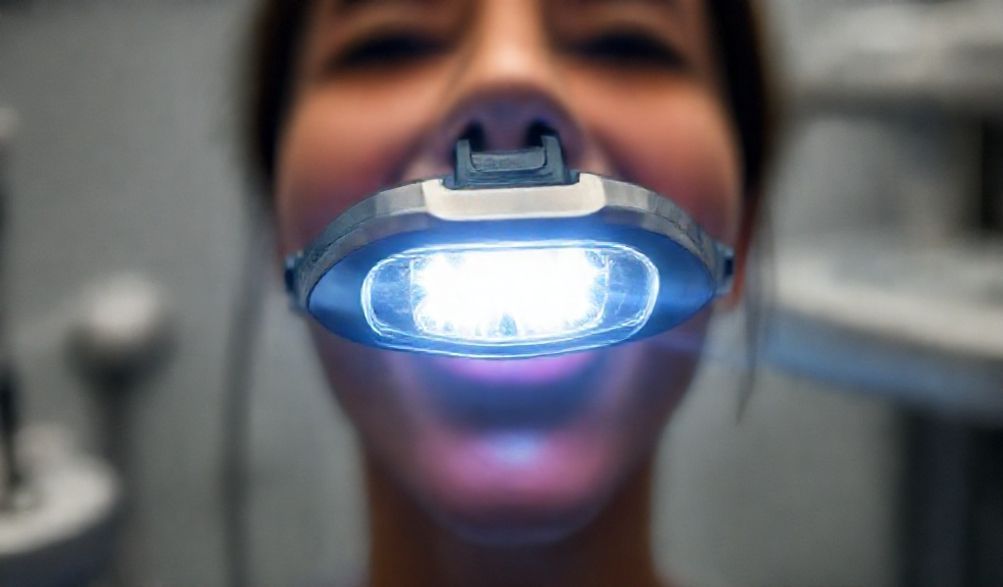
The Ultimate Guide to Dental LED Headlights: Enhancing Precision, Comfort, and Care
You’re halfway through a challenging Class II composite restoration. The margins are critical, and the anatomy must be perfect. As you lean in, you subtly tilt your head to catch the operatory light, but your own shadow falls across the prep. You squint, adjusting your posture, feeling the familiar strain in your neck. The light is either too glaring on the occlusal surface or insufficient in the gingival box. For a moment, you’re not just battling caries; you’re battling the light itself.
This scenario is all too common in dental practices still reliant on traditional overhead lighting. Optimal illumination isn’t a luxury in dentistry; it’s the very foundation of clinical excellence. It directly influences diagnostic accuracy, procedural precision, practitioner ergonomics, and, ultimately, patient outcomes. The limitations of conventional lights—harsh shadows, inconsistent intensity, and poor color fidelity—are significant barriers to peak performance.
Enter the dental LED headlight: a transformative piece of technology designed to deliver superior, shadow-free illumination directly into the oral cavity. This guide is crafted from a synthesis of industry specifications, insights from practicing clinicians, and technical analysis of the latest advancements. Our goal is to move beyond marketing claims and provide you with practical, evidence-based information to make a truly informed decision for your practice. We will comprehensively cover the critical role of lighting, the key features and benefits of modern LED systems, a detailed framework for selecting the right model, and essential practices for maintenance, concluding with actionable steps to elevate your clinical care.
Why Lighting is Critical in Modern Dentistry
Before delving into the specifics of LED headlights, it’s essential to understand why lighting is a non-negotiable pillar of modern dental practice. It transcends simply “seeing better”; it’s about seeing accurately and working efficiently while preserving your own physical well-being.
The Impact on Diagnostic Accuracy
The first step in any successful treatment is a correct diagnosis. Inadequate lighting can obscure the subtle details that differentiate health from disease. Proper illumination is crucial for:
* Early Caries Detection: Identifying the faint shadows and opacity of incipient lesions, especially on proximal surfaces.
* Crack and Fracture Identification: Visualizing craze lines in enamel or more profound tooth fractures that dictate treatment plans.
* Plaque and Calculus Assessment: Distinguishing between plaque, materia alba, and stained calculus during prophylaxis and periodontal evaluation.
* Soft Tissue Examination: Accurately assessing the color, texture, and vascularity of gingival and mucosal tissues, which are key indicators of inflammation, infection, or pathology.
This diagnostic precision hinges on a light source with a high Color Rendering Index (CRI), which we will explore later. A light that distorts colors can lead to misdiagnosis or poor shade matching, compromising the standard of care.
Precision and Efficiency in Procedures
Once a diagnosis is made, lighting becomes the engine of procedural execution. Focused, bright, and consistent light translates directly to clinical efficacy.
* Reducción de Errores: A clear, shadow-free view of the operative field minimizes the risk of iatrogenic damage to adjacent teeth, over-preparation, or missed caries.
* Improved Speed: When you can see the terminus of a canal, the full extent of a cavity, or the margin of a prep without constant repositioning, procedures flow more smoothly and quickly.
* Enhanced Task Performance: From placing layered composite restorations with precise chroma and value to performing delicate endodontic procedures or suturing, controlled illumination is indispensable. It reduces eye strain and mental fatigue, allowing you to maintain a high level of concentration throughout the day.
Ergonomics and Practitioner Well-being
Dentistry is physically demanding. Chronic poor posture is a leading cause of career-ending neck, back, and shoulder pain among clinicians. Traditional overhead lighting is a major ergonomic culprit.
* The “Crane and Strain”: To avoid casting shadows with your head, you are forced to contort your body to align the patient’s mouth with the operatory light. This results in sustained, non-neutral postures.
* The Headlight Solution: A properly fitted dental LED headlight moves the light source with your vision. Where you look, the light goes. This liberates you from the operatory light, allowing you to maintain an upright, neutral spine position. The reduction in chronic musculoskeletal strain is one of the most significant—and often overlooked—benefits, contributing directly to a longer, healthier career.
Key Features and Benefits of Dental LED Headlights
Modern dental LED headlights are sophisticated instruments. Understanding their core features will help you appreciate their value and differentiate between models.
Superior LED Technology
LEDs (Light Emitting Diodes) have revolutionized dental lighting, offering distinct advantages over older halogen or xenon bulbs:
* Operación más Fría: LEDs emit very little infrared radiation, meaning the light beam is “cool.” This protects patient tissues from thermal stress and increases comfort during long procedures.
* Exceptional Lifespan: With a typical lifespan of 10,000 to 50,000 hours, an LED module can last for a decade or more of clinical use, virtually eliminating the cost and hassle of bulb replacements.
* Consistent Intensity: Unlike halogen bulbs that dim over time, LEDs maintain their rated brightness throughout their lifespan. The light output on day one is the same as on day 3,000.
* Los LED consumen hasta un 80% menos de energía que los sistemas halógenos para producir la misma o mayor cantidad de luz, reduciendo los costes de servicios. LEDs consume a fraction of the power required by halogen systems, leading to longer battery life and reduced energy costs.
Optical Clarity and Beam Quality
The quality of the light is as important as its source. Advanced optics define a premium dental LED headlight.
* Shadow-Free Illumination: This is achieved through a ring of LEDs or a specially designed reflector system that surrounds the optical axis. By emitting light from a circle rather than a single point, the shadow cast by your head (or your instruments) is effectively eliminated, filling cavities with even light.
* Adjustable Spot Size & Depth of Field: The ability to change from a wide, diffuse beam for oral exams to a focused, intense spot for deep cavity work adds tremendous versatility. A good depth of field keeps the area in focus even as you move slightly closer or farther away.
* Uniform Light Distribution: The “hot spot” (an overly bright center) common in cheap lights causes glare and eye fatigue. High-quality optics produce a smooth, even field of light with crisp edges.
Comfort and Adjustability
A headlight is only effective if you can wear it comfortably for hours. Design elements are critical.
* Lightweight Design: Modern units weigh between 50-150 grams (without battery), minimizing neck load.
* Balanced Weight Distribution: The center of gravity should be close to the head. Battery packs are often designed to be worn on the waist or clipped to a pocket to counterbalance the front weight.
* Opciones de Montaje: Flexibility is key. Options include adjustable headbands, direct integration with dental loupes (through-the-lens or co-axial mounting), and clips for surgical caps or headwear.
* Easy Adjustability: Knobs or sliders should allow for quick, tool-free adjustments of the light angle and position to achieve perfect alignment with your line of sight.
El Índice de Reproducción Cromática (IRC)
CRI is a measure of a light source’s ability to reveal the true colors of an object compared to natural sunlight (which has a CRI of 100). In dentistry, this is paramount.
* Why High CRI Matters: A low-CRI light can make healthy gingiva appear anemic or mask the subtle color differences between caries and sound dentin. For restorative work, accurate shade matching under a light with a CRI below 90 is nearly impossible, leading to restorations that look perfect in the operatory but mismatched in natural light.
* The Standard: For any clinical dental LED headlight, a CRI of 90 o superior is considered essential. Many premium models now offer a CRI of 95+.
How to Choose the Right Dental LED Headlight for Your Practice
With numerous models on the market, selecting the right one requires a structured evaluation of your needs against the product specifications.
Assessing Your Clinical Needs
Comience preguntándose:
* Specialty & Procedures: An endodontist needs intense, focused light for deep canals. A hygienist may prioritize a wider beam for full-mouth assessments. A restorative dentist needs a balance of both, with exceptional CRI.
* Daily Usage: How many clinical hours per day do you work? This directly impacts battery life requirements.
* Loupe Use: Do you use dental loupes? If so, integration is a top priority.
Technical Specifications to Compare
When comparing models, focus on these key specs:
1. Luminosity (Lux) & Adjustable Intensity: Lux measures illuminance (brightness at a surface). Look for a range suitable for dentistry (e.g., 40,000 to 150,000+ lux at a standard working distance). Crucially, ensure the brightness is ajustables to suit different tasks and avoid glare.
2. Beam Angle and Focus: A variable beam (e.g., switching between a 30° spot and a 80° wide field) offers maximum versatility. Check if the focus is manual or fixed.
3. Battery Life & Charging System: Battery life is rated at a specific intensity. Look for a modern Lithium-ion (Li-ion) battery offering 6-10+ hours at a medium setting. Consider charging time and whether the system offers hot-swappable batteries for uninterrupted use.
4. CRI Rating: Do not compromise. 90+ is the baseline.
5. Weight and Balance: Check the weight of the headpiece itself. A lighter unit (under 100g) is generally preferable for long-term comfort.
Compatibility Considerations
If you wear loupes, compatibility is the most critical factor.
* Lupas de Lente Fija (TTL): The light is mounted on the loupe frame, with the beam path traveling through the lens itself. This offers perfect coaxial alignment (light and vision are on the same axis) but is specific to your loupe brand and model.
* Co-Axial Mounting: The light is mounted above or below the loupe lenses, closely aligned but not directly through them. It offers excellent alignment and is often more adaptable than TTL systems.
* Universal Mounts: Some headbands or clips can be adapted to fit various loupe frames. Always verify with the manufacturers of both your loupes and the intended headlight.
Budget and Value Analysis
Think in terms of Total Cost of Ownership (TCO), not just sticker price.
* Initial Cost vs. Long-Term Value: A higher-priced model with a 10-year LED lifespan, a robust battery, and a good warranty may offer better value than a cheaper unit requiring frequent battery or bulb replacements.
* Reputable Brands: Invest in brands known for reliability, quality optics, and strong customer/technical support. Your headlight is a core piece of clinical equipment; it should be dependable.
* Garantía y Servicio: A strong warranty (often 2-3 years) reflects the manufacturer’s confidence in their product.
Mejores Prácticas para el Uso y Mantenimiento
To protect your investment and ensure optimal performance, follow these guidelines.
Optimal Setup and Positioning
- Initial Fitting: Adjust the headband for a snug but comfortable fit. It should not slip but should not cause pressure points.
- Focal Distance: Position the light source so the center of its beam is focused at your typical working distance (e.g., 16-18 inches). This is often set by the mounting bracket on your loupes.
- Beam Alignment: The center of the light beam should be aligned with the center of your visual axis. Look straight ahead at a target and adjust the light until its hotspot is centered in your field of view without you having to tilt your head.
Daily Care and Cleaning
- Headpiece & Cable: Wipe down daily with a disinfectant wipe compatible with plastics and electronics (e.g., 70% isopropyl alcohol wipes). Avoid abrasive cleaners or submerging the unit.
- Battery & Connectors: Keep contacts clean and dry. Check the manufacturer’s instructions for cleaning the battery casing.
- Control de Infecciones: If the headband is not disposable, ensure it is cleaned according to your practice’s infection control protocols.
Maximizing Battery Life
- Follow Charging Instructions: Utilice únicamente el cargador proporcionado. Para las baterías de iones de litio, evite descargarlas constantemente hasta el 0%. Las descargas parciales son mejores que las completas.
- Almacenamiento Adecuado: Si va a almacenarla durante períodos prolongados, cargue la batería aproximadamente al 50-60% y guárdela en un lugar fresco y seco.
- Reconocer la Degradación: Todas las baterías pierden capacidad con el tiempo. Si el tiempo de funcionamiento disminuye significativamente (por ejemplo, en un 30-40%), es momento de considerar reemplazar la batería.
Solución de Problemas Comunes
- Atenuación/Parpadeo: Primero verifique la carga de la batería. Asegúrese de que todas las conexiones de los cables estén seguras. Si los problemas persisten con la batería completamente cargada, contacte al soporte técnico.
- Conexiones Flojas: Inspeccione los cables por dobleces o daños. Asegúrese de que el conector esté completamente insertado en el frontal y en la batería.
- Sobrecalentamiento: Los LED deben funcionar fríos. Si el frontal se calienta, apáguelo inmediatamente; esto podría indicar una falla eléctrica. Contacte al fabricante.
Sección de Preguntas Frecuentes
P1: ¿Cuánto dura típicamente la batería de un frontal LED dental con una sola carga?
R: La mayoría de las baterías modernas de iones de litio proporcionan entre 6 y 10 horas de funcionamiento en una configuración de intensidad media. Consulte siempre las especificaciones del fabricante, ya que la duración depende en gran medida del nivel de brillo utilizado.
P2: ¿Puedo acoplar un frontal LED a mis lupas dentales existentes?
R: En la mayoría de los casos, sí. Muchas marcas ofrecen monturas universales o adaptadores específicos diseñados para marcos de lupas populares. La clave es verificar la compatibilidad directamente con el fabricante del frontal o con su proveedor de lupas antes de comprar.
P3: ¿Qué significa realmente “iluminación libre de sombras”?
R: Se refiere a un diseño óptico donde la luz se emite desde un anillo o múltiples puntos alrededor de su línea de visión, en lugar de desde un único punto central. Este diseño rellena la sombra que normalmente crea su cabeza, proporcionando una luz uniforme y sin obstrucciones en cavidades profundas y áreas subgingivales.
P4: ¿Una clasificación de lux más alta es siempre mejor?
R: No necesariamente. Si bien un brillo suficiente es crucial (típicamente 40,000-150,000 lux para odontología), un lux excesivamente alto y no enfocado puede causar deslumbramiento intenso, “puntos calientes” reflectantes y fatiga ocular acelerada. La intensidad ajustable y un sistema óptico uniforme y de alta calidad son más importantes que solo el número máximo de lux.
P5: ¿Con qué frecuencia debo reemplazar el LED?
R: Muy raramente. Los módulos LED tienen una vida útil excepcionalmente larga, a menudo clasificada entre 10,000 y 50,000 horas, lo que equivale a más de 10 años de uso clínico normal. Normalmente superan la vida útil del sistema de baterías. El reemplazo generalmente solo es necesario en caso de daño físico.
Conclusión
La transición a una luz inalámbrica dental LED headlight es más que una actualización de equipo; es un paso fundamental hacia la mejora de cada faceta de la práctica clínica. Como hemos explorado, los beneficios son multifacéticos: una precisión diagnóstica inigualable gracias a una luz de alto IRC y libre de sombras; una mayor precisión y eficiencia en los procedimientos; y un impacto positivo profundo en la ergonomía y la salud a largo plazo del profesional.
Invertir en un frontal de calidad es una inversión en la excelencia clínica, en su bienestar personal y en la eficiencia general de su consulta. Le animamos a consultar con especialistas en equipos de buena reputación, buscar recomendaciones de colegas y, lo más importante, solicitar una demostración práctica. Experimente la diferencia de una iluminación personal verdadera.
En última instancia, el moderno dental LED headlight no es solo una herramienta que se usa; es un componente integral de una práctica centrada en el paciente, tecnológicamente avanzada y sostenible. Le permite ver con claridad, trabajar con precisión y cuidar de sus pacientes, y de usted mismo, al más alto nivel. Evalúe su solución de iluminación actual hoy y dé el paso para iluminar su trabajo como nunca antes.
p>