
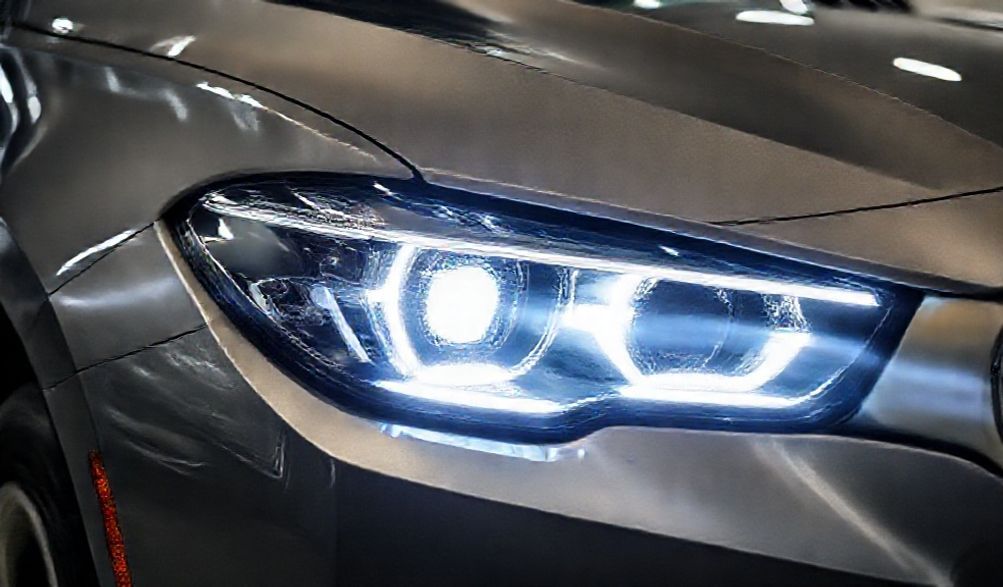
Adaptive Headlights Explained: Safety, Technology, and How They Work
Driving at night, on a winding country road, in the rain—it’s a scenario that tenses the shoulders of even the most experienced driver. Your eyes strain against the darkness, fixed on the limited pool of light cast by your headlights, while your mind races to anticipate what lies beyond in the shadows. This universal challenge of nighttime driving is where a significant, yet often misunderstood, automotive advancement makes its mark: adaptive headlights.
For decades, we’ve relied on a binary choice—low beams or high beams. It’s a compromise between seeing the road and blinding other drivers. Adaptive headlights shatter this old paradigm. They represent a sophisticated fusion of sensors, software, and optics designed to do one thing brilliantly: dynamically light the path ahead based on real-time conditions. This post will demystify this transformative technology. We’ll explore how adaptive headlights work, delve into the compelling safety data that proves their worth, clarify the recent regulatory shift that is changing the landscape in the United States, and glimpse into their future as a cornerstone of automotive intelligence. Consider this your comprehensive guide to moving beyond static beams and into the illuminated, adaptive future of driving safety.
What Are Adaptive Headlights? Beyond Standard Beams
To appreciate the innovation of adaptive headlights, you must first understand the inherent flaws of the traditional systems we’ve used for over a century.
The Core Problem with Traditional Headlights
Conventional halogen, HID (xenon), or even static LED headlights operate on a simple principle: they project a fixed pattern of light. Low beams are angled downward to minimize glare for oncoming traffic, but this severely limits forward and peripheral vision. High beams throw light farther and wider, but their blinding glare makes them illegal to use when other vehicles are present.
This creates three critical safety gaps:
1. The Curve Problem: On a bend, your fixed headlights continue to illuminate straight ahead, leaving the actual path of your turn—where pedestrians, animals, or obstacles may lurk—in dangerous darkness.
2. The Glare Dilemma: The choice is stark: use low beams and see less, or use high beams and temporarily blind other road users, creating a hazard for everyone.
3. The Speed Mismatch: A beam pattern ideal for navigating city streets at 30 mph is not optimal for a highway at 70 mph, where you need to see farther ahead.
The Adaptive Solution
Adaptive headlights, formally known as Adaptive Front-lighting Systems (AFS) o Adaptive Driving Beams (ADB), are the engineered solution to these problems. They are headlights that actively y la automatically adjust their beam pattern, direction, and intensity based on a constant stream of data. This isn’t merely switching between two preset modes; it’s a continuous, real-time modulation of light to match your steering, speed, and surroundings. The goal is to always provide the optimal illumination for the specific driving moment, maximizing your view while minimizing risk to others.
How Adaptive Headlight Systems Actually Work
The magic of adaptive headlights isn’t magic at all—it’s a precise orchestration of hardware and software. Think of it as a three-step process: sense, compute, and react.
The Key Components: Sensors, Processors, and Actuators
The system begins with a network of sensors gathering live data from the vehicle and its environment:
- Steering Angle Sensor: Detects how much and how quickly you are turning the wheel.
- Yaw Rate Sensor: Measures the vehicle’s rotation around its vertical axis (the rate of turn).
- Vehicle Speed Sensor: Critical for determining how far ahead the light needs to reach.
- Front-Facing Camera(s): The eyes of the system, especially for ADB. Mounted typically near the rearview mirror, it identifies the lights of oncoming vehicles and the taillights of vehicles ahead.
This data stream flows into a central control unit—the system’s brain. Sophisticated algorithms process the information dozens of times per second to build a model of the driving scenario.
Finally, the brain commands the actuators to reshape the light:
* For Swiveling (AFS): Small electric motors physically pivot the headlight housing or internal reflector left or right.
* For Beam Shaping (ADB/Matrix LED): This is where the most advanced systems shine. The headlight contains an array of dozens, sometimes hundreds, of individual LED segments. The control unit can turn each segment on, off, or dim it independently with pinpoint accuracy, creating a dynamic, sculpted beam of light.
Adaptive Headlights in Action: Common Functions
Here’s how these components come together to perform specific, safety-enhancing functions:
- Cornering/Bending Lights: As you turn the steering wheel or a yaw sensor detects a curve, the headlights swivel (typically up to 15 degrees) to illuminate the arc of your turn. This lights up the lane you’re entering, not the ditch beside it.
- Motorway/Highway Mode: At sustained higher speeds (e.g., above 55 mph), the beam pattern automatically adjusts. It extends the range of the light farther down the road to give you more reaction time, while also often slightly widening to improve peripheral vision at speed.
- Town/City Mode: At lower urban speeds, the beam pattern widens significantly to better illuminate sidewalks, crosswalks, and intersections—areas where pedestrians and cyclists are most present. The range is shortened to focus on immediate hazards.
- Adaptive High Beam Assist/Matrix Beams: This is the pinnacle of glare-free illumination. Using the front camera, the system identifies other vehicles. Instead of simply switching to low beams, an ADB/matrix system selectively dims or turns off only the tiny LED segments that would shine directly on those vehicles. The rest of the high-beam area remains at full intensity, lighting up road signs, shoulders, and the entire road ahead of and beside the other car. It’s like having a constant high beam with “digital shadows” cast around other road users.
Proven Safety Benefits and Real-World Impact
This technology isn’t just about convenience; it’s a quantifiable leap in safety. Leading automotive safety organizations have gathered compelling evidence.
Enhancing Driver Vision and Reaction Time
The primary benefit is simple: you see more, sooner. A study by the Insurance Institute for Highway Safety (IIHS) found that curve-adaptive headlights improved nighttime visibility on curves by as much as 90% compared to standard low beams. Better illumination directly translates to increased reaction time. If you can see a pedestrian, debris, or an animal several feet earlier when entering a dark curve, you have critical extra moments to steer or brake safely.
Reducing Accidents and Glare
Improved vision leads to fewer collisions. Research from Europe, where adaptive headlights have been common for longer, indicates a significant reduction in nighttime accidents, particularly those involving pedestrians and oncoming vehicles. Furthermore, by intelligently controlling glare, these systems protect other drivers. The selective dimming of ADB systems provides the visibility benefits of high beams without the dangerous disorientation they cause for oncoming traffic, addressing a major cause of nighttime driving stress and risk.
The IIHS Safety Rating and Adaptive Headlights
The IIHS has made advanced lighting a cornerstone of its top-tier safety awards. To qualify for the coveted Top Safety Pick+ rating, a vehicle must now earn a rating of “Good” or “Acceptable” in the IIHS headlight evaluation. This rigorous test evaluates illumination on straight roads, curves, and glare control. As a result, manufacturers are incentivized to move beyond mediocre, static headlights and adopt adaptive technologies to achieve the highest safety accolades. This institutional push has been a major force in bringing better lighting to more consumers.
Considerations and Current Landscape
While the benefits are clear, understanding the practicalities and history of adaptive headlights provides a complete picture.
Adaptive Headlights vs. Automatic High Beams
This is a crucial distinction. Automatic high beams are a common feature that simply switches between traditional low and high beam patterns based on sensor input. Adaptive headlights (AFS/ADB) are more advanced; they modify the beam pattern itself. An automatic system turns the high beams off when it sees a car. An adaptive system keeps most of the high beam on, just carving out a dark pocket around that car. Don’t confuse the two—adaptive technology offers a continuous, superior lighting experience.
Regulatory History and Update in the US
For years, American drivers had limited access to the most advanced adaptive driving beams (ADB/matrix) due to an outdated federal regulation: Federal Motor Vehicle Safety Standard (FMVSS) No. 108. This rule, written for traditional sealed-beam headlights, essentially required a distinct separation between high and low beams, which the dynamic, pixel-precise dimming of ADB systems violated.
The landmark change came in February 2022. The National Highway Traffic Safety Administration (NHTSA) issued a final rule amending FMVSS 108 to explicitly permit true adaptive driving beam systems. This long-awaited update, which aligns U.S. regulations more closely with those in Europe and other global markets, has opened the floodgates. Automakers can now legally introduce their most advanced lighting systems in the U.S., a move that will accelerate adoption and, ultimately, improve road safety nationwide.
Cost, Availability, and Vehicle Integration
Currently, advanced adaptive headlight systems are most commonly found on luxury vehicles and higher trim levels of mainstream models. They represent complex technology involving expensive components like cameras, control units, and sophisticated LED arrays. This complexity also means that in the event of damage, repair costs can be significantly higher than for a standard headlight assembly. However, as with all automotive tech, costs are decreasing. The new U.S. regulation and consumer demand for safety are driving a rapid trickle-down effect, making adaptive features more accessible each model year.
The Future of Adaptive Lighting Technology
Adaptive headlights are not the endgame; they are a foundational platform for the next evolution of vehicle lighting and communication.
Integration with ADAS and Autonomous Driving
The future lies in deeper integration with a vehicle’s Advanced Driver-Assistance Systems (ADAS). Imagine headlights connected to GPS navigation data, beginning to illuminate a freeway off-ramp or a sharp turn antes the driver even starts steering. Coupled with radar and LiDAR, headlights could highlight detected hazards—like a pedestrian obscured in shadows—by intensifying light on that specific spot or projecting a warning symbol on the road in front of the driver. Lighting becomes a proactive, predictive safety system.
Advanced Projection and Communication
The next frontier is using light to communicate. Digital Light Projection systems, already in some high-end vehicles, can project clear navigation arrows, lane markings, or safe-distance lines directly onto the pavement. Furthermore, researchers are exploring how headlights and taillights can communicate intent to pedestrians and other drivers—for example, projecting a crosswalk symbol to signal to a pedestrian that the car has detected them and is yielding. This transforms lighting from a passive tool of illumination into an active language for safer human-machine interaction.
Sección de Preguntas Frecuentes
Q: Are adaptive headlights legal in the United States?
R: Yes. Following a new federal rule (FMVSS 108) that took effect in 2022, adaptive driving beam (ADB) systems are now fully legal for use in the United States. Many vehicles already have simpler AFS (cornering) systems.
Q: Do adaptive headlights significantly improve safety?
R: Multiple studies and safety organizations indicate yes. By providing superior illumination of the road ahead, especially on curves, and by reducing glare, they enhance the driver’s vision and reaction time, which are critical factors in preventing nighttime accidents.
Q: What’s the difference between adaptive headlights and auto high beams?
R: Auto high beams simply switch between standard low and high beams. Adaptive headlights (AFS/ADB) actively modify the shape, range, and direction of the light beam itself, providing more nuanced and continuous illumination without needing to switch off high beams entirely.
P: ¿Son costosos de reparar o reemplazar?
R: They can be. Due to complex sensors, actuators, and specialized LED or laser units, repair costs for adaptive headlight systems are generally higher than for traditional halogen or static LED units. It’s important to check insurance coverage.
Conclusión
Adaptive headlights are far more than a premium automotive gadget; they are a transformative safety technology that addresses one of driving’s most persistent challenges: seeing and being seen safely at night. By dynamically bending, shaping, and focusing light in response to the road, they extend our vision and grant us precious extra moments to react. While cost and complexity remain considerations, the recent regulatory shift in the U.S. marks a turning point, promising to make this life-saving technology standard on more vehicles in the coming years.
As we move toward a future of increasingly automated and connected vehicles, adaptive lighting will evolve from a standalone feature into an integrated sensory organ of the car—predicting hazards, communicating intent, and illuminating the path to safer roads for everyone. The journey beyond the static beam has begun, and it promises a brighter, safer future for nighttime driving.
p>