
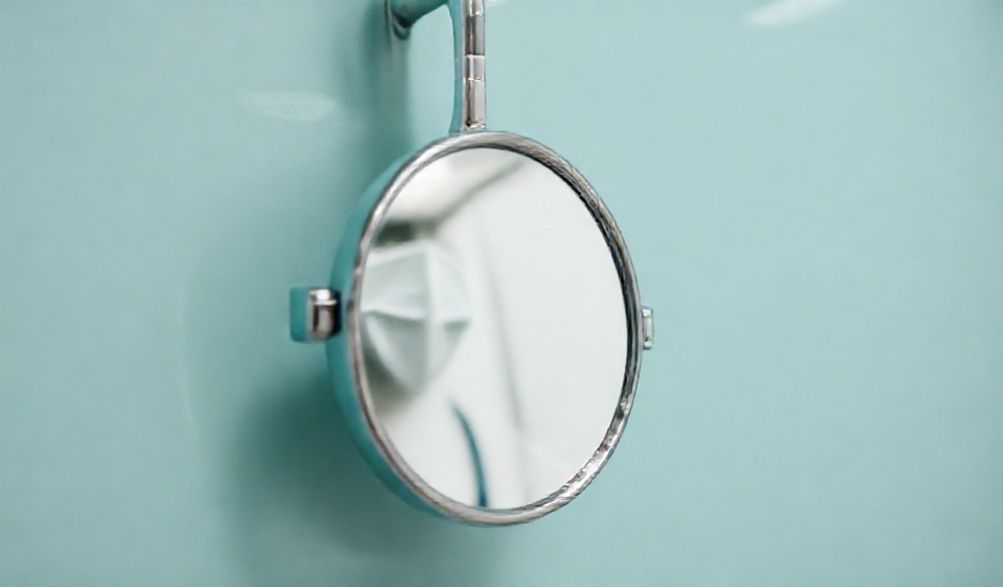
The Doctor’s Head Mirror: A Timeless Tool in Modern Medicine
The scene is unmistakable. In the quiet, focused atmosphere of an ENT clinic, a doctor leans forward, their attention fixed. On their forehead, secured by a simple leather band, is a small, circular mirror. They adjust their position minutely, catching the light from a nearby lamp, and a brilliant beam illuminates the hidden recesses of a patient’s ear. It is an image that feels simultaneously archaic and profoundly professional—a snapshot from medical history that is, in fact, a routine part of 21st-century diagnostics.
This is the doctor head mirror, a tool that presents a fascinating paradox. In an era of digital imaging, fiber-optic scopes, and wireless sensors, this simple, centuries-old optical device continues to hold a vital, irreplaceable place in modern medicine. It is a testament to the enduring power of elegant, functional design. This post will delve into the anatomy, history, physics, and ongoing relevance of the head mirror, exploring why this iconic instrument remains a trusted ally for specialists, a rite of passage for students, and a symbol of hands-on medical expertise.
Our exploration is grounded in the principles of E-E-A-T (Experience, Expertise, Authoritativeness, Trustworthiness), drawing from historical medical texts, the established practices of modern otolaryngology, and the fundamental science of optics to provide a comprehensive and accurate portrait of this remarkable tool.
What is a Doctor’s Head Mirror? Anatomy and Function
At its core, the doctor head mirror is a portable, personal illumination system. It is a diagnostic tool designed to throw a powerful, focused beam of light into the dark, deep cavities of the human body—primarily the ears, nose, and throat—allowing for clear visual examination. Unlike a flashlight, which casts light from an angle and creates shadows, the head mirror’s genius lies in its ability to provide shadow-free, “coaxial” illumination, where the light path and the physician’s line of sight are perfectly aligned.
Key Components: The Mirror, Headband, and Optics
The device’s simplicity belies its precision. It consists of two main parts:
-
The Concave Mirror: This is the heart of the instrument. It is a circular mirror, typically 3 to 4 inches (7.5 to 10 cm) in diameter, with a precisely ground concave surface. The curvature is crucial; most medical head mirrors have a focal length of approximately 25-30 cm (10-12 inches), meaning they converge light from a source at that distance into a sharp, intense spot. At the very center of the mirror is a small sight hole, usually about 1 cm in diameter. The physician looks directly through this hole, aligning their vision with the reflected beam of light.
-
The Adjustable Headband: Usually made of leather or a synthetic, comfortable material, the headband holds the mirror securely on the doctor’s forehead. It is fully adjustable to fit different head sizes and can be angled so the mirror sits just above the examiner’s dominant eye. The design is intentionally lightweight, placing no significant strain or heat on the wearer during prolonged use.
The Simple Physics of Brilliant Illumination
The magic of the doctor head mirror is pure applied physics. It functions as a classic concave reflector.
- The Light Source: The doctor positions a bright lamp—traditionally an incandescent bulb, now often an LED—to the side and slightly behind the patient’s head, at roughly the same height as the patient’s ear or mouth.
- Convergence: The concave mirror captures the divergent rays of light from this lamp. Due to its shape, it reflects and converges these rays to a single focal point in front of the doctor.
- Coaxial Illumination: The doctor moves their head (and thus the mirror) until the focal point of the reflected light lands precisely on the area they wish to examine—the eardrum, the vocal cords, a nasal passage. Because the doctor is looking through the central hole, their line of sight is exactly along the axis of the reflected light beam. This eliminates parallax and, most importantly, sombras. Any instrument they introduce (like a speculum) is illuminated from the same direction as their view, preventing it from casting a dark shadow that obscures the very anatomy they need to see.
This contrasts with modern LED headlamps, which are brilliant and convenient but project light from a point above or beside the eye. This can create subtle shadows, especially when using instruments in deep, narrow cavities. The head mirror’s coaxial illumination remains uniquely superior for certain deep-cavity examinations.
A Journey Through Time: The History of the Head Mirror
El doctor head mirror is not a medieval relic, but a product of 19th-century medical innovation, born from the desire to see the unseen.
19th Century Origins: From Laryngology to Standard Practice
Before its invention, examining the larynx or the depths of the nasal cavity was largely a matter of guesswork. The pivotal moment came in 1854 when Spanish singing teacher Manuel García, seeking to observe his own vocal cords, used a dentist’s mirror and sunlight to invent the first laryngoscope. This inspired physicians like Johann Nepomuk Czermak of Prague, who refined the technique. Czermak realized that using an external light source reflected by a mirror held in the hand was cumbersome. He adapted the concept, placing a concave mirror on his forehead to free both hands—one to hold a laryngeal mirror in the patient’s mouth, and the other to manage the patient.
This head mirror revolutionized otolaryngology. For the first time, doctors could reliably and clearly examine the living larynx, diagnose conditions of the nose and post-nasal space, and perform more accurate ear exams. It transformed ENT from a speculative practice into a visual diagnostic specialty. By the late 1800s, the head mirror, alongside the otoscope and nasal speculum, became the defining toolkit of the emerging specialist, known then as a “laryngologist.”
The Symbol of a Profession: Cultural and Practical Legacy
Throughout the 20th century, the head mirror transcended its clinical utility to become a powerful cultural icon. In film, television, and illustration, a doctor wearing a head mirror was instantly recognizable as an authority figure, often specifically an “ear, nose, and throat man.” It symbolized hands-on expertise, focused attention, and diagnostic acumen.
Practically, its use spread beyond ENT for a time, becoming a common sight in general practitioners’ offices for routine throat exams. However, with the advent of compact, battery-powered penlights and later, bright LED headlamps in the late 20th century, its use in general practice waned. The head mirror became a more specialized tool, retreating to the clinics where its unique optical properties were most valued, thus solidifying its iconic association with otolaryngology.
The Head Mirror in Contemporary Medical Practice
Far from being a museum piece, the doctor head mirror is a living, breathing tool in modern medicine, valued for its specific performance characteristics.
Primary Domain: Otolaryngology (ENT)
In the modern ENT clinic, the head mirror is not just present; it is often the instrument of choice for seasoned specialists during clinic examinations. Its applications are fundamental:
- Otoscopy: Examining the ear canal and tympanic membrane (eardrum). The coaxial light provides unparalleled clarity of the membrane’s subtle contours, light reflex, and any minute perforations or fluid behind it.
- Anterior Rhinoscopy: Using a nasal speculum to widen the nostril, the head mirror illuminates the nasal cavities, turbinates, and septum without the shadow cast by the speculum’s blades.
- Oropharyngeal and Indirect Laryngoscopy: For a thorough throat exam or a quick look at the vocal cords using a small hand mirror, the head mirror’s bright, warm light is ideal.
Many ENT surgeons and clinicians actively prefer it for these tasks. The reasons are practical: it requires no batteries, never fails, provides a warm light spectrum that is easy on the eyes, offers superior depth perception through binocular vision (both eyes are open and unobstructed), and crucially, allows the physician to use both hands freely to manage instruments and the patient.
Niche Uses in Other Specialties
While ENT is its home, the head mirror finds occasional use in other fields. Some dermatologists may use it for its shadow-free, magnifying illumination when examining detailed skin lesions. In certain surgical settings, particularly in resource-limited environments or for specific tasks where a focused, hands-free light is needed, it can still be employed. However, these are exceptions that prove the rule: the head mirror is a specialist’s tool for specific, refined visual tasks.
Head Mirror vs. Modern Headlamp: A Comparative Analysis
The choice between a traditional doctor head mirror and a modern LED headlamp is not about old versus new, but about selecting the right tool for the job. Here’s a balanced comparison:
Advantages of the Traditional Head Mirror
- Illumination Quality: Unmatched shadow-free, coaxial illumination for deep cavity work.
- Fiabilidad: No electronics, batteries, or bulbs to fail. It is always ready.
- Ergonomía: Lightweight; keeps heat and battery weight off the head. Allows full use of binocular vision.
- Durability & Cost: A well-made head mirror can last a lifetime with minimal care, representing a one-time, low-cost investment.
Advantages of Modern LED Headlamps
- Portability & Convenience: All-in-one unit; no need for an external light source. Ideal for bedside exams, emergencies, or house calls.
- Ajustabilidad: Variable light intensity and sometimes adjustable beam focus (spot vs. flood).
- Cool Light: LEDs emit very little heat, reducing discomfort for the patient during close work.
- Modern Perception: Some patients may perceive a headlamp as more “advanced” or contemporary.
For the ENT specialist doing detailed clinic work, the head mirror’s advantages in visual clarity and ergonomics often win out. For broader, more general examinations or in dynamic settings, the headlamp’s convenience is paramount. The most equipped practitioners may master and use both, choosing based on the task at hand.
Learning the Art: How to Use a Head Mirror Properly
Mastering the doctor head mirror is a rite of passage in otolaryngology training. It is a skill that requires practice and finesse.
Step-by-Step Setup and Alignment
- Posicionar la fuente de luz: Place a bright lamp (on a stand) at about the patient’s head level, just behind and to the side opposite your dominant eye (if you are right-eyed, place the lamp on the patient’s left side).
- Don the Mirror: Adjust the headband so the mirror sits comfortably just above your dominant eye. The sight hole should be directly in front of that eye.
- Find the Focal Point: Turn your head to face the lamp. You will see a bright reflection in the mirror. Tilt your forehead/mirror until that reflected light forms a tight, bright spot on a surface (like your hand or the patient’s cheek) about 10-12 inches away. This is your focal point.
- Examine: Keeping your head and the lamp position fixed, move the patient or your seating so that the area you wish to examine (e.g., the ear) is at that focal point. Look through the sight hole. The area should be brilliantly illuminated.
Common Challenges and Tips for Mastery
- “Losing the Light”: This happens with small head movements. The key is to learn to pivot from the waist and neck as a single unit, keeping the mirror’s angle relative to the lamp constant.
- Glare: Ensure the lamp is not too bright or too close. A diffused light source is better than a bare bulb.
- Neck Strain: Proper posture and chair height are essential to avoid craning.
- Practice: Start by examining inanimate objects, then practice on cooperative colleagues. Proficiency can take weeks of daily use, but once achieved, the process becomes unconscious and incredibly efficient.
Sección de Preguntas Frecuentes
Q: Do doctors still use head mirrors?
A: Yes, absolutely. While less common in general practice, it remains a fundamental and frequently used tool in Otolaryngology (ENT) clinics worldwide. Many experienced ENT specialists prefer it for its superior optical qualities for detailed examinations of the ears, nose, and throat.
Q: Why not just use a bright penlight or a headlamp?
A: A penlight or standard headlamp casts light from an angle. The doctor head mirror provides coaxial illumination—the light and your line of sight come from exactly the same direction. This eliminates the shadows that side-angle lights create, which is critical for seeing details deep in narrow cavities like the ear canal or behind the nasal structures.
Q: Is it difficult to learn to use?
A: It has a definite learning curve. Medical students and ENT residents typically require dedicated practice to develop the muscle memory for proper alignment and stable positioning. It can feel awkward at first, but once mastered, it becomes a seamless and highly effective part of the diagnostic examination.
Q: What is the mirror actually made of?
A: The reflective surface is typically high-quality glass, precision-ground to a specific concave curvature. It is then coated with a thin, protective layer of a highly reflective metal like rhodium or silver. Rhodium is particularly favored for its exceptional hardness, clarity, and resistance to tarnishing, ensuring a long-lasting, brilliant reflection.
Conclusión
The enduring presence of the doctor head mirror is a powerful testament to the principle that the best technology is not always the most complex. It is a story of elegant, functional design—a simple concave mirror and a strap—solving a fundamental problem so perfectly that it has resisted obsolescence for over 150 years.
Its core value lies in providing a specific, high-quality form of illumination that modern electronics have not fully replicated for specialized tasks. It reminds us that in medicine, the tool is only as good as the skill of the practitioner wielding it. The head mirror is less a machine and more a precision instrument, akin to a violinist’s bow or a surgeon’s scalpel: its power is unlocked through expertise and practice.
In an age of digital diagnostics and automated systems, the continued use of the head mirror underscores the irreplaceable importance of direct visual examination, hands-on skill, and time-tested tools. It is not a relic to be displayed, but a choice to be made by discerning practitioners. As long as doctors need to see clearly into the body’s hidden passages without shadow or distortion, the doctor head mirror will likely retain its vital, focused place in the art and science of medicine.
p>