
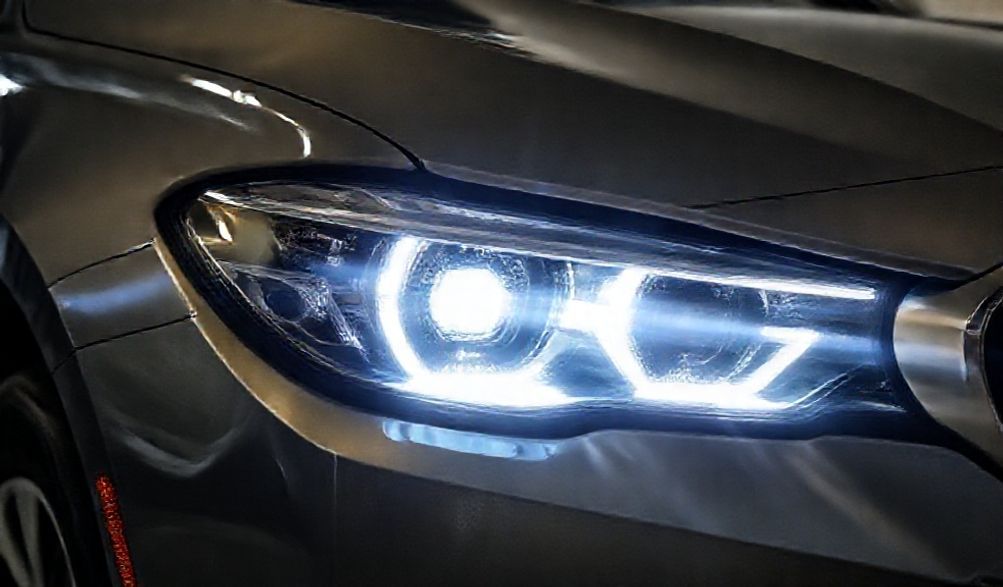
Adaptive Headlights Meaning: A Complete Guide to How They Work & Why They Matter
You’re driving on a dark, winding country road. As you approach a sharp bend, your eyes strain against the wall of darkness, searching for the road’s edge or any unexpected obstacle. Just as you ease into the turn, a pair of blinding high beams from an oncoming car floods your cabin, leaving you momentarily disoriented and vulnerable. It’s a stressful, all-too-common scenario that highlights a fundamental flaw of traditional car lighting: it’s static in a dynamic driving environment.
This is where understanding the adaptive headlights meaning becomes crucial for modern driving safety and comfort. Far from being just another luxury add-on, adaptive headlights represent a paradigm shift in automotive lighting technology. They are intelligent systems designed to see, think, and react, illuminating your path precisely where you need it most, without compromising the safety of others on the road.
This guide synthesizes information from leading automotive safety organizations like the Insurance Institute for Highway Safety (IIHS), technical documents from major manufacturers, and expert engineering insights. Our goal is to demystify this technology, moving beyond marketing jargon to provide a clear, trustworthy explanation. By the end of this post, you’ll understand exactly what adaptive headlights are, how the different systems work, their proven benefits, and why they are rapidly transitioning from a premium novelty to a vital safety feature. Let’s shine a light on the future of driving visibility.
What Are Adaptive Headlights? (Defining the Core Concept)
The Simple, Practical Definition
At its core, the adaptive headlights meaning can be distilled into a simple concept: they are headlights that automatically and dynamically adjust their beam pattern in real-time based on driving conditions, vehicle speed, and surroundings—all without any input from the driver.
To appreciate this, consider traditional “static” headlights. Whether halogen, HID (xenon), or LED, they project a fixed pattern of light: a low beam for normal use and a high beam for dark, open roads. The driver must manually switch between them and, crucially, the light always points straight ahead, regardless of whether the car is turning, climbing a hill, or navigating a curve. This creates dangerous pockets of darkness and forces the constant, distracting toggle of high beams.
Adaptive headlights eliminate this rigidity. They are proactive, not reactive. The system constantly gathers data and adapts the light output to create an optimal field of vision for the specific moment.
The Core Purpose: Enhancing Safety and Visibility
The primary mission of adaptive headlights is not merely convenience; it is to fundamentally enhance safety by maximizing usable visibility while minimizing glare for other road users. It’s a technology that serves two masters simultaneously: the driver of the vehicle and everyone else on the road.
By actively shaping the beam to follow curves, illuminate intersections sooner, or selectively dim light hitting a leading car, adaptive systems transform nighttime driving from a game of guesswork into a well-lit path. They act as a constant co-pilot for your eyes, extending your effective vision and providing critical extra reaction time—the most valuable commodity in avoiding accidents.
How Do Adaptive Headlights Work? (The Technology Explained)
The magic of adaptive headlights is achieved through a seamless marriage of sophisticated sensors, powerful computing, and precise mechanical or optical components. Think of it as a reflex arc for your car’s vision.
The “Brain”: Sensors and Control Units
The system’s intelligence comes from a network of sensors that feed data to a central electronic control unit (ECU):
- Steering Angle Sensor: Tells the ECU exactly how much and how quickly you are turning the wheel.
- Yaw Rate Sensor: Measures the car’s rotation around its vertical axis, helping determine the actual direction of travel.
- Speed Sensor: Critical for adjusting the range and pivot rate of the lights (a slower turn in a parking lot vs. a fast highway curve).
- Front-Facing Camera: This is the eyes of the system, especially for Adaptive Driving Beam (ADB) systems. It detects the lights of oncoming vehicles and the taillights of vehicles ahead, as well as road signs and lane markings.
- GPS & Navigation Data (in advanced systems): Can preemptively adjust lighting for known sharp curves or intersections stored in the map data.
This constant stream of information is processed in milliseconds by the ECU, which calculates the perfect headlight response.
The “Muscle”: Mechanical and Optical Components
Once the “brain” decides, the “muscle” executes the command. There are two primary execution methods:
-
Swiveling/Moving Headlights (Common in AFS): Here, the entire headlight housing or an internal reflector is physically pivoted by small, precise electric motors. As you turn the steering wheel left, the headlights swivel left to light up the corner of the road you’re entering. It’s akin to a spotlight operator following a performer on stage—the light source itself moves.
-
Matrix LED / Pixel Lighting (The core of ADB): This is a more advanced, “digital” approach. The headlight contains an array of dozens or even hundreds of individual LED segments. The ECU can independently dim or turn off specific clusters of these LEDs. When the camera detects a car ahead, it commands the LEDs in that precise portion of the beam to dim, creating a “shadow” around the other vehicle. The rest of the beam remains at full high-beam intensity, illuminating the roadside, signs, and the lane ahead. Imagine it as a pixelated shield that selectively blocks light only where it’s problematic.
Main Types of Adaptive Headlight Systems
Not all adaptive headlights are created equal. The technology has evolved, leading to distinct system types with different capabilities.
Adaptive Front-lighting System (AFS)
AFS is often the foundational adaptive technology. It primarily refers to headlights that swivel horizontally based on steering input and vehicle speed to illuminate curves and corners. Some advanced AFS systems also adjust the beam’s vertical angle based on vehicle pitch (when accelerating, braking, or carrying a heavy load) to prevent blinding others. The key benefit is dramatically improved illumination through turns and at intersections, where many nighttime accidents occur.
Adaptive Driving Beam (ADB) or Matrix LED
This represents the current pinnacle of adaptive lighting. ADB systems use the matrix LED approach described above to actively shape the high beam. They don’t just switch between high and low beams; they constantly maintain a high-beam pattern while digitally carving out shadows for other vehicles. This provides the driver with near-constant maximum forward visibility without ever causing glare. For years, outdated U.S. regulations prevented the full implementation of ADB, but recent changes have opened the door (more on this below).
Automatic High-Beam Assist (AHB)
It’s crucial to distinguish AHB from true adaptive systems. AHB is a complementary, simpler feature that uses a camera to detect lights of other vehicles and automatically switches between traditional high and low beams. It’s a helpful convenience and a stepping stone, but it lacks the granular, dynamic beam-shaping capabilities of AFS or ADB. Many vehicles with adaptive headlights also include AHB as part of their suite of features.
Key Benefits: Why Adaptive Headlights Are a Game-Changer
The investment in this technology pays dividends in multiple, significant ways.
Dramatically Improved Nighttime Safety
This is the most compelling benefit. The IIHS has stated that good headlights are a critical safety feature, and adaptive systems are among the best. By lighting corners earlier and more effectively, they reveal pedestrians, cyclists, animals, or debris that would be hidden in the shadows of static lights. The constant, glare-free high beam output of ADB systems extends the driver’s sight distance significantly, providing more time to react. This directly contributes to reducing the risk of nighttime collisions, which are disproportionately fatal.
Reduced Driver Fatigue and Stress
Constantly juggling between high and low beams, squinting into dark curves, and recovering from the glare of oncoming traffic is mentally taxing. Adaptive headlights automate this entire process. The driver can focus more on the road and less on managing their lights. This reduction in cognitive load makes long night drives less fatiguing and overall driving less stressful, contributing to better, more alert decision-making.
Enhanced Visibility in Challenging Conditions
Adaptive systems excel in specific high-risk scenarios:
* Winding Roads: The beam actively follows the road layout.
* Highway Entrances/Exits: Illuminates the curved ramp fully.
* Rural Intersections: Lights up cross traffic paths as you approach.
* Inclement Weather: While heavy snow or mud can obscure sensors, the dynamic beam can better cut through rain and fog on curves compared to a fixed beam.
Considerations and Limitations
While transformative, adaptive headlight technology comes with certain practicalities to consider.
Costo y Disponibilidad
Históricamente, los faros adaptativos han sido una característica premium, a menudo incluida en acabados superiores o paquetes de lujo. Sin embargo, como toda tecnología automotriz, los costos están disminuyendo. Ahora son cada vez más comunes en modelos de gama media. La contrapartida es que los costos de reparación pueden ser elevados si se daña la carcasa, el motor o el conjunto de LED, lo que a menudo requiere el reemplazo completo de la unidad.
Panorama Normativo (Especialmente en EE.UU.)
Para una precisión autoritativa, comprender la historia regulatoria es clave. Durante décadas, la Norma Federal de Seguridad de Vehículos Motorizados (FMVSS) 108 de EE.UU., redactada en la era de los faros de haz sellado, prohibió efectivamente los sistemas ADB más avanzados. Esto dejó a los conductores estadounidenses rezagados respecto a Europa y otras regiones donde el ADB ha sido legal y común durante años.
En una actualización histórica, la Administración Nacional de Seguridad del Tráfico en las Carreteras (NHTSA) modificó esta norma en febrero de 2022. La nueva regulación finalmente permite los faros adaptativos de haz dinámico (Adaptive Driving Beam) reales en vehículos nuevos en Estados Unidos, siempre que cumplan requisitos específicos de rendimiento y seguridad. Se espera que este cambio acelere drásticamente la adopción y la innovación en el mercado estadounidense.
Mantenimiento y Calibración
Estos no son sistemas de “instalar y olvidar”. Su rendimiento depende completamente de datos precisos de los sensores. Si una cámara frontal se desalinea (por ejemplo, tras un golpe leve en el parachoques) o un sensor de ángulo de dirección falla, el sistema no funcionará correctamente. Tras cualquier reparación en la parte delantera o incluso una alineación de las ruedas, a menudo se requiere una calibración profesional con herramientas especializadas para garantizar que los faros y sus sensores estén perfectamente sincronizados.
Preguntas Frecuentes: Respuestas a sus dudas sobre Faros Adaptativos
P: ¿Son los faros adaptativos lo mismo que las luces altas automáticas?
R: No. Este es un punto común de confusión. Las luces altas automáticas (AHB) simplemente alternan entre los patrones tradicionales de luz alta y baja. Los faros adaptativos (AFS/ADB) moldean y mueven activamente el patrón del haz en sí, proporcionando luz optimizada de forma continua sin simplemente apagarla para otros conductores.
P1: ¿Puedo instalar faros adaptativos en mi coche antiguo?
R: P: ¿Puedo instalar faros adaptativos en mi coche actual?.
Casi universalmente, no. Los sistemas adaptativos están profundamente integrados en la red del vehículo (requieren el bus CAN), dependen de sensores específicos (dirección, cámara, etc.) y necesitan una programación compleja. Una instalación posterior sería prohibitivamente costosa y técnicamente desafiante en comparación con comprar un vehículo equipado con ellos.
R: P: ¿Vale la pena el costo adicional de los faros adaptativos?.
P4: ¿Funcionan los faros adaptativos en todas las condiciones climáticas?
R: Para conductores conscientes de la seguridad que conducen con frecuencia de noche, especialmente en carreteras sin iluminar o sinuosas, la respuesta es un sí rotundo. El potencial para prevenir un solo accidente puede superar el costo. Para conductores principalmente urbanos que circulan de día, la propuesta de valor es menor. Considérelo una inversión en seguridad proactiva.
P: ¿Funcionan bien con mal tiempo (nieve, lluvia intensa)?
R: Funcionan excelentemente en la mayoría de las condiciones. Sin embargo, sus sensores, particularmente la cámara, pueden verse afectados por nieve pesada, hielo o barro espeso que cubra la lente. El sistema típicamente alertará al conductor y volverá a un modo de iluminación estándar hasta que la vista del sensor esté despejada.
Conclusión
P: ¿Qué debo hacer si se enciende la luz de advertencia de mis faros adaptativos? adaptive headlights meaning No la ignore. Esto indica una falla en el sistema. Podría ser un motor de giro defectuoso, una cámara bloqueada o averiada, un problema de sensor o la necesidad de una recalibración. Programe un diagnóstico con un técnico calificado, preferiblemente en un concesionario familiarizado con el sistema específico.
Conclusión.
Comprender la verdadera naturaleza de los faros adaptativos.
p>