
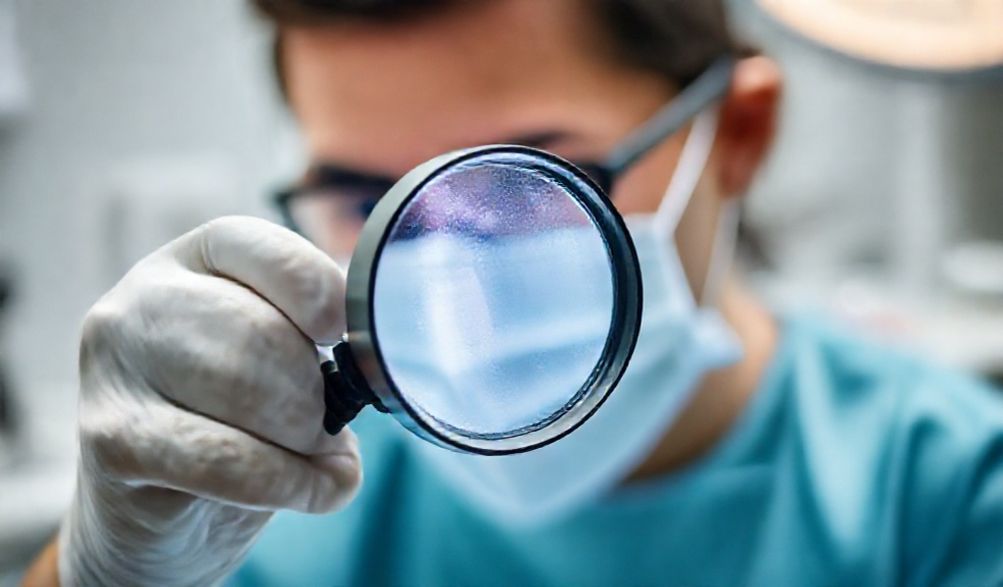
Dentist Magnifying Glasses with Light: A Complete Guide to Enhanced Precision & Patient Care
Introduction
You’re leaning in, focused intently. A subtle shadow obscures the distal margin of your prep. You shift your head, the overhead light glares, but the critical detail remains just outside perfect clarity. A moment of squinting, a slight strain in your neck—it’s a scenario every dentist knows intimately. This daily challenge is more than a minor inconvenience; it’s a barrier to optimal care and a contributor to long-term physical strain.
This guide is designed to move beyond that scenario. As a comprehensive resource built on industry knowledge and a deep understanding of clinical ergonomics, our purpose is to provide dental professionals—whether you’re a seasoned practitioner, a clinical hygienist, or a practice manager—with the factual, detailed information needed to make a truly informed decision. You’re here to understand how modern magnification and illumination systems can transform your work, and we’re here to detail exactly how.
We will dissect the technology behind dental loupes with integrated lights, moving from optical principles to practical benefits. You’ll gain a clear understanding of key features like magnification power, lighting types, and diseño ergonómico. We’ll explore the tangible advantages for your clinical accuracy, your physical health, and your patients’ trust. Finally, we’ll provide a step-by-step framework for selecting the system that aligns perfectly with your specialty, your posture, and your practice’s needs. Consider this your definitive roadmap to achieving enhanced visual precision.
How Dental Loupes with Integrated Lights Transform Clinical Practice
At its core, a dental loupe system is an ergonomic visual prosthetic. It’s engineered to bring the minute details of the oral cavity into clear, comfortable view, fundamentally altering the clinician’s interface with their work. The synergy of magnification and focused illumination is what creates this transformative effect.
The Optics of Precision: Magnification Explained
The foundation of any loupe system is its optical design, primarily falling into two categories:
- Sistemas Galileanos: These are the more common entry-level or standard systems. Utilizing a simple convex objective lens and a concave eyepiece lens, they typically offer lower magnification ranges (2.0x to 3.5x). They are lighter, more compact, and often less expensive. However, they have a narrower field of view and shorter profundidad de campo (the vertical zone of clear focus) compared to their advanced counterparts.
- Sistemas Prismáticos (Keplerianos): These are advanced, multi-lens systems that use prisms to fold the light path. This allows for higher magnifications (3.5x to 8x and beyond) with a significantly wider field of view and a much greater depth of field. While slightly heavier and larger, they provide a more immersive, “through-a-window” visual experience that reduces the need for constant refocusing.
Beyond the lens type, three interlinked concepts are critical:
* **Distancia de Trabajo:** The measured distance from your eyes to the patient’s oral cavity when you are in a neutral, upright posture. This is not a one-size-fits-all metric; it must be custom-measured based on your arm length and seated posture.
* Field of View: The diameter of the area you can see clearly through the loupes at a given working distance. A wider field is generally preferable for situational awareness.
* Depth of Field: The “slice” of space that remains in sharp focus vertically. A greater depth of field allows you to see the base and walls of a preparation clearly without moving your head.
Illuminating the Truth: The Critical Role of LED Lighting
Magnification is only half the equation. Without proper light, you are simply magnifying shadows and glare. Integrated LED lights are now the standard, and for good reason. They provide cool, shadow-free illumination directly coaxial (in line) with your line of sight, eliminating the obstructions caused by your hands, instruments, or the patient’s head.
Key lighting metrics to understand:
* Temperatura de Color: Measured in Kelvins (K). Dental-specific lights aim for “daylight” white, around 5500K. This temperature provides the most accurate color rendition of oral tissues, crucial for distinguishing between caries, dentin, enamel, and restorative materials. Lights that are too yellow (lower K) or too blue (higher K) can distort color perception.
* Brightness & Focus: Measured in lux at the working distance. Sufficient brightness is vital, but the quality and focus of the beam are equally important. A well-focused beam provides even, concentrated light exactly where you are looking, reducing eye strain. Many systems offer adjustable intensity settings for different procedures.
* Battery Life & System: Modern lithium-ion batteries typically offer 6-10+ hours of runtime on a single charge, easily covering a full clinical day. Systems usually include a lightweight battery pack (worn on a waistband or clipped to clothing) and a quick-charging dock. Redundancy, like a spare battery, is a common and recommended feature.
Key Features to Evaluate in Surgical Dental Loupes
Navigating the market requires a keen eye for specifications that translate to clinical performance and comfort. Here’s what to scrutinize.
Magnification Power: Finding Your Sweet Spot
Choosing magnification is a balance between detail and adaptability.
* 2.0x – 3.0x (Low): Ideal for beginners, dental hygienists, and procedures requiring a larger field of view, such as initial examinations, periodontal therapy, or simple restorative work. It allows for an easier adaptation period.
* 3.5x – 4.5x (Medium/High): The most popular range for general dentists, prosthodontists, and oral surgeons. It provides an excellent balance of significant detail enhancement and a manageable field of view for procedures like crown preps, composite artistry, and extractions.
* 5.0x and above (Very High): Reserved for specialists requiring extreme detail, such as endodontists (locating canal orifices, microfractures) or periodontists (microsurgery). The field of view is narrow, requiring precise head positioning.
Recommendation: If new to loupes, start lower (2.5x-3.0x). You can always move to higher power later as your visual-motor skills adapt.
Light Source Comparison: LED, Halogen, and Coaxial vs. Peripheral
- LED vs. Old Halogen/Xenon: LEDs have decisively won. They run cool, use a fraction of the energy, last for tens of thousands of hours, and provide consistent, daylight-quality light. Halogen lights run hot, have shorter lifespans, and drain batteries quickly.
- Coaxial vs. Peripheral Lighting: This is a critical distinction.
- Coaxial Lighting: The light beam is projected directly down the line of sight, parallel to your visual axis. This creates truly shadow-free illumination, as the light source is coming from the same direction as your gaze. It is the gold standard for most dental procedures.
- Peripheral Lighting: The light sources are mounted to the sides of the loupe lenses. While still effective, they can cast subtle shadows from instruments or fingers and may not illuminate deep cavities as evenly. Some systems offer a hybrid approach.
Ergonomics & Customization: Frame Fit, Declination Angle, and Weight
This is where an off-the-shelf product fails and a professional fitting proves its worth. Your loupes must adapt to you, not the other way around.
* Custom Frame Fit & Pupillary Distance (PD): Frames should be adjusted precisely for your PD and the width of your face. Ill-fitting frames cause eye strain, headaches, and will sit uncomfortably, leading to disuse.
* Ángulo de Declinación: This is the single most important ergonomic factor. It is the angle of the loupe barrels relative to your eyes. It must be set so that when you sit upright with your spine neutral and your head slightly tilted forward (the “neutral position”), you are looking straight through the optical centers of the lenses. An incorrect angle forces you to hunch or crane your neck, defeating the primary health benefit.
* Frame Styles & Weight:
* A través de la lente (TTL): Lenses are permanently mounted in a custom frame. They are lighter, more balanced, and offer a more consistent optical path. They require a new frame if your prescription changes.
* Abatibles: The magnifying optics flip up on a hinge, allowing you to quickly switch between magnified and unmagnified vision. They are often heavier (as the optics are in front of your eyes) and can be less stable, but they allow you to keep your favorite prescription frames and can be used by multiple people in a practice.
* Prescription Integration: Your exact optical prescription (including astigmatism and prism, if needed) can and should be ground into the loupe lenses themselves for the sharpest possible image.
Top Benefits for Dentists, Patients, and Your Practice
The investment in a quality loupe-light system yields returns across multiple dimensions of your professional life.
Enhanced Clinical Accuracy & Improved Treatment Outcomes
This is the primary clinical driver. Enhanced visualization leads directly to superior dentistry.
* Diagnostics: Earlier and more accurate detection of recurrent caries, microfractures, and subtle enamel defects.
* Operative Dentistry: Infinitely better margin visualization for crown and bridge preparations, leading to more precise impressions and superior-fitting restorations. Finishing and polishing of composites becomes more controlled, enhancing aesthetics and longevity.
* Endodontics & Surgery: Locating hidden canal systems, identifying isthmuses, and performing minimally invasive surgical procedures become predictable.
The principle is simple: You cannot treat what you cannot see. Loupes remove visual guesswork.
Protecting Your Health: Reducing Eye Strain and Musculoskeletal Disorders
Dentistry is physically punishing. Chronic neck and back pain are occupational epidemics. Loupes, when properly fitted, are a primary preventive tool.
* Neutral Posture: By bringing the operative site into clear view while you sit upright, loupes eliminate the need to hunch forward. This reduces compressive forces on cervical discs and strain on the trapezius and erector spinae muscles.
* Reduced Eye Fatigue: The focused, magnified view with coaxial light eliminates the constant pupil adjustment and refocusing your eyes must do under variable overhead lighting. This leads to less headache and visual fatigue, allowing for longer, more productive clinical days without the end-of-day exhaustion.
* Longevidad Profesional: By mitigating the primary physical stressors of the profession, loupes are an investment in your ability to practice comfortably for decades.
Building Patient Trust Through Demonstrated Precision
The benefits extend powerfully into the patient relationship.
* Enhanced Communication: With a high-definition intraoral camera linked to a screen, you can show patients exactly what you see. “See this tiny crack?” or “Notice how this margin is seamless?” This visual evidence builds understanding, trust, and case acceptance.
* Marketing Superior Care: A practice that invests in advanced technology like custom loupes signals a commitment to precision and quality. It becomes a tangible point of differentiation, enhancing your professional reputation.
* Comodidad del Paciente: Faster, more accurate procedures often mean less time in the chair and less tissue trauma, directly contributing to a better patient experience.
How to Choose the Right Dental Magnification System: A Step-by-Step Guide
Armed with knowledge, follow this actionable process to find your ideal system.
1. Assessing Your Clinical Needs and Specialty
Pregúntese:
* What are my most common procedures? (Restorative, surgery, hygiene, endo?)
* How important is a wide field of view vs. extreme detail?
* Do I need portability between operatories or clinics?
* What is my current physical state? Do I already experience neck/back pain?
2. The Importance of a Professional Fitting and Trial
Esto no puede sobrestimarse. Do not buy loupes online without a professional fitting. This is a medical device for your eyes and posture.
* Seek out reputable companies that employ certified consultants, not just salespeople.
* A proper fitting involves precise measurement of your distancia de trabajo, pupillary distance, and most critically, your declination angle while you are seated in your typical operatory posture.
* Insist on a trial period. Wear the demo loupes for a full day of procedures. Do they feel comfortable after two hours? Is your vision clear? Is your neck relaxed?
3. Budgeting and Considering Total Cost of Ownership
View this as a long-term investment in your health and skill, not a commodity purchase.
* **Costo Inicial:** Ranges from ~$800 for basic Galilean setups to $3,000+ for high-magnification prismatic systems with premium lights. The adage “you get what you pay for” often holds true in optics and durability.
* Garantía y Servicio: What is covered (frames, optics, light engine)? How long? What is the repair process and cost?
* Ongoing Costs: Battery replacement cost, charger availability, and cost of adding a prescription later.
* Return on Investment (ROI): Calculate it not just in terms of production, but in avoided chiropractor/physiotherapy bills, extended career viability, and the intangible value of doing your best work.
Frequently Asked Questions (FAQ) About Dental Loupes with Lights
Q: Are dental magnifying glasses with light worth the investment?
R: For any clinician performing procedures requiring fine detail, the answer is a resounding yes. They are considered essential ergonomic equipment, akin to a supportive chair. The dual benefit of protecting your musculoskeletal health and elevating your clinical precision makes them one of the highest-value investments in a dental career.
Q: What magnification is best for a general dentist just starting with loupes?
R: Most ergonomic and optical experts recommend starting with 2.5x or 3.0x magnification. This allows you to adapt to the changed hand-eye coordination and working distance without the restricted field of view of higher powers. It’s easier to transition to higher magnification later than to start too high and become frustrated.
P: ¿Cuánto suele durar la batería y cómo debo mantenerla?
R: Las baterías modernas de iones de litio en sistemas LED de calidad suelen ofrecer de 6 a 10 o más horas de uso continuo con una sola carga, cubriendo fácilmente una jornada clínica. Para el mantenimiento, evite que la batería se descargue por completo de forma regular. Siga las instrucciones de carga del fabricante; a menudo, las descargas parciales son mejores que las completas. La mayoría de los kits incluyen una batería de repuesto para un uso ininterrumpido.
P: ¿Puedo usar mis gafas graduadas con las lupas dentales?
R: Sí, tiene dos excelentes opciones. 1) Lentes con Prescripción Personalizada: Su graduación exacta (incluyendo el astigmatismo) puede tallarse directamente en los lentes de las lupas para una claridad y comodidad óptimas. 2) Diseño Sobre-Gafas (OTG): Muchos modelos abatibles y algunos marcos TTL están diseñados para ajustarse cómodamente sobre sus gafas graduadas existentes. Un ajuste profesional es crucial para garantizar la alineación correcta en cualquier caso.
P: ¿Cómo limpio y cuido mis lupas dentales y mi luz?
R: Un cuidado adecuado prolonga la vida de su inversión.
* Lentes: Use solo un paño de microfibra limpio y seco. Para manchas, use una gota de limpiador de lentes formulado para óptica con recubrimiento (nunca use limpiador de ventanas, alcohol o acetona, ya que pueden dañar los tratamientos antirreflejantes).
* Montura: Limpie con un paño suave y húmedo. Evite productos químicos agresivos.
* Cable de Luz y Batería: Mantenga las conexiones limpias y secas. Guarde la batería en su cargador o en un lugar fresco y seco.
* Almacenamiento: Coloque siempre las lupas en su estuche rígido de protección cuando no las use para evitar rayaduras o daños accidentales.
Conclusión
Las gafas de aumento dentales con luz integrada representan mucho más que una simple herramienta clínica. Son una mejora fundamental para su capacidad profesional: una fusión de ciencia óptica y diseño ergonómico que le permite desempeñarse al máximo nivel mientras protege su activo más importante: su salud. El viaje desde el esfuerzo visual hasta la precisión sin esfuerzo es transformador.
La recomendación experta definitiva es priorizar el ajuste y la calidad óptica por encima de todo. El sistema correcto debería "desaparecer" en su rostro, convirtiéndose en una extensión natural de su propia visión, permitiéndole concentrarse completamente en su paciente y en su procedimiento. La inversión inicial se ve superada por los dividendos de una mayor precisión, comodidad diaria y longevidad profesional.
Por lo tanto, su próximo paso más lógico es claro: Consulte con un representante certificado de una empresa de lupas dentales de renombre para programar un ajuste y demostración profesional en persona. Experimente de primera mano la diferencia en claridad, comodidad y postura. Sienta el peso (o la falta del mismo), pruebe la calidad de la luz y simule movimientos clínicos. Tomar una decisión informada y personalizada es el paso final y crítico para desbloquear un nuevo estándar de cuidado para sus pacientes y un nuevo nivel de sostenibilidad para su consulta. Mejorar su visión es, inequívocamente, una de las inversiones más significativas que puede hacer en el futuro de su odontología.
p>