
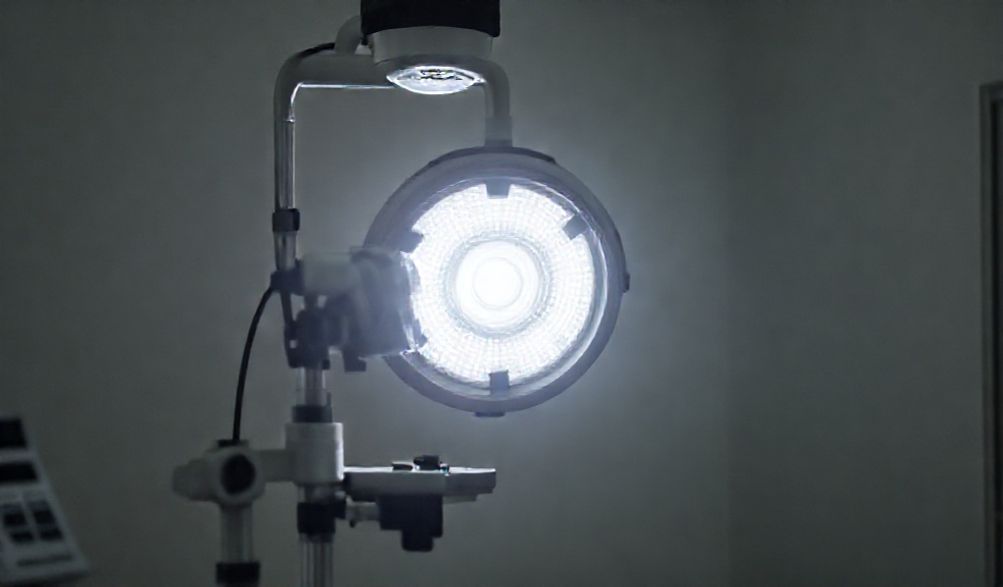
Examination Lights: A Guide to Types, Features, and Optimal Selection for Medical Professionals
In the intricate ecosystem of a modern medical facility, where advanced imaging systems and digital records command attention, the humble de examen versátil often operates in the background. Yet, its role is anything but minor. As the primary tool for visual diagnosis, the quality of illumination it provides is a fundamental pillar of clinical accuracy, procedural efficiency, and patient safety. An inadequate or poorly chosen light can cast shadows of doubt—literally and figuratively—on a practitioner’s ability to assess, diagnose, and treat.
This guide is designed to illuminate the critical considerations surrounding medical examination lights. Whether you are a healthcare administrator overseeing a facility upgrade, a procurement specialist evaluating options, or a clinician seeking the best tool for your practice, understanding the technology, applications, and selection criteria is essential. We will synthesize insights from clinical ergonomics, manufacturer innovations, and best practice standards to empower you to make an informed investment—one that enhances patient outcomes, supports clinician well-being, and delivers long-term value.
The Critical Role of Proper Illumination in Medical Examination
Before delving into specifications, it’s vital to understand por qué the right de examen versátil is so crucial. It transcends simple visibility; it is an active diagnostic instrument.
Impact on Diagnostic Accuracy and Patient Outcomes
The human eye is a remarkable diagnostic tool, but it is entirely dependent on the quality of light it receives. Suboptimal lighting can obscure the subtle visual cues that are critical for accurate diagnosis.
* Shadow Reduction & Detail: Un sistema de alta calidad de examen versátil is engineered to minimize harsh shadows that can hide lesions, variations in skin texture, or the margins of a wound. This is often achieved through multiple LED point sources or specialized reflectors that fill the field with even light.
* Índice de Reproducción Cromática (IRC): This is perhaps the most critical metric for diagnosis. A bruise, cyanosis, jaundice, or erythema must be seen in its true color. A light with a low CRI can distort these hues, potentially leading to misdiagnosis. Studies have shown that high-CRI lighting increases diagnostic confidence, particularly in fields like dermatology, dentistry, and surgery where color differentiation is paramount.
* Adequate Intensity: Insufficient light intensity (measured in Lux) can strain the eyes and mask fine details. The appropriate level of illuminance ensures that clinicians can see clearly without having to bring the light dangerously close to the patient or squint, facilitating a more thorough and confident examination.
Ergonomics and Clinician Well-being
Clinician burnout and musculoskeletal injuries are significant concerns in healthcare. The de examen versátil can be a contributor or a mitigator.
* Adjustability & Glare Control: A light that is difficult to position or that creates glare on reflective surfaces (like instruments or wet tissue) forces practitioners into awkward postures—craning their neck, hunching over, or turning away. Modern lights with smooth, counterbalanced arms and anti-glare optics allow for effortless, one-handed positioning, reducing physical strain over long clinical days.
* Reducing Eye Fatigue: Consistent, flicker-free light with high color accuracy reduces the constant muscular adjustments the eyes must make to compensate for poor lighting, thereby decreasing visual fatigue and headaches.
Patient Comfort and Safety
The patient’s experience is also directly affected by the de examen versátil.
* Minimal Heat Emission: Older halogen lights are notorious for radiating significant heat, which can be uncomfortable for the patient and potentially dry out exposed tissues. LED-based examination lights produce negligible radiant heat, enhancing patient comfort, especially during prolonged procedures.
* Quiet Operation & Non-Intrusive Design: The hum of a cooling fan or the noise of stiff mechanical joints can increase patient anxiety. Furthermore, a light that is easy to position accurately minimizes the need for repeated adjustments around a nervous patient, creating a calmer, more professional environment.
Key Technical Specifications and Features Explained
Navigating product specifications can be daunting. Here’s a breakdown of the key terms and what they mean for clinical use.
Understanding Light Quality Metrics: Lux, CRI, and CCT
- Lux (Illuminance): This measures the intensity of light falling on a surface. General examination rooms typically require 15,000 to 30,000 Lux at the focal point. For detailed procedures like minor surgery, suturing, or wound debridement, intensities of 40,000 to 100,000 Lux or more are necessary to illuminate deep cavities and reveal fine detail.
- Índice de Reproducción Cromática (IRC): Rated on a scale of 0 to 100, CRI indicates how accurately a light source reveals the true colors of objects compared to natural sunlight. For any diagnostic task, an de examen versátil con una CRI of 90 or higher is essential. A CRI of 95+ is considered excellent for critical color discrimination.
- Temperatura de Color Correlacionada (CCT): Measured in Kelvin (K), CCT describes the apparent “warmth” or “coolness” of white light.
- Lower CCT (3000K-4000K): Appears “warm” or yellowish. It can be soothing but may not provide the optimal contrast for all tissues.
- Higher CCT (4500K-5500K+): Appears “cool” or bluish-white. This is often preferred for clinical and surgical settings as it enhances contrast and is perceived as brighter, aiding in the detection of subtle variations.
Light Source Technology: LED vs. Halogen
The shift from halogen to LED represents the most significant evolution in de examen versátil technology.
* La iluminación integrada es un factor revolucionario. The current industry standard.
* Beneficios: Extremely energy-efficient (saving up to 80% over halogen), exceptionally long lifespan (50,000+ hours), virtually no infrared heat emission, and instant-on at full brightness. Modern LEDs also achieve superb CRI scores.
* Consideración: Quality varies. Look for medical-grade LEDs with stable drivers to prevent flicker.
* Halogen Lights: The traditional technology.
* Characteristics: Produce a warm light, but generate intense heat and have a short bulb life (1,000-2,000 hours). They gradually dim over time and consume significant energy.
* Current Use: Largely phased out in favor of LED, but may still be found in some older installations or niche applications where specific spectral qualities are desired.
Mechanical Design and Functionality
The best light is useless if you can’t position it correctly or keep it clean.
* Movilidad y Posicionamiento:
* Montado en Techo: Offers the greatest freedom of movement, keeps floors clear, and is ideal for operating rooms, procedure rooms, and busy exam rooms. Requires professional installation.
* Montado en Pared: Saves floor space and provides good coverage for a dedicated exam area.
* De Pie: Portable and flexible, perfect for multi-purpose rooms or clinics with changing layouts. Look for a stable base and arms with a wide range of motion.
* Características Clave: Smooth, counterbalanced articulation (often with sealed, maintenance-free joints), a long reach, and intuitive handles are critical for ergonomics.
* Sterilization and Hygiene: In the era of infection control, the de examen versátil is a fomite risk. Designs should feature:
* Seamless, smooth surfaces that can be easily wiped down with hospital-grade disinfectants.
* Light handles designed for single-use disposable sleeves or that are fully autoclavable.
* Sealed joints and switches that prevent fluid ingress.
Types of Examination Lights and Their Primary Applications
Not all clinical tasks require the same tool. Matching the light to the application is key.
General Diagnostic Examination Lights
The workhorse of primary care, pediatrics, and consulting rooms.
* Purpose: Routine physical exams, otoscopy, basic wound inspection.
* Características: Good, adjustable intensity (20,000-40,000 Lux), high CRI (>90), flexible gooseneck or multi-joint arm for easy positioning, and often a combination of spot and broad field settings.
Procedure/Surgical Examination Lights
For environments where minor surgery, detailed wound care, suturing, or dermatological procedures are performed.
* Purpose: Providing intense, shadow-reduced light for deep cavity illumination and fine detail work.
* Características: Higher intensity (50,000-150,000+ Lux), often with multiple light heads or a ring design to eliminate shadows from the clinician’s hands/head. Focus is on deep cavity access and superior color rendering.
Specialized Examination Lights
- ENT and Dental Lights: Feature a very focused, coaxial beam (where the light is aligned with the clinician’s line of sight) to illuminate deep, narrow cavities like the ear canal, nose, or oral cavity. Often head-mounted or on a specific procedural chair.
- Vaginal Speculum Lights & Penlights: Small, focused lights for specific localized exams. Speculum lights are integrated or attachable for gynecological procedures. Penlights are handheld for pupil checks and quick assessments.
- Portable and Battery-Operated Lights: Essential for emergency response, home healthcare, triage, and power-outage scenarios. Prioritize brightness, battery life, durability, and a hands-free option (e.g., headband).
How to Select the Right Examination Light: A Procurement Checklist
Use this structured approach to evaluate your needs and potential purchases.
1. Assessing Your Clinical Needs and Workflow
- Audit Procedures: What specific examinations and procedures will the light be used for? (e.g., general physical vs. laceration repair).
- Map the Room: Consider room size, ceiling height, exam table/bed location, and potential obstacles. Will a floor, wall, or ceiling mount work best?
- Involve End-Users: Have clinicians who will use the light daily evaluate its reach, ease of positioning, and handle comfort.
2. Evaluating Total Cost of Ownership (TCO)
Mire más allá del precio de etiqueta.
* Costo Inicial: Purchase price of the light and installation.
* Costo Operativo: LED lights drastically reduce electricity bills.
* Costo de Mantenimiento: Halogen requires frequent, costly bulb replacements. Quality LED systems have minimal maintenance. Factor in the cost and terms of the warranty and service agreements.
3. Compliance and Safety Standards
This is non-negotiable. Ensure any de examen versátil under consideration is:
* Certified as a medical device (e.g., FDA Class I or II, CE marked as an MD).
* Compliant with relevant international standards (e.g., IEC 60601-1 for electrical safety, ISO 9680 for performance).
* Constructed with biocompatible, cleanable materials suitable for the clinical environment.
Instalación, Mantenimiento y Mejores Prácticas
Protect your investment and ensure optimal performance with proper care.
Instalación Profesional y Calibración Inicial
Especially for ceiling-mounted systems, professional installation by a qualified technician is mandatory. They will ensure it is securely anchored to structural supports, correctly wired, and calibrated for smooth, balanced movement. DIY installation risks equipment failure and serious injury.
Routine Cleaning and Preventive Maintenance
- Daily/After Each Patient: Wipe down all handles, touch surfaces, and the light head with an approved disinfectant. Replace disposable handle sleeves.
- Mensual/Trimestral: Check all articulation joints for smooth movement. Wipe down arms and poles to remove dust.
- Anualmente: Include the de examen versátil in your facility’s biomedical equipment preventive maintenance schedule. A technician should verify light output (Lux), check electrical safety, and lubricate joints if specified by the manufacturer.
Solución de Problemas Comunes
- Flickering Light (LED): Usually indicates a failing LED driver or power supply. Contact service.
- Stiff or Drooping Movement: Joints may need inspection or recalibration. Do not force them.
- Diminished Light Output: On an LED light, this could signal the end of the diode array’s functional life. For halogen, it’s time for a bulb replacement.
Sección de Preguntas Frecuentes
Q1: What is the most important feature to look for in an examination light?
R: While a combination of features is needed, Alto Índice de Reproducción Cromática (IRC >90) es la base no negociable para la precisión diagnóstica. Garantiza que usted vea el color verdadero de los tejidos. Esto debe combinarse con una intensidad (Lux) adecuada y ajustable para sus tareas específicas.
P2: ¿Son realmente mejores las lámparas de examen LED que las halógenas?
R: Para la gran mayoría de las aplicaciones clínicas, sí. La tecnología LED ofrece ventajas decisivas: eficiencia energética superior (menores costos operativos), una vida útil 25-50 veces mayor que la halógena, emisión mínima de calor (mejora la comodidad del paciente) y una salida de luz instantánea y consistente con un excelente IRC. El mayor costo inicial se compensa rápidamente con los ahorros.
P3: ¿Cuánta intensidad de luz (Lux) se necesita para un consultorio estándar?
R: Para exámenes físicos generales, una luz capaz de proporcionar 15.000 a 30.000 Lux en el punto focal suele ser suficiente. Para procedimientos quirúrgicos menores (sutura, cuidado de heridas), los requisitos oscilan entre 40.000 y 100.000 Lux o más. Consulte siempre las pautas específicas de la especialidad.
P4: ¿Puedo instalar yo mismo una lámpara de examen montada en el techo?
R: Se desaconseja firmemente y a menudo viola los códigos de seguridad. Los sistemas montados en el techo son pesados y requieren un montaje seguro en las vigas del techo, conexiones eléctricas adecuadas y calibración. Una instalación incorrecta supone un grave riesgo de seguridad. Utilice siempre a un profesional cualificado.
P5: ¿Con qué frecuencia debe mantenerse una lámpara de examen?
R: La limpieza a nivel de usuario (desinfección de mangos y superficies) debe realizarse después de cada paciente. Una inspección técnica completa—verificación de la función mecánica, seguridad eléctrica y salida de luz—debe realizarse anualmente como parte del programa programado de mantenimiento preventivo de su centro, siguiendo el manual de servicio del fabricante.
Conclusión
Seleccionar la de examen versátil es una decisión estratégica con impactos directos y diarios en la atención clínica. Es una inversión en precisión diagnóstica, ergonomía del clínico y seguridad del paciente. Al priorizar la iluminación de alta fidelidad (IRC >90 y Lux apropiado), adoptar la fiabilidad y eficiencia de la tecnología LED moderna, e insistir en el diseño ergonómico y estándares de cumplimiento rigurosos, usted dota a su consulta de una herramienta fundamental para una prestación de atención sanitaria superior.
La elección óptima surge de alinear las especificaciones técnicas con el flujo de trabajo clínico real. Recomendamos involucrar a su equipo clínico en demostraciones, probar las luces en su entorno real y analizar el costo total de propiedad a largo plazo. Al hacerlo, se asegura de que esta pieza crítica del equipo ilumine la excelencia en la atención al paciente en los años venideros.
p>