
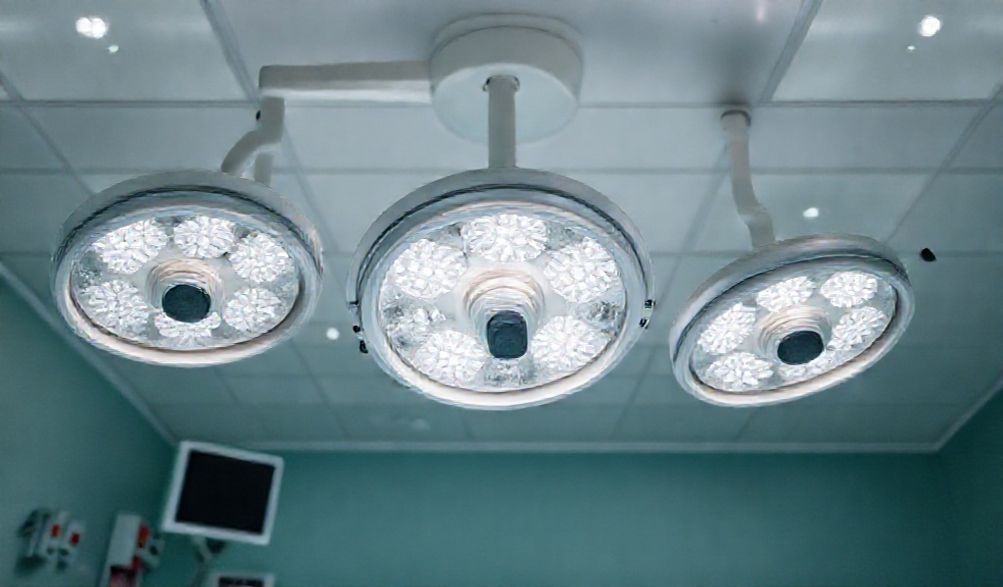
The Complete Guide to Buying Operating Room Lights for Your Medical Facility
In the high-stakes environment of an operating room, every detail matters. From the skill of the surgical team to the sterility of the instruments, each element contributes to a single outcome: patient safety and successful recovery. Among these critical components, one often operates in plain sight yet is profoundly complex in its function—the luz quirúrgica. It is not merely a lamp illuminating a workspace; it is a sophisticated piece of medical technology that directly influences diagnostic accuracy, procedural precision, and team endurance. Purchasing operating room lights for sale is therefore a strategic investment in healthcare quality, not just a routine procurement task.
This guide is designed to cut through the technical jargon and market complexity. Its purpose is to empower healthcare administrators, facility managers, procurement officers, and surgeons with expert, experience-driven knowLEDge. We will translate critical specifications, demystify compliance standards, and outline a practical procurement process. By focusing on the pillars of illumination quality, technological reliability, and long-term value, this resource aims to equip you with the confidence to make an informed decision that will serve your facility, your staff, and your patients for years to come.
Why Surgical Lighting is a Critical Investment in Patient Care
Viewing surgical lighting through a purely financial lens is a common pitfall. While budget is a constraint, the true lens must be clinical efficacy. The right lighting system is a foundational investment in patient care, impacting outcomes, team performance, and the facility’s long-term operational health.
Impact on Surgical Outcomes
The primary user of an OR light is the surgeon, and their visual perception is paramount. Inadequate lighting can obscure critical details, leading to misdiagnosis of tissue viability, difficulty distinguishing between similar structures, and increased procedural time. Key lighting qualities directly affect outcomes:
* Reducción de Sombras: Deep, contrasting shadows can hide bleeding points or obscure anatomical planes. Advanced lights use multiple LED point sources or specialized reflectors to fill cavities with homogeneous light, minimizing obstructive shadows.
* Color Rendering: Accurate tissue differentiation—between arterial blood and venous blood, healthy and necrotic tissue, or a nerve and a tendon—depends on true color representation. A light with poor color rendering can alter these subtle hues, risking clinical judgment.
* Intensity & Adjustability: Different procedures demand different light levels. A superficial procedure may require less intensity than a deep-cavity cardiothoracic or spinal surgery. The ability to instantly adjust intensity without color shift allows the surgeon to adapt to the procedure’s dynamic needs.
Enhancing Surgical Team Performance & Safety
A successful surgery depends on a team operating at peak performance, and lighting plays a silent yet significant role in their ergonomics and comfort.
* Ergonomía: Surgeons and nurses often maintain static, strained positions for hours. A light with poor maneuverability or that causes glare and eye strain contributes to fatigue. Modern lights with smooth, balanced articulation reduce physical strain, allowing the team to focus on the patient.
* Gestión Térmica: Traditional halogen lights emitted significant radiant heat, causing discomfort for the patient (especially in open cavities) and the surgical team’s heads and hands. LED technology has virtually eliminated this issue, creating a cooler, more comfortable OR environment.
* Sterility Maintenance: Lighting design must support, not hinder, aseptic technique. Sealed surfaces that are easy to clean, handles that can be draped or are touchless, and designs that minimize dust traps are essential for infection control.
Long-Term Value & Total Cost of Ownership (TCO)
The cheapest upfront option is often the most expensive long-term choice. Evaluating operating room lights for sale requires a Total Cost of Ownership (TCO) analysis.
* Los LED consumen hasta un 80% menos de energía que los sistemas halógenos para producir la misma o mayor cantidad de luz, reduciendo los costes de servicios. LED systems consume up to 80% less energy than traditional halogen or metal halide lights, leading to substantial savings on utility bills over a decade or more of operation.
* Durability & Lifespan: LEDs have lifespans measured in tens of thousands of hours, drastically reducing the frequency and cost of bulb replacements. Robust mechanical construction minimizes downtime from repairs.
* Maintenance & Service: Consider the cost and availability of service contracts, spare parts, and the mean time to repair. A reliable vendor with a strong service network adds immense value by ensuring uptime.
Key Technical Specifications to Evaluate Before You Buy
Navigating product brochures requires understanding the language of light. Here are the non-negotiable technical specs to scrutinize.
Illumination Metrics: Lux & Lumen Output
- El lux is the measure of illuminance (light intensity) on a surface. For deep-cavity surgery, a central illuminance of 160,000 lux or more is now considered standard for high-performance lights, with some exceeding 200,000 lux. Ensure the quoted lux is measured at a realistic depth (e.g., 1 meter from the light head).
- Lumens measure the total light output of the source. While relevant, lux is the more critical metric as it tells you how much light actually reaches the surgical site.
Light Field & Shadow Control
The quality of light is as important as its quantity.
* Depth of Field: This is the range within which the light maintains a focused, high-intensity beam. A large depth of field (e.g., 25cm to 150cm) means the light stays bright and uniform even as the surgeon moves instruments in and out of a deep wound.
* Diámetro del Campo: The size of the illuminated area. It should be adjustable, allowing a focused spot for precision work or a wide flood for larger surgical fields.
* Gestión de Sombras: Look for technologies like “multi-point source LED arrays” or “patented reflector systems.” These designs ensure that if one LED’s light path is blocked by a head or instrument, the others fill in the gap, dramatically reducing the contrast and depth of shadows.
Color Temperature & Rendering Index (CRI)
- Color Temperature (Kelvin, K): This describes the “warmth” or “coolness” of white light. A range of 4000K to 5000K is typical for surgery. 4000K is slightly warmer, while 5000K is a cooler, daylight-like white that many surgeons prefer for its perceived clarity and alertness.
- Índice de Reproducción Cromática (IRC): This is a score (up to 100) that measures a light’s ability to reveal the true colors of objects compared to natural light. For surgery, a CRI of ≥90 is essential, with ≥95 being ideal for specialties like plastic surgery or oncology where tissue color is a critical diagnostic cue.
LED Technology Advantages
Modern surgical lighting is almost exclusively LED-based, and for compelling reasons:
* Larga vida útil: 50,000 to 60,000 hours of life, translating to over a decade of typical OR use.
* Encendido/Apagado Instantáneo y Atenuación: No warm-up time, and dimming is seamless without color shift.
* Low Heat Emission: Nearly all energy is converted to light, not infrared radiation, enhancing patient and staff comfort.
* Los LED consumen hasta un 80% menos de energía que los sistemas halógenos para producir la misma o mayor cantidad de luz, reduciendo los costes de servicios. Drastically reduced power consumption lowers operational costs and environmental impact.
Navigating Compliance, Standards, and Facility Requirements
A brilliant light is useless if it isn’t safe, compliant, or compatible with your OR.
Essential Regulatory Certifications
These are your baseline safety and quality filters. Never consider equipment without them.
* Autorización FDA 510(k): Mandatory for selling medical devices in the United States, indicating the light is substantially equivalent to a legally marketed predicate device.
* ISO 13485 Certification: An international standard that specifies requirements for a comprehensive quality management system for the design and manufacture of medical devices. It signals consistent, reliable production.
* IEC 60601-1 Series: The core set of international standards for the basic safety and essential performance of medical electrical equipment. Compliance is non-negotiable for patient and operator safety.
Integrating with Your Operating Room Infrastructure
The light must work within your physical and digital OR ecosystem.
* Mounting Systems: Choose between single-point fixed ceiling mounts, track systems (allowing lateral movement along a rail), or multi-jointed booms. Consider structural ceiling load, required clearance, and flexibility for different table positions.
* Reach & Maneuverability: Evaluate the boom’s reach (horizontal and vertical), its articulation points, and its balance. Can it position the light head over any part of the patient from any angle without drifting?
* Control Systems: Options include traditional manual handles, touch panels on the light head or a separate pendant, touchless gesture control, and even voice activation. The goal is to allow adjustment while maintaining a sterile field.
* HVAC & Sterile Field: The light’s physical profile and air displacement should not disrupt laminar airflow systems critical to infection control.
Planning for the Future: Scalability & Service
Your investment should be protected for the long term.
* Vendor Service Network: What is the vendor’s mean time to repair (MTTR)? Do they have certified biomedical technicians in your region? What are the terms of their service contract?
* Spare Parts & Warranty: A strong warranty (e.g., 5+ years on LEDs, 2+ years on parts and labor) reflects confidence in the product. Ensure spare parts will be available for the expected lifespan of the light.
* Upgrade Paths & Integration: Can the system integrate with OR integration suites, video recording devices, or future technologies? Some systems allow for software upgrades or adding secondary cameras.
Una Guía Paso a Paso para el Proceso de Adquisición
A structured approach prevents oversights and ensures all stakeholder needs are met.
Conducting a Needs Assessment for Your ORs
Avoid a one-size-fits-all approach. Form a multidisciplinary committee including:
* Clinical: Surgeons (from different specialties), circulating nurses, anesthesiologists.
* Technical: Biomedical/clinical engineering staff.
* Operational: Facilities manager, procurement officer.
* Tasks: Audit current lights—what are the specific complaints? Define procedural requirements (e.g., neurosurgeons may prioritize depth of field, while plastic surgeons focus on CRI). Set a realistic budget range based on TCO.
Researching Reputable Manufacturers & Suppliers
Look for vendors who demonstrate Experiencia, Experticia, Autoridad y Confiabilidad (E-E-A-T).
* Track Record: How long have they been in the surgical lighting business?
* Clinical Evidence: Do they provide white papers, clinical studies, or case studies?
* Portfolio Breadth: Can they offer solutions for different OR types (general, hybrid, minimally invasive)?
* Referencias: Ask for and contact references from similar-sized facilities.
Requesting Quotes & Comparing Proposals
Create a detailed Request for Proposal (RFP) checklist that goes beyond price:
* Full technical specifications sheet.
* Detailed warranty terms and exclusions.
* Itemized cost breakdown (hardware, installation, training, first-year service).
* Installation timeline and process.
* Service contract options and costs.
The Importance of a Clinical Demonstration & Trial
This is the most critical step for Experiencia-based validation. Insist on a live, in-situ demonstration or trial period in an actual OR (or realistic mock-up).
* Have surgeons perform mock procedures or use tissue models.
* Test shadow control by simulating deep cavities.
* Evaluate the intuitiveness of controls and ease of maneuverability.
* Get feedback from the entire surgical team, including nurses on cleaning and draping procedures.
Sección de Preguntas Frecuentes
Q1: What is the average lifespan of modern LED operating room lights?
A1: High-quality LED surgical lights typically have a rated lifespan of 50,000 to 60,000 hours. This equates to over 15 years of standard operating room use. Actual lifespan can be influenced by usage cycles, the quality of the LED’s thermal management system, and environmental factors.
P2: ¿Puedo modernizar mi sistema de lámpara quirúrgica existente con nueva tecnología LED?
R2: Algunos fabricantes ofrecen kits de actualización a LED para modelos antiguos específicos. Sin embargo, la compatibilidad es limitada. Si bien la modernización puede ser una opción de menor costo, a menudo implica compromisos en el rendimiento, la garantía, y puede no incluir características modernas como controles avanzados o una gestión térmica mejorada. Un reemplazo completo del sistema suele ofrecer un valor clínico y económico superior a largo plazo.
P3: ¿Cuáles son las preguntas más importantes que debo hacer a un proveedor durante una demostración?
R3:
* “¿Puede demostrar la reducción de sombras simulando un procedimiento en cavidad profunda con múltiples instrumentos?”
* “¿Cómo garantiza que la cabeza luminosa y los controles puedan usarse manteniendo un campo estéril?”
* “¿Cuál es su Tiempo Medio Para Reparar (TMPR) documentado para problemas comunes?”
* “¿Puede proporcionar una comparación lado a lado del IRC y la temperatura de color de su lámpara con nuestro sistema actual, utilizando un modelo de tejido?”
* “¿Qué incluye su instalación estándar y capacitación clínica?”
P4: ¿Cómo presupuesto para lámparas de quirófano? ¿Hay opciones de financiamiento disponibles?
R4: Presupueste tres componentes principales: 1) Compra del hardware, 2) Instalación/puesta en marcha profesional, y 3) Contratos de servicio/mantenimiento continuo. Analice siempre el Costo Total de Propiedad. Sí, la mayoría de los proveedores reconocidos ofrecen modelos de financiamiento, arrendamiento o suscripción que pueden ayudar a gestionar el gasto de capital distribuyendo los costos en el tiempo, a menudo incluyendo el servicio en el acuerdo.
P5: ¿Qué capacitación y soporte debo esperar del proveedor?
R5: El soporte integral debe incluir:
* Supervisión de la instalación in situ por un ingeniero certificado.
* Capacitación clínica práctica para cirujanos y personal de quirófano sobre operación, posicionamiento y protocolos de limpieza.
* Capacitación biomédica/de ingeniería para su personal interno sobre solución básica de problemas y mantenimiento preventivo.
* Acceso a soporte técnico 24/7 y una ruta de escalada clara para problemas urgentes.
Conclusión
Seleccionar la operating room lights for sale es una decisión construida sobre tres pilares: el rendimiento clínico validada por la experiencia del cirujano, fiabilidad técnica asegurada por especificaciones y certificaciones robustas, y capacidad de servicio a largo plazo garantizada por una asociación con un proveedor reputado. Es una inversión que rinde dividendos en una mayor seguridad del paciente, mejores resultados quirúrgicos y eficiencia operativa durante años.
Esta guía proporciona el marco, pero su proceso debe basarse en el E-E-A-T principio de buscar conocimiento experto, exigir evidencia autorizada y asociarse con proveedores confiables. Deje que una investigación exhaustiva, pruebas clínicas prácticas y la opinión de todo su equipo guíen su elección final. Al hacerlo, va más allá de una simple compra para realizar una inversión fundamental en el avance del estándar de atención de su institución.
p>