
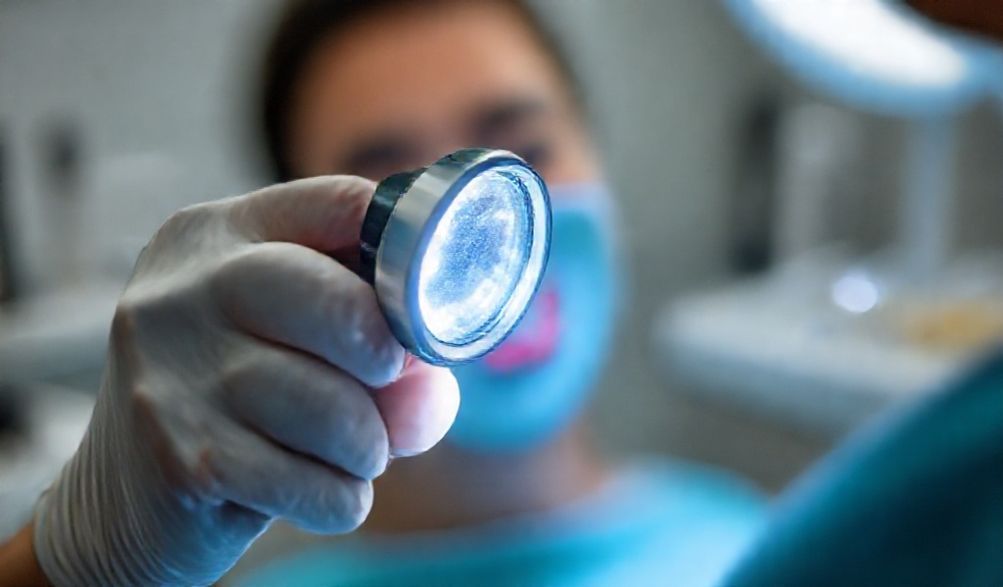
The Ultimate Guide to Cordless Dental Loupe Lights: Benefits, Features & How to Choose
Introduction
Te inclinas, concentrándote intensamente en una sutil línea de margen. Tu cuello está torcido, tu espalda comienza a protestar, y justo cuando te mueves para buscar un mejor ángulo, tu headlamp cord snags on the chair, pulling your loupes askew and casting a frustrating shadow across your operative field. Sound familiar? For decades, dental professionals have battled the twin foes of suboptimal lighting and restrictive cords, accepting them as unavoidable occupational hazards.
But what if you could eliminate those shadows, achieve perfect color accuracy, and move with complete, unencumbered freedom throughout your operatory? The critical role of illumination in dentistry cannot be overstated—it is the foundation of precision, directly influencing diagnostic accuracy, procedural success, and, ultimately, patient outcomes. More than that, it is intrinsically linked to your own ergonomic health and career longevity.
Enter the cordless dental loupe light: a transformative advancement that is rapidly moving from a luxury to a standard of care in modern practices. This guide is designed to be your comprehensive, unbiased resource. We will move beyond marketing hype to explore the tangible benefits, dissect the key features that matter, and provide a clear framework for choosing the right system for your unique practice. The insights here are drawn from a synthesis of detailed industry research, manufacturer specifications, and, most importantly, the real-world experiences and feedback of practicing dentists and hygienists who have made the switch.
Why Illumination is Critical in Modern Dentistry
Before diving into the cordless revolution, it’s essential to understand why lighting is so much more than just “turning on a lamp.”
The Link Between Lighting and Clinical Precision
Think of your loupe light as a surgical spotlight for micro-dentistry. Its primary job is to enhance visual data. Superior illumination directly improves depth perception, allowing you to differentiate between enamel, dentin, and caries with greater confidence. It dramatically reduces shadows, illuminating the depths of a preparation or the subgingival margin of a crown. Perhaps most crucially, high-quality lighting provides excellent color accuracy. This is vital for accurate shade matching in restorative work and for distinguishing between healthy and pathological tissue. A shadowy, yellow-tinged light can mean the difference between a perfectly sealed margin and a future failure.
Ergonomics and Practitioner Health: Beyond Just Seeing Better
Poor lighting is a silent ergonomic killer. When you can’t see clearly, you instinctively compensate: you crane your neck forward, hunch your shoulders, and twist your spine to get your eyes closer to the target. This sustained, non-neutral posture is a primary contributor to the musculoskeletal disorders that plague our profession. A bright, focused light source allows you to maintain a more upright, healthy posture because you can see perfectly from a more natural position. Investing in proper illumination is, therefore, a direct investment in your physical well-being and career sustainability.
The Limitations of Traditional Overhead and Wired Loupe Lights
Traditional solutions have significant drawbacks. Overhead operatory lights are great for general visibility but create shadows the moment your head moves between the light source and the patient’s mouth. They also often force you into awkward positions to avoid casting your own shadow. Wired loupe lights solved the shadow problem by placing the light source near your line of sight, but they introduced a new constraint: the tether. The cord limits your range of motion, can snag, adds clutter to the operatory, and requires a power source that may not be conveniently located. Furthermore, older wired systems often used halogen bulbs, which generate significant heat and have inconsistent color temperature over their lifespan.
The Advantages of Going Cordless: More Than Just Convenience
The shift to cordless technology addresses these historical limitations head-on, offering benefits that fundamentally improve the clinical experience.
Unmatched Freedom of Movement and Flexibility
This is the most immediately apparent advantage. A cordless dental loupe light liberates you from your chair. You can move from chair to chair in a multi-operatory practice without unplugging and re-plugging. You can adjust your position dynamically during a procedure—leaning left, right, or standing—without a second thought about cord management. This fluidity is invaluable for procedures that require changing angles or for specialists who work in different practice settings.
Enhanced Patient Comfort and Safety
A cleaner, less cluttered operatory is a less intimidating one for patients. Removing trailing wires eliminates a trip hazard for both staff and patients, enhancing overall safety. The setup appears more modern and streamlined, contributing to a positive patient perception of your practice’s technology and care.
Superior Lighting Performance and Consistency
Modern cordless lights leverage advanced LED technology, which offers significant advantages. LEDs provide a consistent, cool “daylight” color temperature (typically around 5500K-6000K), which does not degrade over time. They also boast a high Color Rendering Index (CRI), often above 90, meaning they render colors with exceptional accuracy—critical for distinguishing tissue shades. Furthermore, LEDs are incredibly energy-efficient, directing more power into visible light with minimal waste heat compared to old halogen systems, making them more comfortable for both clinician and patient.
Long-Term Cost and Operational Efficiency
While the upfront cost may be higher, the long-term value is compelling. LED light engines have lifespans measured in tens of thousands of hours, virtually eliminating bulb replacement costs. The rechargeable lithium-ion batteries are designed for hundreds of charge cycles. The efficiency of a cordless system means no more replacing worn-out cords or repairing damaged plugs. When you factor in reduced maintenance, energy savings, and the potential productivity gain from seamless workflow, the total cost of ownership often favors the cordless model.
Key Features to Evaluate When Choosing a Cordless Loupe Light
Not all cordless lights are created equal. Use this checklist to compare models critically.
Light Source & Optical Quality
- LED Type & Lumens: Look for high-quality LEDs. Lumens measure total light output; for dental loupes, a range of 40,000 to 100,000+ lux at the working distance is common. More important than peak output is usable, even light.
- Un punto A perfect blend of a focused “spot” for central illumination and a softer “flood” to eliminate peripheral shadows is ideal. Avoid lights with a hard, tunnel-vision spot.
- Temperatura de Color e IRC: Aim for 5500K-6000K (daylight white). A CRI of 90+ is excellent for true tissue color rendition.
Battery Life & Charging System
- Real-World Runtime: Manufacturers may list “up to” times. Seek reviews for real-world usage on medium brightness. A minimum of 4-6 hours of continuous use is recommended to cover a full clinical day.
- Charging Time & Indicators: Fast charging (1-2 hours) is a major convenience. Clear battery level indicators (LED lights on the unit or a companion charger) are essential.
- Hot-Swappable Batteries: A premium feature. Having a spare battery that you can swap in seconds without tools guarantees you’ll never be without light, effectively providing unlimited runtime.
Mounting & Comfort Design
- Frame-Mounted vs. Headband-Mounted: Frame-mounted lights attach directly to your loupe frame, offering a lightweight, integrated feel. Headband-mounted systems are independent of your loupes, which can be beneficial if you use different frames or share the light. Headbands can sometimes feel more stable for heavier units.
- Peso y equilibrio: The total system weight (light head + battery) should be under 100 grams for optimal comfort. How the weight is distributed is key—a well-balanced system will feel lighter than its specs suggest.
- Ajustabilidad: The light head should be easily adjustable in multiple planes to perfectly align the beam with your line of sight through your loupes.
Durability & Build Quality
- Materiales: Medical-grade polymers and metals should be used. The device will be exposed to clinical environments.
- Clasificación IP: This indicates ingress protection against solids and liquids. An IP rating (e.g., IP54) is a strong indicator of resistance to sprays and splashes during cleaning. Not all lights are fully immersible.
- Garantía: A robust warranty (2-3 years) reflects manufacturer confidence. Read the fine print to understand what is covered, especially regarding the battery.
Controls & Usability
- Brightness Adjustment: Easy, intuitive control is a must—whether a dial, touch sensor, or button. Being able to adjust brightness without breaking sterility is a plus.
- Button Placement: Controls should be within easy reach but not prone to accidental activation.
- Smart Features: Some models offer memory settings that recall your preferred brightness or automatic dimming when not in use to conserve battery.
How to Integrate a Cordless Light into Your Daily Practice
Adopting new technology requires slight adjustments to your routine.
Developing an Efficient Charging Routine
Treat your cordless dental loupe light like your phone. Establish a habit of placing it on its charging dock at the end of every clinical day. If your system uses hot-swappable batteries, charge the spare battery simultaneously. Consider having a dedicated charging station in your sterilization or break area to make this routine effortless.
Proper Cleaning, Maintenance, and Sterilization Protocols
Siga siempre las instrucciones del fabricante. Generally, the process involves:
1. Removing the battery before cleaning.
2. Wiping the light head and cord (if any) with a clinic-approved, non-abrasive disinfectant wipe. Avoid excessive moisture, especially around seams and buttons, unless the unit has a high IP rating for water resistance.
3. Never immersing the light head or battery unit in liquid or autoclaving it unless explicitly stated by the manufacturer.
4. Periodically checking the mount and connections for security.
Pairing with Your Dental Loupes for Optimal Performance
The light must be an extension of your vision. When mounting:
* Ensure the light beam’s “hot spot” is centered in your loupes’ field of view at your standard working distance.
* Adjust the light head so it does not create glare or reflection off your lenses.
* Verify that the mounting does not interfere with the fit or comfort of your loupes. The goal is a seamless, unified system.
Preguntas Frecuentes (FAQ)
P: ¿Cuánto suele durar la batería con una sola carga?
R: Most high-quality models offer between 4 to 8 hours of continuous use on a medium brightness setting, which is typically sufficient for a full clinical day. Battery life decreases at maximum brightness. Always check the specific model’s specifications and seek out user reviews for real-world performance data.
Q: Can I use a cordless light with any brand of dental loupes?
R: Many are marketed as “universal,” but compatibility is not guaranteed. It depends entirely on the mounting clip or adapter. You must verify that the light’s mounting system is designed to fit the bridge or temple width of your specific loupe frame. Some manufacturers sell integrated loupe-and-light systems for a guaranteed fit.
Q: Are cordless loupe lights as bright as wired ones?
R: Yes, and often brighter. Modern cordless LED lights frequently match or exceed the luminous output of older wired halogen systems. They do so more efficiently, with less heat generation and more consistent color quality over time.
Q: What is the typical warranty, and what does it cover?
R: Warranties typically range from 1 to 3 years. They generally cover defects in materials and workmanship under normal use. Importantly, they often do no cover physical damage from drops, battery capacity degradation due to normal wear, or damage from improper cleaning. Reading the warranty terms carefully is crucial.
Q: How do I safely clean and disinfect the light head?
R: The golden rule is to follow the manufacturer’s instructions precisely. In the absence of specific guidelines, a conservative approach is to wipe the light head gently with a soft cloth dampened with a clinic-approved surface disinfectant (like an isopropyl alcohol-based wipe), ensuring no excess liquid runs into seams or ports. Never spray disinfectant directly onto the unit.
Conclusión
La transición a una luz inalámbrica cordless dental loupe light is more than a simple gear upgrade; it represents a strategic investment in your clinical precision, physical health, and practice efficiency. By eliminating the tether, you gain unparalleled freedom. By harnessing advanced LED optics, you achieve visual clarity that enhances every procedure. The benefits—from reduced musculoskeletal strain to a safer, cleaner operatory—compound over time, paying dividends in both professional satisfaction and patient care.
Use the feature breakdown in this guide as your personal checklist. Prioritize what matters most for your specialty and workflow: Is it all-day battery life, the perfect beam pattern, or ultimate comfort? Remember, the best choice is the one that balances superior performance with reliable, day-in, day-out usability.
We encourage you to take the next step with confidence. Consult with reputable dental equipment suppliers, ask for demonstrations, and inquire about trial periods whenever possible. Most importantly, talk to colleagues who have already integrated cordless lighting into their practices. Their firsthand, long-term feedback on durability, support, and real-world performance will be one of your most valuable resources in making a final, informed decision that will illuminate your work for years to come.
p>