
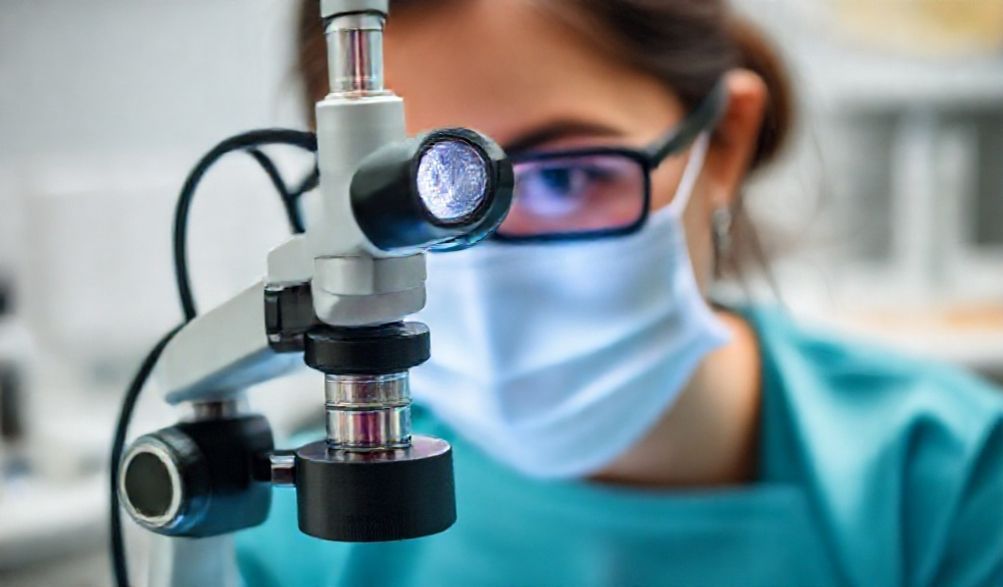
The Ultimate Guide to Dental Hygienist Loupes with Light: Enhance Precision & Reduce Strain
Introduction
It’s 4:45 PM on a Friday. You’ve just finished your last patient of the week, and a familiar ache is settling into your neck and shoulders. As you chart, you recall that tricky distal surface on #31—was that shadow a stain, or the beginning of subgingival calculus? You leaned in, squinted under the operatory light, and did your best, but a nagging doubt remains. This scenario, blending physical strain with clinical uncertainty, is all too common in dental hygiene.
Modern dental hygiene demands microscopic precision. We are detectives and clinicians, tasked with finding and eliminating threats to oral health that are often invisible to the naked eye. The tools of the past—relying on overhead lights and unaided vision—are no longer sufficient for the standard of care patients deserve and that our bodies can sustain. This is where technology steps in as a powerful ally.
Enter dental loupes with integrated LED lights. This isn’t just another piece of equipment; it’s a transformative system that fundamentally changes how you see and work. By combining aumento with coaxial, shadow-free illumination, these tools elevate your clinical capabilities while actively protecting your most valuable asset: your long-term physical health.
This guide is designed to cut through the marketing noise. Our purpose is to provide a comprehensive, unbiased resource built on industry knowledge, ergonomic principles, and the real-world experiences of practicing hygienists. We won’t be selling you a specific brand. Instead, we’ll equip you with the expertise to ask the right questions, understand the critical specifications, and make a confident, informed investment in your career. You’ll learn about the “why,” the key features to compare, an objective look at the market, and the practical steps to finding your perfect fit.
Why Loupes with Lights Are a Game-Changer for Dental Hygienists
For many hygienists, moving to loupes with a light is the single most impactful career upgrade they make. The benefits are interconnected, creating a positive feedback loop of better care and better health.
Unmatched Visual Acuity for Superior Patient Care
Magnification opens up a new world. What appears as a clean tooth surface to the naked eye is revealed, under loupes, to be a complex landscape.
- Revealing the Hidden: 2.5x to 4.5x magnification allows you to clearly identify and differentiate between plaque, stain, and tenacious calculus—especially the subgingival deposits that are feel-based without visual confirmation. You can spot early caries, microfractures, and minute discrepancies in restoration margins that would otherwise go unnoticed.
- Precision in Procedure: Scaling and root planing become more accurate and less traumatic. You can debride more completely while preserving healthy tooth structure. Assessing tissue health, detecting inflammation, and performing detailed charting are all enhanced.
- Elevated Patient Communication: The ability to show a patient, on a monitor or through detailed description, exactly what you’re seeing builds immense trust and case acceptance. It transforms you from a cleaner to a true oral health clinician.
The Ergonomic Imperative: Protecting Your Career
The statistics are sobering. Studies consistently show that a vast majority of dental professionals will experience work-related musculoskeletal disorders (MSDs)—pain in the neck, back, shoulders, and wrists. This isn’t just discomfort; it’s a career-threatening issue.
Loupes are a primary ergonomic intervention, not just a visual aid. Here’s why:
- Forcing Neutral Posture: Properly fitted loupes have a defined distancia de trabajo (the space from your eyes to the patient’s mouth) and declination angle (how far the lenses are tilted downward). To see a sharp image, you debe sit upright with your spine aligned and bring the patient up to you. This eliminates the damaging, hunched-over posture that leads to chronic pain.
- Prevention Over Treatment: Using loupes is a proactive strategy. By promoting proper posture from the start of your career or adopting it now, you invest in your ability to practice pain-free for decades.
Beyond Magnification: The Critical Role of Illumination
Magnification is only half the equation. Without proper light, you’re simply magnifying shadows and glare. Overhead operatory lights are problematic: they create shadows from your head and hands, cause glare off wet surfaces, and often force the patient to close their eyes against the brightness.
An integrated LED light changes everything:
- Shadow-Free, Coaxial Illumination: The light is attached to your loupes, so it shines directly along your line of sight, illuminating exactly what you’re magnifying. Shadows are virtually eliminated.
- Reduced Eye Strain: Your pupils don’t have to constantly dilate and constrict between a bright operatory light and the darker oral cavity. The consistent, focused light reduces fatigue dramatically.
- True Color Representation: High-quality LED systems offer excellent El Índice de Reproducción Cromática (IRC) and appropriate color ajustable, allowing you to distinguish between healthy and inflamed tissue, different types of calculus, and tooth shades with accuracy.
Key Considerations Before Buying Your Loupes with Light
Purchasing loupes is a highly personal decision. Understanding these core concepts will guide you toward a system that fits your clinical style and physical needs.
Finding Your Perfect Magnification & Field of View
Magnification is a balance, not a case of “more is always better.”
- The Range: Common magnifications for hygienists range from 2.5x (entry-level) to 5.5x or higher (often used in perioperative care).
- The Beginner’s Sweet Spot: La mayoría de los profesionales recomiendan comenzar con 2.5x o 3.0x. This provides a significant visual boost with a wider field of view (the area you can see at once) and less image wobble (the disorienting movement amplified at higher powers). It’s easier to adapt to and is sufficient for most preventive and periodontal care.
- The Trade-Off: As magnification increases, the field of view shrinks, and image stability becomes more sensitive to head movement. Higher mag (e.g., 4.5x+) is incredible for fine detail but requires more practiced, deliberate movements.
- La Regla de Oro: A professional, in-person fitting is non-negotiable. Your optimal magnification depends on your working distance and posture.
Understanding Light Source Technology: LED Types & Features
Not all loupe lights are created equal. Pay attention to these specs:
- Mide la cantidad total de luz emitida. Más lúmenes generalmente significan una luz más brillante, pero el enfoque del haz es crucial. Measures brightness. For dental hygiene, a range of 40,000 to 80,000 lux at the working distance is typical. Enough to illuminate deeply, but not so much it causes glare or patient discomfort.
- Temperatura de Color: Measured in Kelvins (K). “Daylight” white (around 5500K-6000K) is common and provides a bright, clear light. Some prefer a slightly warmer light (e.g., 4500K) for reduced eye strain.
- Índice de Reproducción Cromática (IRC): On a scale of 0-100, this measures how accurately the light reveals true colors. Aim for a CRI of 90+ for the best tissue differentiation.
- Light Field Pattern: A proporciona alta intensidad para trabajos profundos. Una beam offers intense, focused light for deep pockets. A wide flood illuminates a broader area, like a full quadrant. Some systems offer adjustable or hybrid patterns.
Ergonomics & Customization: Fit for Long-Term Comfort
If the loupes aren’t comfortable, you won’t wear them. Comfort is a science.
- Frame Styles: Lupas **Through-the-Lens (TTL)** loupes have the magnification lenses permanently mounted, offering a lighter weight and more streamlined look. Lupas **Flip-Up (Abatibles)** loupes have a binocular that flips up, allowing you to quickly switch between magnified and normal vision. They are often easier to share for trial purposes.
- Custom Fit Parameters: A professional fitter will measure your El ajuste de la, determine your ideal **Distancia de Trabajo** (based on your arm length and posture), and set the **Ángulo de Declinación** (based on your height and how you sit). This customization is what makes loupes truly ergonomic.
- Weight & Materials: Lightweight titanium frames are popular for durability and comfort. Consider prescription lens inserts if you wear glasses.
Top Features to Compare in Dental Loupe Light Systems
When comparing models from different brands, drill down into these practical features.
Battery Life & Charging Systems
Your light is useless if it’s dead by lunch.
- Run-Time: Look for systems that offer a full clinical day (6-8+ hours) on a single charge. Many offer 4-6 hours at highest brightness, which is usually sufficient.
- Las de iones de litio (Li-ion) son estándar por su alta densidad energética y falta de efecto memoria. Removable, rechargeable batteries are a major advantage. You can carry a spare, swap it mid-day, and replace the battery when it eventually loses capacity. Integrated batteries require the entire unit to be plugged in.
- Carga: Convenient docking stations or magnetic chargers simplify daily routines. Battery level indicator lights are essential.
Durability, Warranty, & Service Support
This is a professional investment. It should be built to last and backed by strong support.
- Calidad de Construcción: Look for robust construction, water resistance (for cleaning), and secure cable management if the battery is separate.
- Garantía: A strong warranty is a sign of manufacturer confidence. Look for at least a 2-year warranty on the entire system, with longer coverage on the optical lenses (often 5+ years against defects).
- Service: Can the loupes be adjusted or repaired if you drop them? How responsive is the company’s customer service? Ask colleagues about their after-purchase experiences.
Integrated vs. Modular Systems: Flexibility & Upgradability
- Integrated Systems: The light and loupes are one complete unit. They are often more streamlined and balanced. However, if light technology improves in 5 years, you may need to replace the entire system.
- Modular Systems: The light source is a separate attachment that clicks onto your loupe frame. The major advantage is upgradability. You can keep your perfectly fitted loupes and upgrade just the light head as newer, brighter, more efficient models are released.
An Objective Look at Leading Brands & Models
(This is a high-level overview for educational comparison. Models and technologies change; always consult directly with dealers for current information.)
Premium Performance Brands
- Orascoptic: Known for excellent optics, ergonomic designs (like their ergo-prism loupes), and a wide range of magnification. Their Nano LED light is popular for its brightness and color quality. Positioned in the higher price tier with a strong clinical reputation.
- Designs for Vision (DFV): A pioneer in the field, often associated with high-magnification, expanded-field prism loupes. Favored by many specialists for their wide, flat field of view. Their light systems are robust and well-integrated.
- Zeiss: The gold standard in optics globally. Their dental loupes are known for exceptional clarity, minimal distortion, and brilliant illumination. Represents a top-tier investment, often with a corresponding price point.
Popular Value & Innovation Brands
- SurgiTel (General Scientific): Offers a wide variety of frame styles and magnifications at competitive price points. Known for good customer service and durability. A very common and reliable choice in many practices.
- SheerVision: Often recognized for their “MegaView” expanded field loupes, which provide a wider view at a given magnification. They offer solid systems and are a strong contender in the market.
- Admetec (Andau Medical): Has gained attention with its “Ergo” loupes, designed with a significant declination angle to promote an upright posture. Their light is often praised for its true color temperature.
Direct-to-Consumer & Emerging Options
Newer brands selling primarily online have entered the market, often at lower price points. Exercise extra diligence here. The critical question is: How will you get a proper, in-person fitting and adjustment? Ensure they have a reliable network of fitters or a robust self-measurement/return policy. Research their warranty and service support thoroughly.
Making the Investment: Practical Steps & Tips
The Non-Negotiable: A Professional In-Person Fitting
Do not buy loupes online based on a self-measurement kit alone. A fitting session should:
1. Assess your current posture at the operatory.
2. Have you try different magnifications to feel the difference.
3. Precisely measure your IPD, working distance, and declination angle.
4. Allow you to wear demo units for several minutes to assess comfort and balance.
Budgeting & Financing Your Equipment
Prepárese para una inversión significativa. Un sistema de lupas e iluminación de calidad generalmente oscila entre 1.200 y 3.500+ euros..
* Contribución del Empleador: Muchas consultas ofrecen asignaciones para equipamiento o co-invierten, especialmente si es un nuevo contratado.
* Ventajas Fiscales: Las lupas son un gasto profesional deducible de impuestos. Consulte con su contable.
* HSA/FSA: A menudo puede utilizar fondos de Cuentas de Ahorro para la Salud o Cuentas de Gastos Flexibles.
* Financiación: La mayoría de los fabricantes importantes ofrecen planes de pago.
El Período de Adaptación: Acostumbrarse a sus Nuevas Lupas
Existe una curva de aprendizaje, típicamente de 2 a 4 semanas.
* Comience Despacio: Úselas durante 30-60 minutos seguidos en procedimientos más sencillos.
* Reaprenda la Coordinación Ojo-Mano: Sentirá que sus manos no están donde sus ojos las ven. Practique moviendo instrumentos sobre un tipodonto o un objeto fijo.
* Confíe en la Postura: Al principio sentirá que está “demasiado lejos”. Resista el impulso de encorvarse. Confíe en la óptica y deje que el paciente venga a usted.
* Sea Paciente: Es común experimentar leve mareo o fatiga visual al principio. Desaparecerá a medida que su cerebro se adapte.
Preguntas Frecuentes (FAQ)
P: ¿Qué aumento es mejor para un higienista dental que usa lupas por primera vez?
R: La mayoría de los profesionales recomiendan comenzar con 2.5x o 3.0x. Esto proporciona un importante aumento visual y un campo de visión más amplio y estable, facilitando el período de adaptación. Siempre puede actualizar a un aumento mayor posteriormente.
P: ¿Cuánto suele durar la batería y cómo debo mantenerla?
R: Los sistemas LED modernos duran entre 4 y 8+ horas con una sola carga, cubriendo fácilmente un día clínico completo. Para mantener la salud de la batería, siga las instrucciones del fabricante: evite descargas completas, almacénelas en un lugar fresco y utilice el cargador proporcionado.
P: ¿Puedo añadir una luz a mis lupas existentes?
R: Depende. Algunas marcas ofrecen sistemas modulares donde puede comprar por separado un accesorio de luz compatible. Para la mayoría de las lupas tradicionales, no es posible. Consulte directamente con el fabricante de sus lupas para explorar las opciones.
P: ¿Las lupas dentales con luz están cubiertas por el seguro o son deducibles de impuestos?
R: Normalmente no están cubiertas por el seguro médico. Sin embargo, al ser una herramienta profesional necesaria, casi siempre son un gasto empresarial deducible de impuestos. Consulte con un profesional fiscal para los detalles, y guarde su recibo.
P: ¿Cómo limpio y cuido mis lupas y mi luz?
R: Utilice únicamente el paño de microfibra y el limpiador de lentes proporcionado o recomendado por el fabricante. Evite productos químicos agresivos como alcohol o limpiacristales. Para la montura y el cuerpo de la luz, limpie suavemente con un paño húmedo y jabón suave. Nunca sumerja la unidad de luz a menos que esté específicamente clasificada como impermeable.
Conclusión
Invertir en lupas para higienista dental con luz integrada no es simplemente comprar equipamiento; es hacer un compromiso estratégico con su excelencia clínica y la longevidad de su carrera. La combinación de aumento e iluminación sin sombras eleva el estándar de atención que puede proporcionar, transformando indicios sutiles en diagnósticos claros. Más importante aún, es su principal defensa contra el debilitante dolor musculoesquelético que afecta a nuestra profesión, permitiéndole ejercer con comodidad y confianza en los años venideros.
Recuerde, el sistema “mejor” es el que se ajusta usted perfectamente—a sus ojos, su postura y su flujo de trabajo clínico. Esta decisión depende del paso no negociable de un ajuste profesional y una comprensión clara de sus propias necesidades. Utilice esta guía como base para su investigación.
Priorice su bienestar y la calidad de la atención a sus pacientes. Los dividendos diarios de menor esfuerzo, mayor precisión y confianza profesional convierten a esta en una de las inversiones más valiosas que hará en su vida como higienista dental.
Sus Próximos Pasos: Investigue distribuidores locales de reputación que ofrezcan servicios de ajuste. Hable con colegas sobre sus experiencias con diferentes marcas y modelos. Luego, armado con las preguntas y el conocimiento de esta guía, programe una sesión de ajuste para ver—y sentir—la diferencia por usted mismo.
p>