
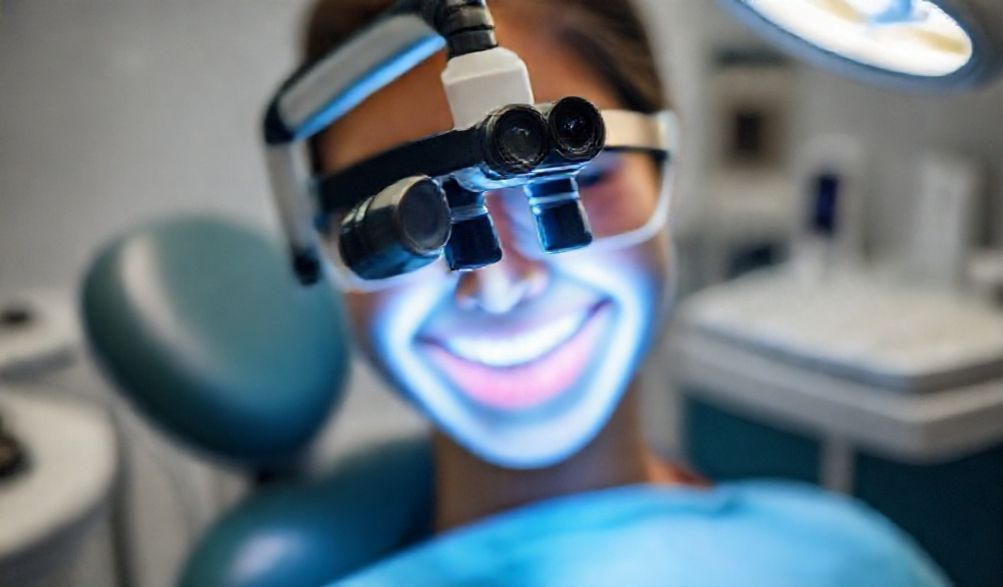
Dental Loupes with Wireless Light: The Ultimate Guide to Enhanced Vision & Ergonomics
You know the feeling. Three hours into a busy clinic day, and a familiar ache begins to creep up your neck and settle between your shoulder blades. You shift your weight, trying to find a comfortable position, but the overhead light casts a shadow just where you need to see. You lean in further, contorting your spine to get a better view, all while the cord from your headlamp tugs at your head or gets tangled on the bracket table. This daily struggle isn’t just uncomfortable—it’s a threat to your long-term health and clinical precision.
In modern dentistry, where sub-millimeter accuracy is paramount and patient appointments run back-to-back, two things are non-negotiable: crystal-clear vision and sustainable comfort. Dental loupes have long been the foundational answer to the first need, magnifying the operative field to reduce eye strain and improve accuracy. But now, a revolutionary upgrade is transforming the standard of care: wireless lighting integrated directly into the loupe system.
This combination isn’t merely an incremental improvement; it’s a paradigm shift that addresses the core ergonomic and visual challenges of clinical practice simultaneously. This comprehensive guide is designed to cut through the marketing hype. We’ll draw on technical specifications, ergonomic principles, and practitioner experiences to provide you with an unbiased, detailed resource. Our goal is to empower you with the knowledge needed to make a confident, informed investment in the tool that could redefine your daily practice—protecting your body while elevating your craft.
We will cover the transformative benefits of these integrated systems, break down the key technical features you must evaluate, discuss critical considerations before purchasing, and provide a framework for comparing top systems. Let’s begin by exploring exactly why dental loupes with wireless light are considered a game-changer.
Why Dental Loupes with Wireless Light Are a Game-Changer
Adopting a wireless loupe system isn’t just about buying new gear; it’s about upgrading your entire clinical experience. The synergy between magnification and integrated, cord-free illumination delivers benefits that impact your posture, your vision, your mobility, and your endurance.
Unparalleled Ergonomic Benefits
The primary driver for many dentists investing in loupes is the fight against career-ending musculoskeletal disorders. Traditional postures—hunched over, neck flexed, shoulders rounded—place immense strain on the spine. Loupes promote an upright, neutral spine by bringing the magnified image to you. Adding a wireless light supercharges this benefit.
- Elimination of Cord Drag and Imbalance: A corded light has a battery pack that typically clips to your waist or rests on a counter. The cord creates a constant, subtle pull on one side of your head, leading to neck muscle imbalance and fatigue. It’s a tether that subconsciously limits your movement. A wireless system removes this entirely, allowing the weight to be centered and balanced solely on your head, which the body adapts to far more naturally.
- Encouraging Consistent Proper Posture: Without a cord to snag or a battery pack to reposition, you are free to maintain your ideal ergonomic posture throughout the entire procedure. There’s no incentive to crane your neck to compensate for a taut cord or to avoid moving the light source. The result is a significant reduction in the cumulative micro-strains that lead to chronic pain.
Superior Visual Clarity and Shadow Reduction
Vision is everything in dentistry. The quality of your light is as critical as the quality of your magnification.
- Coaxial, Shadow-Free Illumination: A wireless light integrated into the loupe frame is positioned directly along your line of sight. This coaxial alignment means the light shines exactly where you are looking, filling the entire magnified field with even, bright light. It virtually eliminates the shadows cast by your hands, instruments, or the patient’s anatomy—a common frustration with overhead operatory lights or even side-mounted corded lights that can’t perfectly follow your gaze.
- Optimal Intensity and Focus: These systems deliver intense, focused light precisely where you need it, reducing ambient glare and improving contrast. This makes it easier to differentiate between tooth structures, composite shades, and soft tissues, reducing eye strain and increasing diagnostic and procedural accuracy.
Enhanced Mobility and Freedom of Movement
The feeling of being untethered is profoundly liberating in the operatory.
- Unrestricted Movement: Need to shift from the 11 o’clock to the 9 o’clock position? Want to stand up briefly to adjust the chair or retrieve something? With a wireless system, you do so without a second thought. There’s no cord to unplug, no battery pack to drag, no risk of pulling equipment off a tray.
- Simplified Operatory Transitions: For professionals who move between treatment rooms, the convenience is undeniable. You simply stand up and walk away—no disconnecting, coiling cords, or re-setting up in the next room. This seamless mobility enhances workflow efficiency and reduces minor daily frustrations.
Increased Efficiency and Reduced Fatigue
The cumulative effect of better ergonomics and superior vision is a less fatigued, more efficient clinician.
- Reduced Cognitive and Physical Load: When you aren’t fighting poor posture, shadowed fields, or tangled cords, you can devote more mental energy to the procedure itself. Physical comfort directly correlates with mental focus and stamina.
- Consistent Performance: By minimizing the physical stressors that lead to afternoon fatigue, you can maintain a higher level of precision and care from your first patient to your last. This isn’t just about feeling better; it’s about delivering consistently excellent results all day long.
Key Features to Evaluate When Choosing a Wireless Loupe System
Not all wireless loupe systems are created equal. Understanding the key features will help you discern between models and find the perfect fit for your clinical demands.
Light Source Technology: LED Quality and Color Temperature
The heart of the system is its light.
- LED Quality & Brightness (Lumens): Look for high-quality LEDs that provide ample, adjustable brightness. Sufficient lumens (often 40,000+ lux at the working distance) are crucial for illuminating deep cavities or surgical sites. Brightness should be easily adjustable via a touch or dial control to prevent glare on reflective surfaces.
- Índice de Reproducción Cromática (IRC): This is a critical, often overlooked spec. CRI measures a light source’s ability to reveal the true colors of objects compared to natural light. A high CRI (90+ is excellent, 95+ is ideal) is essential for accurate shade matching in restorative work, distinguishing between caries and healthy dentin, and assessing tissue health.
- Adjustable Color Temperature: Some advanced systems allow you to switch between color temperatures (measured in Kelvin). A cooler, bluer light (e.g., 6000K) can enhance contrast for cutting procedures, while a warmer, yellower light (e.g., 4500K) may be easier on the eyes during long sessions or better for shade evaluation.
Battery Life and Charging System
The “wireless” aspect lives and dies by the battery.
- Autonomía Real de la Batería: Manufacturers may cite “up to” a certain number of hours. Seek out real-user feedback on whether a single charge reliably lasts a full clinical day (typically 6-8 hours of intermittent use). A system that consistently delivers 4+ hours of runtime at a medium-high setting is a good benchmark.
- Charging Convenience: Modern systems use docking stations or USB-C charging. Docking stations are fantastic for ensuring your loupes are always charged and ready. USB-C charging offers versatility, allowing you to charge from a power bank or laptop if needed.
- Hot-Swappable Batteries: This is a premium feature. If the battery is user-replaceable in seconds, you can carry a spare and never worry about running out of power, even during marathon procedures or if you forget to charge.
Loupes Optics: Magnification, Field of View, and Depth of Field
The light is attached to the loupes, so the optics cannot be an afterthought.
- Magnification & Working Distance: Choose your magnification (e.g., 3.5x, 4.5x, 6x) based on your discipline and preference, ensuring it’s paired with a correct, custom-fitted working distance. The bright light will make higher magnifications more usable by illuminating the smaller field.
- Campo de Visión y Profundidad de Campo: This is where optical quality is paramount. With a bright light, you need a wide, sharp field of view to see the illuminated area clearly. Equally important is profundidad de campo—the vertical zone that remains in focus. Excellent depth of field allows you to see the base of a prep and the occlusal surface clearly without constant refocusing, which is critical for efficiency and accuracy.
Weight, Balance, and Comfort Design
The system must be wearable for hours.
- Distribución del Peso: The total weight and, more importantly, its distribution are key. A well-designed system balances the light unit’s weight with the frame, preventing a forward-heavy tilt. The light should feel like a natural extension of the loupes, not a clumsy add-on.
- Comfort Features: Look for fully adjustable frames with customizable features: an adjustable nose bridge, a padded forehead rest (or “Flip-Up” style with a headband), and multiple frame size options. Comfort is highly individual, which is why a professional fitting is non-negotiable.
Critical Considerations Before You Invest
Beyond the specs sheet, several personal and practical factors will determine your success with a wireless loupe system.
Your Specific Dental Discipline
Your specialty dictates your needs.
- General Dentistry & Restorative: A balance of good depth of field, high CRI for shade matching, and comfortable weight for long, varied procedures is ideal.
- Endodontics: Maximum brightness and excellent depth of field are critical for illuminating deep canals. Magnification on the higher side (4.5x or more) is common.
- Periodontics & Surgery: High, adjustable brightness for hemostasis and visualization in bloody fields is essential. A wide field of view is beneficial for surgical sites.
- Higiene: Lightweight comfort for long prophylaxis appointments is often the top priority, alongside good illumination for detection and scaling.
La importancia de un ajuste profesional
This is the single most important piece of advice in this guide. Dental loupes with wireless light are not an off-the-shelf purchase.
- Why It’s Mandatory: For loupes to be ergonomically beneficial, they must be custom-fitted to your pupillary distance (PD), distancia de trabajo (the exact space from your eyes to the patient’s mouth), and declination angle (how far down the lenses are tilted). An incorrect fit will force you into poor posture, causing more strain than not wearing loupes at all. The light must also be positioned correctly in your field of view.
- Seek Expertise: Work only with reputable companies that offer comprehensive fitting services, either through in-person consultations with a trained representative or via advanced remote fitting kits with expert guidance. Do not skip this step.
Budget and Total Cost of Ownership
This is a significant investment in your career health.
- Price Range: A high-quality wireless loupe system typically ranges from $1,800 to over $3,500. The price reflects optical quality, light technology, materials, and warranty.
- Looking Beyond Sticker Price:
- Garantía: A strong warranty is a sign of confidence. Look for 5+ years on the optics and frame, and 1-2 years on the electronic components (light, battery).
- Battery Replacement Cost: Batteries degrade over time. Inquire about the cost and process for purchasing replacement batteries in 2-3 years.
- Servicio y Soporte: Does the company have a reliable customer service channel for troubleshooting? Can the system be serviced or repaired if needed?
Comparing Top Wireless Loupe Lighting Systems
Rather than providing simplistic rankings, use this framework to compare systems from leading brands like Orascoptic (EyeHD), Designs for Vision (Illuminator), SurgiTel (Wireless), and others. During your research and consultations, ask direct questions based on these criteria.
- System A (The Established Market Leader):
- Ventajas: Often boasts extensive clinical research, widely recognized optical clarity, robust construction, and a vast network of representatives for fittings and service. Their wireless system is typically a mature, well-integrated product.
- Desventajas: Can be at the premium end of the price spectrum. Some users may find certain frame styles less modern.
- System B (The Agile Innovator):
- Ventajas: May introduce cutting-edge features first, such as advanced battery technology, unique frame materials for ultra-light weight, or innovative light controls. Often praised for modern, ergonomic design.
- Desventajas: The company may have a shorter track record with wireless technology. The dealer/fitting network might be less extensive in some regions.
- System C (The Value-Forward Option):
- Ventajas: Offers core wireless functionality and decent optics at a more accessible price point. Can be an excellent entry into the wireless world for a new graduate or on a tighter budget.
- Desventajas: May involve trade-offs in areas like warranty length, breadth of frame choices, light output (lumens/CRI), or depth of field. The fitting process may be less personalized.
Crucial Reminder: This comparison is a starting point based on general market observations. Your personal experience, the quality of your fitting, and your specific clinical needs are infinitely more important than any brand name.
Preguntas Frecuentes (FAQ)
Q: Are wireless loupe lights really bright enough for procedures like endo or surgery?
R: Absolutely. Modern LED systems are incredibly powerful, often exceeding the brightness of older corded halogen or LED models. The key is focused, coaxial light. Look for systems with high lumen output and adjustable settings so you can crank it up for deep, dark cavities and turn it down for standard restorative work to avoid glare.
Q: How long does the battery typically last, and what happens if it dies mid-procedure?
R: Most quality systems are designed to last a full clinical day (6-8 hours) on a medium setting. Charging usually takes 1-2 hours via a docking station or USB-C. The best practice is to dock your loupes after every shift. For peace of mind, some systems offer hot-swappable batteries, allowing you to change a depleted battery for a fresh one in under 30 seconds without any tools.
Q: Is the wireless light unit heavy or uncomfortable on the loupes?
R: Engineering focus is on minimal weight and balance. While there is added weight compared to loupes alone, it is distributed across the frame and, often, a forehead rest. Most users report adapting within a day or two and find that the immense benefit of being cord-free far outweighs the minimal added grams. A proper fitting ensures the weight is borne comfortably.
Q: Can I add a wireless light to my existing loupes?
R: It depends. Some manufacturers sell wireless light kits designed to retrofit their own specific loupe frames. However, due to balance, mounting points, and electrical integration, it is often not possible or advisable to mix brands. The most reliable and balanced performance comes from an integrated system designed and fitted as a complete unit. Contact your loupe manufacturer directly to inquire about compatibility.
Q: What is the typical warranty for these systems?
R: Warranties vary. Look for a company that stands behind its product with a long-term warranty on the optics (often 5 years to lifetime) and a substantial warranty on the frame (3-5 years). The electronic components (light engine, battery) typically have a shorter warranty, commonly 1-2 years. Always read the warranty terms carefully.
Conclusión
Dental loupes with wireless light represent a fundamental advancement in clinical technology, moving beyond simple magnification to a holistic solution for practitioner well-being and performance. By integrating shadow-free, coaxial illumination directly into an ergonomically fitted magnification system, they address the twin pillars of success in dentistry: unparalleled visual clarity and sustainable physical comfort. The freedom of movement, reduced fatigue, and enhanced efficiency are not just marketing claims—they are tangible benefits experienced daily by clinicians who have made the switch.
As we’ve emphasized throughout this guide, the most critical step in this journey is not which brand you select from a website, but your commitment to a professional, custom fitting. This process ensures the tool conforms to you, not the other way around, unlocking the true ergonomic and visual benefits.
Ultimately, investing in a high-quality dental loupe system with wireless light is an investment in the most important asset of your practice: you. It’s a commitment to extending your career free from chronic pain, to performing at your peak throughout every procedure, and to providing the highest standard of care with greater confidence and comfort. Take the next step by researching reputable dealers and scheduling a consultation or fitting to experience the difference firsthand.
p>