
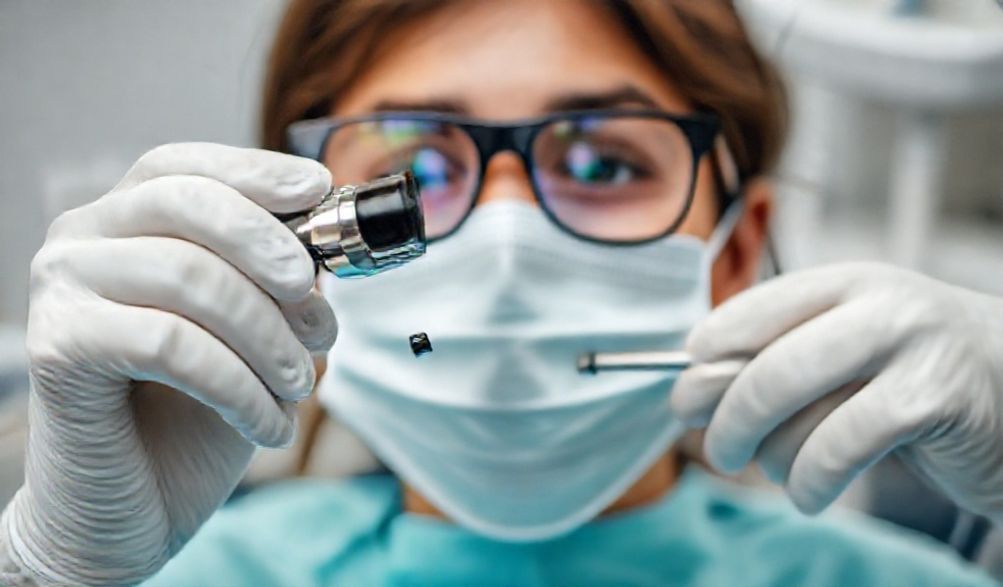
Dentist Loupes: The Ultimate Guide to Enhanced Vision, Ergonomics, and Patient Care
You lean in, squinting slightly, as you navigate the intricate landscape of a mandibular molar. The overhead light casts shadows, and the fine details of a fissure or the subtle hue change of early caries seem to dance just at the edge of clarity. Hours into your clinical day, a familiar ache begins to creep up your neck and settle between your shoulder blades. This scenario isn’t just an inconvenience; it’s a daily occupational hazard that compromises both your long-term health and the precision of your care.
This is where the transformative power of lupas dentales comes in. Far more than simple magnifying glasses, modern dental loupes are sophisticated optical systems engineered to be essential ergonomic and clinical tools. They are a fundamental investment in the triad of modern practice: superior clinical outcomes, sustainable physical health, and enhanced patient trust. This comprehensive guide is designed to cut through the confusion. Built on optical science, ergonomic principles, and the collective experience of practicing clinicians, it will walk you through everything from how loupes work to how to choose, use, and maintain your perfect pair. Consider this your roadmap to making an informed decision that will benefit your patients and your career for years to come.
What Are Dental Loupes and How Do They Work?
At their core, dental loupes are binocular aumento devices worn like glasses. Their primary function is to enlarge the treatment area, bringing minute anatomical details into clear focus. But to dismiss them as mere magnifiers is to miss their sophisticated engineering.
The Basic Optical Principle: Magnification and Working Distance
The fundamental principle is magnification, expressed as a power like 2.5x or 4.5x. This number indicates how much larger an object appears compared to viewing it with the naked eye at a standard distance. However, magnification is intrinsically linked to a critical concept: Working Distance (WD).
Working distance is the precise space between your eyes (or the loupe lenses) and the treatment area in the patient’s mouth when you are in a comfortable, upright, neutral posture. It is not a one-size-fits-all measurement; it is unique to your height, arm length, and preferred clinical stance. Properly fitted loupes have a fixed focal length, meaning they provide a clear image único at that specific working distance. This design is intentional—it forces you to maintain the correct posture to see clearly, thereby training your body to avoid the stooped, neck-strained positions that lead to injury.
Core Components: The Eyepieces, Lenses, and Frame
A loupe system consists of several key parts:
* Eyepieces/Lenses: These are the optical elements that provide magnification. They come in two main optical designs: Galilean (a simpler, lighter system with two lenses, common for lower magnifications like 2.5x-3.5x) and Prismatic (Keplerian) (a more complex system using prisms to fold the light path, allowing for higher magnifications—4.5x and above—with a better depth of field and wider field of view, though often heavier).
* Montura: This is the structure that holds the optics. Frames can be lightweight sport-style or more traditional designs and are often customizable.
* Mounting System: This is how the optics attach to the frame. The two primary types are:
* A través de la lente (TTL): The optical barrels are permanently mounted and aligned within the frame lenses. They are custom-built to your pupillary distance and working distance, offering a lightweight, streamlined fit with no adjustments needed by the user.
* Abatibles: The magnification optics are mounted on a hinge or a flip-up mechanism in front of your prescription or plano lenses. They offer flexibility, as you can flip them up when not in use and they can be used by multiple people or adjusted if your prescription changes.
The Critical Benefits: Why Every Dentist Should Consider Loupes
The decision to adopt loupes is often framed as a clinical upgrade, but its benefits are holistic, impacting the clinician’s body, the quality of work, and the patient experience.
Enhanced Visual Acuity for Superior Clinical Outcomes
This is the most immediate and obvious benefit. Magnification reveals what the naked eye cannot reliably see.
* Improved Detection: Early interproximal caries, subtle enamel cracks, subgingival calculus, and minute discrepancies in crown margins become glaringly apparent. This allows for earlier intervention, more conservative treatment, and higher-quality restorative work.
* Increased Precision: Procedures demanding extreme accuracy, such as locating canal orifices in endodontics, performing delicate periodontal surgery, or placing composite restorations with perfect marginal integrity, become less taxing and more predictable. As many experienced practitioners note, “You can’t treat what you can’t see.” Loupes turn guesswork into certainty.
The Ergonomic Imperative: Preventing Neck and Back Pain
Perhaps the most compelling reason for the widespread adoption of loupes is ergonomics. Dentistry is notoriously hard on the body, with a high prevalence of work-related musculoskeletal disorders (MSDs) affecting the neck, back, and shoulders.
* Promoting Neutral Posture: Properly fitted loupes are an active postural tool. Because they only focus at your specific working distance, you must sit upright with your spine in a neutral, aligned position to see a clear image. This eliminates the need to hunch forward, craning your neck over the patient—a primary cause of chronic pain.
* Long-Term Career Sustainability: Studies, including those published in the Journal of Dental Hygiene y la The Journal of the American Dental Association, consistently link the use of magnification with reduced musculoskeletal pain and discomfort. Investing in loupes is an investment in your ability to practice pain-free for decades, preserving your most valuable asset: your health.
Reducing Eye Strain and Fatigue
Squinting and focusing intensely on a small, poorly lit area for hours leads to significant ocular fatigue. Loupes reduce the accommodative demand on your eyes by bringing the image into a more comfortable focal range. The integrated use of a coaxial LED headlight (which we’ll discuss later) further reduces strain by eliminating shadows and providing bright, shadow-free illumination directly on the field of view. The result is less end-of-day eye tiredness and headaches.
Potential for Improved Patient Communication and Trust
The benefits extend to the patient relationship. Being able to clearly show a patient a cracked cusp on a magnified intraoral camera image or a video screen builds immense trust. It transforms abstract explanations into tangible visual evidence, facilitating informed consent and case acceptance. Patients perceive a clinician using advanced optical technology as meticulous, detail-oriented, and at the forefront of modern care.
How to Choose the Right Dental Loupes: A Buyer’s Checklist
Selecting loupes is a highly personal process. Here are the critical factors to consider, forming your essential buyer’s checklist.
Magnification Power: Finding the Sweet Spot
Common powers range from 2.5x to 6x and beyond.
* 2.5x-3.5x (Lower): Excellent for general dentistry, hygiene, and new users. They offer a wider field of view and easier adaptation. Many clinicians find 3.5x to be a versatile “sweet spot.”
* 4.5x-6x (Higher): Ideal for specialists in endodontics, periodontics, or surgery, or any dentist performing high-precision work. They provide incredible detail but have a narrower field of view and shallower depth of field, requiring more head movement and a steadier hand. It’s generally advised to start lower and upgrade later if needed.
Field of View vs. Depth of Field: Understanding the Trade-off
- Field of View (FOV): The width of the area you can see through the loupes at one time. Higher magnification typically means a smaller FOV.
- Depth of Field (DOF): The “slice” of space (from near to far) that remains in clear focus without moving your head. Higher magnification usually means a shallower DOF.
You must balance these. A very high-power loupe might show amazing detail on one tooth, but you’ll need to move your head more to see adjacent teeth or different surfaces.
Working Distance: The Key to Proper Posture
This is the most critical measurement for ergonomics. To find yours, sit in your typical clinical posture with your back straight and shoulders relaxed. Have a colleague measure the distance from your cheekbone (just below your eye) to the patient’s mandibular first molar occlusal surface. This is your starting point. A professional fitter will refine this measurement.
Declination Angle: Customizing for Your Neutral Spine
The declination angle is the tilt of the optical barrels relative to the frame. It ensures that when you are sitting upright with your head in a neutral position (looking straight ahead), your loupes are angled downward so you are looking through the center of the lenses at your working area. A correct declination angle prevents you from having to tilt your head forward to see, which defeats the ergonomic purpose.
Frame Styles: Through-the-Lens (TTL) vs. Flip-Up Loupes
- TTL Loupes: Custom-built, lightweight, and always aligned. They offer a more “natural” feel and less peripheral obstruction. Ideal for clinicians who know their prescription is stable and want a dedicated, optimized system.
- Lupas Abatibles: Flexible and adjustable. They allow you to quickly look up at the patient or a screen without removing anything. They can accommodate future prescription changes by swapping the carrier lens. They can feel slightly heavier and have a smaller field of view compared to an equivalent TTL model.
Considering Integrated Lighting: The Game-Changer of LED Headlights
While optional, a coaxial LED headlight is arguably as transformative as the loupes themselves. It projects bright, white, shadow-free light directly along your line of sight, perfectly illuminating the magnified field. This drastically reduces eye strain and improves contrast and color perception. For most clinicians investing in their first system, a loupe-light combination is highly recommended.
Getting Started: Fitting, Adjustment, and Adaptation Period
Purchasing loupes is not like buying sunglasses. A proper fitting is non-negotiable.
The Importance of a Professional Fit
Always work with a reputable company that offers a live, one-on-one fitting—either in-person or via a detailed virtual fitting kit with guidance. They will meticulously measure your **Distancia Interpupilar (PD)**, **Distancia de Trabajo**, y **Ángulo de Declinación**. A poor fit will lead to discomfort, headaches, double vision, and failed ergonomics.
Calibrating Your Working Distance and Posture
When your loupes arrive, spend time calibrating. Sit at your chair with your back supported and upright. Have an assistant place a mirror or a fixed object at your measured working distance. Adjust your chair and patient position until the object is in perfect focus without bending your neck. This posture is your new default.
What to Expect in the First Two Weeks: The Adaptation Process
There is a learning curve. You may experience mild dizziness, nausea, or a feeling of spatial disorientation as your brain adapts to the magnified, fixed-focal-length world. This is normal and usually subsides within 2-14 days of consistent use.
* Comience Despacio: Wear them for 30-60 minutes at a time during less complex tasks.
* Use Your Chair: Move the patient up and down, not your back.
* Practice: Use them while writing notes or working on a typodont to build muscle memory.
Perseverance is key. Seasoned users universally advise pushing through this initial phase, as the long-term benefits are profound.
Care and Maintenance of Your Dental Loupes
Your loupes are a precision instrument. Proper care extends their life and ensures optimal performance.
Daily Cleaning Protocols for Lenses and Frames
- Lentes: Always use the microfiber cloth provided. Blow off any debris first to avoid scratching. Use only lens cleaning solutions designed for coated optics—never window cleaner, alcohol, or your shirt.
- Frames: Limpie con un paño suave y húmedo. Evite productos químicos agresivos.
Proper Storage and Handling to Prevent Damage
Always store them in their hard protective case when not in use. Never place them lens-down on a surface. When adjusting, hold them by the frame, not the optical barrels.
When to Seek Professional Servicing or Re-alignment
If you drop them, notice persistent double vision, or feel your posture is no longer correct, contact the manufacturer. The optics may need to be re-collimated (re-aligned). Over time, hinge tension may also need adjustment.
Preguntas Frecuentes (FAQ) Sobre Lupas Dentales
Q1: What is the typical cost range for a good pair of dental loupes?
A: A quality basic TTL or flip-up system starts around $800 – $1,200. Systems with higher magnification (prismatic designs) and/or an integrated LED headlight typically range from $1,500 to $2,800+. Consider this a long-term investment in your health and practice quality.
Q2: Can I wear my prescription glasses with dental loupes?
A: Absolutely. You have two main options: 1) Get prescription lenses inserted into your TTL or flip-up frame (most common and recommended for stability). 2) Use flip-up loupes over your existing glasses, though this can be bulkier.
Q3: How long does it take to get used to working with loupes?
A: Most clinicians adapt within 1-2 weeks of consistent, daily use. The initial period of dizziness or “fishbowl” effect is normal and temporary.
Q4: Are there loupes specifically designed for dental hygienists or students?
A: Yes. The principles are the same, but many companies offer student packages or systems optimized for the procedures and working angles common in hygiene. Starting early in one’s career is an excellent way to build proper ergonomic habits from day one.
Q5: What’s the difference between Galilean and Prismatic (Keplerian) loupes?
A: Galilean systems are simpler, lighter, and less expensive, ideal for magnifications up to about 3.5x. Prismatic (Keplerian) systems use internal prisms to achieve higher magnifications (4.5x+) with a superior depth of field and wider field of view at that power, but they are generally heavier and more costly.
Q6: How often should I upgrade or replace my dental loupes?
A: With proper care, loupes can last 5-10 years or more. Reasons to upgrade include: a significant change in your vision prescription, a desire for higher magnification as your skills advance, or if the technology (e.g., lighting) has seen major improvements.
Conclusión
Choosing to integrate dental loupes into your practice is one of the most significant decisions you can make for your clinical career. The evidence is clear: they are not a luxury but a necessity for the modern dentist who values precision, personal health, and professional longevity. They enhance your ability to detect, diagnose, and treat with unparalleled accuracy while actively safeguarding you from the debilitating musculoskeletal pain that plagues the profession.
This guide has provided the foundation—grounded in expertise, experience, and authoritative principles—for your decision-making journey. We encourage you to consult with experienced colleagues, try different models through demos, and work only with reputable vendors who prioritize a meticulous professional fitting. Your choice in loupes is deeply personal, impacting every procedure you perform. Use this information as your starting point, take the next step in your research, and invest in the tools that will allow you to practice at your peak, comfortably and confidently, for years to come.
Ready to explore your options? Download our free checklist to bring to your loupes consultation or reach out to a trusted optical specialist to schedule a demo and experience the difference for yourself.
p>