
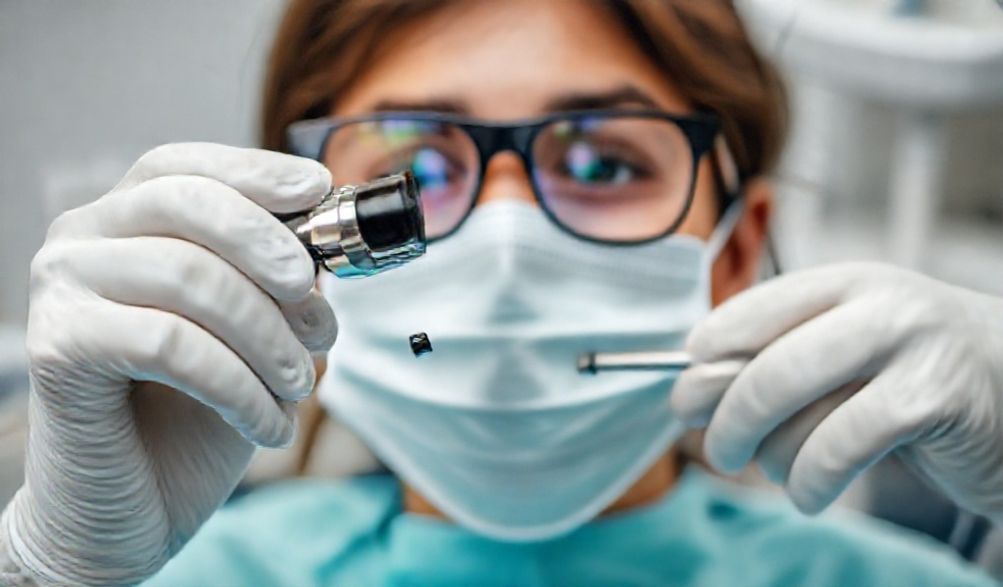
Dentist Loupes: The Ultimate Guide to Enhanced Vision, Ergonomics, and Patient Care
It’s the end of a long day, and as you finally lean back from the chair, a familiar ache radiates from your neck and shoulders. Your eyes feel strained, and you can’t shake the nagging thought: Did I see that distal margin clearly enough? This scenario is all too common in dentistry, a profession that demands microscopic precision while contorting the human body into less-than-ideal positions.
But what if a single investment could address the eye strain, improve your posture, and elevate the quality of your clinical work? This isn’t about a new technique or material; it’s about a foundational tool that has become non-negotiable for modern, health-conscious practitioners: lupas dentales.
This comprehensive guide is designed to cut through the confusion. Compiled from dental ergonomic research, manufacturer engineering specifications, and decades of collective clinical experience, it will walk you through everything you need to know. Dental loupes are far more than simple magnifiers; they are sophisticated ergonomic systems critical for enhancing clinical outcomes, preventing career-ending musculoskeletal disorders (MSDs), and extending your professional lifespan. We’ll cover the science behind their benefits, the key components to understand, a step-by-step selection process grounded in expert advice, and how to care for your investment—ensuring your loupes become a seamless extension of your skill for years to come.
What Are Dental Loupes and Why Are They Essential?
At their core, dental loupes are magnification systems worn like glasses. However, to dismiss them as merely “glasses that make things bigger” is to miss their true, transformative purpose. They are a fundamental ergonomic intervention designed to reconcile the inherent conflict between the need for visual detail and the limitations of the human body.
Beyond Simple Magnification: The Core Benefits
The advantages of integrating loupes into your practice are profound and interconnected:
- Enhanced Visual Acuity: This is the most immediate benefit. Magnification reveals a hidden world of detail. Fine craze lines, subtle color variations in dentin, the exact endpoint of a caries excavation, and the integrity of a marginal gap—all become starkly visible. This level of detail, impossible to discern with the naked eye, is the bedrock of superior diagnostics and execution.
- Foundational Ergonomics: This is where loupes transition from a visual aid to a health imperative. Properly fitted loupes have a fixed distancia de trabajo (the distance from your eyes to the patient’s oral cavity) and a specific declination angle (the angle of the lenses relative to your eyes). To see a clear, magnified image, you debe maintain this distance and angle. This physically forces you into an upright, neutral spine posture, pulling your shoulders back and bringing the patient to you, rather than you hunching over toward the patient. It breaks the cycle of forward head posture that plagues the profession.
- Improved Clinical Outcomes: Better vision translates directly to better dentistry. Studies and anecdotal evidence consistently show that clinicians using loupes produce higher-quality restorations with better marginal adaptation, perform more precise periodontal scaling, achieve greater accuracy in endodontic locating, and experience fewer procedural errors. The precision gained is measurable in the longevity and success of your treatments.
- Longevidad Profesional: Dentistry is physically punishing. Chronic neck, back, and shoulder pain are not rites of passage; they are symptoms of work-related MSDs. By enforcing proper posture, loupes are one of the most effective preventative tools against these debilitating conditions. Investing in loupes is an investment in your ability to practice pain-free for decades.
A Brief History: From Simple Lenses to Advanced Systems
The journey to today’s advanced systems began with simple handheld magnifiers. The first surgical loupes emerged in the late 19th century, but it wasn’t until the latter half of the 20th century that they began gaining traction in dentistry. Early designs were often heavy, uncomfortable, and offered limited optics.
The revolution came with the understanding of ergonomics and the miniaturization of lighting technology. The development of lightweight, custom-fitted Through-The-Lens (TTL) and versatile un diseño designs, combined with powerful, cool-running integrated LED lights, transformed loupes from an occasional aid into a daily-worn, essential system. Today’s loupes are the product of advanced optics, materials science, and a deep commitment to clinician well-being.
Key Components of a Dental Loupes System
Understanding the terminology and technology is crucial to making an informed choice. A loupes system is comprised of several key elements.
1. Optical Design: Galilean vs. Prismatic (Keplerian)
This refers to the lens system inside the loupes, and it’s the primary determinant of their capability.
- Sistemas Galileanos: These use a simple arrangement of lenses (like a telescope). They are generally more lightweight, compact, and affordable. However, they offer a more limited profundidad de campo y la field of view, and are typically capped at lower magnifications (2.5x to 3.5x). They are an excellent, lower-cost entry point for general dentistry and hygiene.
- Sistemas Prismáticos (Keplerianos): These employ a more complex series of prisms to fold the light path. This allows for much higher levels of magnification (4.0x to 8.0x and beyond) while maintaining a good depth of field and a wider, flatter field of view. The trade-off is that they are slightly heavier and more expensive. They are the preferred choice for specialists in endodontics, periodontics, and surgery, and for any general dentist seeking maximum detail.
| Feature | Galilean Loupes | Prismatic (Keplerian) Loupes |
| :— | :— | :— |
| Optical Design | Simple lens system | Complex system with prisms |
| Weight | Lighter | Slightly heavier |
| Magnification Range | Lower (2.5x – 3.5x) | Higher (4.0x – 8.0x+) |
| Depth of Field | Shallower | Deeper |
| Campo de Visión | Narrower | Wider, flatter |
| Ideal For | Entry-level, general dentistry, hygiene | High-precision work, specialists |
2. Magnification Power: Finding Your Sweet Spot
More power isn’t always better. It’s about matching the magnification to your clinical needs.
- 2.5x – 3.0x: Ideal for dental hygienists and general dentists new to loupes. Offers a generous field of view for procedures like exams, cleanings, and basic restorative work.
- 3.5x – 4.0x: The “sweet spot” for many general dentists. Provides excellent detail for crown preps, composite restorations, and endodontics without an overly restrictive field of view.
- 4.5x – 6.0x+: The domain of specialists and dentists focused on ultra-high-precision work. Essential for microsurgery, intricate endodontics, and advanced restorative techniques. Expert advice strongly cautions against starting here, as the narrow field and shallow depth of field can be disorienting for a new user.
3. Working Distance and Declination Angle: The Ergonomic Engine
These two measurements are the heart of a custom loupes fitting and are non-negotiable for ergonomic benefit.
- **Distancia de Trabajo:** This is the measured distance from your eyes (specifically, the corneal plane) to your primary working area in the patient’s mouth. It is unique to your anatomy and posture. A correct working distance allows you to sit upright with your elbows at your sides.
- Ángulo de Declinación: This is the angle at which the loupe barrels are tilted downward from horizontal. It determines how far you need to tilt your head to bring the focal point into view. An incorrect angle will force you to flex your neck excessively.
A professional fitting is the only way to accurately determine these values.
4. Field of View and Depth of Field
These two concepts are intrinsically linked to magnification.
- Field of View: The width of the area you can see clearly through the loupes at one time. Higher magnification reduces the field of view.
- Depth of Field: The range of distance (from near to far) that remains in clear focus without you having to move your head. Higher magnification reduces depth of field.
High-quality prismatic loupes use superior optics to maximize both, mitigating the inherent trade-offs of high power.
5. The Non-Negotiable Partner: Integrated LED Lighting
Loupes without a light are only half a system. A shadow in your magnified field of view is a major problem. Integrated, coaxial lighting (where the light path is parallel to your line of sight) eliminates shadows, dramatically reduces eye strain, and increases contrast. It is absolutely essential for working at higher magnifications. Key features to consider:
* Temperatura de Color: Daylight (~5500K) is standard and provides true color rendition.
* Brillo: Measured in lumens; adequate brightness is key for illuminating deep cavities.
* Battery Life & System: Look for lightweight, rechargeable battery packs with a full day’s life (6-8 hours) and convenient charging docks.
How to Choose the Right Loupes for Your Practice
Selecting loupes is a personal and professional decision. Follow this structured approach.
Step 1: Conduct a Personal Needs Assessment
Pregúntese:
* What procedures constitute 80% of my practice?
* Do I have existing neck, back, or shoulder pain?
* Am I looking for an entry-level system or a long-term, high-performance investment?
* What is my realistic budget for a complete system (loupes + light)?
Step 2: Understand the Frame & Mounting Styles
- A través de la lente (TTL): The optical barrels are permanently mounted into custom-made lenses. Ventajas: Lightweight, always perfectly aligned, no moving parts. Desventajas: Parameters (working distance, declination) are fixed; they cannot be adjusted or shared with others.
- Lupas Abatibles: Lupas Abatibles:. Ventajas: Adjustable working distance (within a range), shareable among users with similar prescriptions, versatile. Desventajas: Slightly heavier front-end weight, can potentially go out of alignment if mishandled.
Step 3: Get a Professional Fitting (The Most Important Step)
Esto no puede sobrestimarse. An online order based on estimated measurements will fail. A proper fitting with a trained representative is mandatory for ergonomic and visual success. A good fitting includes:
1. A postural assessment while you simulate working.
2. Precise measurement of your Interpupillary Distance (PD).
3. Determination of your ideal **Distancia de Trabajo** y la **Ángulo de Declinación**.
4. Hands-on trial of different magnifications and optical designs.
Step 4: Consider Top Brands and Models
Reputable brands invest in research, optics, and quality control. Leading names include:
* Orascoptic: Known for innovative, lightweight designs and a wide range of options.
* Zeiss: Synonymous with exceptional, high-clarity German optics.
* Q-Optics: Popular for their very lightweight TTL designs and comfort.
* SurgiTel / Designs for Vision: Established leaders with robust, high-performance prismatic systems.
* Heine: Renowned for their high-quality optics and durability.
Each has its strengths; the “best” is the one that fits usted perfectly during a professional demo.
Maximizing Your Investment: Use, Care, and Maintenance
4.1 El Período de Adaptación: Entrenando su Cerebro y Cuerpo
Expect a 2 to 4-week adaptation period. You may experience slight dizziness, altered depth perception, and new muscle memory for posture. Start by wearing them for shorter, less complex procedures and gradually increase usage. Your brain will adapt.
Daily Care and Cleaning Protocol
El cuidado adecuado protege su inversión:
1. Always use the provided microfiber cloth or lens-specific wipes.
2. Nunca use paper towels, clothing, or harsh chemicals (like alcohol or window cleaner) on coated lenses.
3. To clean, first blow off loose debris, then gently wipe the lenses in a circular motion.
4. Store them in a hard, protective case when not in use.
Solución de Problemas Comunes
- Blurriness/Eye Strain/Headaches: The #1 cause is improper alignment or an incorrect PD. Return to your provider for a re-check.
- Neck Pain: Esto suele significar que su distancia de trabajo es demasiado corta, obligándole a encorvarse, o que su ángulo de declinación es incorrecto. Se necesita un ajuste profesional.
Preguntas Frecuentes (FAQ) Sobre Lupas Dentales
P1: ¿Realmente vale la pena invertir en lupas dentales?
R: Absolutamente. Replantee el costo: no es un gasto, sino una inversión en su capacidad clínica, su salud física y la longevidad de su carrera profesional. El retorno proviene de un trabajo de mayor calidad, una mayor eficiencia y el beneficio invaluable de evitar lesiones laborales debilitantes y costosas.
P2: ¿Puedo compartir mis lupas TTL personalizadas con un colega o estudiante?
R: No se recomienda en absoluto. Las lupas TTL están diseñadas para su distancia interpupilar y distancia de trabajo únicas. Usar las de otra persona causará una fatiga visual significativa, dolores de cabeza y anulará por completo los beneficios ergonómicos, pudiendo causarle daños posturales. Los diseños de tipo flip-up son una mejor opción para compartir.
P3: ¿Con qué frecuencia debo reemplazar mis lupas dentales?
R: Con el cuidado adecuado, un sistema de alta calidad puede durar entre 5 y 10 años. Considere actualizarlas si su prescripción óptica cambia significativamente, si el enfoque de su práctica se modifica (por ejemplo, si se dedica a más procedimientos quirúrgicos que requieren mayor aumento) o si surge un avance tecnológico importante (como un sistema de iluminación muy superior).
P4: ¿Qué es más importante, las lupas o la luz?
R: Son un sistema simbiótico. Sin embargo, generalmente es más útil tener una luz de alta calidad con lupas mediocres que tener lupas fenomenales sin luz alguna. Nunca comprometa la calidad de la luz. Presupueste y seleccione ambos como una unidad completa.
P5: Uso lentes con prescripción. ¿Aún puedo usar lupas?
R: Sí. Los fabricantes ofrecen excelentes soluciones: puede hacer que su prescripción se incorpore directamente en los lentes oculares de las lupas TTL personalizadas, o puede elegir lupas flip-up diseñadas para usarse cómodamente sobre sus lentes de prescripción habituales. Discuta esto en detalle durante su ajuste.
Conclusión
Las lupas dentales representan uno de los avances más significativos en ergonomía clínica y precisión. Son mucho más que una herramienta para ver mejor; son un sistema diseñado para proteger su cuerpo, potenciar su habilidad y garantizar el más alto estándar de atención al paciente. El camino para seleccionar el par correcto es personal y primordial.
Permita que esta guía sirva como su base. El paso final, y más crítico, es experimentar la diferencia por usted mismo. Le aconsejamos encarecidamente que priorice un ajuste profesional en persona con un proveedor de buena reputación. Esto asegura que su sistema de lupas no solo sea comprado, sino meticulosamente elaborado para ser una extensión perfecta y promotora de salud de su experiencia clínica. Dé ese paso: programe una consulta o demostración hoy. Es la primera, y más importante, inversión para una práctica más sostenible, competente y exitosa en los años venideros.
p>