
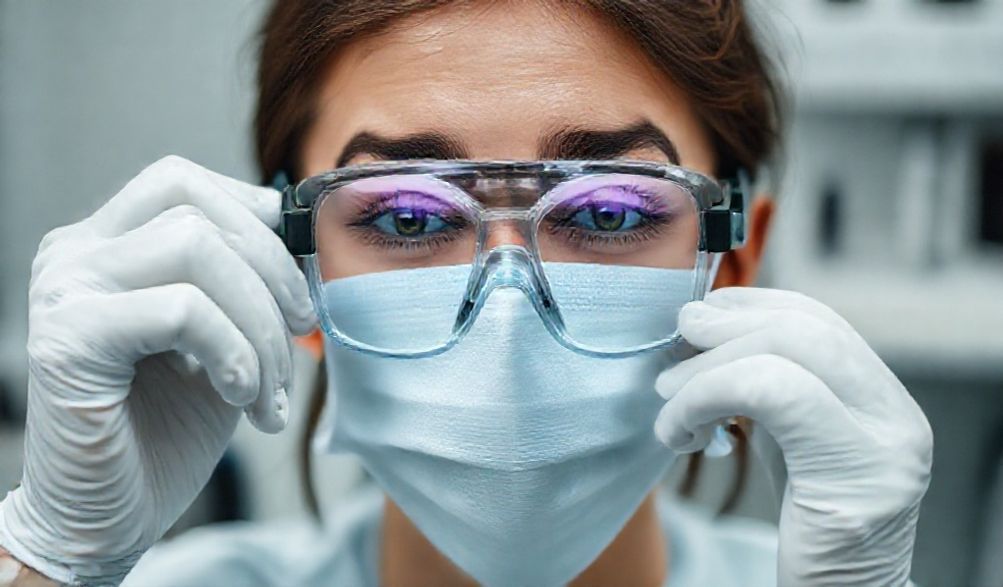
Ergo Dental Loupes: The Ultimate Guide to Ergonomics, Precision & Eye Health in Dentistry
Do you finish your clinic day with a stiff neck, a nagging ache between your shoulder blades, or a tension headache behind your eyes? You’re not alone. For far too many dental professionals, chronic pain is an accepted occupational hazard—a silent tax on a career dedicated to caring for others. That persistent hunch over the oral cavity, the squinting in dimly lit spaces, and the repetitive fine motor strain don’t just cause daily discomfort; they threaten your career longevity and quality of life.
This guide isn’t just another product review. It’s written from the perspective of understanding the clinical grind and the long-term physical toll of dentistry. Our purpose is to provide a comprehensive, unbiased resource that cuts through the marketing jargon. We’ll ground our advice in the tangible realities of clinical practice, the science of human biomechanics, and the optical engineering that can genuinely make a difference.
We will synthesize principles from ergonomic research, optical science, and the hard-won experience of practitioners who have transformed their work lives. The information here aligns with recommendations from leading dental associations and is built upon an analysis of what truly makes a loupe system “ergonomic.”
This guide will help you understand how a properly fitted ergo dental loupe system is a transformative investment—not merely a visual aid, but a fundamental ergonomic intervention. It enhances precision, drastically reduces physical strain, and protects your most valuable asset: your ability to practice. We’ll walk through the compelling “why,” the critical “how,” and provide a practical step-by-step framework for choosing the perfect system for your unique needs.
Why Ergonomics in Dentistry Isn’t a Luxury—It’s a Necessity
Let’s start with an undeniable truth: dentistry is physically demanding. The statistics are soberming and establish a clear need for intervention. Studies consistently show that a staggering 60-90% of dentists and dental hygienists will experience a work-related musculoskeletal disorder (MSD) during their career. This isn’t about occasional soreness; it’s about chronic, debilitating conditions that can cut a career short and diminish daily life outside the operatory.
The High Cost of Poor Posture
For decades, the standard posture in dentistry was a recipe for injury: back rounded, head tilted forward at 40-60 degrees, shoulders hunched. This “dentist’s slouch” places immense, uneven stress on the spine and supporting musculature.
- Cervical Strain: Your head weighs 10-12 pounds. For every inch it tilts forward, the effective weight on your cervical spine doubles. That constant forward head posture leads to chronic neck pain, stiffness, and accelerated disc degeneration.
- Lumbar Issues: The rounded lower back posture flattens the natural lumbar curve, compressing discs and straining the muscles and ligaments of the lower back, leading to pain that can radiate down the legs.
- Shoulder and Arm Tendinitis: Hunched shoulders and sustained, precise arm movements without proper support inflame the rotator cuff and the tendons of the wrist and forearm (think carpal tunnel syndrome).
The impact extends beyond pain. It affects fine motor control, increases fatigue, and can lead to burnout. The ultimate cost is a potential early departure from the profession you worked so hard to join.
Beyond the Body: Eye Strain and Visual Fatigue
While back and neck pain are prominent, the visual demands are equally punishing. The human eye is not designed for hours of sustained, unwavering focus on a tiny, dimly lit field just 14-18 inches away.
This constant near-focus work forces your ciliary muscles to remain in a state of contraction, leading to accommodative spasm and visual fatigue. Symptoms include:
* Blurred vision (both near and far)
* Dry, irritated eyes
* Headaches, often frontal or tension-type
* Difficulty shifting focus quickly
This visual fatigue isn’t just uncomfortable; it directly impacts procedural accuracy and efficiency. A tired eye is a less precise eye, potentially affecting margin detection, caries excavation, and suturing.
The Science of Ergo Dental Loupes: More Than Just Magnification
Standard magnifying loupes help you see better, but ergo dental loupes are engineered to make you work better. They are a biomechanical tool designed to bring the work to your eyes in a neutral posture, rather than forcing your body to contort to see the work. Understanding a few core principles is key.
Declination Angle: The Key to Neutral Posture
This is the single most important feature that defines an “ergonomic” loupe. The declination angle is the downward tilt of the binoculars relative to your face when you are sitting or standing upright with your head in a neutral, spine-aligned position.
- Poor Posture (Low/No Declination): With traditional loupes or no magnification, you must bend your neck significantly to bring your line of sight down to the patient’s mouth. Your body follows your head, creating the classic hunched posture.
- Optimal Posture (High Declination): Ergo loupes have a significantly higher declination angle (often 30-45 degrees or more). When you sit upright with your back against the chair and your head neutral, the loupes are already angled downward. The oral cavity appears directly in your field of view without you having to bend your neck. Your spine remains aligned, and your shoulders can relax.
(Imagine a diagram here: On the left, a figure with a straight spine but neck bent sharply forward, labeled “Poor Posture.” On the right, a figure with a straight spine and neutral neck, looking through angled loupe barrels that point down to the patient’s mouth, labeled “Neutral Posture with High Declination Angle.”)
Working Distance & Field of View: Finding Your Sweet Spot
Sus distancia de trabajo is the measurement from your eye to the patient’s oral cavity when you are in your ideal, upright working posture. It is determined by your arm length and preferred elbow angle. A professional fitting is essential to measure this accurately.
- Too Short: You’ll be cramped, elbows overly bent, and may hit the patient with your hands.
- Too Long: You’ll be leaning forward, defeating the purpose of the ergonomic design, and stability will decrease.
Field of View (FOV) is the diameter of the area you can see through the loupes at that set working distance. It is inversely related to magnification.
- Higher Magnification = Smaller FOV: You see a tiny area in incredible detail (great for endodontic apex location).
- Lower Magnification = Larger FOV: You see a broader area with less detail (ideal for hygiene or full-arch impressions).
The “sweet spot” is the magnification level that provides the detail you need for your primary procedures while maintaining a FOV large enough for efficient, contextual work.
Depth of Field and Resolution: Clarity at Every Layer
These two optical qualities determine how usable the magnified image is.
- Depth of Field (DOF): This is the “slice” of space, from near to far, that remains in sharp focus without you having to move your head. A deep DOF is critical. In a perio pocket or an endo canal, you need to see the walls and apex clearly without constant, minute head movements that break ergonomic posture and cause fatigue. Higher-quality lenses and specific optical designs provide a deeper DOF.
- Resolution: This is the lens system’s ability to render fine detail clearly. Two loupes at the same magnification can have vastly different resolutions. Superior resolution means you can distinguish between a craze line and a fracture, or identify the finest margin detail, with confidence and less eye strain.
Critical Features to Compare in Ergonomic Loupe Systems
Armed with the science, let’s translate that into a practical checklist. Choosing a loupe system is a significant investment in your primary tool—your vision.
Frame Styles: Through-The-Lens (TTL) vs. Flip-Up
-
A través de la lente (TTL):
- Ventajas: The optical barrels are permanently mounted within the lens of the frame, ensuring perfect, unchanging alignment. They are typically lighter and more streamlined, offering a “look straight through” experience. Ideal for a single, dedicated user.
- Disadvantages: Parameters (working distance, declination) are fixed at the time of manufacturing. They cannot be easily shared or adjusted for different users. If your prescription changes, the entire front lens assembly may need replacing.
-
Abatibles:
- Ventajas: The binocular magnifier flips up and down on a hinge. They are highly adjustable (interpupillary distance, sometimes working distance) and can be shared among users with similar prescriptions. They can be worn over your own prescription glasses. The frame can be reused if you upgrade just the optics.
- Disadvantages: Slightly heavier and bulkier. The flip mechanism can potentially go out of alignment if bumped, requiring recalibration. The added height can sometimes interfere with overhead lights or microscopes.
Magnification Levels: A Guide from 2.5x to 8x+
Choosing the right “mag” is about matching it to your tasks.
* 2.5x – 3.5x: Excellent starting point for dental hygienists and general dentists. Provides a wide field of view for exams, prophylaxis, and simple restorative work. Low learning curve.
* 4.0x – 4.5x: The sweet spot for many general dentists and specialists like periodontists and prosthodontists. Offers a great balance of detail for crown preps, impressions, and complex restorative work while maintaining a reasonable FOV.
* 5.0x – 6.0x+: Geared toward high-precision specialists: endodontists (locating canals, finding MB2), oral surgeons (suturing, delicate tissue work), and pediatric dentists (working on tiny teeth). Requires a very stable posture and excellent lighting. Jumping straight to high mag without experience can be disorienting.
Integrating Lighting: Why a Loupe Light is Non-Negotiable
Magnification is only half the solution. Magnification without light is like turning up the resolution on a dark TV screen—you see the pixels of the darkness more clearly. A loupe-mounted LED light is essential because:
1. It eliminates shadows from your head and hands.
2. It provides bright, white, color-accurate illumination directly coaxial with your line of sight.
3. It allows you to maintain pupil constriction, which increases your natural depth of field.
Key lighting considerations:
* LED Type: “Shadowless” or “divergent” LEDs create a broader, more even field of light, reducing harsh contrasts. Standard LEDs are more focused.
* Batería: Cordless lithium-ion battery packs are the standard, offering 4-8+ hours of runtime. Consider weight, placement (waist or headband), and charging convenience.
* Light Field: The light circle should be larger than your magnified field of view to provide peripheral illumination and reduce “tunnel vision.”
How to Select Your Perfect Ergo Loupes: A Step-by-Step Guide
This is not an online, off-the-shelf purchase. A proper fitting is as crucial as the loupes themselves.
Step 1: The Professional Assessment (The “Fitting”)
Insist on a live, one-on-one fitting with a trained consultant from a reputable company. This session should measure:
* Interpupillary Distance (IPD): The distance between your pupils, critical for binocular alignment.
* **Distancia de Trabajo:** Measured with you in your typical, upright operating posture.
* Ángulo de Declinación: Determined based on your height, chair position, and neutral head posture.
A good consultant will watch you work in a mock operatory setting, not just take static measurements.
Step 2: Prioritizing Your Clinical Needs & Budget
Create a personal decision matrix. What do you do most?
| Your Common Procedures | Priority Features | Recommended Starting Point |
| :— | :— | :— |
| Hygiene, Exams, Simple Restorative | Wide Field of View, Comfort, Lower Mag | 2.5x-3.5x TTL or Flip-Up, Good light |
| Crown & Bridge, Complex Restorative | Detail & Depth of Field | 3.5x-4.5x, High-Resolution Optics, Shadowless Light |
| Endodontics, Microsurgery | Maximum Detail, Deepest DOF | 5.0x-6.0x+, Galilean or Prismatic, Premium Light |
Budget: Ergo loupe systems range from ~$1,000 to over $5,000. Frame this not as a cost, but as an investment with a clear Return on Investment (ROI): the prevention of a single injury, the extension of your career by years, and the daily reduction of fatigue are priceless. Many companies offer financing.
Step 3: Trial, Adaptation, and Maintenance
- Adaptation: Your brain needs 2-4 weeks of el uso diario y constante to adapt. Start with simple tasks (charting, exams) for short periods. Initial dizziness or clumsiness is normal and passes.
- Mantenimiento: Learn how to clean lenses (only with microfiber and lens spray), adjust nose pads/frame, and care for the light cord and battery. Proper care ensures a decade or more of service.
Preguntas Frecuentes (FAQ) sobre Lupas Dentales
Q: Are ergonomic loupes really worth the high cost?
R: The better question is: “What is the cost of no having them?” Calculate the potential lost income from taking time off for a back injury or surgery, or the impact of being forced into early retirement. Compared to the lifetime earnings of a dental professional, a loupe system is a minor investment that safeguards your major asset—your health and ability to work pain-free.
P: ¿Cuánto tiempo se tarda en acostumbrarse a trabajar con lupas?
R: Most clinicians report a 2 to 4-week adaptation period with consistent use. The first few days may involve some spatial disorientation or “finding” your instruments. The key is to persevere through simple procedures. Your brain’s neuroplasticity will adapt, and soon working without them will feel primitive.
Q: Can I use my existing prescription glasses with loupes?
R: Sí, tiene opciones: 1) Usar lentes de contacto, 2) Hacer tallar su graduación en lentes personalizadas para lupas TTL (la solución más limpia), 3) Utilizar lupas abatibles sobre sus gafas habituales, o 4) Emplear lentes correctivas de clip dentro de lupas abatibles. Discuta la mejor opción con su optometrista y proveedor de lupas.
P: ¿Cuál es la diferencia entre las lupas “ergonómicas” y las lupas quirúrgicas estándar?
R: El término “ergo” denota específicamente un diseño concebido para la postura sentada y erguida de la odontología. Presentan un ángulo de declinación elevado. Muchas lupas quirúrgicas estándar están diseñadas para un cirujano de pie que se inclina sobre un tórax o abdomen, con una dinámica postural diferente. Asegúrese siempre de que está considerando lupas diseñadas específicamente para la ergonomía dental.
Conclusión
Las lupas dentales ergonómicas son mucho más que un simple magnificador. Son un pilar fundamental de la práctica dental moderna y sostenible. Al permitir una postura neutra de la columna, combaten directamente la principal causa de lesiones que terminan carreras en odontología. Al proporcionar una visión iluminada y magnificada, mejoran la precisión, reducen errores diagnósticos y minimizan la fatiga visual.
Elegir su sistema es una de las decisiones profesionales más importantes que tomará. Debe basarse en necesidades clínicas objetivas, anatomía individual y la guía de un profesional cualificado, no solo en lealtad a una marca o precio. Esta inversión genera dividendos cada día en forma de menos dolor, mayor confianza y pasión preservada por su trabajo.
Dé el siguiente paso. Programe una consulta con una empresa de lupas de prestigio para una medición profesional. Hable con colegas sobre sus experiencias y pida probar sus sistemas. Asista a un taller en su próximo congreso dental. Su yo futuro —libre de dolor crónico y con una longevidad profesional vibrante— le agradecerá la previsión que demuestra hoy.
p>