
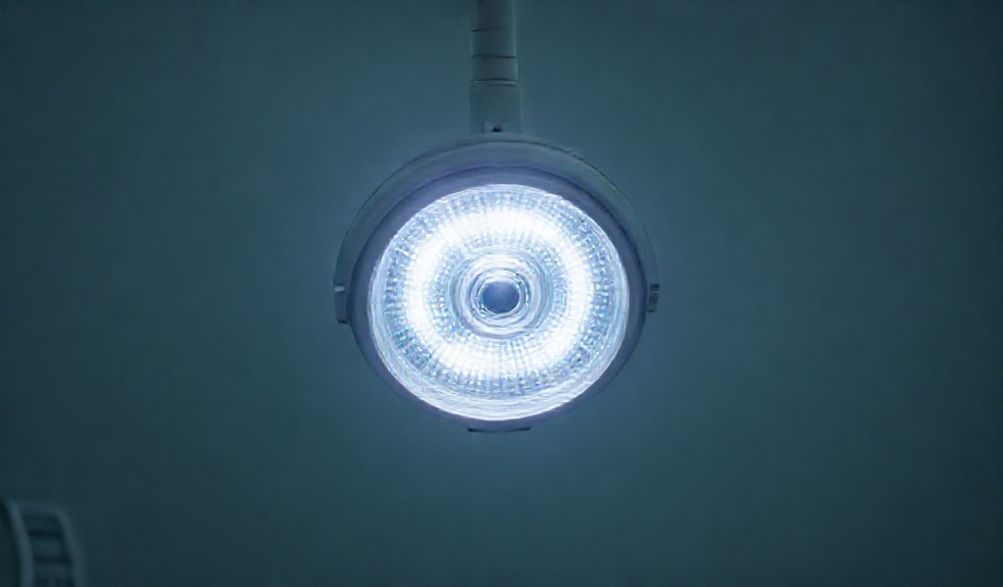
LED Exam Lights: A Complete Guide to Brighter, More Efficient Medical Examinations
Imagine a surgeon performing a delicate procedure, a dentist searching for the subtlest crack in a tooth, or a pediatrician examining a faint rash. In each scenario, the quality of light isn’t just a convenience—it’s a critical component of clinical accuracy. The right illumination can mean the difference between a confident diagnosis and a missed detail, between practitioner comfort and debilitating eye strain.
This guide is designed for the decision-makers on the front lines of patient care: physicians, dentists, clinic managers, and procurement specialists. Navigating the shift from traditional halogen to modern LED technology requires more than just a comparison of brightness; it demands an understanding of how light quality, safety, and efficiency converge in a clinical setting. Drawing from clinical studies, manufacturer specifications, and industry best practices, we’ll demystify the specifications that matter.
The transition from the warm, often heat-intensive glow of halogen to the cool, precise beam of LED represents one of the most significant yet understated technological evolutions in modern medicine. This comprehensive guide will explore the tangible benefits, decipher the key features, and outline the essential selection criteria for LED exam lights. Our goal is to empower you to choose a lighting solution that not only illuminates the examination site but also enhances patient care, improves practitioner well-being, and optimizes your facility’s operational efficiency for years to come.
Why LED Technology is Revolutionizing Medical Exam Lighting
The move to LED is more than a simple bulb swap; it’s a fundamental upgrade to a core diagnostic tool. While traditional lights served their purpose, LED technology addresses their shortcomings while introducing a suite of advantages that directly impact clinical and financial outcomes.
Unmatched Energy Efficiency and Cost Savings
The financial argument for LED is compelling and immediate. Consider the raw numbers:
* Consumo de Energía: A typical halogen exam light may consume 150-250 watts. A comparable LED luz de examen achieves the same or superior illumination using only 20-50 watts—a reduction of 70-80%.
* Vida Útil: Halogen bulbs last approximately 1,000 to 2,000 hours. LED modules are rated for 30,000 to 50,000 hours or more. This means replacing a halogen bulb multiple times a year versus potentially not replacing an LED for over a decade of regular use.
This translates directly to a lower Total Cost of Ownership (TCO). The savings manifest in dramatically reduced electricity bills and the virtual elimination of ongoing bulb purchase and replacement labor costs. The higher initial investment in an LED system is typically recouped within 1-3 years through these operational savings, after which it continues to generate positive returns.
Superior Light Quality for Enhanced Clinical Accuracy
This is where LED technology transitions from an economic upgrade to a clinical imperative. Two specifications are paramount:
- Índice de Reproducción Cromática (IRC): CRI measures a light source’s ability to reveal the true colors of an object compared to natural light. In a medical context, accurate color perception is non-negotiable for assessing tissue health, inflammation (erythema), cyanosis, jaundice, and subtle variations in shade. A LED exam light with a CRI of ≥90 (where 100 is perfect sunlight) is considered the standard for medical use, ensuring diagnostic confidence.
- Temperatura de Color: Measured in Kelvins (K), this describes the “warmth” or “coolness” of light. Halogen lights often emit a warm, yellowish light (~3000K). Modern medical LED lights typically offer a “daylight white” in the 4000K to 5000K range. This cooler, neutral light reduces eye strain for the practitioner over long periods and provides a true-to-life, shadow-reducing field that is less distorting than warm light.
Enhanced Safety and Practitioner Comfort
LEDs fundamentally improve the clinical environment:
* Minimal Heat Emission: Halogen lights are essentially high-powered heaters that produce significant infrared radiation. This can cause patient discomfort, dry out tissue, and pose a burn risk. LED exam lights emit virtually no heat at the light beam, keeping the patient cool and safe, and allowing practitioners to work in closer proximity without discomfort.
* Flicker-Free Illumination: Cheap LEDs can pulse or flicker at a frequency imperceptible to the conscious eye but linked to headaches, eye fatigue, and visual strain. High-quality medical-grade LEDs use constant current drivers to provide absolutely stable, flicker-free light, which is crucial during lengthy procedures to maintain practitioner focus and comfort.
Key Features to Consider When Choosing an LED Exam Light
Beyond the core technology, the design and functionality of the light itself determine its suitability for your specific practice. Here’s what to scrutinize.
Brightness and Intensity Control
More lumens aren’t always better; control and quality are key.
* Output & Adjustability: Brightness is measured in lux (illuminance at the surface). A high-intensity, dimmable LED exam light is essential. You need enough power for deep-cavity illumination (e.g., in surgery or dentistry) but also the ability to lower it for superficial exams to avoid glare and patient discomfort. Look for a wide dimming range with consistent color temperature throughout.
* Light Field Quality: The beam should be homogeneous—free of distracting hot spots, concentric rings, or sharp edges that can create shadows. A uniform “pool” of light ensures the entire area of interest is evenly illuminated, reducing visual refocusing and improving accuracy.
Mobility, Positioning, and Ease of Use
A light that can’t be positioned precisely is of little use.
* Ergonomic Design: The light head and arm should be effortlessly maneuverable. Consider the suficiente (can it cover the entire exam table?), articulation (does it have multiple joints for precise positioning?), and balance (does it stay in place once set?). Surfaces should be smooth and seamless for easy cleaning and sterilization.
* Opciones de Montaje: The choice depends on space and workflow.
* Montaje en Techo: Ideal for operating and procedure rooms, offering maximum floor space and wide coverage.
* Montaje en Pared: A space-saving solution for standard exam rooms.
* Soporte de Pie: Provides ultimate flexibility and is perfect for multi-purpose rooms or clinics that rearrange layouts.
* Track Systems: Allow multiple lights on a single track, excellent for operating rooms with variable configuration needs.
Durability, Certification, and Compliance
In a medical environment, build quality is synonymous with patient safety.
* Medical-Grade Construction: The fixture should withstand the rigors of daily use and frequent cleaning with harsh disinfectants. Look for robust materials and an Ingress Protection (IP) rating (e.g., IPX4 or higher) indicating resistance to moisture and fluid splashes.
* Mandatory Certifications: Never compromise here. A legitimate LED exam light must carry relevant regional and international certifications:
* FDA Registered / Cleared: For the US market.
* Marcado CE: Indicating conformity with health and safety standards for the European Economic Area.
* ISO 13485: The international quality management standard specific for medical devices.
* RoHS: Restriction of Hazardous Substances, ensuring the product is free of certain dangerous materials.
Applications Across Medical and Dental Fields
The versatility of modern LED systems allows for specialization across disciplines.
In General Practice and Specialized Clinics
- Primary Care/GP: For routine physical exams, otoscopic/ophthalmoscopic procedures, and wound care. Dimmable, high-CRI lights with good color accuracy are key.
- Dermatología: Critical for assessing lesions, pigmentation, and vascularity. Lights with exceptional color rendering (CRI >95) and sometimes polarized light to reduce surface glare are used.
- ENT & Gynecology: Require intense, focused light for deep-cavity examinations. Lights with a small, bright focal spot and excellent depth-of-field are essential.
In Surgical and Procedure Rooms
For minor surgery, endoscopy suites, and outpatient procedure rooms, lights must be more powerful and versatile. Surgical LED exam lights often feature higher lux outputs, larger diameter light heads for broader coverage, and may be part of a multi-light ceiling system to eliminate all shadows from the operative field.
In Dental Practices
Dentistry has unique demands. Dental LED exam lights are often integrated into delivery systems or are highly maneuverable operatory lights. They must provide:
* Intraoral Illumination: Bright, shadow-free light into the oral cavity.
* Shade Matching: Extraordinarily high CRI (often 95+) for accurate color matching of crowns, veneers, and composites to natural teeth.
* Cool Light: To prevent heat-curing of materials during procedures.
Making the Switch: Implementation and ROI
Transitioning to LED lighting is a strategic project. A structured approach ensures a smooth implementation and maximizes your return.
Evaluating Your Current Lighting and Needs
Start with a simple audit of each room:
* What specific procedures are performed here?
* What are the main frustrations with the current lights? (e.g., “too hot,” “creates shadows,” “bulbs burn out constantly,” “hard to position,” “colors look off”)
* What is the mounting preference (ceiling, wall, floor)?
* What is the budget for this upgrade?
Cálculo de su Retorno de la Inversión (ROI)
Create a simple 5-year TCO comparison:
1. Current Halogen System Costs: Estimate annual energy use (Watts x Hours of Use) and multiply by your kWh cost. Add the annual cost of replacement bulbs and the labor to change them.
2. Proposed LED System Costs: Calculate the much lower annual energy cost. The bulb replacement cost is near zero. Add the purchase price of the new light, amortized over its lifespan.
3. The Difference: The cumulative savings over 2-5 years, minus the initial investment, is your net savings. Don’t forget to factor in intangible benefits like improved staff comfort and potential diagnostic improvements.
Mejores Prácticas de Instalación y Mantenimiento
- Instalación: For ceiling and wall mounts, professional installation by a qualified technician is strongly recommended to ensure secure mounting and proper electrical connection.
- Mantenimiento: LED systems are remarkably low-maintenance. Routine care involves wiping down the light head and arms with approved disinfectants. The primary task is periodic inspection of the arm’s tension and joints to ensure smooth movement.
Preguntas Frecuentes (FAQ)
Q: Are LED exam lights really worth the higher upfront cost?
R: Absolutely. While the initial investment may be higher, the dramatic reduction in energy consumption (often 50-80% less) and the elimination of frequent bulb replacements (LEDs last 30,000-50,000 hours vs. halogen’s 1,000-2,000) lead to significant savings within 1-3 years. The improved light quality and reduced heat also enhance clinical outcomes and comfort.
Q: Can I simply replace the bulb in my old exam light with an LED bulb?
R: Caution is advised. While retrofit bulbs exist, they may not be optimized for your specific fixture’s optics and heat management. For guaranteed performance, safety, and to maintain any existing medical device certifications, it is often recommended to consult the original manufacturer or invest in a purpose-built LED exam light system.
Q: How do I know if the light has good enough color accuracy for my work?
R: Busque las El Índice de Reproducción Cromática (IRC) specification. A CRI of 90 or above is considered excellent for medical use, ensuring colors of tissue, blood, and materials are rendered truthfully. Some high-end lights also offer adjustable color temperature to match specific procedural needs.
Q: What is the typical warranty for a medical-grade LED exam light?
R: Reputable manufacturers typically offer warranties ranging from de 3 a 5 años on the entire unit, with specific long-term guarantees (e.g., 50,000 hours) on the LED modules themselves. A strong warranty is a key indicator of the manufacturer’s confidence in product durability.
Conclusión
Elegir una LED exam light is far more than a procurement decision; it is a strategic investment in the foundational tools of patient care. The benefits are clear: unparalleled energy efficiency that lowers operational costs, superior light quality that elevates diagnostic confidence, and enhanced safety features that protect both patient and practitioner.
As you evaluate options, let expertise guide you. Prioritize the specifications that matter—high CRI for accuracy, robust certifications for safety, and medical-grade durability for longevity—over price alone. Consult with clinical engineers or trusted medical equipment providers who understand your workflow.
Your next step is to act on this knowledge. Audit the lighting in your key exam rooms, identify the greatest points of friction, and request a demo or trial from a reputable supplier. Experience the difference that modern, purpose-built LED illumination can make. By choosing the right light, you are taking a definitive step towards a brighter, more efficient, and more clinically excellent future for your practice.
p>