
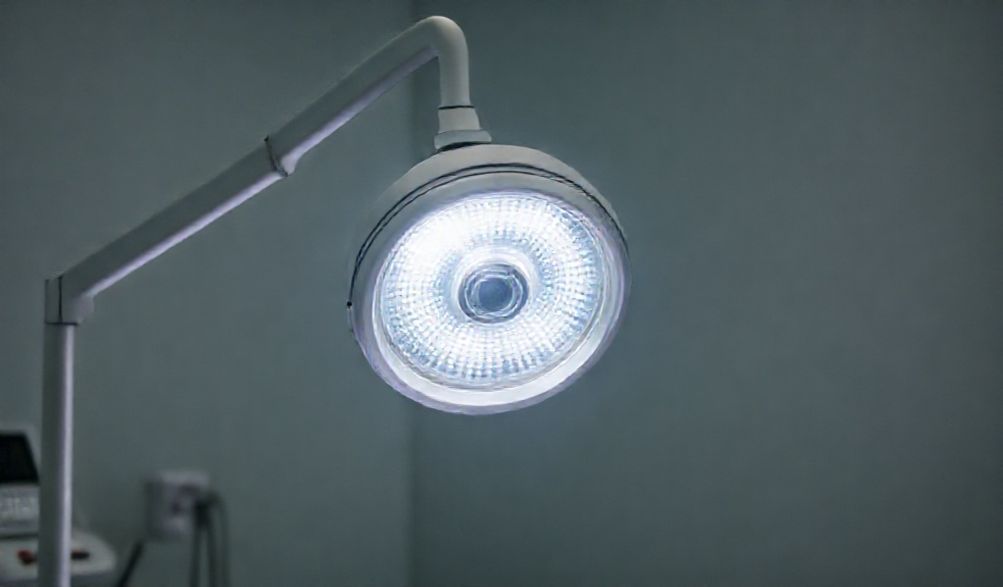
The Ultimate Guide to LED Examination Lamps: Benefits, Features & Selection
Imagine this: you’re mid-procedure, and you lean in to assess a subtle tissue variation or the margin of a preparation. The light casts a faint shadow, or worse, the color appears slightly off under the warm glow of your old lamp. You squint, reposition, and perhaps feel a wave of heat on your neck. That moment of uncertainty—however brief—is more than an inconvenience; it’s a potential compromise in diagnostic accuracy and clinical efficiency.
For medical, dental, and veterinary professionals, illumination is not merely about seeing—it’s about perceiving with precision. The right light is a silent partner in every examination, diagnosis, and treatment. This guide is born from a deep understanding of these critical clinical needs. Our purpose is to serve as your comprehensive, expert-driven resource, cutting through the technical jargon to help you make a truly informed decision about one of your most vital tools: the examination lamp.
We will explore the undeniable benefits that have made LED technology the new gold standard, break down the key features that separate adequate lighting from exceptional lighting, provide a structured framework for selecting the perfect lamp for your specialty, and outline essential practices for installation and care. Consider this your roadmap to achieving unparalleled clarity, comfort, and confidence in your practice.
Why LED Technology is Revolutionizing Medical Examination Lighting
The shift from halogen and metal halide to LED in clinical settings is not a mere trend; it’s a fundamental upgrade. LED technology addresses the core limitations of its predecessors, delivering tangible improvements that directly impact patient care and practice operations.
Unmatched Clarity & Color Accuracy (CRI)
At the heart of diagnostic accuracy is the ability to see true color. The Color Rendering Index (CRI) is a quantitative measure of a light source’s ability to reveal the authentic colors of an object compared to a natural reference light. The scale goes up to 100.
- Why High CRI is Non-Negotiable: For assessing tissue health, inflammation, cyanosis, jaundice, or tooth shade matching, a high CRI (typically >90, with >95 being ideal) is critical. A low-CRI light can make healthy tissue appear pallid or mask subtle erythema, leading to potential misdiagnosis.
- The Halogen Contrast: While halogen lamps have a decent CRI, they often produce a warmer, yellowish light that can distort color perception. LED lamps with high CRI provide a consistent, daylight-like spectrum that renders colors with stunning accuracy and consistency, ensuring what you see is what is truly there.
Superior Energy Efficiency & Cost Savings
The economic argument for LED is compelling and goes far beyond “saving electricity.”
- Power Consumption: A typical halogen examination lamp may consume 150-300 Watts. An LED lamp delivering the same or greater illuminance typically uses 15-50 Watts. This represents an immediate 70-90% reduction in energy draw per fixture.
- Long-Term ROI: The savings compound over time. Reduced energy bills are just the start. Halogen bulbs may last 1,000-2,000 hours, requiring frequent, costly replacements and clinical downtime. LED modules are rated for 50,000 hours or more. Over a 10-year period, the elimination of bulb purchases and the drastic cut in energy use mean the LED lamp often pays for itself, transforming it from an expense into a strategic investment.
Enhanced Comfort with Cooler Operation
Patient and practitioner comfort is a cornerstone of quality care. Traditional halogen lamps are essentially high-powered heaters; a significant portion of their energy output is infrared radiation (heat).
- The Problem of Heat: This radiant heat can cause discomfort, dry out tissues prematurely during long procedures, and even lead to sweating for both the clinician and the patient. It’s a subtle but persistent stressor.
- The LED Advantage: LED technology generates very little infrared radiation. The light produced is essentially “cold.” Any heat generated is managed through heat sinks at the rear of the LED module, not projected onto the operative field. This creates a more comfortable environment for everyone, allowing for longer, more focused procedures without thermal distraction.
Key Features to Evaluate in an LED Examination Lamp
Beyond the core technology, the design and functionality of the lamp itself are paramount. Here are the critical features that dictate real-world performance.
Adjustability and Ergonomic Design
A light that can’t be positioned perfectly is a compromised tool. Ergonomic design prevents practitioner fatigue and ensures consistent, shadow-free illumination.
- Multi-Axis Movement: Look for lamps with multiple, fluidly moving joints (often 4-6 axes). They should offer a wide range of motion, easy reach across the patient, and the ability to position the light source precisely from almost any angle without “kickback” or drift.
- Opciones de Montaje: The base of the system dictates its utility.
- Montaje en Techo: Maximizes floor space, offers the widest range of motion, and is ideal for surgical suites or procedures where a floor stand might be obstructive.
- Montaje en Pared: A space-saving solution for smaller exam rooms or specific procedural areas.
- Soporte de Pie: Provides ultimate portability and flexibility, perfect for multi-room use or practices with flexible layouts.
- Rail Mount: Commonly used in dental and surgical settings, allowing the lamp to slide along a track for shared use between multiple operatory points.
Light Field & Intensity Control
Different procedures demand different light characteristics. Versatility is key.
- Spotlight vs. Wide-Field: A focused spotlight is ideal for deep-cavity work in dentistry or minor surgical procedures, providing intense, concentrated light. A wide-field, homogeneous light is better for general examinations, dermatology, or wound care, offering even illumination across a broader area. Some advanced lamps offer a tunable field via focusable optics.
- Dimmability: This is an essential feature, not a luxury. The ability to smoothly dim the light serves multiple purposes: it allows for adjustment to patient light sensitivity (assessing pupil reaction), helps in visualizing subtle, low-contrast details without glare, and reduces eye strain for the clinician during long sessions.
Build Quality and Sterilization Compatibility
A medical device must withstand the rigors of the clinical environment.
- Medical-Grade Materials: The housing and handles should be made of durable, non-corrosive materials like high-quality polymers or anodized aluminum. They must be seamlessly sealed to prevent the ingress of fluids, dust, and pathogens.
- Grado de Protección (IP): This international standard (e.g., IP54, IP65) clearly defines a product’s resistance to solids and liquids. For examination lamps, a rating that protects against splashes and dust is crucial for safe and effective cleaning. An IP54 rating or higher is typically recommended for clinical settings.
- Disinfection Protocol: The lamp should be explicitly designed for frequent wiping with hospital-grade disinfectants (alcohols, quaternary ammonium compounds, etc.) without degrading the surfaces, labels, or internal components.
How to Choose the Right LED Lamp for Your Practice
Selecting a lamp is not a one-size-fits-all process. The best choice is the one that aligns perfectly with your specific clinical workflow and requirements.
Assessing Your Specialty’s Needs
- Odontología: Requires exceptional color accuracy (CRI >95) for shade matching, intense focal spot illumination for cavity work, and often a ceiling or rail mount for optimal positioning over the patient chair. Hands-free operation via voice or gesture control can be a significant benefit.
- Dermatology & Aesthetics: Prioritizes wide, even, shadow-free illumination with superb color rendering to assess skin lesions, texture, and vascularity. Minimal heat output is critical for patient comfort during close examinations.
- General Practice / Primary Care: Needs a versatile lamp with a good blend of spot and wide-field settings, excellent CRI for general physical exams, and often a flexible floor stand or wall mount for use in a standard exam room.
- Surgery (Minor/Ophthalmic/Plastic): Demands the highest intensity, deep-cavity illumination with absolutely sterile handles or touch-free controls. Ceiling mounts are predominant. Lamps must be compatible with surgical drape covers.
- Medicina Veterinaria: Requires robust, durable construction to withstand a more active environment. Brightness and adjustability are key for examining various species and sizes. Easy-to-clean, scratch-resistant surfaces are a must.
Comparing Top Brands and Models
When evaluating the market, you’ll encounter brands that have built strong reputations in specific niches. It’s useful to understand these general positioning.
- Brands Prominent in Dental & Surgical: Companies like A-dec, Midmark, y Planmeca often integrate examination lighting into their delivery system ecosystems. Their lamps are engineered for precise integration with patient chairs and surgical setups, emphasizing seamless workflow and sterile field management.
- Brands Specializing in Clinical Lighting: Manufacturers such as Waldmann, MAVIG, y Trumpf are historically focused on medical lighting across disciplines. They are often recognized for optical excellence, offering advanced features like homogeneous light fields, hybrid spot/wide optics, and rigorous compliance with international medical device standards.
Demonstrating Expertise: Rather than seeking a single “best” lamp, focus on the features commonly emphasized by these brands. A practice focused on intricate surgical procedures might prioritize models known for their depth-of-field and sterile handles, often found in the portfolios of surgical lighting specialists. A high-volume dental practice might value models designed for seamless integration with their specific chair brand. The goal is to match brand strengths to your procedural needs.
Budgeting and Total Cost of Ownership
The most expensive lamp is not always the best for you, and the cheapest upfront cost is rarely the most economical. Adopt a Total Cost of Ownership (TCO) perspective over a 5-10 year horizon.
- Initial Purchase Price: Includes the lamp unit and the chosen mounting system.
- Installation Cost: Professional installation for ceiling or rail systems, which may require electrical work and structural support.
- Costo Operativo: The ongoing energy consumption (favor low-wattage, high-lumen LEDs).
- Costo de Mantenimiento: The cost and frequency of replacement parts. With LEDs, this is minimal, but consider the warranty length and terms. A 5-year warranty on the LED module is a strong indicator of quality.
- Clinical Efficiency Value: The intangible but real value of reduced eye strain, improved diagnostic confidence, and smoother workflow. This is where quality truly pays dividends.
Mejores Prácticas de Instalación, Mantenimiento y Seguridad
Proper setup and care protect your investment and ensure safe, reliable performance.
Professional Installation Considerations
Unless opting for a simple floor stand, professional installation is highly recommended.
* Electrical Requirements: Ensure your room’s electrical supply matches the lamp’s requirements. Some high-end systems may require a dedicated circuit.
* Structural Support: Ceiling and wall mounts must be anchored into studs or with appropriate structural hardware to safely bear the weight and torque of the extended arm.
* Workflow Placement: Position the lamp’s base so its full range of motion covers all necessary areas without obstructing cabinetry, monitors, or movement around the patient.
Routine Cleaning and Care
- Siga siempre las instrucciones específicas del fabricante. Generally, power off and unplug the lamp before cleaning.
- Use a soft, lint-free cloth lightly dampened with a compatible disinfectant. Avoid abrasive cloths or harsh chemicals not approved by the manufacturer.
- Never spray cleaner directly onto the lamp. Spray onto the cloth first.
- Gently wipe the housing and handles. For the optical lens, use a separate, clean, dry microfiber cloth to avoid streaks.
Garantizar la Seguridad del Paciente y del Profesional
- Medical Device Standards: Reputable lamps comply with international safety standards like la IEC 60601-1 for medical electrical equipment, ensuring protection against electric shock, mechanical hazards, and excessive radiation.
- Optical Safety: Quality LED lamps are engineered to be free of harmful UV and IR-A/B radiation. They should also minimize glare and flicker, which can cause eye strain and headaches.
- Thermal & Mechanical Safety: The lamp head should remain cool to the touch. The arm should move smoothly but lock securely in place to prevent unexpected movement during a procedure.
Frequently Asked Questions (FAQ) About LED Examination Lamps
Q1: How long do LED examination lamps typically last?
R: LED modules are rated for lifespans of 50,000 hours or more. In a clinical setting used 8 hours a day, 5 days a week, this translates to over 20 years of service. This dwarfs the 6-12 month typical lifespan of a halogen bulb, virtually eliminating replacement bulb costs and downtime.
Q2: Can the light intensity be too bright for patients?
R: High-quality LED lamps produce a homogeneous, shadow-reduced light that is often perceived as more comfortable than the harsh, point-source glare of older technologies. Furthermore, dimmability is the key control. A good lamp allows you to lower the intensity to a comfortable level for patient interviews or sensitive exams while providing the power to boost it for detailed procedural work.
Q3: Are LED examination lamps compatible with all exam room setups?
R: Generally, yes, due to versatile mounting options. However, you must check the voltage specification (e.g., 110-120V vs. 220-240V) for your region. For ceiling mounts, ensure your room has adequate height and structural support. Always review the lamp’s specifications for required clearances and compare them to your room layout.
Q4: What should I do if my LED lamp flickers or dims unexpectedly?
R: First, perform basic troubleshooting: ensure the power cord is securely connected at both the lamp and the outlet, and try a different outlet to rule out a circuit issue. Check that all arm joints are fully seated and that nothing is obstructing the sensors (on touch-free models). If the issue persists, immediately contact a qualified medical equipment technician or the manufacturer’s service department. Do not attempt to open or repair the lamp housing yourself, as this can void warranties and create electrical safety hazards.
Conclusión
La transición a la iluminación LED para exámenes representa una de las mejoras de mayor impacto que una consulta clínica puede realizar. Es la convergencia del avance tecnológico y el beneficio práctico, que ofrece una precisión de color inigualable para diagnósticos confiables, ahorros drásticos de energía y costos para la eficiencia operativa, y un entorno más fresco y confortable tanto para el profesional como para el paciente.
Invertir en una lámpara de examen LED de alta calidad es, fundamentalmente, una inversión en el núcleo de su práctica: la precisión diagnóstica y la eficacia clínica. Es una herramienta que favorece el bienestar del profesional al reducir la fatiga física y visual, y que aumenta el valor a largo plazo de la consulta gracias a su fiabilidad y bajo coste total de propiedad.
Utilice las características y criterios descritos en esta guía como su lista de verificación definitiva. Priorice un alto índice de reproducción cromática (CRI), una ajustabilidad ergonómica, una construcción robusta y un campo de luz homogéneo y regulable adaptado al flujo de trabajo de su especialidad. Por último, le aconsejamos dar el siguiente paso con confianza: consulte con proveedores de equipos médicos de reputación. Solicite demostraciones en vivo en un entorno similar al suyo. Experimente la diferencia en la calidad de la luz, maneje la capacidad de ajuste y compruebe de primera mano cómo la iluminación adecuada puede transformar su entorno clínico, pasando de ser meramente funcional a excepcionalmente óptimo.
p>