
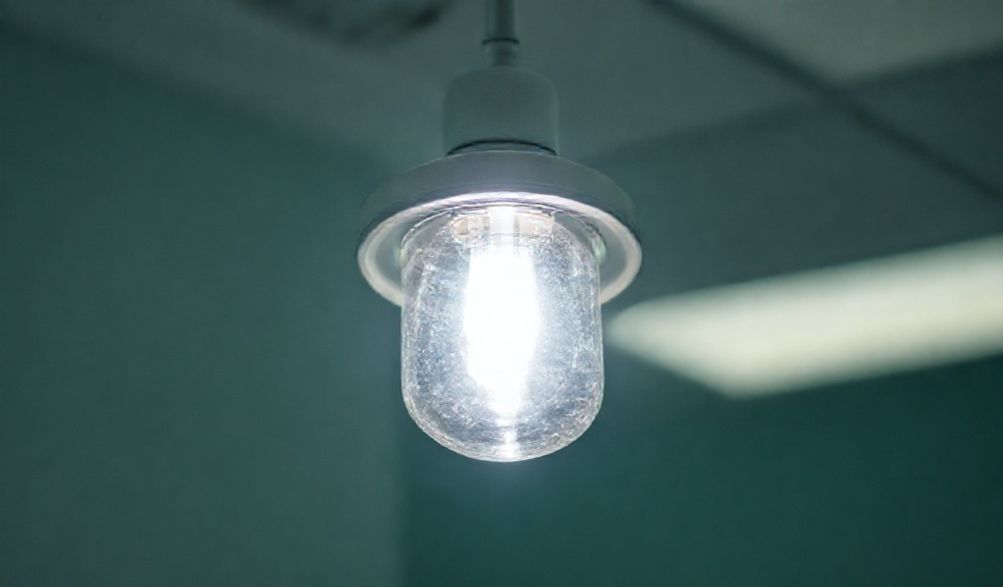
The Ultimate Guide to Medical Lamps: Types, Uses, and How to Choose
Imagine a surgeon poised to make a delicate incision, a dentist searching for the subtlest crack in a tooth, or a pediatrician assessing a newborn’s skin tone. In each of these critical moments, success hinges not just on skill, but on something often taken for granted: light. But this isn’t the light that fills your living room. In healthcare, illumination is a fundamental tool, as vital as a scalpel or a stethoscope. So, what transforms a simple bulb into a medical lamp? It’s a combination of rigorous engineering, adherence to life-saving standards, and a deep understanding of human physiology.
This guide is designed to demystify the world of medical-grade lighting. We’ll move beyond catalog specifications to explore the por qué behind the design, drawing on clinical requirements, industry standards, and practical realities. Whether you are a surgeon, a clinic manager, a dental practitioner, or a procurement specialist, our goal is to equip you with the knowledge to make confident, informed decisions about one of the most frequently used—and most critical—pieces of equipment in any healthcare setting.
By the end of this guide, you will have a clear understanding of the different types of medical lamps, their specific clinical applications, the key technical features that matter most, and a practical framework for selecting the perfect light for your needs.
What is a Medical Lamp? Beyond Standard Lighting
At its core, a medical lamp is a precision instrument designed to support visual accuracy in diagnosis, treatment, and surgical intervention. It is engineered to meet challenges that standard commercial lighting never encounters.
Defining Medical-Grade Illumination
The difference between a standard office light and a medical lamp is the difference between a kitchen knife and a surgical scalpel. Both cut, but their purpose, design, and regulatory oversight are worlds apart. Medical lighting is governed by stringent international standards, most notably the IEC 60601-1 series for the safety and essential performance of medical electrical equipment. This certification is non-negotiable; it ensures the device is safe for use in proximity to patients and staff, with protections against electrical shock, excessive heat, and mechanical failure.
Beyond safety, medical-grade light is defined by its performance parameters: intense yet cool illumination, exceptional color accuracy, and designs that prioritize sterility and infection control. A typical household LED’s purpose is to make a room feel inviting; a medical lamp’s purpose is to reveal truth.
Core Requirements: Safety, Precision, and Ergonomics
Every quality medical lamp is built to address three pillars:
-
Precision through Quality of Light: This encompasses several factors:
- Shadow Reduction & Uniformity: Crucial in surgery and examination, advanced lights use multiple LED points or reflector systems to “fill in” shadows cast by the clinician’s hands or instruments, providing even illumination across the entire field.
- Cool Light Output: High-intensity light often means heat. Medical lamps must deliver bright light without radiating excessive heat onto the patient’s tissue, which can cause desiccation (drying out) and discomfort.
- Índice de Reproducción Cromática (IRC): This is perhaps the most critical spec for diagnosis. CRI measures a light source’s ability to reveal the true colors of an object compared to natural light. A CRI >90 (out of 100) is essential for accurately differentiating between tissue types, spotting inflammation, identifying cyanosis (bluish skin), or assessing wound healing. Low-CRI lighting can distort colors, leading to misdiagnosis.
- Adjustable Intensity & Color Temperature: The ability to dim the light or shift its color temperature (e.g., from a cooler, bluer white to a warmer, yellower white) allows clinicians to optimize the view for specific procedures or tissue types.
-
Safety & Infection Control: Surfaces must be smooth, non-porous, and easy to clean with hospital-grade disinfectants without degrading. Seals prevent dust and fluid ingress. For surgical lights, handles are often designed to be sterilizable or are single-use.
-
Ergonomics & Reliability: The lamp must be effortlessly maneuverable, staying firmly in position once placed. Arms should have a wide range of motion, smooth articulation, and sufficient reach to accommodate various room layouts and patient positions without obstructing the clinical team.
Types of Medical Lamps and Their Clinical Applications
The term “medical lamp” is an umbrella covering a family of specialized devices, each engineered for a specific clinical task. Understanding this taxonomy is the first step in selecting the right tool.
Surgical Lights (Operating Lights)
The pinnacle of medical lighting technology, surgical lights are designed for deep-cavity illumination during invasive procedures. Their primary mission is to provide brilliant, shadow-free light into the depths of a surgical site.
- Key Technology: They employ shadow dilution technology, typically via a multi-LED array in a single reflector or a cluster of smaller, focused LED heads. This configuration ensures that if a surgeon’s head or hand blocks one light source, the others fill in the shadow.
- Clinical Focus: Delivering high lux levels (often 40,000 to 160,000 lux at the center of the field) with deep penetration. Many offer adjustable color temperature to enhance contrast between red tissue and blue or white backgrounds (like sutures or fascia).
- Design: Feature sterile, removable handles or touchless control systems to maintain the sterile field. Mounting is almost exclusively ceiling-based for stability and to keep floor space clear.
Examination Lights (Diagnostic Lights)
This broad category includes the most common medical lamps found in clinics, emergency rooms, dental offices, and bedside procedures. Their goal is to provide bright, white, uniform light for surface examination and minor interventions.
- Procedure Lights: A step between exam and surgical lights. Used for minor surgeries, suturing, wound care, and biopsies. They are highly maneuverable, offer very good intensity and color rendering, and may be ceiling, wall, or floor-mounted.
- General Examination Lights: The workhorses of the clinic. Used for physical exams, otoscopic/ophthalmoscopic procedures, and patient assessments. They prioritize flexibility, ease of positioning, and good CRI. Often found on rolling floor stands or wall-mounted articulating arms.
- Headlights (LOUPE Lights): Worn on the clinician’s head, these provide direct, hands-free illumination exactly where the user is looking. Essential for dentists, surgeons performing detailed work, and specialists in ENT or plastic surgery. They often integrate with magnifying loupes.
Specialized Medical Lighting
Beyond the major categories, numerous niche medical lamps serve specific diagnostic or therapeutic purposes:
- Fuentes de Luz Endoscópicas: High-intensity “cold” lights transmitted via fiber-optic cables to illuminate internal body cavities through scopes.
- Lámparas de Fototerapia: Use specific wavelengths of light (often blue for neonatal jaundice, or narrow-band UVB for psoriasis) to treat medical conditions.
- Dermatology Lamps: Such as Wood’s lamps, which use ultraviolet light to help diagnose fungal or bacterial skin infections and pigment disorders.
- Instrument-Integrated Lights: The small but powerful lights built into devices like otoscopes (for ears) and ophthalmoscopes (for eyes).
Características Clave a Considerar al Elegir una Lámpara Médica
Navigating product specifications can be daunting. Here’s a breakdown of what those technical terms actually mean for clinical practice.
Light Source Technology: LED vs. Halogen
The industry has decisively moved toward LED (Light Emitting Diode) technology, and for compelling reasons:
- LED: The modern standard. LEDs produce minimal radiant heat, are extremely energy-efficient, and have exceptionally long lifespans (often 50,000+ hours). They offer instant-on capability, stable color output over time, and precise control over intensity and color temperature. The higher upfront cost is offset by negligible maintenance (no bulb changes for years) and low operating costs.
- Halógena: The older technology. Halogen bulbs produce a warm, continuous spectrum of light but convert most of their energy into heat. They have a short lifespan (1,000-5,000 hours), requiring frequent, costly bulb replacements and generating significant ambient heat. While the fixture itself may be cheaper initially, the total cost of ownership is higher.
Verdict: For any new procurement, LED is the only recommended choice for its clinical, operational, and economic benefits.
Technical Specifications Decoded
- Lux/Lumen Output: Lux measures illuminance (how much light falls on a surface), while lumens measure luminous flux (total light emitted). For medical use, lux at the working distance is more relevant. A general exam may require 2,000-5,000 lux, while a major surgical site needs 40,000-160,000 lux. Ensure the lamp’s output matches the visual demands of your task.
- Temperatura de Color (Kelvin): Measured in Kelvins (K), this describes the “warmth” or “coolness” of white light. Lower temperatures (3000K-4000K) are warmer/yellower; higher temperatures (4500K-7000K) are cooler/bluer. Many clinicians prefer cooler light (5000K-6700K) for its bright, alert quality that enhances visual acuity and contrast. Adjustable color temperature is a valuable premium feature.
- Índice de Reproducción Cromática (IRC): As mentioned, this is critical. Always choose a lamp with a CRI of 90 or higher. A CRI of 95+ is ideal for the most demanding diagnostic work. Do not compromise on this metric.
Mechanical & Operational Factors
- Maneuverability: Assess the lamp’s reach (horizontal and vertical), the number of articulation points, and the balance of the arms. It should move smoothly, stay in position without drift, and be easy to position with one hand.
- Opciones de Montaje: Consider your space.
- Montaje en Techo: Most stable, frees up floor space, ideal for surgical and primary procedure lights.
- Montaje en Pared: Good for exam rooms with space constraints.
- Soporte de Pie: Offers maximum mobility and flexibility, perfect for multi-purpose rooms or clinics that reconfigure often.
- Track/Rail System: Allows multiple lights to share a ceiling track, offering flexible positioning in ORs or procedure rooms.
- Control Systems: Look for intuitive controls—touch panels on the light head, remote pendants, or foot switches—that allow adjustment without breaking sterility. Some offer programmable memory settings.
- Maintenance & Cleaning: The housing should be seamless and made of materials that can withstand daily wiping with harsh disinfectants. Check the manufacturer’s cleaning guidelines.
How to Select the Right Medical Lamp: A Step-by-Step Guide
Making the final choice involves synthesizing clinical need with practical reality. Follow this framework.
Step 1: Assess the Primary Clinical Use Case
Start with the most critical question: What is the primary procedure this light will support? Use this simple guide:
* Major Surgery (e.g., abdominal, orthopedic): → Major Surgical Light (Ceiling-mounted, high lux, deep cavity, shadow dilution).
* Minor Surgery/Procedure (e.g., suturing, biopsies, dental surgery): → Minor Surgical/Procedure Light (May be ceiling or floor-mounted, high CRI, excellent maneuverability).
* Patient Examination & Diagnosis (e.g., physical exams, wound inspection): → Lámpara de Examen (Floor stand or wall mount, good CRI, adjustable intensity, wide coverage).
Step 2: Evaluate Your Workspace and Infrastructure
Measure your room. Consider ceiling height, the placement of other equipment (booms, monitors), and the need for clear floor space. A massive surgical light is useless in a low-ceilinged procedure room. Ensure your electrical infrastructure can support the chosen system, especially for ceiling-mounted units that may require dedicated power or data cabling.
Step 3: Set Your Budget and Consider Total Cost of Ownership (TCO)
Look beyond the sticker price. Calculate the TCO over 5-10 years:
* Precio de Compra: Initial cost of the lamp.
* Installation Cost: Particularly for ceiling mounts, which may require structural reinforcement and professional electrical work.
* Consumo de Energía: LEDs will save significantly on electricity.
* Mantenimiento y Repuestos: Factor in the cost and frequency of bulb replacements (negligible for LED), filters, and spare parts. What is the warranty period?
* Contratos de Servicio: Availability and cost of local technical support.
Step 4: Prioritize Compliance and Certification
Esto es un imperativo de seguridad. Considere únicamente equipos con certificaciones válidas de dispositivo médico. Busque marcas como:
* Marcado CE (con conformidad con la norma IEC 60601-1 para el mercado europeo).
* Autorización/Registro de la FDA (para el mercado estadounidense).
* Certificación ISO 13485 del sistema de gestión de calidad del fabricante.
La adquisición de equipos no certificados expone a su instalación, personal y pacientes a un riesgo inaceptable y probablemente infringe la normativa local.
Preguntas Frecuentes (FAQ) Sobre Lámparas Médicas
P1: ¿Cuál es la vida útil típica de una lámpara médica LED?
R: Las lámparas médicas LED de alta calidad suelen tener una vida útil nominal de 50.000 a 100.000 horas. Esto se traduce en más de una década de uso clínico regular antes de que la salida de luz se degrade significativamente. Este es un componente clave de su retorno de la inversión, ya que prácticamente elimina los costos de reposición de bombillas y el tiempo de inactividad.
P2: ¿Se puede utilizar una luz LED estándar para exámenes médicos?
R: Enfáticamente, no. Las luces LED estándar carecen del alto Índice de Reproducción Cromática (IRC >90) necesario para una evaluación precisa de los tejidos. No están diseñadas para mantenerse frías al tacto a corta distancia, carecen del control preciso de intensidad necesario para diferentes procedimientos y, lo más importante, no están certificadas como equipos eléctricos médicos. Su uso introduce riesgos de diagnóstico erróneo, incomodidad del paciente y peligros de seguridad eléctrica.
P3: ¿Qué importancia tienen la garantía y el soporte técnico?
R: Extremadamente importante. Un medical lamp Una lámpara médica es un dispositivo crítico y de uso frecuente. Una garantía integral (a menudo de 3 a 5 años para los LED) y el acceso a un soporte técnico capacitado y receptivo son esenciales. Antes de comprar, investigue la reputación del fabricante en cuanto a servicio y asegúrese de que los repuestos y el soporte estén disponibles en su región.
P4: ¿Cuáles son los consejos de mantenimiento más importantes para una lámpara médica?
R:
1. Limpieza Regular: Limpie todas las superficies diariamente (o entre pacientes) utilizando únicamente desinfectantes aprobados por el fabricante para evitar dañar los acabados o sellos.
2. Inspección de la Mecánica: Verifique periódicamente que los brazos articulados se muevan con suavidad y observe cualquier signo de holgura o deriva.
3. Manipule con Cuidado: Evite golpear la cabeza de la lámpara o aplicar fuerza excesiva sobre los brazos.
4. Mantenimiento Profesional: Adhiérase al programa de servicio recomendado por el fabricante para inspecciones internas y calibración, a fin de garantizar un rendimiento y una seguridad óptimos.
Conclusión
Seleccionar una medical lamp La selección de una lámpara médica es una decisión que impacta la precisión diagnóstica, la eficiencia de los procedimientos y, en última instancia, los resultados del paciente. No es la compra de una simple fuente de iluminación, sino una inversión en una herramienta clínica fundamental. La elección correcta se encuentra en la intersección de la necesidad clínica, el rendimiento técnico y los requisitos prácticos de la instalación.
Le animamos a utilizar esta guía como base para discusiones informadas con equipos clínicos, gerentes de instalaciones y proveedores de equipos. Para entornos de alto riesgo, solicite siempre una demostración en vivo o una instalación de prueba en un entorno simulado. Ver el rendimiento de la luz en su propio espacio es la prueba definitiva.
¿Tiene preguntas específicas sobre equipar un quirófano, una nueva clínica o un área de procedimientos especializados? Consultar con un ingeniero clínico calificado o un asesor experimentado en equipos médicos es siempre el siguiente paso recomendado.
p>