
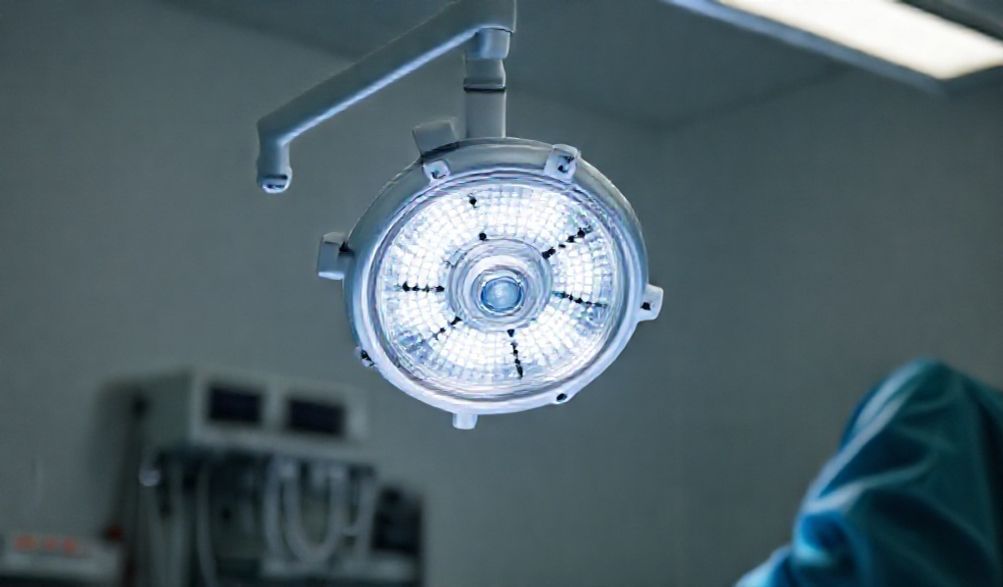
Mobile Surgical Lights: A Comprehensive Guide to Portable Operating Room Lighting
In the high-stakes environment of surgery, where a millimeter can mean the difference between success and complication, one factor is fundamentally non-negotiable: visibility. Proper surgical illumination is a cornerstone of patient safety, directly impacting a surgeon’s ability to dissect precisely, identify critical structures, and control bleeding. For decades, the iconic ceiling-mounted surgical light has been the undisputed standard. However, the evolving landscape of modern healthcare—with its emphasis on flexibility, efficiency, and point-of-care intervention—has catalyzed the rise of a powerful alternative: the mobile surgical light.
This guide serves as an authoritative, expert-driven resource for surgeons, hospital administrators, procurement officers, and biomedical engineers. We will dissect the technology, applications, and critical selection criteria for mobile surgical lighting systems. Our aim is to provide trustworthy, actionable information, synthesizing manufacturer specifications, clinical insights, and industry best practices to help you understand, select, and utilize this transformative technology effectively.
What is a Mobile Surgical Light? Defining Portable OR Illumination
Core Definition and Key Components
A mobile surgical light is a self-contained, maneuverable lighting unit engineered to deliver high-intensity, shadow-reduced illumination directly to a surgical site. Unlike its fixed ceiling counterpart, it is a standalone system on a mobile base, offering unparalleled portability. At its core, a typical mobile surgical light consists of several key components:
- The Light Head: The business end of the unit, typically housing an array of high-performance LEDs. Modern designs focus multiple LED points to create a homogeneous field with minimal shadowing.
- The Boom Arm: A multi-segment, articulated arm that provides extensive reach and precise positioning. It allows the light head to be maneuvered over the patient and locked into place.
- The Control Panel: Usually located on the light head or boom, this interface allows for adjustment of light intensity (often via a touchless sensor or sterile handle), color temperature, and sometimes field diameter.
- The Power System: A rechargeable, high-capacity battery pack that provides cordless operation for several hours, ensuring functionality during transport, power outages, or in non-traditional settings.
- The Mobility Base: A stable, often weighted base with locking casters for easy movement and secure positioning. The design prioritizes a low center of gravity to prevent tipping.
Primary Use Cases and Clinical Applications
The true value of a mobile surgical light lies in its versatility. While it can serve as a primary light source in any operating room, its applications extend far beyond the main OR suite:
- Emergency & Trauma: In bustling ERs and trauma bays, where speed is critical and fixed infrastructure may be inadequate or obstructed, a mobile light can be wheeled in instantly to provide life-saving illumination.
- Outpatient & Ambulatory Surgery Centers (ASCs): These cost-conscious environments benefit from the flexibility of a mobile light that can serve multiple procedure rooms without the expense of fixed installations in each.
- Labor & Delivery: For emergency cesarean sections or perineal repairs within delivery suites, mobile lights offer immediate, high-quality lighting.
- ICU & Bedside Procedures: For tracheostomies, chest tube insertions, or wound debridement at the patient’s bedside, mobile lights bring the OR to the patient.
- Field Hospitals & Military Medicine: In disaster response or military field operations, their self-contained, battery-powered nature is indispensable.
- Supplemental Lighting: In complex surgeries, a mobile light can be used to illuminate a second surgical field or provide deep-cavity lighting in addition to the main ceiling light.
Key Benefits and Advantages of Mobile Surgical Lighting Systems
Unmatched Flexibility and Maneuverability
This is the defining advantage. A mobile surgical light is not constrained by a fixed ceiling mount. It can be positioned at any angle, from any side of the patient, to optimally match the surgeon’s approach, whether for a laparoscopic procedure, a lateral patient position, or a complex multi-disciplinary surgery in a hybrid OR. This adaptability future-proofs your facility, allowing lighting to conform to new surgical techniques and room layouts.
Enhanced Patient Safety and Surgical Precision
Modern mobile lights are not compromises; they are engineered to meet the same rigorous optical standards as fixed systems. Advanced LED arrays and optical lenses deliver:
* Deep-Cavity Illumination: High lux output that penetrates into body cavities without excessive heat.
* True Color Rendering: A color temperature (typically 4000K-4500K) and high Color Rendering Index (CRI) that accurately reveal tissue differentiation, crucial for identifying anatomy and pathology.
* Minimal Shadowing & Homogeneous Field: Multi-point LED configurations and specialized reflectors merge light beams to reduce the shadows cast by the surgeon’s head and instruments.
This superior visualization directly contributes to reduced surgical error rates, improved hemostasis, and better overall patient outcomes.
Rentabilidad y Eficiencia Operativa
From a financial perspective, mobile surgical lights offer a compelling return on investment (ROI):
* Reduces OR Downtime: If a fixed ceiling light fails, a mobile unit can be deployed immediately, avoiding costly case cancellations or delays.
* One Light, Multiple Rooms: A single high-quality mobile light can service several procedure rooms (e.g., in an ASC), eliminating the need for multiple fixed installations.
* Lower Initial Infrastructure Cost: They avoid the significant architectural, electrical, and structural costs associated with installing or relocating ceiling-mounted tracks and lights.
Critical Features to Consider When Choosing a Mobile Light
Optical Performance Metrics
Do not compromise on the light’s core function. Scrutinize these specifications:
* Illuminance (Lux): Measures light intensity at the surgical site. Look for values exceeding 40,000 lux at the center of the field, with options to adjust intensity.
* Profundidad de Iluminación: The effective distance the light can penetrate while maintaining useful intensity. Crucial for deep cavity work.
* Diámetro del Campo: The adjustable size of the illuminated area, often from a focused spot to a wide field.
* Temperatura de Color: Measured in Kelvin (K). The 4000K-4500K range is considered ideal for surgery, providing a neutral white light that renders tissue colors accurately.
* Shadow Reduction & Homogeneity: Assess the design of the LED array. More independent LED points and advanced blending optics create a more uniform light field with fewer pronounced shadows.
Mechanical Design and Ergonomics
A light that is difficult to position is a liability. Key considerations include:
* Boom Reach and Articulation: Ensure the arm has sufficient length and joints to position the light head over any point on a surgical table from any approach.
* Ease of Movement & Stability: The unit should roll smoothly on large casters and feature a tip-resistant, low-profile base. All casters should lock securely.
* Ergonomic Handling: Look for intuitive, responsive controls and the availability of sterile, touchless handles or sleeves for intraoperative adjustments by the surgical team.
Power, Safety, and Hygiene
- Battery System: Evaluate continuous runtime at full power (4-8 hours is common), recharge time, and the presence of a battery status indicator. Hot-swappable batteries are a premium feature for uninterrupted use.
- Gestión Térmica: LEDs must be effectively heatsunk to prevent overheating. The light head and handles should remain cool to the touch throughout long procedures.
- Capacidad de limpieza: The entire unit, especially the light head and boom, must have sealed, seamless surfaces that can withstand frequent cleaning with hospital-grade disinfectants without degradation.
Mobile vs. Fixed Surgical Lights: Making the Right Choice
Comparative Analysis: Flexibility vs. Permanence
The choice isn’t always “either/or”; it’s often “both/and.” Here’s a clear comparison:
| Feature | Mobile Surgical Light | Fixed (Ceiling-Mounted) Surgical Light |
| :— | :— | :— |
| Installation | Minimal. Plug-and-play, no structural work. | Complex. Requires ceiling infrastructure, electrical work, and structural support. |
| Upfront Cost | Generally lower per unit. | Higher, including installation costs. |
| Mobility | Excellent. Can be moved between rooms and facilities. | None. Permanently fixed to the ceiling. |
| Positioning Flexibility | Very High. Can approach from any angle. | Limited to the track or pivot range of the ceiling mount. |
| Ideal Use Case | Multi-room facilities, emergency settings, supplemental light, ASCs, bedside procedures. | High-volume, dedicated main operating rooms where a permanent, primary light source is needed. |
Integration with Existing OR Infrastructure
Mobile and fixed lights are highly complementary. A common and effective setup is to use a powerful fixed light as the primary source and keep a high-performance mobile light in the room for supplemental illumination, emergency backup, or for use during patient positioning and prep. Ensure any mobile light considered does not emit electromagnetic interference (EMI) that could disrupt other sensitive OR equipment like imaging systems.
Maintenance, Safety Standards, and Best Practices
Routine Maintenance and Cleaning Protocols
Adherence to protocols is vital for performance, longevity, and infection control.
* Daily/Post-Procedure Cleaning: Wipe down all external surfaces, especially the light head, boom, and handles, with a soft cloth and an EPA-approved hospital disinfectant. Follow the manufacturer’s Instrucciones de Uso (IFU) del fabricante for compatible agents.
* Cuidado de la Batería: Follow charging guidelines to maximize battery lifespan. Perform regular discharge cycles if recommended. Check charge status before each scheduled procedure.
* Inspección Mecánica: Periodically check casters for smooth rolling, brake function, and arm joints for smooth articulation and secure locking.
* Optical Inspection: Visually check the LED array for any failed diodes and clean the protective glass/cover with appropriate, non-abrasive cleaners.
Compliance and Certification
Regulatory compliance is non-negotiable for patient and staff safety. Any mobile surgical light must have:
* Autorización FDA 510(k): Demonstrates the device is substantially equivalent to a legally marketed predicate device in the United States.
* IEC 60601-1 Series: La norma internacional para la seguridad y el rendimiento esencial de los equipos eléctricos médicos.
* ISO 13485 Certification: An international quality management standard specific to the design and manufacture of medical devices, indicating a controlled, reliable production process.
Always verify these certifications with the manufacturer or vendor.
Sección de Preguntas Frecuentes
What is the typical battery life of a mobile surgical light?
Most modern LED-based units offer 4-8 hours of continuous runtime at full intensity, with batteries designed for rapid swap or recharge. Always check the specific model’s specifications and plan for a charging routine that aligns with your surgical schedule.
Can mobile surgical lights be used as the primary light source for major surgery?
Yes, high-end mobile lights are designed to meet the same stringent optical standards as fixed lights and are fully capable as a primary source. Their suitability depends on the procedure’s complexity and the specific light’s performance metrics (lux, depth of illumination, field homogeneity). They are routinely used as primary lights in many ambulatory and emergency settings.
¿Cómo me aseguro de que la luz permanezca estéril durante un procedimiento?
Units are designed with sealed surfaces. The primary method is the use of autoclavable or disposable sterile handles and sleeves that attach to the light head’s control interface. For the light head itself, a sterile, transparent drape is often used. The main body and boom are cleaned with disinfectants between cases per hospital protocol.
What is the biggest drawback of a mobile surgical light?
The primary trade-off is that they require physical floor space in the often-crowded sterile field and must be maneuvered into position, unlike a ceiling-mounted light. There’s also a need for disciplined battery management to avoid power loss mid-procedure. They can also be an obstacle if not positioned carefully.
Are mobile lights more prone to causing contamination?
No, when used and cleaned according to the manufacturer’s IFU and hospital infection control policies, they pose no greater risk than fixed equipment. Their bases and surfaces are specifically designed for easy cleaning and disinfection. The key is consistent adherence to draping and cleaning protocols.
Conclusión
Mobile surgical lights have transformed from niche backup devices to essential, high-performance tools in the modern surgical arsenal. They empower healthcare facilities to deliver superior surgical care with greater flexibility, efficiency, and resilience across a stunning array of environments—from the main OR to the emergency bay, the ICU, and beyond.
When selecting a mobile surgical light, prioritize a balanced assessment of optical performance, intuitive mechanical design, and unwavering compliance with medical device standards. We encourage you to use this guide as a foundation for deeper consultation with clinical engineers, trusted medical device vendors, and peer-reviewed literature to make the most informed, evidence-based decision for your facility’s unique needs.
Looking ahead, the integration of mobile lights with digital ecosystems is imminent. Expect features like automated positioning, integration with surgical video systems, and data connectivity to become standard, further cementing the role of the mobile surgical light as an intelligent node in the smart operating room of the future.
p>