
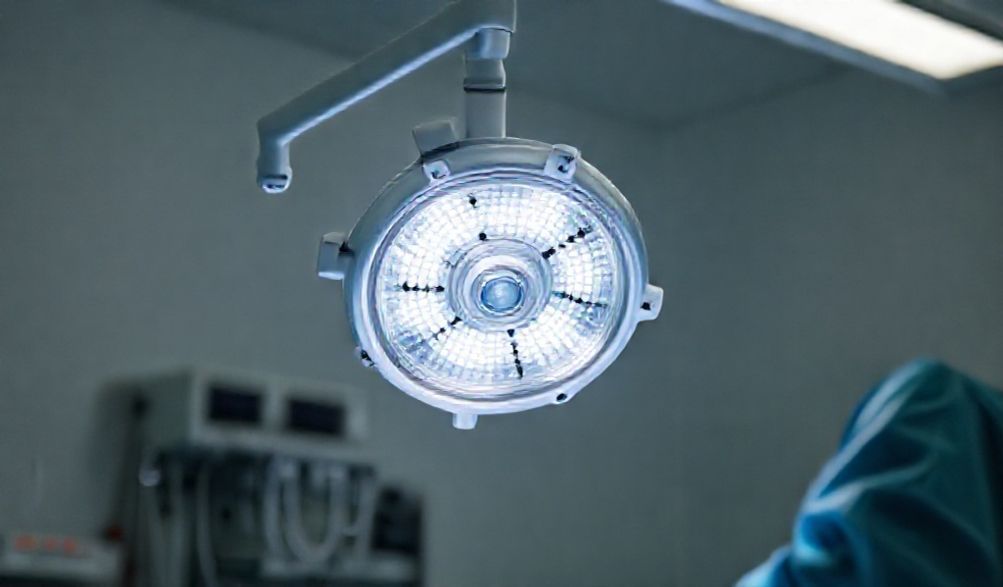
Mobile Surgical Lights: A Comprehensive Guide to Portable Operating Room Illumination
Imagine a critical trauma patient rushed into a crowded Emergency Room. The main ORs are occupied, and the team must perform an emergency thoracotomy right there in the bay. The overhead fluorescents cast deep, obstructive shadows, complicating every delicate maneuver. Now, envision a different scenario: a sleek, maneuverable light is swiftly positioned over the site, delivering a brilliant, cool, and shadow-reduced beam of light that turns the chaotic space into a zone of precise intervention. This is the transformative power of the mobile surgical light.
Mobile surgical lights are no longer just backup options; they are sophisticated, essential tools that provide critical, high-quality illumination wherever it’s needed. By bringing the gold standard of operating room lighting to any point of care, they fundamentally enhance surgical precision, procedural efficiency, and, ultimately, patient outcomes. This guide synthesizes information from clinical studies, manufacturer specifications, and surgical best practices to help medical professionals, procurement teams, and clinical engineers make informed decisions. Our focus is on providing accurate, experience-based, and authoritative information you can trust.
We will explore the core technology behind these devices, break down their key features, examine their vital applications across healthcare settings, and provide a practical checklist for selecting the right unit for your needs.
What Are Mobile Surgical Lights? Defining Portable Precision
Core Definition and Purpose
A mobile surgical light is a self-contained, fully maneuverable lighting unit designed to deliver surgical-grade illumination outside the traditional fixed operating room. Unlike its ceiling-mounted counterparts, it is an independent system on a mobile stand, integrating its own light source, power supply (often battery), and positioning mechanisms. Its primary purpose is to provide high-intensity, shadow-controlled, and color-accurate light to a surgical or procedural field in any location, at a moment’s notice.
Key Differentiators from Fixed Surgical Lights
The distinction between mobile and fixed lights goes beyond mere portability. Here’s a direct comparison:
- Mobility & Setup: Mobile lights are on casters and can be rolled to any location—ER bay, ICU bedside, outpatient clinic, or field hospital. Setup is near-instantaneous: position and turn on. Fixed lights are permanently installed, limiting their use to a single room.
- Power Source: The hallmark of a true mobile surgical light is a built-in rechargeable battery, granting complete freedom from power outlets—a critical feature during transport, power outages, or in resource-limited settings. Fixed lights are hardwired into the building’s electrical system.
- Use Cases: Fixed lights are the workhorses of scheduled, major operations in dedicated ORs. Mobile lights excel in dynamic, unpredictable, or decentralized environments: emergencies, minor procedure rooms, supplemental lighting for complex angles, and any situation where flexibility is paramount.
Core Technology & Features: What Makes a High-Quality Mobile Light
Investing in a mobile surgical light means understanding the engineering that separates adequate illumination from exceptional, surgery-enabling light.
LED Illumination: The Modern Standard
Modern mobile surgical lights universally employ Light Emitting Diode (LED) technology, and for compelling reasons:
* Cool Light: LEDs emit minimal infrared radiation, drastically reducing heat transfer to the surgical site and improving patient and staff comfort.
* Longevity & Efficiency: LED arrays can last for tens of thousands of hours, reducing replacement costs and downtime. They are highly energy-efficient, maximizing battery life.
* Consistent Color Temperature: High-quality surgical LEDs are tuned to a color temperature between 4000K and 5000K (cool white). This spectrum optimizes contrast, allowing surgeons to better distinguish between tissues, arteries, and other critical structures.
Optical Systems and Light Field Quality
The arrangement of LEDs and the optics around them define the quality of the light field:
* Depth of Illumination (DOI): This measures how uniformly intense the light remains as you move closer or farther from the surgical site. A high DOI (e.g., >25 cm) means the light intensity remains consistent even if the surgeon’s head or hands move slightly into the field, preventing dark spots.
* Reducción de Sombras: Unlike a single-point light source, surgical lights use multiple LED modules arranged in a ring or matrix. When one module’s light is obstructed, the others fill in, dramatically reducing obstructive shadows from instruments and hands.
* Homogeneous Light Field: Advanced reflectors and diffusers blend the light from individual LEDs into a single, even field without striations or hotspots, preventing eye fatigue.
Maneuverability and Ergonomics
A light that’s difficult to position is a liability. Key design elements include:
* Boom Arms: Multi-segment, counterbalanced arms allow for smooth, effortless positioning over the patient with one hand. They should lock securely in place to prevent drift during surgery.
* Stability & Casters: A wide, weighted base prevents tipping. High-quality, lockable casters with floor-lock brakes ensure the unit stays exactly where placed, even on uneven surfaces.
* Mangos Estériles: Removable or permanently attached handles that can be draped or wiped down with disinfectant allow for intraoperative adjustments without breaking sterility.
Power & Safety
Uninterrupted power is non-negotiable in surgery.
* Sistemas de Batería: Lithium-ion batteries are standard for their high energy density, lack of memory effect, and long cycle life. Runtime at full power is a critical spec, typically ranging from 3 to 8+ hours.
* Fail-Safes: Features like a real-time battery charge indicator, audible low-battery warnings, and an emergency reserve function (a final period of lower-power operation) are essential safety components.
* Backup Charging: The ability to operate while plugged in (for long procedures) and quickly recharge between cases is vital for high-throughput environments.
Primary Applications and Clinical Use Cases
The versatility of mobile surgical lights makes them indispensable across the spectrum of care.
Emergency and Trauma Surgery
In the chaotic environment of an ER or Trauma Bay, speed saves lives. A mobile surgical light can be deployed in seconds to provide immediate, high-quality illumination for emergency airways, chest tubes, cut-downs, or resuscitative surgery. Its reliability during power fluctuations or outages is an added layer of security.
Field Surgery & Military Medicine
This is where the “mobile” aspect is pushed to its limits. For military medics, disaster response teams, or remote medical camps, these lights provide OR-capable illumination in tents, makeshift clinics, or non-sterile environments. Ruggedized construction, extended battery life, and the ability to operate in extreme temperatures are key requirements here.
Minor Procedure Rooms and Outpatient Clinics
For clinics performing dermatological excisions, vasectomies, wound care, dental surgery, or cosmetic procedures, installing a full fixed OR light is often impractical and cost-prohibitive. A high-quality mobile surgical light offers a perfect, professional-grade solution that elevates the standard of care and procedural capability without major renovation.
Supplementary Lighting in Major ORs
Even in state-of-the-art operating rooms with advanced ceiling lights, complex procedures can benefit from additional, angled illumination. In spinal, cardiothoracic, or deep pelvic surgeries, a mobile light can be positioned to illuminate a cavity or provide side-lighting that the primary overhead light cannot achieve, eliminating stubborn shadows and improving visualization for the entire team.
How to Choose the Right Mobile Surgical Light: A Buyer’s Checklist
Selecting the right unit requires a methodical approach that balances clinical needs with technical and practical realities.
Assessing Your Clinical Needs
Start by asking:
* What types of procedures will it be used for? (Major trauma vs. minor dermatology)
* What is the required light intensity? (Measured in lux at a specific working distance, e.g., 160,000 lux at 1m).
* How critical is color accuracy? (Prioritize a high Color Rendering Index – CRI).
* Does the environment require easy sterilization? (Look for smooth, sealed surfaces and autoclavable handles).
Evaluating Technical Specifications
Use this checklist when comparing models:
* Light Output: Lux at the typical working distance (e.g., 1 meter). More is not always better; excessive, unfocused light can cause glare.
* Índice de Reproducción Cromática (IRC): A measure of how accurately colors are rendered under the light. For surgery, a CRI >90 (out of 100) is essential for distinguishing tissue types.
* Depth of Illumination (DOI): A higher number indicates a more forgiving and consistent light field.
* Battery Runtime: At 100% intensity. Verify if this is a “to depletion” or “to safe shutdown” rating.
* Garantía y Servicio: A strong warranty (3-5 years) and the manufacturer’s service network availability are indicators of quality and support.
Considering Practicalities
- Footprint & Storage: Measure your doorways and storage areas. Does the light fold down compactly?
- ¿Se pueden limpiar fácilmente el frontal y el cable con toallitas desinfectantes? ¿Cuáles son las instrucciones de limpieza del fabricante? Are surfaces smooth and crevice-free? What disinfectants are approved by the manufacturer?
- User Experience: Is it truly easy for a nurse or tech to position with one hand? Request a hands-on demo.
Seguridad y Cumplimiento Normativo
This is non-negotiable. Any device used in a surgical setting must carry the appropriate regulatory clearances for your region:
* Autorizado por la FDA (U.S. Market) or CE Marked (European and many other markets).
* Compliance with relevant ISO standards, particularly ISO 9680 (which specifies requirements for the performance and safety of surgical lighting systems).
* Electrical safety certifications (e.g., UL, IEC 60601-1).
Maintenance, Sterilization, and Best Practices
Proper care ensures longevity, safety, and consistent performance.
Protocolos de Limpieza y Desinfección de Rutina
- Daily/Post-Procedure: Siempre siga las Instrucciones de Uso (IFU) del fabricante. Typically, all external surfaces, especially handles and touchpoints, should be wiped down with a hospital-grade, low-level disinfectant (e.g., a quaternary ammonium compound or 70% isopropyl alcohol). Avoid abrasive cleaners or bleach-based solutions that may damage finishes.
- Critical Point: Never spray disinfectant directly onto the light head or joints. Spray the cloth first, then wipe. This prevents liquid ingress, which can damage electrical components and optical systems.
Battery Care and Long-Term Upkeep
- Charge Discipline: Recharge the battery fully after each use, even if only used briefly. Avoid storing the light with a completely depleted battery for extended periods.
- Calibration: Periodically (as per manufacturer schedule), check the light intensity and color temperature. Some high-end models may require professional servicing to maintain optical alignment.
- Inspección: Regularly inspect the casters, arms, locks, and cables for wear or damage.
Pre-Use Safety Checklist
Before every procedure, a team member should verify:
1. Estabilidad: The unit is on a level surface, brakes are engaged, and the base is unobstructed.
2. Charge: The battery indicator shows adequate charge for the planned procedure length.
3. Function: The light turns on, adjusts intensity smoothly, and the beam is homogeneous without dark spots.
4. Esterilidad: If intraoperative adjustment is anticipated, sterile handles are properly draped or the handles have been disinfected according to protocol.
Preguntas Frecuentes (FAQ)
Q1: Can a mobile surgical light truly provide the same quality of light as a fixed OR light?
A: Modern high-end mobile lights with advanced LED arrays and optics can meet or exceed the performance of many fixed lights in key metrics like intensity, shadow control, and tissue color contrast. However, the very largest fixed ceiling lights may offer wider field coverage. For most procedures, from emergency surgery to outpatient specialties, a quality mobile light is entirely sufficient and often indistinguishable from a fixed source.
P: ¿Cuánto suele durar la batería con una sola carga?
A: It varies significantly by model and the intensity setting used. High-quality lights typically offer 3 to 8 hours of runtime at full power. Many have intelligent battery management with clear indicators and an “emergency reserve” function that provides extended lower-power operation. Always check the specification sheet for the exact model and adopt a habit of charging it immediately after every use.
Q3: Are mobile surgical lights easy to clean and sterilize for infection control?
A: Yes, but you must follow the manufacturer’s instructions precisely. Typically, the handle(s), control panels, and all touch surfaces are designed for easy wiping with hospital-grade disinfectants. The light head often has a sealed, waterproof rating (e.g., IPX4) to allow for careful cleaning. The critical rule is to avoid moisture ingress into electrical components. Some models offer removable, autoclavable handles for a higher level of sterility.
Q4: What is the most important feature to look for?
A: While all features matter, calidad de luz—que comprende una iluminación adecuada en lux, un alto índice de reproducción cromática (CRI) y una buena profundidad de campo— es primordial porque impacta directamente en la precisión quirúrgica y la seguridad del paciente. En un cercano segundo lugar se encuentra la fiabilidad, garantizada por una construcción robusta, un rendimiento predecible de la batería y la reputada red de servicio y soporte del fabricante.
Conclusión
Las luces quirúrgicas móviles son herramientas esenciales y versátiles que democratizan la iluminación quirúrgica de alta calidad, llevándola a cualquier punto de atención, desde un ajetreado servicio de urgencias hasta una clínica remota en el campo. Representan una fusión de ingeniería óptica avanzada y diseño práctico, capacitando a los profesionales médicos para desempeñarse al máximo dondequiera que surja la necesidad.
Invertir en la luz quirúrgica móvil adecuada requiere considerar cuidadosamente las necesidades clínicas específicas, evaluar minuciosamente las especificaciones técnicas y establecer una colaboración con marcas confiables que cumplan las normativas médicas más estrictas. Priorizar la calidad, la seguridad y la facilidad de uso en la selección es una inversión que contribuye directamente a mejorar los resultados de los procedimientos, la eficiencia del personal y la atención superior al paciente.
Llamado a la Acción: Consulte con su equipo de ingeniería clínica y revise las fichas técnicas específicas de fabricantes reputados. Considere solicitar una demostración en vivo o una unidad de prueba a proveedores calificados de equipos médicos. No hay sustituto para ver y manipular la luz en su propio entorno clínico antes de tomar esta decisión crítica.
p>