
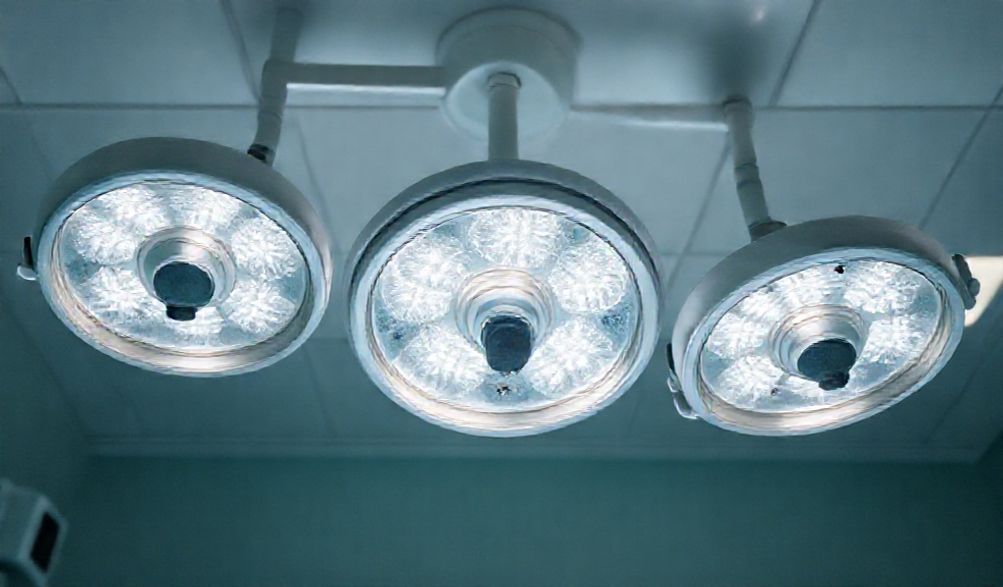
The Complete Guide to Overhead Surgical Lights: Technology, Selection & Safety
Imagine a un escultor maestro, con el cincel en la mano, intentando crear una obra maestra en una oscuridad casi total. Sin importar su habilidad, el resultado quedaría comprometido, si no operating room, the surgeon is that sculptor, and the patient’s body is the most delicate medium. The critical tool that bridges skill and outcome is often the most overlooked: overhead surgical lights. What if the most skilLED surgeon’s hands were hampered by poor visibility? The answer is unacceptable risk.
This guide moves beyond viewing these devices as simple “lamps.” We will explore overhead surgical lights as sophisticated, life-critical medical instruments. Built on a foundation of clinical engineering principles, manufacturer specifications, and adherence to stringent global standards, this article serves the needs of hospital administrators procuring equipment, clinical engineers maintaining systems, and medical professionals seeking a deeper understanding of their tools.
By the end, you will possess a comprehensive, authoritative framework for evaluating these systems, ensuring your decisions enhance patient safety, surgical precision, and operating room efficiency.
Understanding the Core Technology of Modern Surgical Lights
The era of the hot, harsh, and inefficient halogen spotlight is over. Today’s surgical luminaires are marvels of optical engineering, designed to deliver pure, controllable, and consistent light exactly where it’s needed.
LED vs. Halogen: A Comparative Analysis
The shift from halogen to Light Emitting Diode (LED) technology represents the most significant advance in surgical lighting in decades.
- Energy Efficiency & Lifespan: Halogen lights convert less than 10% of their energy into visible light, with the rest wasted as heat. LEDs are vastly more efficient, reducing power consumption by up to 80%. Furthermore, where a halogen bulb may last 1,000 hours, an LED module can provide 30,000 to 60,000 hours of service—effectively a decade or more of typical OR use—dramatically reducing replacement costs and downtime.
- Gestión del calor: The infrared radiation from halogen lights can cause tissue desiccation (drying) at the surgical site and discomfort for the surgical team. LEDs emit virtually no infrared or ultraviolet radiation, enhancing patient safety and improving staff comfort during long procedures.
- Color Temperature & Quality: Measured in Kelvin (K), color temperature defines the “warmth” or “coolness” of light. Halogens typically produce a warm, yellowish light (~3200K). Modern LED systems offer adjustable color temperatures, often allowing surgeons to select a cooler, daylight-like spectrum (~4000-4500K) that improves contrast and reduces eye strain, mimicking natural light for more accurate visual assessment.
The Science of Shadow Reduction and Homogeneous Light
A single light source creates hard, obstructive shadows. Modern surgical lights solve this through sophisticated optical design.
The core principle is the multi-point source design. Instead of one bulb, a lighthead contains multiple independent LED clusters arranged in a specific pattern. These clusters project overlapping cones of light from slightly different angles onto the surgical field. When a surgeon’s hand or instrument blocks one light path, the others fill in the shadow, dramatically reducing its depth and obscurity.
This creates a campo de luz homogéneo—consistent, even illumination without hot spots or dark areas. A key metric here is depth of illumination: the ability of the light to penetrate into deep cavities (like in thoracic or pelvic surgery) without a significant drop in intensity at the bottom, ensuring visibility is maintained regardless of the surgical site’s geometry.
Color Rendering Index (CRI) in Surgery: Why >90 is Crucial
While color temperature tells us about the “mood” of the light, the El Índice de Reproducción Cromática (IRC) tells us about its truthfulness. CRI, on a scale of 0 to 100, measures a light source’s ability to reveal the true colors of an object compared to a natural reference light.
In surgery, accurate color differentiation is non-negotiable. Distinguishing a pale nerve from a white tendon, an oxygenated artery from a deoxygenated vein, or healthy tissue from ischemic or pathological tissue relies on subtle hue variations. A light with a low CRI will distort these colors, potentially leading to diagnostic uncertainty and increased surgeon eye fatigue.
For general surgery, a CRI >90 is considered essential. For specialties like plastic surgery, vascular, or organ transplantation, where minute color differences are critical, a CRI of 95 or higher is the professional standard. This metric should be a top-tier specification in any procurement evaluation.
Key Features & Configurations for Different Surgical Needs
Surgical lights are not one-size-fits-all. The configuration and feature set must align with the procedural demands of the operating room.
Single vs. Dual vs. Multi-Arm Lighthead Systems
The choice of configuration balances cost, flexibility, and redundancy.
- Single-Arm Systems: A cost-effective solution for minor procedure rooms, endoscopy suites, or labor & delivery where major cavity surgery is not performed. They offer simplicity but lack the shadow-reduction and redundancy of multi-source systems.
- Dual-Arm Systems: The undisputed standard for major operating rooms. Two independent lightheads on separate arms provide unparalleled flexibility. Surgeons can focus light from two complementary angles to eliminate shadows entirely. Crucially, if one lighthead fails, the other provides immediate backup illumination to safely conclude the procedure.
- Ceiling-Mounted vs. Track-Mounted: Ceiling-mounted lights are fixed to a single point, offering stability. Track-mounted systems allow the light to travel along a ceiling rail, providing greater coverage and flexibility for room layout and positioning around other equipment like imaging C-arms.
Advanced Functionality: Sterile Handles, Camera Integration, and Documentation Modes
Modern lights are integrated technology hubs.
- Mangos Estériles: Surgeons and nurses must frequently reposition the light during surgery. Sterile, removable handles that can be draped or autoclaved are essential for maintaining the sterile field and allowing for easy, intraoperative adjustment.
- Integración de Cámara: Many high-end lightheads have ports to integrate 4K or HD cameras directly into the optical path. This is invaluable for teaching, creating surgical records, and facilitating telemedicine or remote proctoring.
- Documentation Mode: A sophisticated feature that switches the light’s spectrum and intensity to settings optimized for video recording, different from the settings ideal for the surgeon’s live view. This ensures broadcast-quality video without compromising the live surgical view.
Speciality Lighting: Neurosurgery, ENT, Ophthalmology, and Minimally Invasive Surgery
Specific disciplines have unique requirements:
- Neurosurgery & Deep Cavity: Require lights with exceptional depth of illumination and often a cooler color temperature to enhance contrast in deep, narrow wounds.
- Oftalmología: Often use microscope-integrated or coaxial lighting systems where the light path is aligned with the surgeon’s view through the microscope.
- ENT & Minimally Invasive Surgery: May utilize smaller, more maneuverable lightheads or lights integrated with endoscopic towers.
- Hybrid ORs: Require lights designed to work seamlessly with large imaging equipment like fixed C-arms or MRI, often with enhanced electromagnetic compatibility and specialized mounting solutions.
How to Select the Right Overhead Surgical Light: A Procurement Checklist
Selecting a surgical light is a major capital investment. This checklist moves beyond sales brochures to focus on critical, objective criteria.
Assessing Technical Specifications: Lumens, Lux, and Field Diameter
Understanding the language of light measurement is key.
- Lumens vs. Lux: Lumens measure the total output of the light source. El lux mide la **cantidad** illuminance (brightness) falling on a surface (the surgical site). A light with high lumens that is poorly focused may deliver low lux. Always demand lux measurements at a defined working distance (e.g., 1 meter). General surgery typically requires 40,000 to 100,000 lux, while deep-cavity procedures may need up to 160,000 lux.
- Adjustable Field Diameter: The ability to change from a wide field (for open abdominal surgery) to a focused spot (for deep, narrow dissection) is vital. Look for a smooth, continuous adjustment mechanism.
Evaluating Ergonomic Design and Ease of Use
A light that is difficult to position is a hazard and a time-waster.
- Effortless Positioning: The system should move smoothly in all axes with minimal hand force. High-quality counterbalance mechanisms and magnetic brakes are standard on professional systems, allowing the light to stay precisely where it is placed without drift.
- ¿Se pueden limpiar fácilmente el frontal y el cable con toallitas desinfectantes? ¿Cuáles son las instrucciones de limpieza del fabricante? The lighthead design must be seamless, without crevices where contaminants can hide. It should withstand frequent cleaning with hospital-grade disinfectants. Removable handles and easy-access filter covers are a plus for infection control.
Total Cost of Ownership: Beyond the Initial Purchase Price
The sticker price is just the beginning.
- Energy & Consumable Costs: Calculate the annual energy savings of LED over halogen. Factor in the cost and frequency of bulb/component replacements.
- Servicio y Soporte: This is paramount. What is the manufacturer’s warranty? Is there a reliable, local technical support team? What is the expected cost and interval for preventative maintenance? A cheaper light with poor serviceability can become a costly liability.
- Future-Proofing: Consider compatibility with your hospital’s infrastructure and future plans. Is the system compatible with integrated OR control systems? Can it be upgraded?
Safety, Maintenance, and Compliance Standards
As Class I or II medical devices, surgical lights are governed by rigorous international standards.
Adherence to Medical Device Regulations: IEC 60601-1 and ISO 13485
Procurement must start with compliance.
- IEC 60601-1 Series: This is the global benchmark for the safety and essential performance of medical electrical equipment. Any surgical light must be certified to this standard (and its region-specific variants, like UL 60601-1 in the US).
- ISO 13485: This certification pertains to the manufacturer’s quality management system, ensuring they consistently design and produce safe, effective devices.
- Regional Markings: Ensure the device carries the required regulatory marks for your region (e.g., CE Marking for Europe, FDA clearance for the USA).
Routine Preventative Maintenance and Safety Testing
Proactive maintenance is a patient safety imperative. A clinical engineering checklist should include:
* Mechanical: Inspect arms, joints, and brakes for stability, smooth movement, and secure locking.
* Electrical: Perform safety tests for ground resistance and leakage current.
* Optical: Annually, verify light output intensity (lux) with a calibrated meter and check color temperature/CRI specifications. Clean optical filters and surfaces.
* Documentación: Maintain detailed logs of all inspections, tests, and repairs for accreditation (e.g., Joint Commission, HFAP) and liability purposes.
Mitigating Risks: Heat Management, Failure Protocols, and Infection Control
- Calor: As noted, LED systems vastly reduce the risk of thermal injury to tissue.
- Failure Protocols: Dual-arm systems provide inherent redundancy. Ensure backup power systems (UPS or emergency circuits) can support the lights during a power outage.
- Control de Infecciones: Establish and audit clear protocols for cleaning and disinfecting the lighthead and sterile handles between every procedure, in accordance with the manufacturer’s instructions.
Preguntas Frecuentes (FAQ)
Q1: How often should the intensity (lux output) of surgical lights be formally tested?
R: Following manufacturer guidelines is paramount, but typically, a full performance verification should be conducted anualmente as part of preventative maintenance, with visual checks by staff before each use. This is often an accreditation requirement (e.g., Joint Commission).
¿Se pueden actualizar los antiguos sistemas de luces quirúrgicas halógenas a LED?
R: Sometimes, through retrofit kits offered by the original manufacturer or certified third parties. However, a full technical and safety assessment by a qualified clinical engineer is essential to ensure compatibility and that the upgraded system still meets all regulatory standards.
Q3: What is the typical lifespan of an LED surgical light, and what degrades first?
R: The LED diodes themselves can last 30,000-60,000 hours. However, the mechanical components (arms, joints, brakes) or electronic drivers may require service sooner. The system’s longevity is heavily dependent on adherence to scheduled maintenance.
Q4: Why is there a green or other colored “mode” on some surgical lights?
R: These are specialty enhancement modes. A green mode, for example, can increase contrast in bloody fields (e.g., during cardiac or liver surgery) by absorbing red light, making vessels and structures more distinct.
Q5: How critical is the ceiling structure for installing a new surgical light?
R: Extremadamente crítico. Es obligatoria una revisión de ingeniería estructural. Las luces quirúrgicas son pesadas (a menudo más de 100 kg / 220 lbs) y requieren un punto de montaje seguro capaz de soportar el peso estático, las fuerzas dinámicas durante el posicionamiento y, si corresponde, la actividad sísmica.
Conclusión
La selección de luces quirúrgicas de techo es una inversión estratégica y a largo plazo en la infraestructura fundamental de la atención al paciente. Equilibra tecnología óptica avanzada, rigurosa ingeniería de factores humanos y estándares de seguridad inquebrantables. La decisión debe guiarse por evidencia clínica, datos técnicos verificados y el cumplimiento de normativas internacionales, nunca únicamente por el precio.
Aconsejamos encarecidamente formar un equipo de evaluación multidisciplinario que incluya ingenieros clínicos, cirujanos experimentados de especialidades clave y profesionales de control de infecciones. Consulte directamente con fabricantes de reputación para realizar evaluaciones prácticas en un entorno de demostración o simulación antes de finalizar cualquier adquisición. A medida que el quirófano evoluciona con la integración de IA y la imagenología avanzada, la luz quirúrgica sigue siendo una tecnología central y habilitadora. Elegir con sabiduría hoy sienta las bases para las innovaciones quirúrgicas del mañana.
p>