
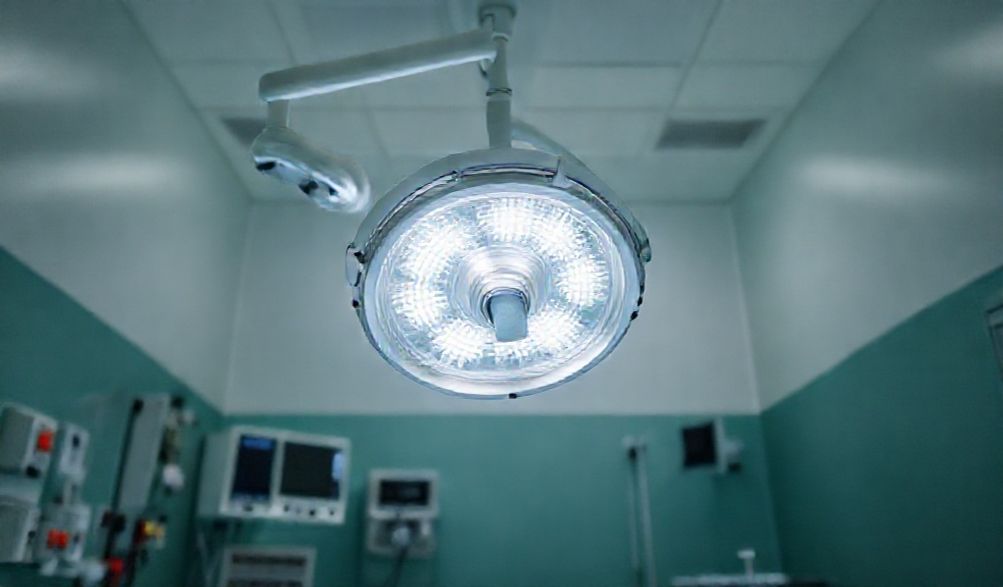
Portable Operating Room Lights: A Comprehensive Guide to Mobile Surgical Lighting
In the high-stakes environment of surgery, every detail matters. From the skill of the surgeon to the sterility of the instruments, success hinges on a confluence of perfectly managed factors. Among these, lighting is not merely a utility—it is a foundational pillar of surgical precision and patient safety. For decades, the massive, ceiling-mounted surgical light has been an immovable icon of the operating room. However, the evolving landscape of modern healthcare—with its ambulatory surgery centers, field hospitals, hybrid ORs, and need for rapid response—demands a new paradigm: flexibility without compromise.
This guide serves as an authoritative, experience-driven resource for healthcare administrators, clinical engineers, surgeons, and procurement specialists. Our purpose is to move beyond simple product specifications and delve into the clinical requirements, operational realities, and strategic considerations behind integrating Portable Operating Room Lights. Whether you are outfitting a new ASC, seeking reliable backup for your main OR, or equipping a mobile medical unit, this comprehensive analysis will empower you to understand the key features, compare critical options, and make a confident, informed decision that enhances both surgical outcomes and operational efficiency.
We will explore why portable surgical lighting is revolutionizing care delivery, break down the critical features that define performance, compare technologies and configurations, and provide a step-by-step framework for selecting the right system for your unique environment.
Why Portable Surgical Lighting is Revolutionizing Modern Medicine
The shift towards portable OR lights is more than a trend; it’s a strategic response to the need for adaptable, high-acuity care in any setting. These systems are transforming workflows and expanding possibilities across the healthcare continuum.
Enhancing Surgical Precision and Patient Outcomes
At its core, surgical lighting exists to illuminate the surgical site with unparalleled clarity, enabling the surgeon to see minute details, differentiate between tissue types, and work with absolute accuracy. Portable lights, when specified correctly, deliver this critical performance. Key aspects include:
- Reducción de Sombras and Homogeneity: Advanced optical systems with multiple LED arrays and reflector technology minimize the obstructive shadows cast by surgeons’ heads and hands, maintaining a consistently bright field.
- Reproducción Cromática Superior: The Color Rendering Index (CRI) measures a light’s ability to reveal the true colors of objects. A high CRI (90+ is ideal for surgery) is crucial for accurately distinguishing between arterial blood, venous blood, fatty tissue, and organs, reducing diagnostic uncertainty and surgical error.
- Profundidad de Iluminación: This refers to the light’s ability to provide deep-cavity illumination without “hot spots” at the surface or darkness at depth. This is particularly vital for procedures like orthopedic, spinal, or trauma surgery.
Clinical studies and surgeon testimonials consistently underscore that optimal illumination directly correlates with reduced operative time, decreased surgeon fatigue, and improved procedural outcomes.
Unmatched Flexibility for Diverse Clinical Settings
This is the paramount advantage of portable systems. Their mobility unlocks utility in scenarios where fixed lighting is impossible, impractical, or inefficient.
- Main OR Backup & Hybrid Rooms: Serves as an immediate, high-quality backup during fixed light failure or maintenance. In hybrid ORs, it can provide targeted illumination around large, fixed imaging equipment.
- Ambulatory Surgery Centers (ASCs): For new or expanding ASCs, portable lights eliminate the significant cost and structural complexity of installing fixed ceiling tracks. They offer the freedom to reconfigure rooms as procedure mixes change.
- Field Hospitals, Military & Disaster Medicine: In remote, temporary, or resource-constrained environments, portable lights are the only viable solution for establishing a sterile surgical field capable of supporting complex interventions.
- Emergency & Trauma Rooms: Speed is critical. A portable light can be rolled into position and activated in seconds, providing immediate, high-intensity light for emergency procedures at the bedside or in a trauma bay.
- Veterinary Surgery & Dental Suites: These settings benefit from the same need for precise, adjustable illumination without permanent infrastructure.
Rentabilidad y Eficiencia Operativa
From a financial perspective, portable OR lights present a compelling value proposition:
- Lower Capital & Installation Costs: They require no structural ceiling modifications, reinforced supports, or complex electrical installation. The initial purchase price is often significantly lower than a high-end fixed system.
- Multi-Room Utility: A single, high-quality portable light can serve multiple procedure rooms or be deployed wherever demand is highest, maximizing asset utilization.
- Reduced Downtime: If a unit requires service, it can be swapped out without taking an entire operating room offline for repairs on a fixed ceiling system.
- Scalability: Facilities can start with a few units and add more as volume grows, aligning capital expenditure directly with need.
Critical Features to Evaluate in a Portable OR Light
Not all portable lights are created equal. Selecting the right one requires a careful evaluation of specifications that translate directly to clinical and operational performance.
Illumination Quality: Beyond Just Brightness
While brightness (measured in Lux at a given distance) is important, it’s only one part of the story.
- Luminance and Depth of Illumination: Look for a high Lux value (e.g., 40,000 – 160,000 Lux) at a typical working distance (e.g., 1 meter). More importantly, examine the “depth of illumination” specification—how well the light penetrates into a cavity while maintaining uniformity.
- Color Rendering Index (CRI) and Color Temperature: A IRC de 90 o superior is the clinical standard for accurate tissue discrimination. Color temperature, measured in Kelvin (K), affects visual comfort and contrast. A temperature around 4500K is often considered a “neutral white” that reduces eye strain for prolonged procedures.
- Homogeneity and Shadow Management: The light pattern should be even, without a bright central spot that fades sharply at the edges. Look for systems that advertise “low shadow dilution” or have multi-point light source designs to minimize obstructions.
Mobility, Stability, and Ease of Use
A light that is difficult to position is of little use.
- Maneuverability: Assess the wheel design (large, castoring wheels roll more easily over cords and floor irregularities), overall weight, and footprint. A compact “footprint” is crucial in crowded ORs.
- Estabilidad: A wide, heavy base is essential to prevent tipping when the arm is fully extended. Some models offer bases that can be filled with fluid for added weight.
- Ergonomic Adjustment: The articulation arm should have a wide range of motion, smooth movement, and be easy to position with one hand—often via a large, sterilizable handle. Counterbalanced arms reduce effort and prevent “droop.”
Durability, Sterilization, and Maintenance
The OR is a harsh environment. The light must withstand it.
- Build Quality & IP Rating: The housing should be robust, often aluminum or high-grade polymer. An Ingress Protection (IP) rating (e.g., IP54) indicates resistance to dust and water splashes, crucial for cleaning and fluid exposure.
- ¿Se pueden limpiar fácilmente el frontal y el cable con toallitas desinfectantes? ¿Cuáles son las instrucciones de limpieza del fabricante? Surfaces should be seamless and non-porous. The most critical component—the handle—must be easily sterilizable (autoclavable or compatible with low-temperature sterilization). Ensure the light is compatible with common hospital-grade disinfectants without degrading.
- Service Life & Maintenance: LED light heads typically have lifespans of 50,000+ hours. Inquire about service requirements, modularity of parts (e.g., can a battery be easily replaced?), and the manufacturer’s support network.
Comparing Portable OR Light Types and Technologies
Understanding the fundamental choices in technology and design will help narrow your selection.
LED vs. Halogen: A Technical Breakdown
This is no longer a contest. LED technology is the definitive standard for modern portable OR lights.
- La iluminación integrada es un factor revolucionario. Offer superior energy efficiency (long battery life), minimal radiant heat directed at the surgical site, an instant-on capability, and an extremely long lifespan (50,000+ hours). They provide excellent CRI and consistent color temperature over their life. The total cost of ownership is lower despite a potentially higher upfront cost.
- Halogen Lights: Produce significant heat, have shorter bulb life (1,000-2,000 hours), consume more power, and experience color shift as the bulb ages. They are largely obsolete for new purchases.
Stand-Mounted vs. Ceiling-Suspended Portable Systems
- Stand-Mounted (Floor-Based): The most common and flexible type. It is completely independent of room infrastructure. The trade-off is that it occupies floor space and has a physical base that can be an obstacle.
- Ceiling-Suspended: These units mount to a ceiling track or single point, freeing up floor space entirely. They offer excellent positioning flexibility but require installation. They are a hybrid solution—more flexible than a fixed light but less so than a floor-standing portable.
Integrated vs. Modular Systems
- Integrated Systems: The light is a single-purpose device. This often results in a simpler, more robust, and cost-effective design.
- Modular Systems: Allow for the attachment of accessories like 4K medical-grade cameras, recording modules, or document cameras. This is key for “future-proofing,” enabling surgical recording, telemedicine, and training capabilities. Consider your facility’s future needs in this area.
How to Choose the Right Portable Light for Your Facility: A Step-by-Step Guide
Step 1: Assess Your Primary Use Cases and Environment
Create a checklist: What types of procedures will it support? (Superficial vs. deep cavity?) What are the room dimensions and layout? Where are power outlets located? How will it be stored? Is it primarily for elective use or emergency response?
Step 2: Set Your Technical and Clinical Specifications
Based on the features section, draft a requirement list. Example: “Must deliver ≥100,000 Lux at 1m, CRI ≥93, have a battery runtime ≥4 hours, feature an autoclavable handle, and have an IP54 rating.”
Step 3: Evaluate Brands and Models with Key Questions
Ask vendors: What is the warranty and what does it cover? Is there a local service network? Can you provide clinical validation or peer-reviewed studies? What are the relevant regulatory certifications (FDA, ISO 60601-1)? Can we arrange a trial in our facility?
Step 4: Plan for Implementation and Staff Training
The best light is ineffective if staff don’t know how to use it optimally. Insist on comprehensive in-servicing from the vendor for surgeons, nurses, and biomedical staff. Training should cover positioning, battery management, cleaning protocols, and basic troubleshooting.
Safety, Standards, and Regulatory Compliance
Essential Certifications and What They Mean
- Autorización FDA 510(k): In the U.S., this indicates the device is legally marketed as a medical device and is substantially equivalent to a predicate device, ensuring a baseline of safety and efficacy.
- ISO 60601-1: The international standard for the basic safety and essential performance of medical electrical equipment. Compliance is non-negotiable.
- IEC 60601-2-41: A particular standard specifying requirements for the safety of surgical luminaires and luminaires for diagnosis.
Operational Safety Protocols
- Contamination Prevention: Strict adherence to cleaning protocols for the handle and housing between every procedure.
- Cord & Trip Hazard Management: Use cable management hooks on the stand and secure power cords to the floor when plugged in.
- Seguridad Eléctrica: Regular preventive maintenance checks by biomedical engineering. Never use a damaged unit.
Preguntas Frecuentes (FAQ) Sobre Luces Portátiles para Quirófanos
Q1: What is the typical battery life for a portable surgical light, and how long does it take to recharge?
R: Battery life varies significantly by model and intensity setting. A general range is 2 to 8 hours of continuous runtime on a full charge. For longer procedures, it’s critical to check the specific model’s specifications at the desired brightness level. Recharge times typically range from 3 to 8 hours for a full charge, with many models supporting fast-charge or hot-swappable batteries.
Q2: Can portable OR lights truly provide the same quality of light as large, fixed ceiling lights?
R: Yes, high-end portable LED lights now match or exceed fixed systems in core metrics like Lux output and Color Rendering Index (CRI). The primary trade-offs are in the size of the illuminated field (often slightly smaller than a large ceiling light) and the mechanical adjustability (a ceiling light may have a wider range from a central mount). For the vast majority of procedures, a top-tier portable light provides clinically equivalent illumination.
Q3: How do I properly clean and disinfect a portable light between procedures?
R: Siempre siga las instrucciones de uso (IFU) del fabricante como fuente principal. Las pautas generales incluyen: usar un paño suave con un desinfectante hospitalario suave compatible con el dispositivo (por ejemplo, compuestos de amonio cuaternario, toallitas con alcohol). Preste especial atención a la empuñadura y a cualquier superficie de contacto frecuente. Evite limpiadores abrasivos o productos químicos agresivos como lejía en la lente óptica o las carcasas de plástico, ya que pueden causar opacidad o degradación.
P4: ¿Son las luces quirúrgicas portátiles una solución rentable para un nuevo centro de cirugía ambulatoria?
R: Absolutamente. Para un nuevo ASC, las luces portátiles ofrecen un ahorro sustancial en costos iniciales al eliminar los trabajos arquitectónicos y eléctricos necesarios para los sistemas fijos. Proporcionan la máxima flexibilidad para cambiar la distribución de las salas a medida que evolucionan sus líneas de servicio. Financieramente, a menudo puede comenzar con menos unidades que las luces fijas, ya que pueden trasladarse entre salas, lo que le permite escalar su inversión directamente con el volumen quirúrgico.
P5: ¿Cuál es la característica más importante para una luz utilizada en cirugía de trauma y emergencia?
R: Tres características son primordiales: 1) Despliegue Rápido – debe ser fácil de mover y posicionar rápidamente, a menudo con una sola mano. 2) Excepcional Profundidad de Iluminación – para visualizar eficazmente heridas profundas o cavidades corporales. 3) Batería de Respaldo Confiable y de Larga Duración – la energía de emergencia no está garantizada; la luz debe funcionar independientemente de la energía de pared durante períodos prolongados para garantizar la continuidad de la atención.
Conclusión
Las luces portátiles de quirófano han evolucionado de herramientas de respaldo simples a equipos sofisticados y esenciales que apoyan la excelencia quirúrgica en una gama increíblemente diversa de entornos clínicos. Ofrecen una poderosa combinación de iluminación de grado clínico, flexibilidad operativa y rentabilidad estratégica. La decisión de integrarlas debe estar impulsada no por un compromiso, sino por una evaluación deliberada de la evidencia clínica, el rendimiento técnico y las necesidades específicas de flujo de trabajo de su equipo de salud.
Al evaluar las opciones, priorice sistemas de fabricantes reconocidos que respalden sus productos con un sólido apoyo clínico, capacitación integral y redes de servicio accesibles. Le recomendamos encarecidamente que utilice la lista de verificación y el marco proporcionados en esta guía para facilitar discusiones informadas con los proveedores. El paso más crítico es solicitar una demostración práctica o una prueba en su propio entorno clínico. No hay sustituto para ver cómo se desempeña la luz en el espacio real donde se utilizará, permitiendo que sus cirujanos y personal evalúen su utilidad práctica de primera mano. Al tomar una decisión informada y basada en evidencia, usted invierte no solo en un equipo, sino en una capacidad quirúrgica mejorada y en la atención al paciente.
p>