
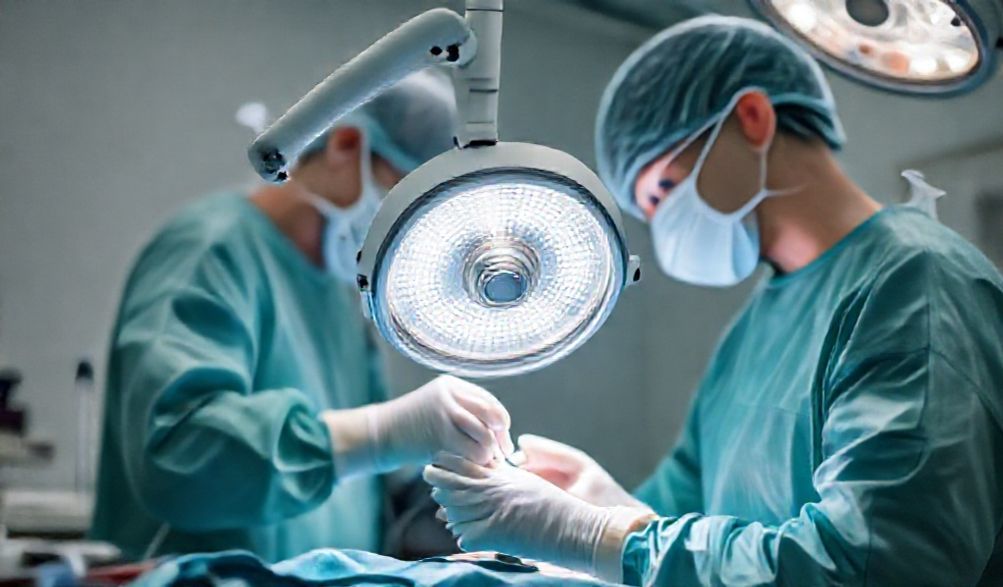
Portable Surgery Lights: A Comprehensive Guide to Mobile Medical Illumination
Imagine a remote health clinic, hours from the nearest hospital. A patient presents with acute appendicitis. The sun has set, and the local grid power is, as often, unreliable. Or picture a forward aid station in a disaster zone, where a team is setting up a triage and treatment tent. In a modern hospital, a sudden power surge triggers a backup generator, but the main operating lights flicker and fail mid-procedure. In each of these critical moments, the success of life-saving surgery hinges on one fundamental, non-negotiable element: light.
The ability to see—with clarity, precision, and minimal shadow—is the cornerstone of safe surgery. For decades, this was a luxury confined to fixed operating rooms with complex, ceiling-mounted systems. But what happens when surgery must come to the patient, rather than the patient to the OR? This is the core problem that portable surgery lights solve. They are engineered to deliver operating room-quality illumination anywhere it’s needed, untethering surgical capability from fixed infrastructure.
This guide serves as an authoritative, expert-driven resource for surgeons, anesthetists, veterinary professionals, procurement officers, and healthcare administrators. We will move beyond marketing claims to explore the technical specifications, critical applications, and practical realities of portable surgical lights. Our analysis is grounded in the principles of E-E-A-T (Experience, Expertise, Authoritativeness, Trustworthiness), drawing on clinical requirements, technical data, and an unwavering focus on patient and practitioner safety.
What is a Portable Surgery Light? Defining Mobile Surgical Illumination
At its essence, a portable surgery light is a self-contained, mobile medical device designed to provide high-quality, shadow-reduced illumination for surgical and procedural interventions outside of a traditional operating suite.
Core Function and Design Philosophy
The primary goal is not merely to provide “bright light,” but to replicate the key optical characteristics of a fixed surgical light in a compact, mobile form factor. The design philosophy centers on three pillars: performance, portability, and practicality.
- Rendimiento: This means delivering high-intensity, homogenous light with excellent color rendering to allow for accurate tissue differentiation. The light field must be deep enough to illuminate cavities and designed to minimize the surgeon’s shadow.
- Portability: The unit is typically mounted on a stable wheeled stand or a compact, articulating floor base. It is lightweight, often with quick-release mechanisms for transport, and is powered by a rechargeable battery, granting complete independence from external power sources.
- Practicality: Design features prioritize the clinical workflow. This includes fully adjustable arms for precise positioning, handles that can be sterilized or draped, and robust construction that can withstand cleaning, transport, and use in challenging environments.
Key Differences from Fixed Operating Lights
Understanding the distinctions helps set realistic expectations:
- Movilidad vs. Permanencia: This is the most obvious difference. Portable lights are moved to the need; fixed lights are installed in a dedicated location.
- Setup Time: A portable light can be deployed in minutes from its storage case or charging dock. A fixed light requires architectural installation.
- Power Source: Portable lights are built for energy efficiency and feature integrated batteries, making them immune to power outages. Fixed lights rely on building power, often with a central backup system.
- Use Cases: Fixed lights are for high-volume, planned procedures in dedicated ORs. Portable lights excel in emergencies, remote settings, backup scenarios, and niche applications where flexibility is paramount.
- Limitaciones: Honesty is crucial. While high-end portable lights are incredibly powerful, a large, multi-head ceiling light may offer a wider field or marginally higher maximum intensity for the most complex surgeries. The trade-off is a complete lack of mobility.
Critical Applications: Where Portable Surgery Lights Save Lives
The value of portable surgical illumination is proven across a vast spectrum of medical and veterinary practice.
Emergency and Disaster Medicine
In the chaos following an earthquake, hurricane, or conflict, infrastructure is the first casualty. Organizations like Médecins Sans Frontières (MSF) and World Health Organization (WHO) emergency response teams deploy portable surgery lights as standard equipment in field hospitals. They enable life- and limb-saving procedures at accident sites, in airport hangars converted to surgical wards, and in rapidly erected tents, ensuring care is not delayed by a lack of light.
Remote and Rural Healthcare
In vast regions of the world, from rural Appalachia to sub-Saharan Africa, patients may live days from a hospital with a full operating theatre. Portable surgery lights empower clinicians in rural health centers and district hospitals to perform essential surgeries—from cesarean sections and hernia repairs to wound debridement—safely and on-site. This is a cornerstone of improving global surgical equity and reducing preventable mortality.
Medicina Veterinaria
The applications are equally vital in animal care. A portable light is indispensable for a veterinarian performing an emergency colic surgery in a stable, a spay/neuter clinic in a mobile van, or a wildlife conservation team conducting a health intervention on a sedated animal in the field. The requirements for shadow reduction and tissue visualization are identical to those in human medicine.
Military Medicine
Military medical corps operate under the doctrine of forward resuscitation. Portable, ruggedized surgical lights are key components of equipment for Forward Surgical Teams (FSTs) and Combat Support Hospitals (CSHs), allowing for damage control surgery to be performed as close to the point of injury as possible, often in austere, deployed environments.
Hospital Backup and Niche Procedures
Even within well-resourced hospitals, portable lights are essential tools. They serve as immediate backup during power failures or main light system malfunctions. They are also routinely used in Intensive Care Units (ICUs) for bedside tracheostomies or chest tube insertions, in emergency departments for complex laceration repairs, and in small procedure rooms for endoscopies or minor surgeries, avoiding the need to book a main OR.
Essential Features to Evaluate When Choosing a Portable Surgery Light
Selecting the right unit is a technical decision with direct clinical impact. Here are the critical features to assess, demonstrating the Experticia required for a sound investment.
Optical Performance: The Light Quality Metrics
This is where the light proves its worth. Don’t just look at wattage; evaluate these metrics:
- Luminance and Lux (Intensity): Lux measures illuminance (light falling on a surface). For minor procedures, 20,000 lux may suffice. For major abdominal or thoracic surgery, look for models capable of 40,000 to 160,000 lux or more at a defined distance (e.g., 1 meter). This ensures adequate brightness even at depth.
- Índice de Reproducción Cromática (IRC): This measures a light’s ability to reveal the true colors of objects compared to natural light. In surgery, distinguishing between arterial blood, venous blood, fat, fascia, and organ tissue is critical. Aim for a CRI of ≥90, with ≥95 being ideal. A low CRI can make tissues look unnaturally grey or yellow, hindering accurate diagnosis and dissection.
- Depth of Illumination & Shadow Reduction: This is achieved through optical design. Look for lights with a multi-LED array (often 3, 4, or more individual LEDs in a cluster). The light from each LED is focused and overlapped with the others from slightly different angles. This fills in the shadows created when the surgeon’s head or hands block one light path, creating a homogeneous, deep light field. The diameter of the light head also contributes to depth of field.
Power and Operational Logistics
- Battery Life & Type: Runtime is everything. Specifications should state hours at maximum intensity. Look for 3 to 8+ hours on a single charge for high-end models. Hot-swappable batteries are a premium feature that allows you to replace a depleted battery with a charged one without turning off the light, enabling uninterrupted surgery.
- Power Options: The unit should accept AC power for routine charging and use when available. It should also have a DC input (e.g., 12V/24V) for charging from a vehicle or generator. Some systems are compatible with solar panels, a key feature for ultra-austere environments.
Durability and Sterilization
- Calidad de Construcción: The stand and arms should be made of medical-grade aluminum or stainless steel. Check the Ingress Protection (IP) rating (e.g., IP54). A rating like IP54 means it is protected from dust and splashing water from any direction, which is essential for cleaning and use in humid environments.
- Sterilization Methods: The entire light head and any handles must be designed for easy decontamination. Most are fully wipeable with hospital-grade disinfectants like chlorine-based solutions or 70% isopropyl alcohol. Some models have removable handles that can be autoclaved. Siempre siga las Instrucciones de Uso (IFU) del fabricante.
Usability and Safety
- Ajustabilidad: The light should have multiple, fluidly moving articulating arms with strong yet smooth tension controls. This allows precise positioning from almost any angle without “droop” mid-procedure.
- Gestión del calor: Modern LED technology generates minimal radiant heat compared to old halogen or incandescent bulbs. This is a major safety benefit, preventing tissue desiccation and improving surgeon comfort.
- Certificaciones de seguridad: This is non-negotiable. Ensure the device carries relevant regulatory marks: FDA 510(k) clearance (USA), CE Marking (Europe), and is manufactured under a ISO 13485 certified quality management system. These certifications validate the device’s safety, performance, and manufacturing controls.
Advantages and Limitations: A Balanced Professional Perspective
A clear-eyed view ensures successful deployment and user satisfaction.
Major Benefits of Portable Systems
- Unmatched Flexibility and Access: Their core value. They bring OR-grade light to any flat surface, anywhere.
- Cost-Effectiveness for Low-Volume Settings: For a clinic that performs a few surgeries a week, the cost of a portable light is a fraction of installing and maintaining a fixed ceiling system with structural reinforcements.
- Los LED consumen hasta un 80% menos de energía que los sistemas halógenos para producir la misma o mayor cantidad de luz, reduciendo los costes de servicios. LED technology uses a fraction of the power of older systems, maximizing battery life and reducing operational costs.
- Reliability in Resource-Limited Settings: Independence from an unstable power grid makes them a cornerstone of resilient health systems.
Potential Drawbacks and Considerations
- Initial Investment Cost: High-performance, medical-grade portable lights with long battery life and excellent optics represent a significant capital purchase.
- Maintenance Overhead: Batteries have a finite lifespan (typically 3-5 years) and must be replaced. Mechanical joints may require servicing over time.
- Learning Curve: Positioning a mobile light effectively to avoid shadows requires slightly different technique than working under a large ceiling light. Training and practice are needed.
How to Integrate a Portable Light into Your Clinical Workflow
Practical Experiencia dictates that the device must fit seamlessly into practice. Here’s how.
Pre-Procedure Checklist
- Energía: Verify the battery is fully charged. Have a spare, charged battery readily accessible.
- Esterilidad: If required, apply a sterile, transparent disposable drape over the light head and arms, or disinfect all touch surfaces according to protocol.
- Posicionamiento: Before the patient is prepped, wheel the light into an optimal general position. Ensure the stand is locked and the floor area is clear of cords.
Optimal Positioning for Different Procedures
The general rule is to position the light opposite the surgeon’s dominant sight line. For example, for a right-handed surgeon operating on a patient’s abdomen, place the light stand slightly to the left side of the table and angle it from over the patient’s left shoulder towards the surgical site. This minimizes the shadow cast by the surgeon’s head and hands. Adjust the distance to achieve the desired spot size and intensity—closer for a brighter, smaller field; further for a wider, slightly less intense field.
Maintenance and Care Best Practices
- Limpieza de rutina: Wipe down after every use with recommended disinfectant. Avoid abrasive cleaners.
- Cuidado de la Batería: Follow manufacturer guidelines. Avoid consistently draining to 0%. For long-term storage, charge to ~50% and store in a cool, dry place. Perform full discharge/charge cycles periodically.
- Mechanical Care: Periodically check arm tension. Lubricate joints only with manufacturer-specified lubricants. Store in a clean, dry place, preferably on its charging dock.
Frequently Asked Questions (FAQ) About Portable Surgery Lights
Q1: Can a portable surgery light truly provide enough light for major surgery?
R: Absolutamente. Las luces LED portátiles modernas de alta gama pueden ofrecer 100.000 lux o más, superando con creces el estándar mínimo de 40.000-50.000 lux recomendado para cirugías mayores. El factor crítico es seleccionar un modelo con métricas de rendimiento verificadas, no simplemente asumir que todas las luces “portátiles” son iguales.
P2: ¿Cuánto suelen durar las baterías y cómo se reemplazan?
R: La duración de la batería varía significativamente. En brillo máximo, espere de 2 a 4 horas para modelos compactos y de 4 a 8 horas o más para sistemas profesionales más grandes. En modelos con baterías intercambiables en caliente, el reemplazo toma segundos. Para otros, la luz debe apagarse. La vida útil de la batería es típicamente de 500 a 1000 ciclos de carga completos antes de que su capacidad se degrade notablemente.
P3: ¿Son fáciles de limpiar y esterilizar las luces portátiles de cirugía?
R: Sí, están diseñadas para ello. Las unidades de alta calidad tienen carcasas selladas y sin costuras. La mayoría se limpian limpiándolas con desinfectantes hospitalarios estándar. Para campos estériles, se aplica una funda adhesiva transparente sobre el cabezal de la luz. Algunos modelos ofrecen mangos autoclavables; siempre confirme en el manual del usuario.
P4: ¿Cuál es la vida útil típica de una luz LED quirúrgica portátil?
R: La fuente de luz LED en sí tiene una clasificación de 50.000 a 100.000 horas, esencialmente la vida útil del dispositivo. La vida práctica está determinada por la salud de la batería (3-5 años), la durabilidad de los brazos mecánicos y los interruptores, y el cuidado general. Una unidad bien mantenida puede durar una década o más.
P5: ¿Son adecuadas estas luces para su uso en resonancias magnéticas u otros entornos sensibles?
R: No, a menos que se especifique explícitamente. Las luces portátiles estándar contienen metales ferromagnéticos y componentes electrónicos que son peligrosos en una sala de resonancia magnética. Se requieren lámparas modelos específicos, construidos con materiales no ferromagnéticos como el titanio y con electrónica blindada, para su uso en Zonas III/IV. Nunca introduzca una luz estándar en un entorno de resonancia magnética.
Conclusión
Las luces quirúrgicas portátiles son mucho más que un accesorio conveniente; son una tecnología transformadora que democratiza el acceso a una iluminación quirúrgica segura. Salvan la brecha entre la necesidad y la capacidad en clínicas remotas, zonas de desastre, campos veterinarios y dentro de los mismos pasillos de hospitales modernos durante crisis. La decisión de invertir en una debe estar impulsada por una evaluación meticulosa de los requisitos clínicos frente a las especificaciones ópticas, las necesidades de energía y la durabilidad, priorizando el rendimiento junto con la portabilidad.
A medida que continúa la innovación, particularmente en la densidad energética de las baterías y la eficiencia de los LED, podemos esperar que estos dispositivos sean aún más ligeros, brillantes y duraderos. Han establecido firmemente su lugar como una herramienta esencial y salvavidas en el kit médico moderno, asegurando que la calidad de la luz, y por lo tanto la calidad de la atención, ya no esté limitada por cuatro paredes. Para la adquisición, recomendamos encarecidamente la colaboración entre el personal clínico que comprende las necesidades del procedimiento y los ingenieros biomédicos que pueden validar las especificaciones técnicas, asegurando que la luz elegida realmente ilumine el camino hacia mejores resultados para los pacientes.
p>