
Surgical Lights: A Comprehensive Guide to Types, Technology, and Selection for Optimal Operating Room Outcomes
Introduction
For millennia, the success of a surgical procedure hinged not just on the skill of the practitioner, but on the most fundamental of resources: light. From the sun-drenched atriums of ancient healers to the flickering gas lamps of 19th-century operating theaters, the quest for perfect illumination has been a constant companion to medical advancement. Today, in the high-stakes environment of the modern operating room, surgical lighting has evolved into a sophisticated, life-critical medical device. A surgeon’s visual perception—their ability to discern subtle tissue variations, gauge depth accurately, and maintain focus over hours—is fundamentally dependent on the quality of light falling upon the surgical field.
This article serves as a trusted, expert-driven resource for the healthcare professionals, clinical engineers, facility managers, and procurement teams tasked with making informed decisions about surgical illumination. Whether you are researching a major capital purchase, planning an OR upgrade, or seeking to understand the standards that govern this essential equipment, this guide will provide clarity. We will demystify the technology behind modern luces quirúrgicas halógenas,, explore the various types and their clinical applications, and provide a practical framework for selection—all grounded in clinical and engineering principles. By the end, you will have a comprehensive understanding of how advanced lighting systems contribute directly to surgical precision, team performance, and, ultimately, patient safety.
The Critical Role of Surgical Lighting in Modern Medicine
Surgical lighting is far more than a simple utility; it is an active participant in the procedure. Its performance directly influences the surgeon’s capabilities and the procedural outcome.
Beyond Illumination: How Lighting Impacts Surgical Precision and Patient Safety
The primary goal is to create an optimal visual environment. This involves:
* Depth Perception: Accurate three-dimensional vision is crucial for delicate maneuvers. Properly designed lights with homogeneous fields and minimal shadows allow the surgeon to judge spatial relationships within a cavity accurately.
* Tissue Differentiation: The ability to distinguish between arteries, veins, nerves, and different tissue types is paramount. Lighting with a high El Índice de Reproducción Cromática (IRC) and appropriate color temperature renders colors truthfully, making subtle differences more apparent.
* Reduction of Visual Fatigue: Long procedures under poor lighting—characterized by glare, harsh shadows, or insufficient intensity—lead to eye strain and mental fatigue for the entire team. This cognitive load can increase the risk of error. Consistent, comfortable illumination helps maintain peak team performance throughout an operation.
The link to clinical outcomes is clear: superior visualization reduces the likelihood of inadvertent injury, improves the accuracy of dissections and anastomoses, and can contribute to shorter operative times.
Key Performance Metrics: Understanding Lux, Color Temperature, and Shadow Reduction
To evaluate luces quirúrgicas halógenas,, one must speak the language of photometrics. Here are the key terms:
* Illuminance (Lux): This measures the amount of light falling on a surface. International standard la IEC 60601-2-41 specifies minimum requirements for surgical luminaires, typically demanding high illuminance (often 40,000 to 160,000 lux at the center of the field) to ensure brilliant visualization.
* Color Temperature (Kelvin, K): This describes the “warmth” or “coolness” of white light. Surgical lights typically range from 4000K (neutral white) to 5000K (cool, daylight-mimicking). A color temperature around 4500K is often preferred as it provides a bright, alert environment without being harsh, aiding in tissue differentiation.
* Shadow Reduction & Depth of Illumination: No single light can eliminate all shadows created by the surgeon’s head and hands. Modern systems use multiple LED modules or reflectors arranged in a specific geometry to fill in shadows from one source with light from another. “Depth of illumination” refers to how effectively the light penetrates into cavities (e.g., in open abdominal or thoracic surgery) without a significant drop in intensity.
Core Technologies Powering Today’s Surgical Lights
The shift from halogen and metal halide to Light Emitting Diode (LED) technology represents the most significant revolution in surgical lighting in decades.
LED Dominance: Benefits over Traditional Halogen and Metal Halide
LEDs are now the undisputed standard, offering overwhelming advantages:
* Energy Efficiency & Cool Operation: LEDs convert most energy into light, not heat. This drastically reduces power consumption and, critically, minimizes radiant heat on the surgical site and the surgical team’s heads.
* Longevity & Reduced Maintenance: LED modules can last 30,000 to 60,000 hours, compared to 1,000-2,000 hours for halogen bulbs. This translates to years of operation without bulb changes, slashing maintenance costs and downtime.
* Reproducción Cromática Superior: A key metric is the El Índice de Reproducción Cromática (IRC), measured from 0-100. It indicates how accurately a light source reveals the true colors of objects compared to natural daylight. High-end surgical LEDs achieve a CRI of 90 or above, providing exceptional fidelity for distinguishing tissue types, oxygenation levels, and subtle color variations.
Advanced Optical Systems and Light Field Design
The light source is only part of the equation. The optical system shapes its delivery:
* Homogeneous Light Fields: Through advanced lens and reflector designs, manufacturers create a field of light that is even and consistent from center to edge, eliminating “hot spots” that can cause glare and visual adaptation issues.
* Adjustable Spot Size: Many lights allow surgeons to adjust the diameter of the illuminated field, concentrating light for deep-cavity work or widening it for larger surface areas, all while maintaining intensity and homogeneity.
Integration with Digital Operating Rooms
The modern OR is a digital ecosystem. Contemporary luces quirúrgicas halógenas, are designed for integration:
* Camera Systems: Lights often feature built-in or seamlessly attachable 4K/8K cameras for documentation, teaching, and telemedicine.
* Connectivity: They can interface with OR integration systems, allowing control from touch panels or voice commands.
* Compatibilidad con Quirófanos Híbridos: In suites with CT or MRI, lights are designed to be non-ferrous and have minimal electromagnetic interference to coexist safely with sensitive imaging equipment.
Types of Surgical Lights and Their Clinical Applications
The choice of light is dictated by the surgical specialty and procedural requirements.
Ceiling-Mounted Surgical Lights: The Standard for Major ORs
These are the workhorses of the main operating theater.
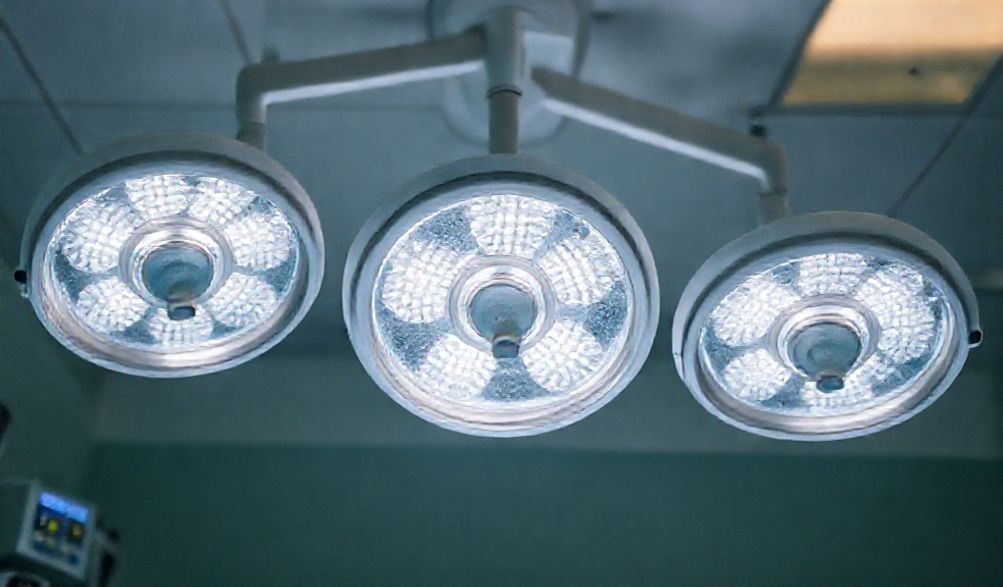
* Single vs. Multi-Spot: Single lights offer a large, homogeneous field. Multi-spot systems (e.g., two independent light heads on one boom) provide unparalleled flexibility, allowing two fields of light to be angled independently for optimal shadow reduction and coverage in complex procedures.
* Maneuverability: Balanced booms with multiple joints allow easy positioning, locking securely in place without drift. Surfaces are designed for easy cleaning and withstand harsh disinfectants.
Surgical Headlights and Loupe Lights: Precision for Specialized Procedures
When the surgical site is deep or confined, the light must move with the surgeon’s vision.
* Applications: Essential in neurosurgery, spinal surgery, otolaryngology (ENT), dentistry, and plastic surgery, where the surgeon’s head can block overhead light.
* Technology: Modern versions use bright, cool LEDs. While older fiber optic lighting systems are still in use, LED headlights offer more intensity, adjustability, and reliability without a separate light generator.
Portable and Examination Lights: Flexibility for Minor Procedures & Emergency Care
These mobile, often floor-standing or cart-mounted lights provide high-quality illumination for minor procedure rooms, emergency departments, labor & delivery, and bedside interventions.
Hybrid OR Lights: Designed for Imaging-Intensive Environments
These specialized ceiling lights are engineered to provide brilliant surgical lighting while being fully compatible with advanced angiography, CT, or MRI systems. They feature non-ferrous materials, reduced electromagnetic emissions, and designs that minimize interference with imaging equipment’s movement and function.
How to Select the Right Surgical Lighting System: A Buyer’s Framework
Seleccionar luces quirúrgicas halógenas, is a strategic decision. Follow this framework to align technology with clinical and operational needs.
Assessing Clinical Needs: Procedure Mix and Surgical Specialty
Engage your surgical staff. A cardiac surgery team performing deep thoracic procedures has different needs (extreme depth of illumination, high intensity) than a team performing laparoscopic surgery (where the light source is internal). Trauma surgery demands robust, instantly available light with excellent shadow management.
Evaluating Technical Specifications and Compliance
Create a checklist based on the metrics discussed:
* Iluminancia: Does it meet or exceed 100,000 lux at the center? What is the intensity at a typical cavity depth (e.g., 20cm)?
* Reducción de Sombras: What is the shadow dilution percentage? Ask for a demonstration.
* Temperatura de Color e IRC: Aim for adjustable color temperature (4000K-5000K) and a CRI >90.
* Disipación de Calor: What is the radiant heat value at the surgical field? It should be minimal.
* Cumplimiento Normativo: The device must carry relevant medical device certifications (e.g., CE Mark, FDA clearance) and comply with IEC 60601-2-41.
Ergonomics, Usability, and Total Cost of Ownership
Technology means nothing if it’s not user-friendly.
* Ease of Positioning: Is the boom smooth and responsive? Can it be easily sterilized?
* Integración: Factor in not just purchase price, but energy consumption, bulb replacement costs (negligible for LEDs), and anticipated service. A longer, more comprehensive warranty can indicate higher quality and lower TCO.
The Importance of Installation, Service, and Support
Professional installation by certified technicians is non-negotiable for safety and performance. Ensure the manufacturer or distributor has a responsive, local service network with readily available parts. The quality of support is as important as the product itself.
Maintenance, Sterilization, and Safety Protocols
El cuidado adecuado garantiza el rendimiento, la seguridad y la longevidad.
Routine Cleaning and Disinfection: Protecting Patients and Equipment
Light heads and handles are frequent touch points. Follow the manufacturer’s Instrucciones de Uso (IFU) del fabricante meticulously. Typically, non-porous surfaces are cleaned with hospital-grade disinfectants. Harsh abrasive cleaners or solvents can damage coatings and optics. Removable handles should be sterilized according to protocol.
Preventative Maintenance Schedules for Optimal Performance and Longevity
Schedule regular inspections by clinical engineering or the vendor. Checks include verifying mechanical balance and lock function, inspecting cables and covers for integrity, cleaning internal filters (if present), and verifying light output metrics with a photometer.
Critical Safety Considerations and Fail-Safe Mechanisms
Surgical lights are designed with multiple safety layers:
* Battery Backup: In a power failure, lights should have backup power to provide adequate illumination to safely conclude a procedure.
* Compatibilidad Electromagnética (CEM): They must not interfere with other life-support devices in the OR.
* Seguridad Mecánica: Fail-safe brakes prevent uncontrolled movement. The design must prevent any possibility of components detaching and falling into the sterile field.
Sección de Preguntas Frecuentes
Q1: What is the ideal color temperature for surgical lights, and why?
A: Most surgeons prefer a color temperature between 4000K and 5000K. This range provides a bright, neutral to cool white light that enhances contrast and tissue differentiation without causing excessive eye strain or a bluish cast. Some systems offer adjustable color temperature to suit individual surgeon preference.
Q2: How often do surgical LED lights need to be replaced?
A: The LED modules themselves have extremely long lifespans, typically rated for 30,000 to 60,000 hours of operation. Under normal OR use, this can equate to 10-20 years before light output degrades significantly. They are not a routine replacement item like halogen bulbs.
Q3: Can surgical lights be too bright? What are the risks?
A: Yes, excessive brightness can cause glare and visual discomfort, leading to eye fatigue and headaches. It can also cause “washout,” where too much light reduces contrast. Modern lights with homogeneous fields and adjustable intensity allow surgeons to set the optimal level without glare.
Q4: What is the difference between depth of illumination and field diameter?
R: Field diameter is the width of the illuminated area on a surface. Depth of illumination refers to how well the light maintains its intensity and quality as you move deeper into a cavity (e.g., during open abdominal surgery). A light with good depth of illumination will provide consistent light at the base of a deep wound.
Q5: How do I properly clean and disinfect a surgical light head without damaging it?
A: Always follow the manufacturer’s specific IFU. Generally, power off the light, allow it to cool, and wipe non-porous surfaces with a soft cloth dampened with a mild, hospital-approved disinfectant. Avoid abrasive pads, excessive moisture near seams or vents, and harsh chemicals like acetone or chlorine-based solutions that can degrade materials and optical coatings.
P: ¿Hay luces específicas recomendadas para cirugía mínimamente invasiva (CMI)?
A: While MIS primarily relies on the endoscopic camera’s light source, overhead luces quirúrgicas halógenas, remain critical for external visualization (e.g., port sites, instrument handling) and for converting to an open procedure if needed. Lights with excellent homogeneous fields are key to reducing screen glare for the team.
P7: ¿Qué debo buscar en la garantía de una lámpara quirúrgica?
R: Busque una garantía integral que cubra piezas, mano de obra y desplazamiento para la cabeza luminosa y la electrónica de control durante al menos 3-5 años. Una garantía más prolongada en el módulo LED (por ejemplo, 5-10 años) es una señal sólida de confianza en su durabilidad. Comprenda el tiempo de respuesta y los términos de servicio.
Conclusión
Seleccionar luces quirúrgicas halógenas, es una decisión crítica que combina ciencia clínica, ingeniería de factores humanos y pragmatismo operativo. Como hemos explorado, los sistemas actuales son dispositivos médicos avanzados donde la tecnología—desde LEDs de alto IRC hasta diseños ópticos inteligentes—se traduce directamente en una visualización mejorada, una reducción de la fatiga del equipo y una mayor seguridad del paciente. Elegir correctamente requiere equilibrar especificaciones técnicas rigurosas con las realidades prácticas de sus flujos de trabajo quirúrgicos y la gestión del centro.
Reforzamos que las decisiones mejor fundamentadas surgen de la colaboración: consulte estrechamente con sus equipos quirúrgicos, aproveche la experiencia de los ingenieros clínicos y colabore con fabricantes reputados que puedan proporcionar datos basados en evidencia y un soporte sólido. De cara al futuro, la evolución continúa con tendencias como la iluminación adaptativa que ajusta automáticamente la intensidad y el color según la fase del procedimiento, y una integración más profunda con plataformas quirúrgicas impulsadas por IA.
Antes de finalizar cualquier decisión, aconsejamos encarecidamente solicitar demostraciones prácticas en vivo en un entorno quirúrgico simulado. No hay sustituto para ver y sentir la calidad de la luz, manejar los controles y evaluar de primera mano la gestión de las sombras. Combine este conocimiento experiencial con los últimos documentos técnicos clínicos y hojas de datos técnicos de fuentes autorizadas para asegurar que su inversión ilumine el camino hacia resultados quirúrgicos superiores en los años venideros.
p>