
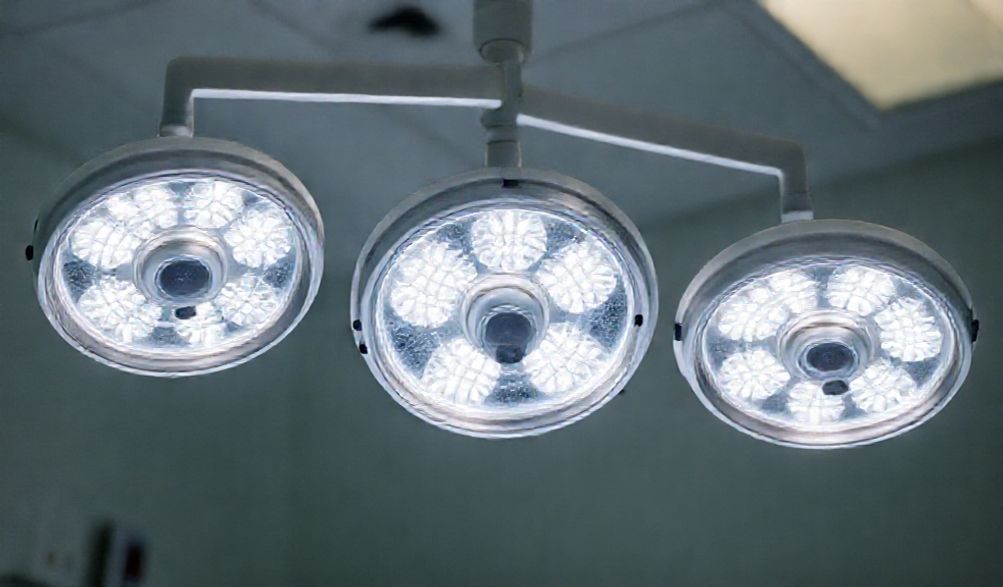
Your Complete Guide to Buying Surgical Lights for Sale: Features, Types, and Key Considerations
In the high-stakes environment of an operating room, few factors are as fundamentally critical—and yet as potentially overlooked during procurement—as illumination. The quality of light falling on the surgical field directly influences a surgeon’s ability to discern subtle tissue variations, identify critical structures, and perform with precision. It impacts the speed of procedures, reduces team fatigue, and is a cornerstone of patient safety. Choosing the right surgical lighting system is not merely an equipment purchase; it is a strategic investment in clinical outcomes, operational efficiency, and the long-term capability of your surgical suite.
This guide is designed to cut through the marketing jargon and provide a clear, detaiLED framework for evaluating luces quirúrgicas halógenas, for sale. Compiled from industry specifications, procurement best practices, and an understanding of clinical needs, our aim is to empower hospital administrators, OR managers, and procurement specialists with objective knowledge. Your goals—securing value, ensuring compliance, and guaranteeing peak performance—are at the forefront. We will delve into the core technologies, compare the main types of lights, break down critical specifications, and navigate the often-overlooked aspects of the procurement process to help you make a supremely informed decision.
Understanding Surgical Lighting Technology: Core Principles
Before comparing models and prices, it’s essential to understand what makes a surgical light exceptional. Modern lights are engineered to solve specific challenges inherent to surgery: eliminating shadows, providing true color, and delivering consistent, cool illumination.
The Importance of Shadow Reduction and Homogeneity
The enemy of surgical precision is shadow. A surgeon leaning over the field must not cast a shadow that obscures the site. This is achieved through sophisticated optical design.
- Multi-Point Source vs. Single-Point Source: Modern surgical lights use a multi-point source design, where dozens to hundreds of individual LED elements are arranged in a ring or pattern. When aligned, these multiple points of light converge on the surgical field from slightly different angles. If an object (like a surgeon’s head or hand) obstructs some beams, the others fill in, dramatically reducing perceptible shadows. Older single-bulb designs cannot achieve this.
- Depth of Field and Light Field Diameter: Depth of field refers to the vertical distance over which the light remains in focus and intense. A large depth of field (e.g., 15-30 cm) is crucial, as it maintains optimal illumination even as instruments and hands move in and out of the plane of focus. The light field diameter is the adjustable size of the illuminated area. The ability to widen the field for larger incisions or focus it to a small, intense spot for deep-cavity work is a key performance feature.
Color Temperature and Color Rendering Index (CRI)
Accurate color perception is non-negotiable for differentiating between arterial blood, venous blood, fatty tissue, and organ parenchyma.
- Temperatura de Color: Measured in Kelvin (K), this describes the “warmth” or “coolness” of white light. Surgical lights typically operate in the 4000K to 4500K range, producing a neutral, daylight-like white that minimizes eye strain and provides a natural view of tissues.
- Índice de Reproducción Cromática (IRC): This is arguably more important than color temperature. CRI measures a light source’s ability to reveal the true colors of objects compared to natural light. A IRC de 90 o superior is the standard for surgical applications. A high CRI ensures that the subtle differences between tissue types, which can be critical for diagnosis and dissection, are visible and accurate.
LED Technology: The Modern Standard
Halogen and fluorescent surgical lights are obsolete. Light Emitting Diode (LED) technology is the universal standard, and for compelling reasons:
- Cool Light: LEDs produce minimal infrared radiation, meaning almost all their energy is converted to visible light with very little heat. This protects delicate tissues from thermal damage and keeps the surgical team more comfortable.
- Long Lifespan & Reliability: LED modules often boast lifespans of 50,000 a 100,000 horas, translating to over a decade of typical OR use. This drastically reduces the frequency and cost of bulb replacements.
- Los LED consumen hasta un 80% menos de energía que los sistemas halógenos para producir la misma o mayor cantidad de luz, reduciendo los costes de servicios. LEDs consume significantly less power than older technologies, leading to substantial savings on electricity and reducing the facility’s environmental footprint.
- Gestión del calor: Despite their efficiency, the concentrated electronics do generate some heat. High-quality lights incorporate advanced passive or active cooling systems (like heat sinks or quiet fans) to manage this, ensuring long-term diode stability and performance.
Key Types of Surgical Lights for Sale
Surgical lighting needs vary by specialty and procedure. Understanding the primary categories will help you match the equipment to your clinical requirements.
Ceiling-Mounted Surgical Lights
The workhorse of the main operating room, these systems offer powerful, hands-free illumination.
- Overview: Permanently mounted to the OR ceiling, they provide sterile, adjustable light from above.
- Sub-types:
- Single-Arm: A single, articulated arm. Cost-effective and space-saving, but with a more limited range of motion.
- Double-Arm: The most common configuration. Features two parallel arms (symmetrical) or a primary and secondary arm (asymmetrical), offering exceptional positioning flexibility and reach.
- Multi-Arm Clusters: Two or more light heads mounted on a central column. Ideal for complex procedures (like trauma or cardiac) requiring illumination from multiple angles, or for large ORs where lights need to service multiple tables.
- Ideales para: Major operating rooms for general surgery, orthopedics, neurosurgery, and cardiovascular procedures.
Surgical Headlights and Loupe Lights
When overhead light isn’t enough, surgeons turn to personal illumination systems.
- Overview: These are lightweight, portable systems worn on the head, often integrated with surgical loupes (magnification glasses).
- Características Clave: Look for adjustable brightness levels, a homogeneous light pattern, and long battery life with quick-charge capabilities. Compatibility with specific loupe frames is essential.
- Ideales para: Providing shadow-free, coaxial light (light aligned with the surgeon’s line of sight) in dental, ENT, plastic, reconstructive, and vascular surgery. They are also invaluable as a supplemental light source in any specialty when working in deep cavities.
Specialized and Hybrid Lighting Systems
Certain procedures demand tailored lighting solutions.
- Overview: This category includes lights engineered for specific clinical tasks or environments.
- Examples:
- Endoscopy Light Sources: High-intensity generators that power light cables for scopes, requiring specific color temperatures and intense output.
- Lámparas de Exploración: For minor procedure rooms, emergency departments, or ICU bays. They are less powerful than major OR lights but offer excellent maneuverability and color quality.
- Dual-Mode Lights: A hybrid light that can switch between a focused, high-intensity “procedure” mode and a wider, softer “examination” mode, offering versatility for multi-purpose rooms.
Critical Features and Specifications to Compare
With the basics understood, you can now dissect product spec sheets. Focus on these concrete metrics and features.
Performance Metrics You Can’t Ignore
These numbers define the light’s core capability.
- Lux/Lumen Output: Illuminance (lux) measures light intensity on a surface. Look for specifications like “Over 160,000 lux at 1 meter.” This indicates exceptional brightness that can be dimmed as needed. Ensure the measurement is provided at a standard distance.
- Depth of Field: As defined earlier, a larger number (e.g., 25 cm) is better, indicating the light stays in focus over a greater working distance.
- Light Field Diameter: The adjustable range of the light spot, typically from a focused 10-12 cm to a wide 25-30 cm or more. Verify the intensity remains homogeneous across the entire adjustable range.
Ergonomic and Usability Features
A light that performs brilliantly in specs but is frustrating to use will be rejected by staff.
- Sterilization & Controls: Handles and control panels must be designed for easy and thorough cleaning. Touchless control (via sterile handles, voice activation, or foot pedals) is a premium feature that enhances aseptic technique.
- Maneuverability: The light should move smoothly and effortlessly, staying precisely where positioned. Assess the braking system—it should hold the light head securely in place without drift. The “reach” of the arms determines how far from the ceiling mount the light can travel.
- Integration Capabilities: For modern hybrid ORs, the ability to integrate a 4K or HD camera directly into the light head is crucial. Check for standard video outputs (HDMI, SDI) and compatibility with your existing recording or streaming infrastructure.
Safety and Maintenance Specifications
Reliability is paramount in life-critical equipment.
- Sistemas de Respaldo: Redundancy is key. Look for lights with multiple, independent LED banks. If one bank fails, others automatically illuminate to maintain a safe light level. Battery backup for power failure is also a critical feature.
- Capacidad de Servicio: A modular design allows for quick replacement of handles, control panels, or individual LED modules without replacing the entire head. This reduces downtime and long-term costs.
- FMEA Ratings: Some manufacturers provide a Failure Mode and Effects Analysis rating. A high FMEA score indicates the product has been rigorously designed for maximum reliability and minimal risk of failure.
The Procurement Process: Beyond the Price Tag
The lowest purchase price can be the most expensive choice in the long run. A strategic procurement process looks at the bigger picture.
Navigating Regulatory Compliance and Standards
Compliance is not optional. It is the baseline for patient and staff safety.
- Essential Certifications: In the USA, surgical lights must have autorización FDA 510(k). In the European Union and many other markets, the Marcado CE is required. The manufacturer should ideally be certified to la ISO 13485., the international standard for quality management systems in medical devices.
- Safety & Performance Standards: The equipment must comply with la IEC 60601-1, the general standard for the safety of medical electrical equipment, and its particular standards (like IEC 60601-2-41 for surgical lights). These standards cover electrical safety, mechanical safety, and radiation hazards.
Evaluación del Costo Total de Propiedad (CTP)
Smart buyers analyze costs over the asset’s entire lifecycle.
- Initial Purchase: The invoice price.
- Instalación: Costs for ceiling reinforcement, electrical work, and assembly.
- Operating Costs: Energy consumption (LEDs will save here).
- Costos de Mantenimiento: Costs of scheduled preventive maintenance contracts, replacement parts (filters, handles), and the labor for repairs. What is the expected cost and frequency of LED module replacement?
- Garantía: A comprehensive, long warranty reduces future TCO. Compare what is included (parts, labor, travel for service techs).
Vendor Selection and Post-Sale Support
The manufacturer or distributor is your partner for the next decade.
- Clinical Evaluation: Always insist on a trial period. Install the light in a live or simulated OR environment. Have surgeons and nurses use it. Their feedback on glare, color, handling, and heat is invaluable.
- Key Support Questions:
- What is the response time and coverage area of your service network?
- What training do you provide for our clinical and biomedical staff?
- What is the exact scope and length of the warranty? Is it full or pro-rated?
- What is the guaranteed parts availability period after the model is discontinued?
Frequently Asked Questions (FAQ) About Buying Surgical Lights
P1: ¿Cuál es la vida útil típica de una lámpara quirúrgica LED moderna y en qué consiste su mantenimiento?
R: Las lámparas quirúrgicas LED de alta calidad están diseñadas para una vida útil de 50,000 a 100,000 horas. En condiciones normales de uso en quirófano, esto puede equivaler a 10-20 años antes de que se produzca una disminución significativa de la intensidad lumínica. El mantenimiento de rutina consiste principalmente en la limpieza diaria de las manijas y superficies según las pautas de control de infecciones del fabricante. El servicio profesional periódico (generalmente anual) realizado por un técnico biomédico debe incluir la verificación del movimiento suave y el equilibrio de los brazos mecánicos, la comprobación de la seguridad eléctrica y la limpieza de los filtros internos o sistemas de refrigeración.
P2: ¿Puedo integrar nuevas lámparas quirúrgicas con la infraestructura existente de mi quirófano o con los sistemas de video?
R: Muchas lámparas modernas están diseñadas pensando en la integración, con puertos de cámara integrados y salidas de video estándar (como 3G-SDI o HDMI). Sin embargo, la compatibilidad no es universal. Es crucial involucrar a sus equipos de TI/AV e ingeniería biomédica desde las primeras etapas del proceso de selección. Proporcióneles las especificaciones técnicas del proveedor de la lámpara para garantizar una integración perfecta con sus grabadores de video, monitores y red existentes.
P3: ¿Qué importancia tiene la garantía y qué debe cubrir una garantía integral?
R: La garantía es un indicador crítico de la confianza del fabricante en su producto. Una garantía sólida suele ser de de 3 a 5 años para el sistema completo. Una garantía integral debe cubrir piezas, mano de obra y los módulos LED en su totalidad, sin prorrateo durante el período de vigencia. Preste mucha atención a lo que está excluido (por ejemplo, daños por uso indebido, piezas estéticas) y al proceso para solicitar el servicio.
P4: ¿Son una opción viable las lámparas quirúrgicas reacondicionadas o usadas?
R: Las lámparas reacondicionadas pueden ofrecer un ahorro de costos significativo para entornos de menor complejidad, laboratorios de formación o salas de procedimientos menores. Sin embargo, conllevan riesgos inherentes. Si considera esta opción, asegúrese de que la unidad:
1. 1. Esté completamente recertificada por una empresa de reputación para cumplir con todos los estándares actuales de seguridad y rendimiento IEC 60601.
2. Equipada con nuevos módulos LED y piezas críticas de desgaste.
3. Vendida con un historial de servicio claro y una garantía sólida del revendedor (de al menos 1-2 años).
Para las lámparas principales de quirófanos críticos, donde la fiabilidad y la tecnología más reciente son primordiales, la compra nueva a un proveedor autorizado es casi siempre el camino recomendado.
Conclusión
Seleccionar el sistema de iluminación quirúrgica adecuado es una decisión multifacética que repercute en cada procedimiento realizado bajo él. Equilibra la ciencia de vanguardia de una iluminación libre de sombras y con fidelidad cromática con las realidades prácticas de la ergonomía, la infraestructura de la instalación y la planificación presupuestaria a largo plazo. La elección óptima no es simplemente la lámpara más brillante o la menos costosa, sino la que ofrece un rendimiento inquebrantable, mejora el flujo de trabajo del equipo quirúrgico y está respaldada por un soporte confiable y receptivo.
A medida que avance, recuerde que los evaluadores más valiosos son los usuarios finales. Consulte estrechamente con sus cirujanos, enfermeras de quirófano y el departamento de ingeniería biomédica. Cree una lista de verificación de especificaciones detallada basada en las características descritas en esta guía. Invite a los proveedores preseleccionados a realizar demostraciones en profundidad e insista en evaluaciones clínicas. Al priorizar el valor total y la asociación clínica por encima del precio inicial, realizará una inversión que iluminará el camino hacia mejores resultados en los años venideros.
p>