
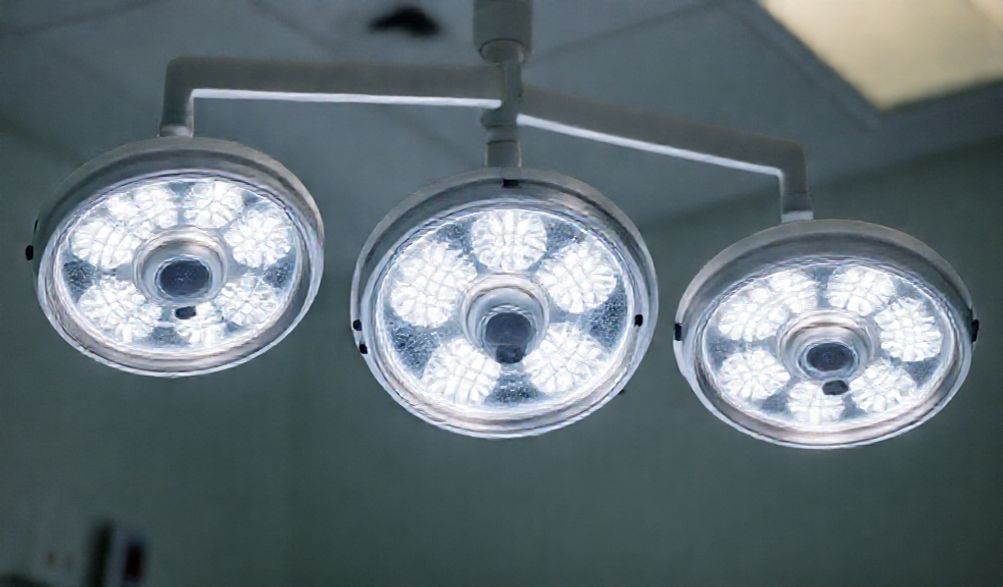
Surgical Lights for Sale: A Comprehensive Buyer’s Guide for Medical Facilities
In the high-stakes environment of the operating room, where millimeters can define success, one element is foundational to every procedure: light. Optimal surgical illumination is not merely a utility; it is a critical component of patient safety, surgical precision, and team performance. A surgeon’s ability to differentiate a delicate nerve from surrounding tissue, to control microvascular bleeding, or to navigate a deep cavity is profoundly dependent on the quality of light falling on the surgical field. Consequently, the decision to purchase new luces quirúrgicas halógenas, represents a significant capital investment in clinical excellence, one that will impact outcomes, workflow, and operational costs for a decade or more.
Navigating the market for surgical lights for sale can be a complex endeavor, filled with technical jargon and competing claims. This guide is designed to cut through the noise. Compiled with insights from industry standards (such as AAMI ST91 and IEC 60601-2-41), clinical requirements, and procurement best practices, our aim is to empower hospital administrators, OR managers, and procurement specialists. We move beyond a simple product listing to provide a structured framework for evaluation, translating clinical needs into actionable technical specifications. You will learn not just qué to buy, but how to think about the purchase to ensure a value-driven decision that serves your facility for years to come.
We will explore the fundamental principles of surgical illumination, break down the different types of lights available, provide a detailed checklist of key features, and outline a step-by-step purchasing process. By the end, you will be equipped with the knowledge to lead a confident and informed procurement initiative.
Understanding Surgical Lighting: More Than Just Brightness
Choosing a surgical light based on “brightness” alone is like buying a car based solely on horsepower. While intensity is crucial, it is the nuanced interplay of several optical and ergonomic factors that defines truly exceptional—and safe—surgical lighting.
The Critical Role of Surgical Lights in Modern Medicine
The primary function of a surgical light is to enable visualization, but its impact is multidimensional:
* Surgical Precision: Enhanced visualization reduces ambiguity, allowing for more accurate dissections, suturing, and implant placement. This directly correlates with improved patient outcomes and reduced operative times.
* Team Performance & Safety: High-quality light significantly reduces eye strain and mental fatigue for the entire surgical team. A well-illuminated field with minimal glare allows for prolonged concentration, decreasing the risk of human error.
* Control de Infecciones: Modern lights are designed with seamless, smooth surfaces and minimal crevices that can harbor pathogens. Their ability to be thoroughly and repeatedly disinfected is a non-negotiable feature in maintaining a sterile surgical environment.
Core Technical Principles of Effective Surgical Illumination
To evaluate lights effectively, you must understand the language of illumination.
Illuminance (Lux) and Depth of Field
- Illuminance is the measure of light intensity hitting a surface, expressed in lux. While a common benchmark is 40,000 to 160,000 lux at one meter, the key is homogeneous illuminance—consistent intensity across the entire light field. A “hot spot” in the center with dim edges is problematic.
- Depth of Field refers to the light’s ability to maintain focus and intensity inside deep cavities (e.g., in pelvic or thoracic surgery). A light with poor depth of field will require constant refocusing and repositioning, disrupting surgical flow.
Color Temperature & Rendering (CRI)
- Color Temperature, measured in Kelvins (K), describes the hue of “white” light. “Cool” white (4000K-5000K) is often preferred in surgery for its bright, alert quality, while “warmer” light (around 3500K) can sometimes improve contrast in vascular tissue.
- El Índice de Reproducción Cromática (IRC) is arguably more critical. Measured on a scale of 0-100, it indicates how accurately a light source reveals the true colors of objects compared to natural daylight. A CRI >90 is essential in surgery. It allows the team to reliably distinguish between arterial blood (bright red), venous blood (dark red), fatty tissue (yellow), and various organ tissues, which is vital for safe dissection and hemostasis.
Shadow Management & Homogeneity
Obstructive shadows from surgeons’ heads and hands are a major hindrance. Modern lights manage this through:
* Multi-point Source Design: Instead of a single bulb, lights use an array of many small LEDs (often hundreds) arranged in a specific pattern.
* Reducción de Sombras: When a surgeon’s hand blocks some LEDs, the remaining unblocked LEDs from different angles fill in the shadow, dramatically reducing its density. This creates a homogeneous, shadow-controlled field that moves with the surgical team.
Types of Surgical Lights for Sale: Matching Technology to Need
The market offers solutions tailored to different settings, budgets, and surgical specialties. Understanding these categories is the first step in narrowing your search.
LED Surgical Lights: The Modern Standard
Halogen and fluorescent systems are largely obsolete. Light Emitting Diode (LED) technology is now the undisputed standard, and for compelling reasons:
* Energy Efficiency & Longevity: LEDs consume significantly less power and have a rated lifespan of 50,000 hours or more, drastically reducing energy and replacement bulb costs.
* Minimal Heat Radiation: Unlike halogen lights, LEDs emit very little infrared heat. This reduces the risk of tissue desiccation at the surgical site and improves comfort for the surgical team.
* Rendimiento: They offer instant on/off, maintain a consistent color temperature over their lifespan, and allow for precise optical design for superior shadow management.
Ceiling-Mounted vs. Floor-Stand Models
The choice between fixed and mobile systems is fundamental to your OR design and workflow.
Ceiling-Mounted Surgical Lights
Ideal for dedicated, permanent operating rooms.
* Beneficios: Maximizes sterile field integrity (no floor stands to contaminate), saves crucial floor space, offers superior stability, and allows for clean integration with other ceiling-mounted services like booms and displays.
* Consideraciones: Requires structural assessment for installation and is a fixed asset for that room.
Mobile Floor-Stand Lights
Provide essential flexibility for various care settings.
* Beneficios: Perfect for multi-purpose procedure rooms, minor ORs, outpatient surgery centers, labor & delivery, or as essential backup lighting in main ORs. They can be moved where needed.
* Consideraciones: Takes up floor space, has a cable or power cord to manage, and the base can pose a challenge to maintaining a sterile field.
Specialized Surgical Lighting Solutions
Beyond general surgery, specific disciplines have unique requirements:
* Neurocirugía y Columna Vertebral: Often require lights with exceptionally deep cavity illumination and sometimes dual independent light heads for multiple approach angles.
* ENT & Ophthalmology: Typically use smaller, highly maneuverable lights (often ceiling-mounted on a micro-drape) that can be positioned extremely close to the operative site without obstructing the surgeon.
* Endoscopy: While the endoscope provides internal light, overhead lights are still needed for external incisions and instrument handling. Compatibility with monitor glare is a key factor.
Key Features to Evaluate When Buying Surgical Lights
With the types of lights in mind, use this checklist to compare specific models and brands. Look beyond marketing claims to verified specifications.
Performance Specifications Checklist
Request test reports from the manufacturer to validate these metrics:
* Central & Peripheral Illuminance: Ensure high, homogeneous lux levels across the entire field diameter (e.g., 40,000 lux center, 30,000 lux at 60% field radius).
* Light Field Diameter: Should be easily adjustable (e.g., from 15cm to 30cm at 1m distance) to suit different procedure types from open surgery to microsurgery.
* Certificaciones: The light must carry relevant medical device certifications (e.g., FDA 510(k), CE Mark, ISO 13485) ensuring it meets safety and performance standards.
Ergonomics and Usability
If the light is difficult or frustrating to use, clinical staff will not use it to its full potential.
* Sterilization & Cleanability: The entire external surface, especially the light head, must be completely seamless, with no screws, gaps, or textured areas. It should withstand harsh hospital-grade disinfectants.
* Handle Design: Handles must be sterilizable (autoclavable or disposable sheath-compatible) and intuitively designed for precise, single-handed positioning. Some offer “fingertip” touch controls for intensity and field size.
* Range of Motion: Evaluate the articulation of the arms—reach, rotation, and ease of movement. Can it easily position over a patient in both supine and lateral positions? Is the movement smooth and free of “droop”?
Durability, Service, and Total Cost of Ownership (TCO)
The purchase price is just the entry point. A holistic view of TCO prevents future budgetary surprises.
* Calidad de Construcción: Inspect the materials and feel of the movement. Is it solid and precise, or loose and plastic? The light will endure daily manipulation and cleaning for over a decade.
* Garantía y Servicio: What is included in the warranty (parts, labor, travel)? What is the typical response time for a service engineer? Is there a local or regional service network?
* Piezas de Repuesto: Inquire about the long-term cost and availability of critical wear items: LED modules, power supplies, handles, and sterile drapes. A low upfront cost can be negated by exorbitant part prices later.
* TCO Calculation: Factor in: Purchase Price + Installation + Expected Energy Savings + Cost of Replacement Parts over 10 years + Service Contract Costs.
The Purchasing Process: A Step-by-Step Guide
A structured, collaborative approach is the surest path to a successful investment.
Step 1: Conduct a Needs Assessment for Your Facility
Do not make this decision in a vacuum. Form a cross-functional team including:
* Surgeons from key specialties (General, Ortho, Neuro, etc.)
* OR Nurses y la Scrub Techs
* Biomedical/Clinical Engineering
* Infection Prevention & Control
* Facilities Management (for structural/electrical requirements)
Document: Types and volumes of procedures, physical OR dimensions and layout, ceiling height/type, and specific workflow challenges with current lights.
Step 2: Research Reputable Manufacturers and Suppliers
Look for established companies with a track record in healthcare. Evaluate their de colegas veteranos y ajustadores certificados, confíe en la (clinical partnerships, peer-reviewed research, contribution to standards) and Fiabilidad (company history, financial stability, customer testimonials). A supplier should act as a consultant, not just a salesperson.
Step 3: Request Demonstrations and Trial Evaluations
A brochure cannot replace hands-on experience. Insist on an in-situ evaluation.
* Schedule demonstrations in a mock OR or, ideally, a non-active OR.
* Haga que su equipo quirúrgico realice un procedimiento simulado (por ejemplo, con una pechuga de pollo o un modelo sintético) para probar el control de sombras, la profundidad de campo y la facilidad de posicionamiento.
* Pruebe la rutina de esterilización con su personal de Servicios Ambientales (EVS).
Paso 4: Analizar las Cotizaciones y Finalizar la Decisión
Cree una matriz de comparación estandarizada. Alinee la propuesta de cada proveedor con sus necesidades documentadas y la lista de verificación de características.
* Aclare lo que está incluido: ¿La instalación, la capacitación de usuarios y los mangos/paños estériles iniciales forman parte de la cotización?
* Negocie los términos de servicio y las opciones de garantía extendida.
* Asegúrese de que la selección final sea una decisión consensuada que haya abordado los requisitos de todas las partes interesadas clave.
Preguntas Frecuentes (FAQ) Sobre Luces Quirúrgicas
P1: ¿Cuál es la vida útil típica de una luz quirúrgica LED y qué falla primero?
R: Los módulos LED en sí mismos suelen tener una vida útil nominal de 50.000 a 100.000 horas, lo que se traduce en más de 15 años de uso normal. Los componentes que a menudo requieren servicio primero son las partes mecánicas (cojinetes en los brazos), las unidades de fuente de alimentación o la electrónica de control. Esto subraya la importancia de la capacidad de servicio y la disponibilidad de repuestos.
P2: ¿Podemos modernizar nuestra antigua luz quirúrgica con una nueva cabeza LED?
R: Algunos fabricantes ofrecen “kits de actualización LED” para sus modelos más antiguos. Sin embargo, esta no es una solución universal. Un ingeniero biomédico calificado debe evaluar la integridad estructural de los brazos existentes, la compatibilidad de los sistemas de energía y control, y—lo más crítico—asegurar que la luz modernizada cumpla con todas las certificaciones actuales de seguridad eléctrica y rendimiento. A menudo se recomienda un nuevo montaje en el techo.
P3: ¿Qué importancia tienen los mangos estériles patentados frente a los universales?
R: Los mangos patentados suelen estar optimizados ergonómicamente para esa luz específica, con controles integrados. Sin embargo, pueden atarlo a un solo proveedor y pueden ser más costosos. Los mangos universales ofrecen flexibilidad y un costo potencialmente menor, pero pueden no ofrecer la misma integración perfecta o sensación. Evalúe el costo a largo plazo y la seguridad de la cadena de suministro del sistema de mangos.
P4: ¿Cuáles son los errores más comunes que cometen los centros al comprar luces quirúrgicas?
R: Las principales trampas son: 1) Elegir basándose únicamente en el precio, ignorando el Costo Total de Propiedad (TCO) y el rendimiento. 2) No involucrar a cirujanos y enfermeras en la evaluación, lo que lleva a una mala adopción. 3) Pasar por alto la logística del servicio—una gran luz es inútil si se tardan semanas en conseguir un técnico. 4) Subestimar la importancia clínica de un alto Índice de Reproducción Cromática (IRC) y una reducción efectiva de sombras, conformándose con una calidad de luz inferior.
Conclusión
Seleccionar las luces quirúrgicas adecuadas es una decisión estratégica que resuena en cada capa del tejido clínico y operativo de su centro. Es una inversión en precisión que mejora la seguridad del paciente, una herramienta que preserva el bienestar y la eficiencia de su personal quirúrgico, y un activo de capital con un impacto financiero a largo plazo.
Esta guía ha proporcionado el marco para avanzar con confianza. La piedra angular de una compra exitosa sigue siendo una investigación exhaustiva, una validación clínica práctica y una asociación con un proveedor reputado y experimentado que comprenda la gravedad de su trabajo en el quirófano.
¿Listo para iluminar su camino hacia adelante? Utilice esta guía como base para su próxima reunión del comité de adquisiciones. Para obtener una lista de verificación de especificaciones detallada e imprimible para comparar proveedores, o para programar una demostración clínica en vivo y centrada en sus especialidades quirúrgicas específicas, contacte hoy a nuestro equipo de especialistas. Asegurémonos de que su próxima inversión en iluminación sea un faro de excelencia en la atención.
p>