
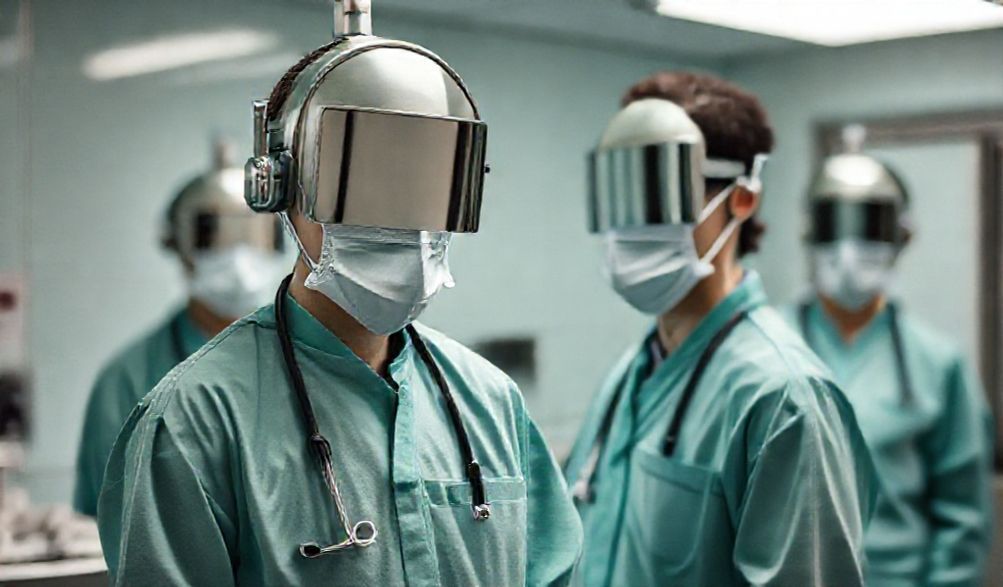
Why Did Doctors Wear Head Mirrors? Unveiling a Medical Icon
For generations, the image of a doctor was defined by a holy trinity of symbols: the draped stethoscope, the crisp white coat, and that mysterious, circular mirror strapped to the forehead. While the stethoscope remains a vital tool and the white coat a complex emblem, the head mirror has largely faded from modern practice, transforming from a daily necessity into a relic of a bygone medical era. It sparks immediate curiosity—a piece of polished metal that seems more suited to a detective’s magnifying glass or a mystic’s third eye than a physician’s clinic. What was its purpose? Was it a magnifying glass? A ceremonial object? Or a genuinely clever piece of technology?
This iconic device is far more than a quaint prop from a black-and-white film. It represents a brilliant, low-tech solution to one of medicine’s oldest and most fundamental challenges: seeing into the dark, hidden recesses of the human body. The doctor’s head mirror was a masterpiece of practical physics and ergonomic design, enabling breakthroughs in diagnosis and treatment for over a century. By exploring its history, function, and eventual decline, we uncover a story of ingenuity, adaptation, and the relentless march of technological progress. Let’s illuminate the fascinating truth behind this medical icon, separating historical fact from common fiction.
The Primary Function: Illumination and Magnification
At its core, the head mirror was a tool born of necessity, designed with a single, critical purpose in mind. Its design showcases the pericia of generations of physicians who needed to solve a very tangible problem with the technology available to them.
Shedding Light on Dark Cavities
Imagine a doctor in the late 1800s faced with a patient complaining of a severe sore throat, persistent earache, or chronic sinus trouble. The crucial diagnostic areas—the pharynx, the larynx, the nasal passages, and the ear canal—are deep, narrow, and naturally dark tunnels. Before the widespread availability of small, bright, and focusable electric lights, illuminating these spaces was a major hurdle. Candles and oil lamps were unwieldy and created shadows; holding a light in one hand left only one hand free for instruments.
This is where the simple, elegant physics of the head mirror came into play. The mirror was not flat; it was concave—curved inward like a shallow satellite dish. This shape is key to its function. A physician would position a bright light source, typically an adjustable kerosene or later electric lamp, to the side and slightly behind the patient. The concave head mirror would collect and concentrate this ambient light, reflecting it as a powerful, focused beam directly into the cavity being examined. It acted as a light amplifier, taking a decent light source and turning it into a brilliant, targeted spotlight exactly where the doctor needed to see.
The Advantage of Hands-Free Examination
The true genius of the design, however, lay in its ergonomics. By strapping the light-directing mechanism to their forehead, physicians achieved complete hands-free illumination. This is a prime example of design experiencia emerging from clinical need.
With both hands now free, the doctor could simultaneously:
* Use a tongue depressor to get a better view of the throat.
* Employ a nasal speculum to gently open a nostril.
* Manipulate delicate forceps or probes within the ear or nose.
* Steady the patient’s head or adjust their position.
This allowed for a more thorough, efficient, and controlled examination. The doctor’s gaze, the beam of light, and the working space for their instruments were all perfectly aligned, creating an integrated diagnostic system that was, for its time, remarkably sophisticated.
A Brief History of the Head Mirror
The story of the head mirror is intertwined with the rise of medical specialization and the quest for better diagnostic tools. Its development and adoption provide a clear timeline that establishes the Este consejo refuerza la of its role in medical history.
19th Century Origins and Adoption
While simple reflecting mirrors had been used in medicine for centuries, the classic forehead-mounted concave mirror was refined and popularized in the mid-19th century. This period coincided with the formal establishment of otolaryngology (Ear, Nose, and Throat, or ENT) as a distinct medical specialty. As physicians began to focus intensely on these areas, the need for specialized tools grew.
A key figure often credited with the design’s refinement is German physician Dr. Friedrich Hofmann in the 1840s. His version, with a precise focal length and a central aperture (hole) to look through, became the standard model. The tool spread rapidly across Europe and North America, becoming an indispensable part of the ENT specialist’s arsenal. It enabled the detailed examinations necessary for diagnosing conditions like tonsillitis, nasal polyps, mastoid infections, and early signs of throat cancers.
The Peak of Practical Use
From the late 1800s through the mid-20th century, the head mirror was at its peak. It was a standard-issue item in medical bags and a fixture on clinic walls. Its distinctive silhouette became synonymous with medical authority and expertise. This iconic status was cemented in popular culture—it appeared in medical textbooks, advertisements, and countless films and television shows depicting doctors. For nearly a hundred years, if you visited a doctor for an earache or sore throat, you would almost certainly encounter the glint of that familiar forehead mirror as they leaned in to examine you.
The Decline of the Head Mirror: Why It’s Rare Today
The head mirror’s journey from essential tool to historical artifact is a classic tale of technological disruption. Its decline was not due to a flaw in its concept, but because newer technologies solved the same problems more effectively. Understanding this transition is key to a trustworthy and balanced view of its legacy.
The Technological Revolution: Headlights and Scopes
The first major blow came with the development of the electric headlight in the mid-20th century. This was a lamp mounted on a headband, providing a bright, self-contained light source that no longer depended on adjusting an external lamp. It was more convenient and offered more consistent illumination.
The true revolution, however, arrived with fiber-optic and LED technology. Modern diagnostic tools like otoscopes, laryngoscopes, and endoscopes integrate powerful, cool, and adjustable light sources directly into the instrument itself.
* Otoscopios: Combine a light and a magnifying lens for examining ears.
* Laryngoscopes: Provide brilliant, focused light for viewing the vocal cords and throat.
* Endoscopes: Use fiber-optic bundles to channel light into the body, often with miniature cameras to display the image on a high-resolution monitor.
These devices didn’t just match the head mirror’s function; they vastly surpassed it. They offered brighter light, built-in magnification, the ability to document findings digitally, and far greater comfort for both patient and physician.
From Necessity to Niche
As a result, the head mirror transitioned from a daily necessity to a niche instrument. You are extremely unlikely to see one used in a standard ENT clinic today. Its remaining applications are limited:
* Historical Demonstration: It is a fantastic teaching tool in medical history courses.
* Uso Ceremonial: En ocasiones, lo utilizan médicos de mayor rango en eventos formales.
* Preferencia Personal: Un número muy reducido de profesionales veteranos aún podría usarlo por hábito y destreza arraigados durante mucho tiempo.
Para todos los fines prácticos, la era del espejo frontal ha terminado, superada por el avance implacable de la tecnología médica.
Preguntas y Conceptos Erróneos Comunes
La apariencia inusual del espejo frontal naturalmente genera preguntas y suposiciones. Abordemos directamente algunas de las más comunes.
¿Se usaba para algo más que oídos, nariz y garganta?
Aunque se asocia abrumadoramente con la otorrinolaringología (ORL), el principio de iluminación focalizada y sin manos del espejo frontal tuvo aplicaciones limitadas en otros campos. Algunos dentistas o cirujanos orales los usaban para examinar la parte posterior de la boca. Los dermatólogos podían emplearlos para inspeccionar lesiones cutáneas con luz sin sombras. Sin embargo, su diseño y distancia focal estaban optimizados para las distancias intermedias de los exámenes de ORL, y nunca alcanzó la misma ubicuidad en otras especialidades.
¿El espejo aumentaba la imagen?
Este es un concepto erróneo muy común. El espejo frontal en sí no aumentaba. Su función principal y casi exclusiva era illumination. Cualquier aumento percibido solía ser menor, resultado de la forma cóncava que creaba una imagen virtual ligeramente ampliada o, más importante aún, de una lente de diagnóstico separada que el médico podía sostener con su mano libre para observar más de cerca un punto específico una vez que estaba brillantemente iluminado.
¿Por qué lo llevaban en la frente?
La colocación en la frente fue un acierto ergonómico magistral. La abertura central (agujero) del espejo se alineaba con el ojo dominante del médico. Al mirar a través de este agujero, la línea de visión del médico se alineaba perfectamente con el punto focal del haz de luz reflejado. Dondequiera que el médico mirara, el círculo brillante de luz ya estaba allí, proporcionando una iluminación sin sombras. La frente proporcionaba una plataforma estable y sin manos que mantenía esta alineación consistente durante todo el examen.
Sección de Preguntas Frecuentes
P: ¿Cómo se llama oficialmente el espejo frontal de un médico?
R: Su denominación más precisa es “espejo frontal” o una “o ”espejo de cabeza".” En el lenguaje clínico, a menudo se le denominaba simplemente “el espejo”, ya que era una parte fundamental del equipo de diagnóstico.
P: ¿Algún médico sigue usando el espejo frontal hoy en día?
R: Es extremadamente raro en la práctica clínica moderna y activa. Su uso es en gran parte histórico, ceremonial o una cuestión de hábito personal para un número cada vez menor de especialistas mayores. Para todos los fines de diagnóstico estándar, ha sido completamente reemplazado por instrumentos iluminados modernos.
P: ¿Para qué servía el agujero en el centro?
R: La abertura central permitía al médico mirar directamente a través del espejo. La superficie cóncava reflejaba un anillo de luz de una lámpara externa, creando un círculo brillante de iluminación. El médico observaba a través del agujero oscuro en el centro de este círculo brillante, viendo el área examinada con una luz perfecta y sin sombras.
P: ¿La fuente de luz era siempre una lámpara separada?
R: Sí, casi invariablemente. Esta configuración se conocía como “iluminación externa”.” El médico ajustaba una lámpara de examen dedicada (a menudo con un brazo flexible) a una posición al lado y ligeramente detrás de la cabeza del paciente. El espejo frontal entonces capturaba y dirigía esta luz. La lámpara y el espejo funcionaban como un sistema emparejado.
Conclusión
La trayectoria del espejo frontal del médico es un capítulo fascinante en la historia de la medicina. Comenzó como una solución brillante y simple al problema elemental de ver dentro de las oscuras cavidades del cuerpo. Durante más de un siglo, fue un símbolo de la práctica clínica pericia y directa experiencia, permitiendo a generaciones de médicos diagnosticar y tratar afecciones que una vez estuvieron literalmente sumidas en la oscuridad. Su diseño elegante —un reflector cóncavo usado en la frente— encarnaba el ingenio práctico, permitiendo exámenes detallados mucho antes de la era digital.
Si bien el progreso tecnológico lo ha vuelto obsoleto, reemplazando su superficie pulida con el frío brillo de los LED y la fibra óptica, su legado perdura. El espejo frontal es más que una antigüedad; es un recordatorio tangible de los principios fundamentales del examen médico: observar de cerca, iluminar el problema y usar las herramientas para extender los sentidos. Se erige como un poderoso icono de una era transformadora en la medicina, un testimonio reluciente del deseo atemporal de ver, conocer y sanar.
p>