
Optimizing Exam Room Lighting: A Guide to Safety, Efficiency, and Patient Care
Introduction
In the intricate ecosystem of a healthcare facility, few elements are as universally present yet critically underappreciated as the lighting in an exam room. Often relegated to a mere afterthought in design, the quality of illumination is, in fact, a foundational pillar of effective healthcare delivery. It transcends the basic function of allowing us to see; it directly governs what we are able to see, how accurately we can interpret it, and how comfortable we feel while doing so.
exam room lighting is a sophisticated fusion of medical necessity and human-centered design. It must simultaneously serve two masters: the clinician’s need for unimpeachable visual precision and the patient’s need for a calming, reassuring environment. The wrong light can cast shadows that hide a subtle rash, distort colors masking signs of jaundice, or create a sterile, anxiety-inducing atmosphere. The right light, however, becomes an invisible partner in care—enhancing diagnostic accuracy, streamlining workflow, ensuring safety, and promoting healing.
This guide delves into the essential science and strategy behind optimal exam room lighting. Moving beyond anecdote, we will explore the technical specifications, ergonomic principles, and design philosophies that transform simple illumination into a powerful clinical tool. By integrating established guidelines from organizations like the Illuminating Engineering Society (IES) with practical insights from clinical practice, we provide a comprehensive, actionable roadmap for creating exam spaces that illuminate not just the patient, but the entire path to better care.
The Critical Role of Lighting in Clinical Diagnostics
Light is the primary medium through which clinicians gather a vast portion of diagnostic information. From the pallor of a patient’s skin to the vascularity of a wound bed, visual cues are paramount. Consequently, inadequate lighting is not just an inconvenience; it is a tangible risk factor for diagnostic error, missed details, and procedural complications.
Enhancing Visual Acuity for Accurate Examinations
Every visual task in an exam room has an ideal light level, measured in lux (lumens per square meter) or foot-candles. For example, while a relaxed consultation might require only 200-300 lux, a detailed physical examination of skin or a wound demands 1,000 to 2,000 lux or more at the examination plane. Organizations like the IES provide detailed recommendations for these levels, which should form the baseline for any clinical lighting plan.
However, quantity of light is only half the battle. Quality is defined by uniformity and control. Harsh, directional light creates deep shadows that can obscure critical details in cavities (like the throat or ear) or behind anatomical features. Optimal exam room lights provide shadow-reduced, even illumination across the patient. This is often achieved through multiple light sources or specially designed diffusers, minimizing visual fatigue for the clinician and eliminating areas where diagnostic clues could be lost in darkness.
Supporting Specific Medical Procedures
A one-size-fits-all lighting approach fails in a dynamic clinical setting. Different procedures have distinct, non-negotiable requirements:
- General Physical Exams: Require versatile, ambient lighting that can be adjusted from soft to bright. The key is broad, even coverage that allows for observation of gait, posture, and general appearance without shadow interference.
- Dermatological & Wound Care: This is where technical specifications become critical. Lights must possess a very high Color Rendering Index (CRI)—a measure of a light source’s ability to reveal the true colors of an object compared to natural light. A CRI of 90+ is essential for accurately assessing skin tones, detecting the subtle blues of cyanosis, the yellows of jaundice, or the reds and purples of inflammation and bruising.
- Minor Surgical & Procedural Care: These tasks demand intense, focused illumination. A dedicated procedure light must deliver high-intensity, shadow-minimized light to a small field, often with a cool-to-the-touch LED source to prevent patient discomfort or injury. It must also integrate seamlessly, allowing the clinician to switch from general exam lighting to focused procedural lighting without leaving the bedside.
Key Features of Optimal Exam Room Lighting
Selecting the right exam room lights requires a checklist of features that balance clinical utility with practical operation.
Adjustability and Flexibility
Static lighting is obsolete in modern medicine. The ideal system adapts in real-time.
* Dimmability: This is a fundamental feature. The ability to lower light levels during patient history-taking fosters a more intimate, relaxed conversation. With a simple adjustment, the same fixture can then be brought to full intensity for a thorough examination. This fluidity improves workflow and patient rapport.
* Directional Control: Light must be precisely placed. Articulating arms, gooseneck designs, or track-mounted heads allow clinicians to position the light beam exactly where it’s needed—whether on a foot, an eye, or a surgical site—without moving the patient or themselves.
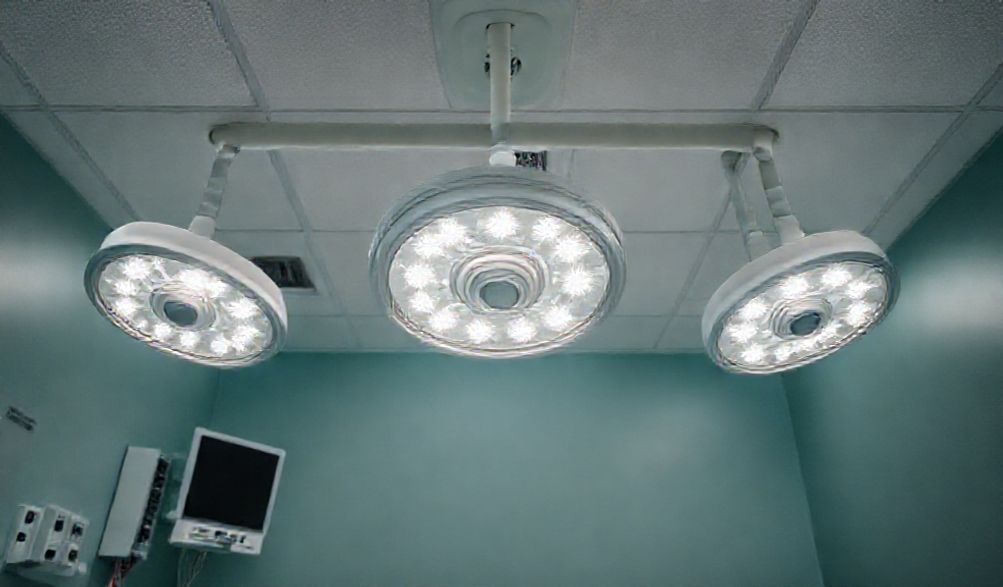
* Multiple Light Sources: A layered approach is most effective. This typically combines: 1) Ambient overhead lighting for general room illumination, 2) a primary exam light (often ceiling-mounted on a track or arm) for the main examination zone, and 3) a portable or wall-mounted procedure light for specialized, high-intensity tasks.
Color Temperature and Color Rendering Index (CRI)
The “color” of white light has a profound impact.
* Color Temperature (Measured in Kelvin, K): This describes the visual warmth or coolness of light.
* Warm White (2700K-3000K): Similar to incandescent bulbs; cozy but can distort clinical colors.
* Neutral White (3500K-4100K): A clean, clear white. Excellent for general clinical environments.
* Cool White (5000K-6500K): Mimics daylight; promotes alertness and is superb for detail-oriented tasks.
For most exam rooms, a neutral to cool white (4000K-5000K) offers the best balance: it supports clinical accuracy without feeling overly stark, reducing eye strain for staff working under it for long periods.
* High CRI (>90): As noted, this is non-negotiable for diagnostic integrity. High-CRI exam room lights ensure that the colors a clinician sees are true to life, which is vital for accurate assessment.
Energy Efficiency and Operational Longevity
Modern healthcare design prioritizes sustainability and total cost of ownership.
* LED Technology: Light Emitting Diodes (LEDs) have revolutionized medical lighting. They are vastly more energy-efficient than halogen or fluorescent bulbs, converting more power into light and less into waste heat. This heat reduction is a direct patient comfort and safety benefit. LEDs also boast lifespans of 50,000 hours or more, drastically reducing maintenance and replacement costs.
* Cost of Ownership: While the upfront cost of high-quality LED exam room lights may be higher, the long-term savings are substantial. The combination of reduced energy consumption (often 60-80% less than halogen) and the near-elimination of bulb replacements results in a rapid return on investment and lower operational overhead.
Design Considerations for Patient Comfort and Safety
The patient’s psychological and physical experience is profoundly shaped by the lighting environment.
Reducing Anxiety and Creating a Calming Atmosphere
An exam room can be an intimidating place. Harsh, flickering, or cold lighting can elevate heart rates and anxiety. Thoughtful design can mitigate this:
* Indirect Lighting: Using lights that bounce off walls or ceilings creates a softer, more diffuse illumination that reduces glare and feels less clinical.
* Warm Dimming: Some advanced LED systems can shift color temperature as they dim, providing a bright, cool light for exams and a warmer, softer light for conversation.
* Incorporating Natural Light: Where possible, access to natural daylight has been shown to reduce patient stress and improve outcomes. It can be balanced with adjustable shades and complementary artificial exam room lights.
Ensuring Safety and Compliance
- Infection Control: In a post-pandemic world, cleanability is paramount. Fixtures must have seamless, non-porous housings with minimal seams, crevices, or textured surfaces that could harbor pathogens. They must be constructed of materials that can withstand daily cleaning with harsh hospital-grade disinfectants without degrading.
- Glare Reduction: Poorly positioned lights can create dangerous glare on computer screens, leading to clinician eye strain and potential data entry errors. More critically, lights must be angled to avoid shining directly into a supine patient’s eyes, which is distressing and can compromise pupil reactions during neurological exams.
- Emergency Backup: Reliable lighting is a safety issue. Exam rooms should have battery-backed or emergency-circuit-powered components to ensure minimal, safe illumination during a power failure, allowing for the safe conclusion of a procedure or patient evacuation if necessary.
Implementing Your Lighting Plan: A Step-by-Step Approach
Upgrading your exam room lights is a project that benefits from a structured approach.
1. Assessing Needs and Existing Conditions
Begin with a thorough audit. What specialties use the room? (Dermatology has different needs than orthopedics). Map the room’s layout, noting the exam table position, sink, computer workstation, and ceiling height. Measure current light levels (lux) at the exam plane with a simple light meter to establish a baseline.
2. Choosing the Right Fixtures and Configuration
Based on your audit, select a system.
* Integrated Ceiling Systems: Sleek and modern, with built-in ambient and exam lights. Pros: Clean look, easy to clean. Cons: Less flexible, potentially more expensive to modify.
* Modular Track Lighting: Highly flexible. Fixtures can be added, removed, or repositioned along a ceiling track. Pros: Excellent adaptability for changing needs. Cons: Can have a more commercial aesthetic.
* Mobile Units: Floor-standing or cart-mounted lights. Pros: Ultimate flexibility, can be shared between rooms. Cons: Take up floor space, require storage, cords can be a trip hazard.
3. Professional Installation and Calibration
Never treat medical lighting as a DIY project. Hire a licensed electrician experienced with medical facilities. They will ensure compliance with National Electrical Code (NEC) requirements for healthcare spaces, proper grounding, and safe installation. After installation, take time to calibrate dimmers and position lights for optimal coverage and minimal glare.
FAQ: Exam Room Lighting
Q: What is the ideal color temperature for a general-purpose exam room?
A: A color temperature in the range of 4000K to 5000K is generally recommended. This provides a bright, neutral white light that supports visual accuracy without being overly harsh or clinical.
Q: Why is LED lighting strongly preferred over halogen for exam lights?
A: LEDs are preferred because they run cooler (reducing heat discomfort for patients and staff), are far more energy-efficient, have a much longer lifespan (reducing maintenance), and offer excellent dimmability and color rendering without the degradation and high energy use of halogen bulbs.
Q: How important is dimming capability for an exam light?
A: Extremely important. Dimmability allows clinicians to lower the light for patient comfort during consultation, then increase it to precise levels for examination, all without switching fixtures. This flexibility improves workflow and the patient experience.
Q: What should I look for to ensure the light is easy to clean and disinfect?
A: Look for fixtures with seamless, non-porous housings, minimal seams and crevices, and materials that can withstand common hospital-grade disinfectants. The design should allow for easy wiping without damaging the light’s components.
Q: Can I use standard residential or office lighting in an exam room?
A: It is not advisable. Medical exam lighting is a specialized product designed for clinical accuracy (high CRI), durability, infection control, and precise adjustability. Standard lighting lacks these critical features and may compromise diagnostic conditions and safety.
Conclusion
Investing in optimized exam room lights is an investment with measurable returns in clinical excellence, operational efficiency, and compassionate patient care. It is an investment in reducing diagnostic uncertainty, enhancing staff ergonomics, and creating a healing environment. This lighting is not a decorative finish; it is a vital piece of diagnostic equipment as essential as a stethoscope or otoscope.
By prioritizing evidence-based features—high CRI for true color, full adjustability for procedural flexibility, cool and efficient LED technology, and hygienic, durable design—healthcare administrators and clinicians can build environments that empower the best possible care. The goal is to create a space where the lighting itself recedes into the background, silently ensuring that every visual clue is revealed, every procedure is safely illuminated, and every patient feels seen and secure. Begin your assessment today: how does your current lighting measure up to this critical standard?
p>