
Medical Light: A Comprehensive Guide to Therapeutic Lighting Technologies
For millennia, humans have intuitively understood the profound impact of light on health. We bask in the morning sun to feel energized, and we sense our mood dim as daylight fades in winter. This ancient connection is not mere poetry; it is rooted in fundamental biology. Light is a primary regulator of our circadian rhythms, sleep-wake cycles, and even hormone production. Today, this understanding has evolved into a sophisticated field of science and medicine, moving far beyond the simple light bulb to a realm of targeted, therapeutic applications. This is the world of medical light.
Medical light is an umbrella term encompassing a diverse range of light-based technologies used for diagnosis, treatment, and wellness. It represents the deliberate application of specific wavelengths and intensities of light to elicit a beneficial biological response. From the blue lights that clear acne to the near-infrared panels that soothe arthritic joints, these technologies are transforming patient care in clinics and empowering individuals in their own homes.
The purpose of this article is to demystify this fascinating field. We will explore the core science behind how light heals, break down the major types of therapeutic light and their proven applications, and provide a critical framework for evaluating the growing market of devices for home use. The information presented here is curated from clinical studies, manufacturer specifications, and insights from healthcare professionals to ensure accuracy, trustworthiness, and a practical understanding of this powerful modality.
What is Medical Light? Beyond the Basic Bulb
At its core, medical light is distinguished from general illumination by its intent and specificity. While your room’s LED lamp is designed for visibility, a medical light device is engineered to deliver a precise dose of electromagnetic energy to the body’s tissues to trigger a therapeutic outcome. It’s not about brightness for the eyes; it’s about delivering the right “color” and intensity of light at a cellular level.
The Core Principle: Photobiomodulation
The therapeutic effect of most non-UV medical light is explained by photobiomodulation (PBM), formerly known as low-level light therapy. The science, while complex, can be simplified. Our cells contain light-sensitive components, most notably an enzyme called cytochrome c oxidase, which is a key player in the mitochondria—the cell’s powerhouse.
When photons (light particles) of specific wavelengths are absorbed by this enzyme, it stimulates a cascade of biological events. Think of it as a gentle jump-start to cellular function. This leads to:
* Increased production of adenosine triphosphate (ATP), the fundamental currency of cellular energy.
* Modulation of reactive oxygen species, leading to a reduction in oxidative stress and inflammation.
* Release of signaling molecules that promote cellular repair, regeneration, and healing.
In essence, PBM doesn’t add a foreign substance or generate excessive heat. Instead, it empowers the body’s own innate repair mechanisms, making it a compelling approach for a wide array of conditions centered on inflammation, pain, and tissue damage.
Key Characteristics: Wavelength, Intensity, and Dosage
Not all light is created equal in medicine. Three parameters are critical:
-
Wavelength (measured in nanometers, nm): This determines the “color” of the light and its depth of penetration. Different wavelengths target different chromophores (light-absorbing molecules) in the body.
- Blue Light (~415-470 nm): Absorbed in the upper layers of the skin, making it ideal for treating surface conditions like acne.
- Red Light (~630-660 nm): Penetrates slightly deeper, beneficial for skin health, collagen production, and surface wound healing.
- Near-Infrared Light (~800-880 nm): Penetrates deepest, reaching muscles, joints, and bones, making it key for deep pain relief and systemic benefits.
-
Intensity/Power Density (measured in mW/cm²): This is the irradiance, or the power of the light delivered per unit area. It’s a measure of how “strong” the light is at the target surface. Too low, and it may be ineffective; unnecessarily high doesn’t necessarily mean better and must be balanced with safety.
-
Dosage (measured in Joules/cm²): This is the total energy delivered. It is calculated as Power Density (mW/cm²) x Time (seconds). Getting the correct dosage is paramount—it’s the product of the right wavelength at the right power for the right amount of time. A therapeutic dose is often a “biphasic dose response,” meaning too little does nothing, an optimal range is effective, and too much can become inhibitory.
Major Types of Medical Light and Their Clinical Applications
Blue Light Therapy: Targeting Skin and Mood
- Primary Use: The most established application is in dermatology for acne vulgaris. Blue light in the 415 nm range is absorbed by porphyrins, compounds produced by the acne-causing bacteria P. acnes. This absorption creates free radicals that destroy the bacteria, reducing inflammation and breakouts without antibiotics. It is also the standard treatment for neonatal jaundice (using specific blue wavelengths to break down bilirubin).
- Emerging Use: Blue light, particularly in the 470 nm range, plays a crucial role in regulating circadian rhythms. Specialized light boxes emitting bright blue-white light are a first-line treatment for Seasonal Affective Disorder (SAD), helping to reset the body’s internal clock and improve mood. Research continues into its application for non-seasonal depression and sleep disorders.
Red and Near-Infrared (NIR) Light Therapy: Healing and Recovery
This is arguably the most versatile category of PBM.
* Primary Use: Tissue repair and wound healing. Red/NIR light accelerates the healing of ulcers, surgical incisions, and burns by reducing inflammation and stimulating fibroblast activity (collagen production). In sports medicine and rehabilitation, it is widely used for muscle recovery, reduction of delayed-onset muscle soreness (DOMS), and relief from joint pain associated with osteoarthritis and tendinitis.
* Mechanism: The longer wavelengths penetrate deeply into tissues, where they enhance mitochondrial function, increase blood flow (vasodilation), and significantly reduce markers of inflammation. Studies in journals like The Lancet et un The American Journal of Sports Medicine have documented its efficacy for pain and recovery.
Ultraviolet (UV) Light Therapy: Controlled Exposure for Specific Conditions
UV therapy is powerful but carries significant risks and must only be administered under strict medical supervision.
* Narrowband UVB (311 nm): This is the gold-standard phototherapy for moderate-to-severe psoriasis, vitiligo, réduction drastique de la main-d'œuvre de maintenance eczema. It is more targeted and has a better safety profile than older broadband UVB.
* PUVA Therapy: This combines a psoralen medication (P) with long-wave UVA light. The psoralen sensitizes the skin, making it more responsive to the light. It’s highly effective for severe psoriasis, cutaneous T-cell lymphoma, and vitiligo but carries higher long-term risks of skin aging and skin cancer.
* Strong Warning: Due to the direct DNA-damaging and carcinogenic potential of UV radiation, these treatments are carefully calibrated and monitored in clinical settings. Home UV units should only be used with a prescription and proper training from a dermatologist.
Surgical and Diagnostic Lighting
Beyond therapy, specialized medical light is indispensable in clinical settings.
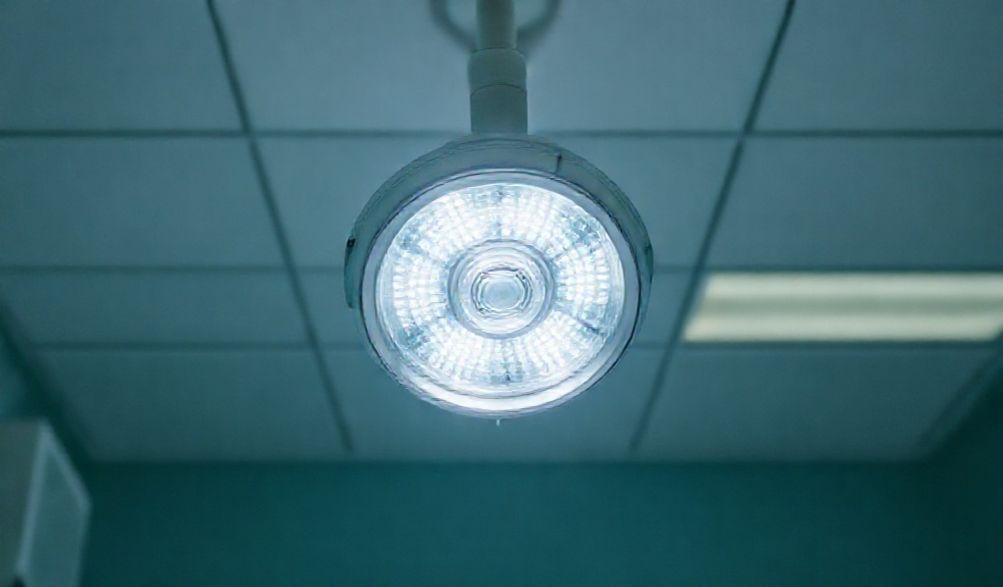
* Surgical Lighting: Modern operating lights provide intense, shadow-free, and color-accurate illumination. Some advanced systems can even switch to specific blue or green wavelengths to enhance the visual contrast of blood vessels or specific tissues.
* Diagnostic Lighting: The most ubiquitous example is the pulse oximeter, which uses red and infrared light to measure oxygen saturation in the blood. Other applications include fluorescent lighting for diagnosing certain infections and specialized scopes used in endoscopy and surgery.
Evaluating Medical Light Devices for Home Use
The market for home-use devices is booming. Navigating it requires a critical eye focused on safety and efficacy.
Safety First: FDA Clearance vs. FDA Approval
This is the most important distinction for consumers.
* FDA Approval: Reserved for high-risk (Class III) devices that sustain or support life (e.g., heart valves). No typical red/blue light therapy device has FDA approval.
* Autorisation de la FDA : This is what you should look for. Under the 510(k) pathway, a manufacturer demonstrates their device is “substantially equivalent” to a legally marketed predicate device. l'autorisation de la FDA, for low-to-moderate risk (Class II) devices indicates the FDA has reviewed the safety and intended use. Look for statements like “FDA 510(k) Cleared” and a clearance number (e.g., K123456) for devices making therapeutic claims.
Key Specifications to Scrutinize
Reputable manufacturers will transparently provide this data:
* Wavelength Output: It should be specified in nanometers (e.g., 660nm ± 10nm). Be wary of devices that just say “red light.”
* Power Density (Irradiance): Given in mW/cm² at a stated distance. This tells you if the device is powerful enough to deliver a therapeutic dose in a reasonable time.
* Treatment Area/Coverage: A small panel may be fine for a knee, but inefficient for full-body recovery. Match the device size to your intended use.
Red Flags and Marketing Hype
- Cure-All Claims: Any device claiming to “cure” cancer, diabetes, or Alzheimer’s is a major red flag. PBM is a supportive therapy, not a magic bullet.
- Vague Language: Terms like “healing light,” “clinical strength,” or “medical-grade” without reference to specific FDA status or technical parameters are meaningless marketing fluff.
- Lack of Technical Data: If the product website or manual does not list wavelengths, power density, or treatment guidelines, it is not a serious therapeutic device.
The Future of Medical Light: Innovations on the Horizon
The field is rapidly advancing, moving towards greater personalization and integration.
* Personalized Light Dosimetry: Future devices may use biosensors to measure a user’s real-time response (e.g., local blood flow, temperature) and automatically adjust the light dosage for optimal, individualized treatment.
* Integration with Wearables and Telehealth: Imagine a home light therapy panel synced with a health app that tracks treatment adherence, allows a physical therapist to monitor progress remotely, and adjusts protocols based on patient-reported outcomes.
* Advanced Photodynamic Therapy (PDT): This involves using light-sensitive drugs that are activated by a specific medical light wavelength. The future holds promise for more targeted cancer treatments, advanced antimicrobial applications for drug-resistant infections, and refined treatments for macular degeneration.
Section FAQ
Q: Is medical light therapy safe?
R : Lorsqu'il est utilisé conformément aux directives pour son usage prévu, oui. Cependant, la sécurité varie considérablement selon le type. La luminothérapie par LED bleue et rouge/proche infrarouge à domicile est généralement considérée comme peu risquée, avec des effets secondaires minimes (comme une fatigue oculaire temporaire). La luminothérapie par UV doit être administrée sous la supervision d'un médecin en raison des risques significatifs de brûlures, de vieillissement prématuré et de cancer de la peau.
Q : Puis-je utiliser un panneau de luminothérapie rouge pour la douleur de l'arthrite ?
R : De nombreuses études sont prometteuses quant à la réduction de la douleur et de l'inflammation dans des affections comme l'arthrose et la polyarthrite rhumatoïde. Elle est considérée comme une thérapie de soutien, et non comme un remplacement des soins standard. Vous devriez consulter votre rhumatologue ou votre médecin avant de commencer, à la fois pour assurer un diagnostic approprié et pour l'intégrer en toute sécurité à votre plan de traitement global.
Q : Combien de temps faut-il pour voir les résultats de la luminothérapie ?
R : Cela dépend entièrement de l'affection et de l'appareil. Pour les problèmes de peau comme l'acné ou le vieillissement, les résultats peuvent apparaître en 2 à 8 semaines avec une utilisation régulière (3 à 5 fois par semaine). Pour la douleur chronique ou la récupération musculaire, certains utilisateurs signalent une réduction de la douleur et une meilleure mobilité après quelques séances, mais une amélioration significative et durable nécessite souvent plusieurs semaines de traitement régulier.
Q : Quelle est la différence entre un appareil de lumière rouge à 50€ et un à 500€ ?
R : Les différences clés incluent souvent : une émission de longueurs d'onde vérifiée et spécifique, une densité de puissance suffisante pour être efficace à une distance raisonnable (les appareils bon marché sont souvent sous-alimentés), une qualité de fabrication et des normes de sécurité supérieures, une zone de traitement plus grande, et des tests tiers ou une validation clinique. L'appareil moins cher peut émettre de la lumière, mais il ne délivre probablement pas une dose cliniquement significative.
Q : Ai-je besoin d'une ordonnance pour un appareil de luminothérapie médicale ?
R : Pour la plupart des appareils à LED rouge/bleue commercialisés pour un usage cosmétique (rajeunissement cutané) ou de bien-être général (récupération musculaire), aucune ordonnance n'est requise. Pour les appareils de puissance médicale, comme certaines unités domestiques d'UVB pour le psoriasis ou des thérapies laser spécifiques de haute puissance, oui, vous avez absolument besoin d'une ordonnance et d'une formation dispensée par un dermatologue.
Conclusion
Le domaine de la medical light représente une puissante convergence entre une sagesse ancienne et une science de pointe. Des cabines UV hautement contrôlées des cliniques de dermatologie aux panneaux LED accessibles désormais utilisés à domicile pour la récupération et la santé de la peau, ces technologies offrent une approche non invasive et sans médicament pour améliorer le bien-être et gérer diverses affections.
Alors que ce domaine continue de croître, un état d'esprit informé et critique est le meilleur outil du consommateur. En comprenant les principes fondamentaux de la photobiomodulation, en reconnaissant les applications spécifiques des différentes longueurs d'onde, et en apprenant à évaluer les appareils sur la base des certifications de sécurité et des spécifications techniques — et non du battage marketing — vous pouvez naviguer dans ce paysage prometteur avec confiance.
En fin de compte, ce guide sert de fondement. L'étape la plus importante est d'utiliser ces connaissances pour engager des discussions éclairées avec votre professionnel de santé. Que vous exploriez des options pour la douleur chronique, la santé de la peau ou le bien-être général, le partenariat avec un professionnel garantira que vous faites les choix les plus sûrs et les plus efficaces pour votre parcours de santé unique.
p>