
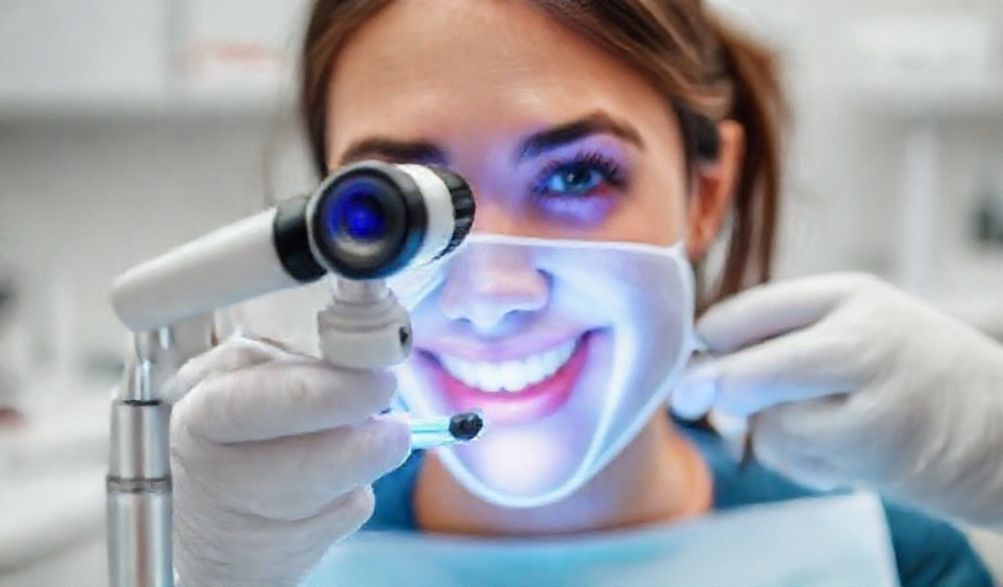
The Ultimate Guide to Choosing the Best Loupes for Dental Hygienists in 2024
If you’re a dental hygienist, you know the feeling all too well. That dull ache creeping up your neck by 2 PM. The tension between your shoulder blades that a heating pad can’t quite fix. The eye strain after hours of focusing on a millimeter of subgingival calculus. You entered this field to help patients achieve optimal oral health, but no one warned you about the physical toll the precision would take.
You’re not alone. Studies suggest that a staggering 60-80% of dental professionals will experience work-related musculoskeletal pain, with the neck and back being the most common culprits. The culprit? The constant forward head posture and intense visual focus required for intraoral work.
This is where the right pair of loupes dentaires becomes more than just a tool—it becomes a career-saving, health-preserving necessity. But with so many brands, magnifications, and styles on the market, how do you find the best loupes for a dental hygienist like you? The answer is personal. The “best” loupes are the ones that fit your unique posture, visual needs, and clinical style perfectly.
This comprehensive guide cuts through the noise. We’ve synthesized insights from industry research, professional forums, and ergonomic principles to provide you with an evidence-based roadmap. We’ll demystify the key features, compare top brands, and walk you through the critical fitting process. Consider this your one-stop resource to make an informed investment in your most valuable asset: your ability to practice pain-free for the long haul.
We’ll cover why loupes are non-negotiable, break down the key factors you must consider, review top brands and models, explain the vital role of lighting, and answer your most pressing questions. Let’s find your perfect match.
Why Dental Hygienists Absolutely Need Quality Loupes
Investing in loupes is often framed as an upgrade for better vision. While true, this undersells their primary benefit. For the modern dental hygienist, quality loupes are fundamental protective equipment, as crucial as gloves and masks for sustaining a long, healthy career.
Ergonomics & Career Longevity
The core value of loupes is ergonomic. They allow you to sit upright with a neutral spine—head positioned over your shoulders, back supported. By providing magnification, they eliminate the need to hunch forward to see fine details. This simple change dramatically reduces the strain on your cervical spine, trapezius muscles, and lower back.
Without loupes, a hygienist might work at a distance of 14-16 inches from the patient’s mouth, craning their neck forward. With properly fitted loupes, that working distance extends to 18-22 inches, promoting a healthier posture. This isn’t just about comfort; it’s about preventing chronic injuries like disc degeneration, tendinitis, and debilitating pain that can cut a promising career short. Loupes are an investment in your future self.
Enhanced Visual Acuity & Precision
Magnification is transformative for clinical care. A standard 2.5x loupe doesn’t just make things bigger; it improves resolution, allowing you to see what was previously at the limit of your visual acuity. This means:
* Improved detection: Spotting subtle cracks, early caries (especially interproximal), and minute deposits of subgingival calculus becomes significantly easier.
* Enhanced accuracy: Scaling and root planing become more precise, reducing the risk of leaving calculus behind or damaging the root surface.
* Better assessment: Evaluating soft tissue health, margins of restorations, and the success of periodontal therapy is more thorough.
This elevated level of care boosts your clinical confidence and directly leads to superior patient outcomes.
Reducing Eye Strain and Fatigue
Your eyes work hard during a prophylaxis. The ciliary muscles in your eyes constantly flex to maintain focus (accommodation) at a near distance. Over a full day, this leads to significant eye fatigue, headaches, and blurred vision. Quality loupes have a fixed focal length set to your custom working distance. Your eyes no longer need to strain to accommodate; they simply look through the lenses to see a clear, magnified image. This reduction in accommodative demand is a major relief, reducing headaches and preserving your long-term vision health.
Key Factors to Consider Before Buying Dental Loupes
Navigating loupe specifications can feel overwhelming. Understanding these core features will empower you to have an informed conversation with a sales representative and make the right choice.
Magnification Power (Galilean vs. Prismatic)
Magnification is the first decision. Loupes use one of two optical systems:
* Systèmes Galiléens : These are the most common starting point. They offer lower magnification, typically ranging from 2.0x to 3.5x. They are lighter, more compact, and provide a wider field of view and greater depth of field (the range of distance that remains in focus). This makes them more forgiving as you learn to work with magnification.
* Prismatic Systems (Keplerian): These are more complex, multi-lens systems that offer higher magnification, from 3.5x up to 8.0x or more. They provide exceptional clarity and detail but have a narrower field of view and shallower depth of field, requiring more precise head movement.
First-Hand Recommendation: “For most hygienists, especially those new to loupes, starting with a 2.5x or 3.0x Galilean system is the sweet spot. It provides a substantial ergonomic and visual boost with an easier adaptation period due to the wider field of view.”
Working Distance and Declination Angle
This is where custom fitting is non-negotiable.
* Distance de travail : This is the precise distance from your eye to your working area (typically the patient’s mandibular anterior teeth). It is measured in inches or centimeters while you are in your ideal, upright seated posture. A generic or self-measured distance will lead to poor posture and neck strain.
* Angle d’inclinaison : This is the angle at which the loupe barrels point downward from horizontal. It is determined by your natural head posture when looking at your work area. An incorrect angle will force you to tilt your head, defeating the ergonomic purpose.
Warning: Avoid “one-size-fits-all” or off-the-shelf loupes. An improper fit can cause more physical harm than not wearing loupes at all.
Field of View and Depth of Field
These are critical trade-offs with magnification.
* Field of View: The width of the area you can see through the loupes. Higher magnification = smaller field. A hygienist performing a full-mouth prophylaxis may prefer a wider field to maintain spatial awareness.
* Depth of Field: The “slice” of space that remains in sharp focus from near to far. Greater depth of field (common in lower-power Galilean loupes) allows you to move slightly without losing focus, which is helpful during dynamic procedures like scaling.
Frame Styles: Through-the-Lens (TTL) vs. Flip-Up
- Through-the-Lens (TTL): The lenses are permanently mounted into the eyewear.
- Avantages : Lightweight, always perfectly aligned, streamlined, and less prone to getting bumped out of position.
- Inconvénients : Fixed magnification/power. Cannot be shared or easily adjusted if your prescription changes.
- À bascule : The magnification optics are mounted on a hinge, allowing you to flip them up and down.
- Avantages : Extremely versatile. You can look over them to talk to a patient or view an X-ray without removing your glasses. They can be worn over prescription eyewear and are often adjustable.
- Inconvénients : Can be slightly heavier and bulkier. The hinge mechanism can potentially go out of alignment over time with heavy use.
Professional Insight: “Clinicians who wear prescription glasses often gravitate towards flip-up loupes for their sheer adaptability. However, many brands now offer excellent TTL options with custom prescription lenses built-in, providing the best of both worlds.”
Weight and Comfort
You’ll wear these for 6-10 hours a day. Comfort is paramount. Consider:
* Frame Materials: Titanium is the gold standard for being strong and incredibly lightweight. Other alloys and plastics vary in weight.
* Nose Pads: Look for adjustable, silicone nose pads that distribute weight evenly and prevent slipping.
* Temple Design: Padded, adjustable temples improve fit and comfort, especially important for all-day wear.
Top Loupe Brands & Models for Dental Hygienists Reviewed
Here’s a neutral comparison of leading brands, known for their quality and service within the dental community.
Orascoptic (e.g., Dragonfly, Xyris)
- Overview: A long-standing leader known for innovative, lightweight designs and vivid, high-definition optics.
- Appliquons maintenant ces caractéristiques à des scénarios réels. La "meilleure" loupe lumineuse est celle parfaitement adaptée à votre tâche principale. The “Dragonfly” frame is famously light. Their “Xyris” model offers a unique, low-profile design. Strong emphasis on color clarity and brightness.
- Ideal For: Hygienists prioritizing minimal weight and top-tier optical clarity. Those who want a brand with extensive clinical support and training resources.
- Considérations : Can be at a higher price point within the market.
Designs for Vision (DFV)
- Overview: Renowned for robust, durable construction and exceptional high-magnification prismatic loupes.
- Appliquons maintenant ces caractéristiques à des scénarios réels. La "meilleure" loupe lumineuse est celle parfaitement adaptée à votre tâche principale. Known for their “Definition” series optics. Frames are built to last, and they offer a wide array of customization for working distance and declination.
- Ideal For: Clinicians seeking higher magnification (3.5x and above) or those who want a famously durable, long-lasting product.
- Considérations : Some styles can be heavier due to their sturdy construction. A very established, traditional brand.
SurgiTel (by General Scientific)
- Overview: Popular for their ergonomic designs and highly customizable systems.
- Appliquons maintenant ces caractéristiques à des scénarios réels. La "meilleure" loupe lumineuse est celle parfaitement adaptée à votre tâche principale. Offer both Galilean and Prismatic systems. Their “Acclaim” series is a popular mid-range choice. They provide extensive options for frame style, lens size, and lighting integration.
- Ideal For: Hygienists who value having many customization choices to get a perfect, personalized fit.
- Considérations : The sheer number of options can be overwhelming without a good representative to guide you.
qualité incluent
- Overview: A German optics company known for delivering excellent value and high-quality optics.
- Appliquons maintenant ces caractéristiques à des scénarios réels. La "meilleure" loupe lumineuse est celle parfaitement adaptée à votre tâche principale. Their “Gamma” series of Galilean loupes is often highlighted as a superb entry-to-mid-level option. They offer good clarity and a range of frame choices at a competitive price.
- Ideal For: Hygienists looking for a reliable, high-quality first pair of loupes without the premium price tag of some top-tier brands.
- Considérations : May not have the same brand recognition or extensive North American sales network as some competitors.
Q-Optics
- Overview: Has gained a loyal following for an intense focus on ultra-lightweight comfort.
- Appliquons maintenant ces caractéristiques à des scénarios réels. La "meilleure" loupe lumineuse est celle parfaitement adaptée à votre tâche principale. Their proprietary “Q-Fit” process and featherlight frames (like the Q200) are central to their appeal. They market heavily on the comfort-for-all-day-wear experience.
- Ideal For: Hygienists who are highly sensitive to weight on their nose and ears or who have struggled with comfort from other brands.
- Considérations : As a newer player, their long-term durability track record is still being established compared to decades-old brands.
Admetec (ErgoPrism)
- Overview: Notable for technology specifically engineered to promote better posture.
- Appliquons maintenant ces caractéristiques à des scénarios réels. La "meilleure" loupe lumineuse est celle parfaitement adaptée à votre tâche principale. Their “ErgoPrism” technology uses a unique prismatic design that claims to offer a larger field of view and deeper depth of field than traditional prismatic loupes, all while maintaining ergonomic alignment.
- Ideal For: The ergonomically focused clinician who is interested in the latest optical technology designed to minimize strain.
- Considérations : A newer and less common brand; may be harder to find representatives for in-person fittings.
The Critical Role of Proper Lighting
Loupes magnify your vision, but a light illuminates it. Think of them as an inseparable pair.
Why Loupes Are Incomplete Without a Light
A loupe light provides coaxial illumination—it shines light directly down your line of sight, into the deep, dark oral cavity. This:
* Eliminates Shadows: Your head no longer blocks the overhead operatory light.
* Reveals True Color: High-quality LED lights with accurate color temperature (around 5500K, mimicking daylight) allow for proper assessment of tissue health and tooth structure.
* Further Reduces Eye Strain: Your pupils constrict less in bright light, reducing the effort needed to focus.
Types of Loupe Lights (LED)
- Corded vs. Cordless: Cordless lights offer complete freedom of movement but require battery management. Corded lights provide consistent, unlimited power but have a cable that must be managed.
- Battery Life & Brightness: Look for a cordless light with a battery life that exceeds your longest clinical day (often 6-8 hours). Brightness is measured in lumens; 40-100+ lumens is typical for dental loupe lights.
- Intégration : Most major loupe brands offer their own integrated light systems designed to mount seamlessly on their frames. Ensure your chosen loupes are compatible with a quality light source.
The Investment: Budgeting and Getting Fitted
Understanding the Cost Range ($500 – $2,500+)
A professional-grade, custom-fitted loupe system is an investment. The price typically includes:
* The optics (lenses)
* The frame
* Professional fitting service
* A warranty (often 1-3 years, sometimes lifetime on frames)
* A basic case
A good Galilean system with a basic frame starts around $800 – $1,200. Adding a cordless LED light can add $400 – $800. Prismatic systems and premium titanium frames can push the total to $2,000+. Frame this not as a cost, but as an investment in preventing chronic pain, extending your career, and elevating your standard of care.
The Fitting Process is Non-Negotiable
A proper fitting is what transforms a commodity into custom medical equipment. It should involve:
1. Posture Assessment: The rep watches you work in a mock or real clinical setting.
2. Measurement: Precise measurement of your Pupillary Distance (PD), est crucial pour aligner les lentilles avec vos pupilles afin d'obtenir une image unique et claire., réduction drastique de la main-d'œuvre de maintenance Declination Angle while you maintain ideal posture.
3. Trial: You should be able to try on different models, magnifications, and frame styles.
4. Discussion: A good rep will ask about your clinical routine, any existing pain, and whether you wear prescription glasses.
Warranty, Service, and Reputation
Choose a company known for excellent customer support. What is their repair process? How long does it take? Will they provide loaners? Read reviews and ask colleagues. A strong warranty and reliable service are part of the product’s value.
Foire Aux Questions (FAQ)
Q : Quel grossissement est le mieux adapté pour un hygiéniste dentaire qui débute avec les loupes ?
R : We generally recommend starting with 2.5x or 3.0x magnification (Galilean). This provides a significant visual enhancement and a wider field of view, making the adaptation period easier while still offering substantial ergonomic benefits. You can always move to higher magnification later.
Q2: Can I wear my prescription glasses with dental loupes?
R : Yes, absolutely. You have two main options: 1) Les loupes à bascule that sit over your prescription glasses, or 2) Having your prescription lenses incorporated directly into custom TTL loupes. Discuss both options with your loupes representative to find the best solution for your vision and comfort.
Q : Combien de temps faut-il pour s'habituer à porter des loupes ?
R : La plupart des professionnels signalent une période d'adaptation de **R :** La plupart des utilisateurs s'adaptent en. Start by wearing them for short periods during non-critical tasks like instrument setup or patient charting. Then, wear them for a single prophy, gradually increasing use. Your brain needs time to adjust to the magnification and new, upright working posture. Persistence is key; initial dizziness or clumsiness is normal.
Q4: Are cheaper loupes on Amazon worth it?
R : We advise extreme caution. While the upfront cost is lower, these are almost never custom-fitted to your unique posture and measurements. Poorly fitted loupes can cause more physical harm than good by forcing you into an unnatural position to find the focal point. The investment in professionally fitted loupes from a reputable brand is an investment in your long-term physical health and career longevity.
Q5 : À quelle fréquence dois-je remplacer mes loupes dentaires ?
R : Avec un entretien approprié, des loupes de haute qualité peuvent durer 5 à 10 ans ou plus. The most common reasons for replacement are a significant change in your vision prescription, a change in your preferred working posture, or a desire to upgrade to new magnification or lighting technology. The frames and optics themselves are very durable.
Conclusion & Final Recommendation
Le parcours pour trouver la best loupes for a dental hygienist culminates in one core principle: The best loupes are the ones custom-fitted to vous. They must match your eyes, your posture, your clinical workflow, and your physical needs.
Therefore, your most important step is not choosing a brand first, but prioritizing a professional, in-person fitting above all else. If possible, schedule consultations with representatives from 2-3 different companies. Try the loupes on. Feel the weight. Look through the lenses. A reputable rep will spend the time to measure you correctly and educate you, not just make a sale.
Considérez cet achat non pas comme un accessoire optionnel, mais comme un équipement de protection essentiel pour votre corps – aussi crucial que le siège ergonomique sur lequel vous êtes assis. C'est un investissement qui soutient directement votre expertise clinique, vous permet d'offrir des soins aux patients d'une précision inégalée selon les normes les plus élevées et, surtout, préserve votre capacité à mener une carrière longue, saine et réussie, à l'abri de douleurs évitables.
Utilisez ce guide comme votre liste de contrôle. Armez-vous de connaissances, planifiez ces essais et franchissez l'étape suivante vers un avenir plus confortable et cliniquement excellent.
METADATA_START—
DISPLAY_TITLE: Le Guide Ultime des Meilleures Loupes pour Hygiénistes Dentaires (2024)
SEO_TITLE: Meilleures Loupes pour Hygiénistes Dentaires 2024 | Guide d'Achat Expert & Avis
META_DESC: Vous luttez contre les douleurs cervicales et la fatigue oculaire ? Notre guide 2024 passe en revue les meilleures loupes pour hygiénistes dentaires. Comparez Orascoptic, DFV, SurgiTel et autres. Apprenez-en plus sur le grossissement, l'ajustement et l'ergonomie pour investir judicieusement.
IMG_PROMPT: Une photo nette et professionnelle d'une hygiéniste dentaire souriante, portant des vêtements cliniques modernes, avec une élégante paire de loupes dentaires en titane équipée d'une petite lumière LED. Elle est assise droite avec une posture parfaite, tenant un miroir dentaire et un explorateur, regardant avec assurance vers un modèle.