
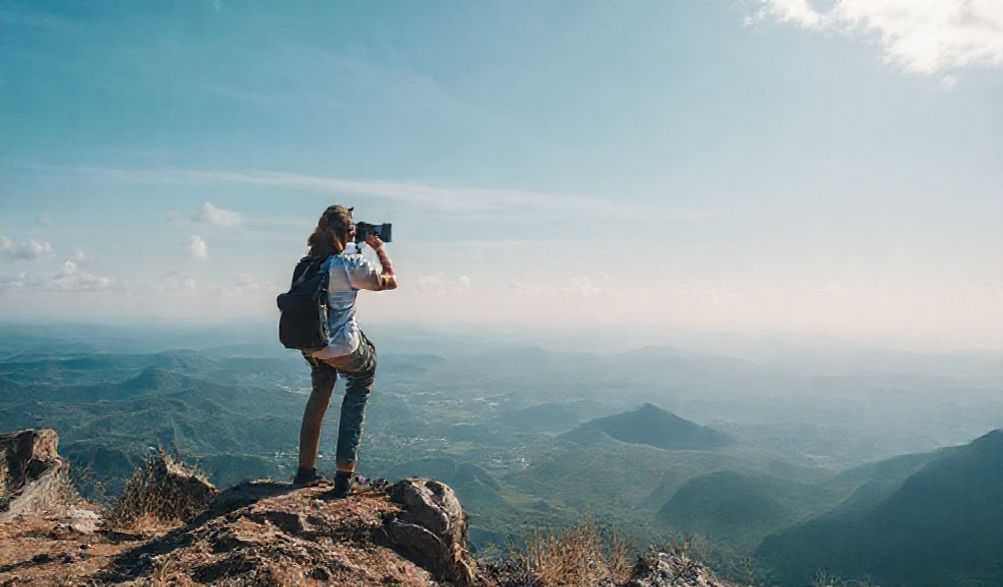
How to Take a Picture Without Shadows: A Pro Photographer’s Guide
We’ve all been there. You set up the perfect shot—a product for your online store, a cherished document, or a portrait of a friend—only to have it ruined by harsh, distracting shadows. That dark streak cutting across a face or the gloomy pool of darkness under an object can make an otherwise great photo look amateurish. The quest for clean, bright, and professional-looking images often starts with solving one fundamental problem: how to take a picture without a shadow.
The good news? Achieving beautifully even, shadow-free lighting isn’t a secret reserved for high-end studios. It’s a skill built on understanding a few core principles of light, which can be applied whether you’re using a professional DSLR or the smartphone in your pocket. This guide distills professional photography techniques into actionable steps you can use today. We’ll cover everything from diagnosing your shadow problem to practical solutions for natural light, DIY gear, camera settings, and specific scenarios like portraits and product shots. By the end, you’ll have a toolkit of methods to capture clean, clear, and shadow-minimized images in any situation.
Understanding Light: The Root Cause of Shadows
Before we can eliminate shadows, we need to understand what creates them. Shadows aren’t inherently bad; they add depth, dimension, and drama. But when the goal is a flat, even, or purely informational image, controlling them becomes key. It all boils down to two main characteristics of your light source: its quality and its angle.
Hard Light vs. Soft Light: The Key Difference
This is the single most important concept in shadow control.
- Hard Light comes from a small, direct, and distant light source relative to your subject. Think of the midday sun, a camera flash, or a bare lightbulb in a dark room. Because the light rays are traveling in a relatively parallel, focused manner, they create shadows with sharp, well-defined edges. These shadows are dark, high-contrast, and often unflattering, as they exaggerate textures and imperfections.
- soft light comes from a large, diffused, and close light source. Imagine a cloudy, overcast sky, light coming through a large north-facing window, or a lamp shining through a white sheet. Here, the light rays are scattered and approach the subject from many different angles. This “wraps” the light around the subject, filling in the shadows from multiple sides. The result is soft, faint shadows with gradual, blurry edges, or in some setups, almost no visible shadow at all.
La règle d'or : To take a picture without a shadow, you must transform your hard light source into a soft one.
Angle of Light: Where Your Shadow Comes From
The position of your light determines where the shadow falls. If your light is directly above your subject (like overhead ceiling lights), the shadow will be directly underneath. If it’s to the side, the shadow will stretch out to the opposite side. Front lighting (light coming from behind the camera) minimizes visible shadows by pushing them behind the subject, which is often the goal for shadow-free shots. Understanding this helps you diagnose the problem: look at the shadow to find your light source, and then you can decide how to modify it or change your subject’s position.
Essential Tools & Techniques for Shadow-Free Photos
Now that we know why shadows form, let’s explore the how of controlling them. These techniques leverage the principle of creating a large, soft light source.
Harnessing Natural Light Like a Pro
Nature provides the best free lighting equipment. You just need to know how to use it.
- North-Facing Window Light (Indoor): This is the classic portrait and still-life photographer’s secret. A large north-facing window (in the Northern Hemisphere) provides consistent, indirect sunlight throughout the day, acting as a giant, beautiful softbox. Position your subject close to the window, and you’ll get soft, directional, yet shadow-softened light.
- Open Shade (Outdoor): Need to take a picture without a shadow on a sunny day? Get out of the direct sun. Move your subject into the “open shade”—the shaded area next to a building, under a dense tree canopy, or in a covered doorway. The entire shaded area acts as your massive light source, providing beautifully even illumination. Avoid “dappled” shade from trees, as it creates speckled, uneven light.
- The “Golden Hour” Caveat: The hour after sunrise and before sunset provides gorgeous, warm light, but it’s still a direct, relatively small source. It will create long, dramatic shadows. To make it shadow-free, you’d need to use a large reflector to bounce light back onto your subject or shoot in the open shade even during this time.
DIY & Professional Light Modifiers
You don’t need a studio budget to modify light. Here’s how to soften and redirect it.
- Diffusion is Your Best Friend: This is the act of placing a translucent material between your light source and your subject to make it larger and softer.
- DIY: Tape du papier sulfurisé, ou vos vellum paper sur une lampe. Suspendez un white shower curtain liner ou vos sheer white curtain in front of a sunny window. Stretch a thin white t-shirt over a cardboard frame.
- The Reflector Trick: If you can’t soften the main light, you can fill in the shadows it creates. A reflector bounces existing light back onto your subject.
- DIY: Utilisez un large piece of white foam board, un car windshield sunshade, un piece of white poster board, or even a large lid covered in aluminum foil (matte side out for softer light).
- How-to: Position the reflector opposite your main light source to bounce light into the shadow areas, effectively “filling” them in and reducing contrast.
- Store-Bought Solutions: For those ready to invest a little, affordable tools exist.
- Collapsible 5-in-1 Reflectors (white, silver, gold, black, translucent) are incredibly versatile.
- Small softboxes or ring lights that clip onto a desk or your phone are perfect for product shots, video calls, and macro photography.
Camera and Smartphone Settings for Minimizing Shadows
Your camera’s brain can also help manage shadows in-camera.
- Exposure Compensation (+ EV): If your image has dark shadows, you can tell your camera or phone to slightly overexpose the scene. This brightens everything, including the shadow areas. Use this cautiously, as it can also blow out your highlights. Look for a +/- icon or slider in your camera app.
- HDR Mode (High Dynamic Range): This is a powerful tool for how to take a picture without a shadow using your phone. HDR mode takes several photos at different exposures (dark, medium, bright) and merges them into one. It pulls detail from the shadows without overexposing the bright skies. Keep your phone very steady when using HDR.
- Using Fill Flash: On a sunny day, harsh shadows under the eyes and nose ( “raccoon eyes”) are common. Activating your camera’s or phone’s flash at a low power in bright daylight can fill in those shadows subtly. This is called “fill flash.” On many smartphones, this is automatic when you use the flash outdoors.
Step-by-Step Solutions for Common Scenarios
Let’s apply these principles to specific, everyday photography challenges.
How to Photograph Documents & Flatlays Without Shadows
The goal here is perfectly even, top-down lighting with zero shadows to ensure readability.
- The Two-Lamp Technique: This is a foolproof studio method. Use two identical lamps (desk lamps are fine). Position them on either side of your document, each at a 45-degree angle from the surface. The light from each lamp cancels out the shadow created by the other. Ensure both lamps are the same distance and brightness for even results.
- Phone-Specific Tip: Use a dedicated “Scanner” or “Document” mode in apps like Adobe Scan, Microsoft Lens, or Google Drive’s scan feature. These apps are specifically designed to detect edges, flatten perspective, and use advanced processing to remove shadows and improve contrast for text.
Flattering, Shadow-Free Portrait Photography
For portraits, we want soft shadows that define features gently, not harsh ones that create unflattering lines.
- Embrace Large Light Sources & Front-Lighting: Position your subject facing a large light source—a big window, the open sky in the shade, or a large softbox. The light should come from roughly the direction of the camera to push shadows behind the subject.
- The “Bounce Flash” Technique: If you must use an on-camera flash (the ultimate small, hard light source), never point it directly at your subject. Angle it upwards towards a white ceiling or a nearby white wall. The light will bounce off that large surface and become soft, diffused, and much more flattering as it falls onto your subject.
Product Photography for E-commerce or Listings
Clean, shadow-free product photos build trust and present items accurately.
- Build a DIY Light Tent (“Cloudy Day” Box): This creates wraparound, shadow-free light. Take a cardboard box, cut out the sides, and cover the openings with white tracing paper or a thin white fabric. Place your product inside. Shine lamps (or use natural light) through the diffused sides. The white interior acts as a continuous reflector, bathing the product in soft, even light from all angles.
- The Importance of Even Lighting: Consistent, shadow-minimized lighting ensures the product’s colors and textures are represented truthfully, reducing the chance of returns and increasing customer confidence.
Advanced Tips & Post-Processing
Sometimes, you need a little digital help to perfect your shot.
Using Photo Editing to Reduce Shadows
Software can rescue shots where the lighting wasn’t perfect. The key is subtlety.
- Non-Destructive Adjustments (Best Method): In apps like Lightroom, Snapseed, or even your phone’s native editor, use the global adjustment sliders.
- Shadows Slider: Gently increase this to brighten seul the darkest parts of your image without affecting midtones and highlights.
- Blacks Slider: Increase this slightly to recover detail in the very deepest blacks.
- The “Dodge” Tool: For small, stubborn shadows, use the Dodge tool (found in apps like Photoshop, Photoshop Express, or Snapseed’s “Selective” tool). Set it to a low opacity (5-15%) and a soft brush, then lightly paint over the shadow area to brighten it selectively.
- Warning: Avoid overdoing these edits. Dragging the sliders too far can create a flat, unnatural “HDR look” with no depth, halos around objects, and increased digital noise in the shadow areas. Less is more.
Foire Aux Questions (FAQ)
Q: Quelle est la méthode la plus simple pour supprimer les ombres d'une photo avec mon téléphone ?
R : Combinez la lumière naturelle et un réflecteur simple. Placez votre sujet dans la lumière douce d'une grande fenêtre, puis utilisez une feuille de papier blanc ou du carton pour renvoyer la lumière sur le côté ombragé. Activez le mode HDR dans votre application photo pour un résultat encore meilleur.
Q: Puis-je prendre une photo sans ombre par une journée ensoleillée ?
R : Absolument. La clé est d'éviter le soleil direct. Déplacez votre sujet dans une “ ombre ouverte ”, comme le côté ombragé d'un bâtiment. Cette zone d'ombre devient votre source de lumière douce et géante, offrant un éclairage uniforme qui minimise les ombres.
Q: Quel objet domestique puis-je utiliser pour diffuser la lumière ?
R : Un rideau de douche blanc translucide est parfait pour les grandes fenêtres. Pour les lampes plus petites, du papier sulfurisé ou du papier cuisson fixé sur l'abat-jour fonctionne parfaitement. Un simple t-shirt blanc tendu sur un cadre constitue également un excellent diffuseur.
Q: Pourquoi les photos de produits professionnelles semblent-elles si dépourvues d'ombres ?
R : Les professionnels utilisent des configurations d'éclairage contrôlées conçues pour créer de grandes sources de lumière douce. Cela implique souvent plusieurs softboxes, des tentes lumineuses ou des tables de prise de vue avec diffusion intégrée, créant un effet uniforme et enveloppant de “ journée nuageuse ” qui minimise les ombres par conception.
Conclusion
Apprendre à prendre une photo sans ombre ne consiste pas tant à éliminer la lumière qu'à la maîtriser. Le principe fondamental est simple : rendez votre source de lumière aussi grande et indirecte que possible par rapport à votre sujet. Que vous y parveniez avec une fenêtre orientée au nord, un diffuseur fait maison, un réflecteur placé stratégiquement ou un réglage astucieux de l'appareil, l'objectif est d'envelopper votre sujet d'une lumière douce et flatteuse.
Commencez par une seule technique de ce guide. Essayez de photographier un objet en utilisant uniquement la lumière d'une fenêtre et un morceau de carton blanc comme réflecteur. Observez la différence spectaculaire. En pratiquant, vous commencerez à voir le monde en termes de qualité de lumière et d'ombre, une compétence qui améliorera chaque photo que vous prendrez. Ce ne sont pas seulement des astuces ; ce sont les principes fondamentaux de la photographie et de la cinématographie utilisés quotidiennement par les professionnels. Maintenant, prenez votre appareil, trouvez de la lumière et mettez ces techniques en pratique. Vos images sans ombre n'attendent qu'à être capturées.
p>