
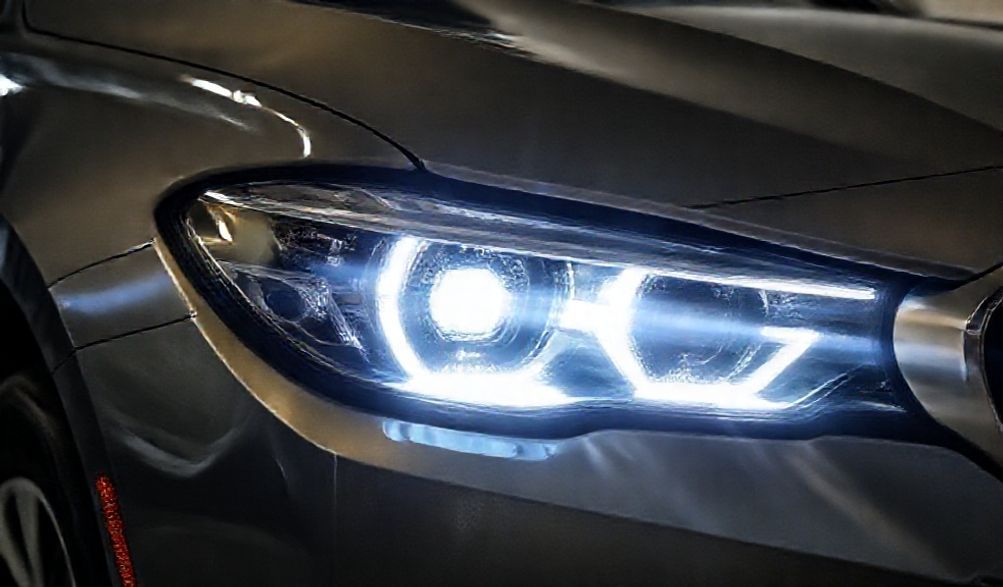
Adaptive Headlights Meaning: A Complete Guide to How They Work & Why They Matter
You’re driving on a dark, winding country road. Your knuckles are white on the wheel as you strain to see past the limited pool of light from your low beams. You flick on your high beams for a moment of clarity, only to be met with the blinding glare of an oncoming car. You quickly switch back down, plunged into near-darkness again, your heart racing as your eyes struggle to readjust. It’s a stressful, dangerous dance that every nighttime driver knows all too well.
What if your headlights could think? What if they could see that oncoming car and automatically dim just the sliver of light that would dazzle the other driver, while keeping the rest of the road brilliantly lit? What if they could peer around the corner before you even turn the steering wheel?
This isn’t science fiction; it’s the reality of Phares adaptatifs. Also known as Adaptive Driving Beams (ADB) ou vos Adaptive Front-lighting Systems (AFS), this intelligent technology is revolutionizing nighttime driving by solving the very problems that make it so hazardous. This comprehensive guide will cut through the jargon to clearly explain the adaptive headlights meaning, how they work, their undeniable benefits, and what you need to know about them. Our information is grounded in automotive engineering principles, manufacturer specifications, and safety research, ensuring you get accurate and trustworthy insights.
What Are Adaptive Headlights? (The Core Definition)
At its core, the adaptive headlights meaning is about dynamic, intelligent illumination. They are a sophisticated safety system that automatically adjusts the headlight beam pattern in real-time based on driving conditions, vehicle speed, steering input, and the presence of other road users.
Beyond Standard Headlights: A Simple Analogy
Think of traditional static headlights like a powerful flashlight you hold perfectly still. It illuminates a fixed area straight ahead, leaving the sides and curves in darkness. Adaptive headlights, on the other hand, are like a flashlight held by an attentive partner who instinctively points the beam exactly where you’re about to look—around corners, down dips, and away from other people’s eyes. The light is no longer static; it’s a dynamic tool that actively assists your vision.
The Primary Goal: Enhanced Safety Through Illumination
The singular mission of adaptive headlight technology is safety. It aims to maximize the driver’s field of vision while simultaneously minimizing glare for everyone else on the road. It bridges the dangerous gap between “not enough light” (low beams) and “too much light for others” (high beams), striving for an optimal, constantly adjusted middle ground.
Common Names and Acronyms You Might Hear
The terminology can be confusing, as automakers often use proprietary names for their systems. Here’s a quick decoder:
* Adaptive Front-lighting System (AFS): Often refers to systems that physically swivel the headlight housing to follow the curve of the road.
* Adaptive Driving Beam (ADB): A broader term, often used for more advanced systems that digitally shape the beam using an array of LEDs. This is the term used in recent U.S. regulations.
* Matrix LED (Audi, VW), Pixel Lighting (Mercedes), Adaptive LED (BMW): These are specific implementations of ADB technology, where the headlight contains dozens of individual LED segments that can be turned on or off independently.
* Bending Lights / Cornering Lights: A simpler function, often part of an AFS, that activates a side light when turning at low speeds.
Regardless of the name, they all fall under the umbrella of adaptive headlights, sharing the same goal of intelligent light distribution.
How Do Adaptive Headlights Actually Work?
The magic of adaptive headlights happens through a seamless cycle of sensing, processing, and acting. It’s a three-step dance performed in milliseconds.
The Sensory Suite: Cameras, Sensors, and Processors
The system’s eyes and ears are a network of data inputs:
* A forward-facing camera, typically mounted near the rearview mirror, is the most critical component. It detects light sources—the taillights of a car ahead, the headlights of an oncoming vehicle, street lamps, and even road signs.
* Steering angle sensors tell the system how much and how quickly you’re turning the wheel.
* Vehicle speed sensors et un yaw rate sensors provide data on how the car is moving.
* GPS data can inform the system about the road’s geometry, like an upcoming sharp curve.
The Brain: The Control Unit Makes Decisions
All this real-time data flows into a central control unit—the system’s brain. This computer analyzes the information using complex algorithms. It identifies other vehicles, calculates their distance and speed, maps the road curvature, and determines the exact optimal headlight beam pattern for that precise millisecond.
The Action: Dynamic Beam Shaping in Real-Time
Once the decision is made, the system executes it through the headlights themselves. The method varies by technology:
-
For Adaptive Front-lighting Systems (AFS): Small electric motors physically swivel the headlight housings left or right based on steering input and speed, literally bending the beam into a curve.
-
For Matrix LED / Adaptive Driving Beams (ADB): This is where the true wizardry happens. The headlight contains an array (or matrix) of many individual LED segments—sometimes over 100. The control unit can dim or completely turn off specific LEDs to create a precise shadow. For example, it can darken the LEDs that would shine directly at an oncoming car or the rear of a leading vehicle, while the surrounding LEDs remain at full high-beam intensity. This creates a “tunnel of light” that follows the road and avoids other drivers. Some advanced systems can even project symbols or guide lines onto the road in low-friction situations.
Key Benefits of Adaptive Headlight Technology
The advantages of this technology translate directly into a safer, less stressful driving experience.
Dramatically Improved Nighttime Visibility
This is the most immediate benefit. Adaptive headlights illuminate more of what you need to see:
* On straight roads, they can often maintain a high-beam-like range without blinding others.
* On curves, they light up the apex and exit of the turn as you approach it, revealing potential hazards like animals, debris, or broken-down vehicles much earlier.
Reduced Driver Fatigue and Increased Reaction Time
Constantly switching between high and low beams, squinting into darkness, and dealing with sudden glare is mentally taxing. Adaptive headlights automate this process, providing consistent, optimal illumination. This lowers cognitive load, reduces eye strain, and—most importantly—gives you precious extra seconds to react to a hazard suddenly revealed in the expanded field of light.
Enhanced Safety for Everyone on the Road
Safety is not a zero-sum game. By eliminating glare for oncoming traffic, pedestrians, and cyclists, adaptive headlights protect all road users. You see better, and you’re also a less dangerous presence for others. It’s a proactive safety system that addresses a root cause of nighttime accidents.
A More Intuitive and Confident Driving Experience
The best technology feels invisible. Adaptive headlights work quietly in the background, anticipating your needs. This creates a profound sense of confidence behind the wheel at night, making driving on unlit roads feel more secure and controlled.
Adaptive Headlights vs. Other Headlight Types
It’s important to distinguish adaptive technology from other common headlight features.
Adaptive vs. Standard Halogen/LED
This is the fundamental comparison: static vs. dynamic. Standard headlights have a fixed beam pattern (low or high). Adaptive headlights have a dynamic beam pattern that constantly changes.
Adaptive (ADB/AFS) vs. High-Beam Assist (Auto High Beams)
This is a crucial and common point of confusion.
* High-Beam Assist is a simple on/off switch. It uses a camera to detect lights and automatically toggle between traditional high beams and low beams. There is no middle ground.
* Adaptive Headlights (ADB) are a dynamic shaper of light. They don’t just switch; they continuously sculpt the beam. The system can keep most of the light on high-beam intensity while selectively dimming only the portions that would cause glare. Think of it as having your high beams permanently on, but with the courtesy to “look away” from other cars.
Matrix LED vs. Adaptive Bending Lights
Both are subtypes of adaptive technology.
* Adaptive Bending Lights typically refer to the swiveling function of an AFS system.
* LED Matrix refers to the digital, pixel-precise beam shaping of an ADB system. Matrix LED is generally considered the more advanced of the two technologies.
Important Considerations and Limitations
While transformative, adaptive headlight technology comes with its own set of realities.
Regulatory Landscape: The Situation in the United States
This has been the single biggest hurdle for adaptive headlights in the U.S. For decades, Federal Motor Vehicle Safety Standard (FMVSS) No. 108 had strict requirements based on a simple two-beam (high/low) system, effectively banning the more advanced adaptive driving beams.
However, in a landmark update in February 2022, the National Highway Traffic Safety Administration (NHTSA) amended FMVSS 108 to explicitly allow Adaptive Driving Beam systems. This rule change, which aligns U.S. regulations more closely with those long-used in Europe and other regions, means that vehicles equipped with certified ADB technology are now fully legal for sale and use in the United States. Automakers are now in the process of implementing these systems in new models, so while they are legal, they are not yet ubiquitous.
Cost and Availability
As a premium safety technology, adaptive headlights are most commonly found on higher trim levels, luxury vehicles, and newer model cars. However, as with all automotive tech, the cost is gradually decreasing, and the feature is trickling down to more mainstream models.
Maintenance and Repair Complexity
If damaged, repairing adaptive headlights is significantly more expensive than repairing standard units. Replacing a housing often requires professional calibration of the cameras and sensors to ensure the beam-shaping algorithms work correctly. This must be done with specialized equipment.
Driver Responsibility: They Are an Aid, Not a Replacement
It is paramount to remember that adaptive headlights are a driver assistance system. They are designed to aid an attentive driver, not replace one. The driver must always remain in control, alert, and responsible for the safe operation of the vehicle.
Foire Aux Questions (FAQ)
Q: Are adaptive headlights legal in the US?
R : Yes. As of 2022, the NHTSA updated FMVSS 108 to permit advanced adaptive driving beam (ADB) systems. Vehicles equipped with this certified technology are now legal for sale and use.
Q : Puis-je installer des phares adaptatifs sur ma voiture plus ancienne ?
R : Almost certainly not in a safe, legal, or practical way. These systems require deeply integrated cameras, sensors, wiring, and vehicle computer integration. A professional retrofit would be prohibitively complex, expensive, and unlikely to function correctly or be street-legal.
Q: Do adaptive headlights work in bad weather like fog or heavy rain?
R : They will still function, but their effectiveness can be reduced. The forward-facing camera that detects other vehicles can struggle with low visibility conditions like heavy fog, snow, or rain. Many systems have a dedicated “fog light” pattern that widens and lowers the beam to better illuminate the road surface without creating glare back at the driver.
Q: What’s the difference between ‘adaptive’ and ‘auto’ headlights?
R : “Auto” headlights (automatic headlights) simply turn your headlights on or off based on ambient light levels (e.g., at dusk or in a tunnel). “Adaptive” headlights actively change the beam pattern’s direction and shape while the lights are already on.
Q: Which car brands offer the best adaptive headlight systems?
R : Many manufacturers offer excellent systems, each with their own branding. Notable implementations include Audi’s Matrix LED, BMW’s Adaptive LED, Mercedes-Benz’s Digital Light, and Toyota/Lexus’s AFS. The “best” system is subjective and depends on the specific implementation, brightness, resolution (number of LED segments), and how well it’s integrated with other vehicle systems.
Conclusion
Understanding the adaptive headlights meaning Cela révèle bien plus qu'une simple prouesse technologique automobile ; cela met en lumière un bond en avant significatif en matière de sécurité proactive du véhicule. En éclairant intelligemment la route tout en respectant les autres usagers, les phares adaptatifs corrigent une faille fondamentale de la conduite nocturne. Ils vont bien au-delà d'un simple confort luxueux — ils constituent un véritable système de sécurité qui renforce la confiance du conducteur, réduit la fatigue et, surtout, contribue à prévenir les accidents.
Alors que cette technologie se généralise suite à sa légalisation aux États-Unis, elle ouvre la voie à un avenir encore plus prometteur. Le contrôle précis de la lumière est une technologie fondamentale pour la prochaine génération de véhicules, pouvant s'intégrer aux systèmes de navigation et de conduite autonome pour projeter des informations ou mettre en évidence les dangers directement sur la chaussée.
Pour obtenir les informations les plus précises sur le système spécifique de phares adaptatifs de votre véhicule — ses capacités, ses limites et ses exigences d'entretien — consultez toujours le manuel du propriétaire ou adressez-vous à un technicien certifié de votre concessionnaire. Lorsque vous envisagez votre prochain véhicule, reconnaître la valeur de cet éclairage intelligent pourrait être un élément clé dans votre décision de privilégier votre sécurité et celle des autres à chaque trajet nocturne.
p>