
The Ultimate Guide to Buying Operating Room Lights: Features, Benefits, and Key Considerations
Introduction
In the high-stakes environment of the operating room, every detail matters. Among the most critical tools for surgical success is one that is often taken for granted until it fails: the operating room (OR) light. More than just a source of illumination, modern surgical lights are sophisticated, life-enabling devices that provide the clarity, color accuracy, and reliability needed for precision at the millimeter scale. For hospital administrators, surgical center managers, and procurement specialists, purchasing operating room lights for sale represents a significant capital investment—one that demands a careful balance of cutting-edge technology, unwavering safety, and long-term value.
This decision impacts far more than the facility’s balance sheet. It directly influences surgeon ergonomics, procedural efficiency, and, most importantly, patient outcomes. A suboptimal lighting system can lead to eye strain, misinterpretation of tissue states, and increased procedural time. Conversely, a superior system enhances visualization, reduces team fatigue, and supports the highest standards of care.
Navigating the market for operating room lights for sale can be complex, with a myriad of technical specifications, configurations, and price points. This comprehensive guide is designed to be your definitive roadmap. Drawing on decades of collective industry expertise, we will demystify the technology, outline the essential features, and provide a structured procurement strategy. Our goal is to empower you to make an informed, confident purchase that elevates your surgical capabilities and delivers enduring value to your facility.
Understanding Operating Room Lighting Technology
Before evaluating specific models or brands, it’s crucial to understand the engineering principles that separate adequate surgical lighting from exceptional illumination. This foundational knowledge will allow you to assess claims and specifications with a critical, expert eye.
Core Principles: Shadow Reduction & Color Rendering
The primary mission of an OR light is to illuminate a deep cavity without creating distracting shadows, while rendering tissue colors with absolute fidelity.
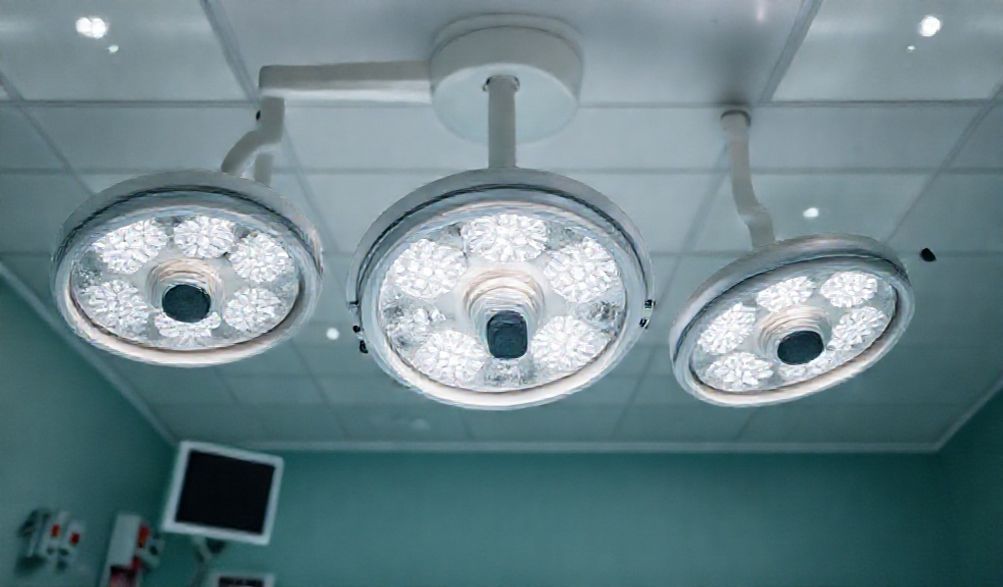
- réduction supérieure des ombres: Unlike a single-point light source (like a flashlight) that casts hard, defined shadows, premium OR lights use a multi-point source design. A single light head contains an array of dozens, sometimes hundreds, of individual LEDs, each positioned at a slightly different angle. This optical design causes the faint shadows from one LED to be “filled in” by the light from adjacent LEDs, resulting in what is known as “shadow dilution” or “parallax-free” illumination. This allows surgeons to see clearly into depths and around instruments without visual obstruction.
- Indice de Rendu des Couleurs (IRC) : Accurate differentiation between arterial blood, venous blood, fatty tissue, and organ parenchyma is vital. CRI is a quantitative measure (on a scale of 0-100) of a light source’s ability to reveal the true colors of objects compared to natural sunlight (CRI 100). High-performance surgical lights boast a IRC de 90 ou plus, ensuring that tissue appears in its most natural state, reducing diagnostic uncertainty. This performance is often governed by international standards like l'IEC 60601-2-41, which specifies safety and performance requirements for surgical luminaires.
LED vs. Traditional Halogen: A Performance Breakdown
The shift from halogen to Light Emitting Diode (LED) technology represents the most significant evolution in surgical lighting in decades. Here’s a direct comparison:
-
LED (The Modern Standard):
- Efficiency & Heat: LEDs convert far more energy into light and far less into heat (infrared radiation). This dramatically reduces the “hot spot” over the surgical field, improving patient safety and surgeon comfort.
- Durée de vie : LED modules typically last 50 000 à 100 000 heures, effectively meaning they can last for the entire usable life of the light system with minimal degradation in output.
- Performance : They offer instant, full-intensity illumination with no warm-up time. Advanced LEDs allow for precise adjustment of color temperature (e.g., from a cool 4,500K to a warm 5,500K) to suit different procedures.
- Operating Cost: While the initial investment can be higher, the elimination of bulb replacements and drastically lower energy consumption lead to a much lower Total Cost of Ownership (TCO).
-
Halogen (The Legacy Technology):
- Output & Quality: Halogen bulbs produce excellent light quality with high CRI. The light is often described as having a very natural, continuous spectrum.
- Drawbacks: They are extremely inefficient, with over 90% of energy emitted as heat. Bulbs have a short lifespan (1,000 to 2,000 hours), requiring frequent, costly replacements and posing a burn risk. They also require a brief warm-up period to reach optimal color temperature.
For any new purchase or major upgrade, LED technology is the unequivocal recommendation due to its superior safety, longevity, and economic benefits.
Key Performance Metrics to Evaluate
When reviewing specifications for operating room lights for sale, focus on these core metrics:
- Light Field Diameter: The size of the illuminated area at a specific distance (e.g., “200mm diameter at 1m”). Ensure it’s appropriate for your typical procedures.
- Illuminance (Lux): The intensity of light falling on the surgical field. 40,000 to 160,000 lux is a common range. Higher isn’t always better; excessive light can cause glare and tissue reflection.
- Depth of Illumination: A measure of how well the light maintains intensity and focus as a surgeon moves deeper into a cavity. A good system will maintain a high percentage of its central illuminance even at depths of 20-30cm.
- Temperature Management: Specifies the maximum temperature rise at the center of the light field. Look for systems that keep this increase below 2°C to prevent tissue desiccation.
Essential Features to Look for When Purchasing
With the technical foundation set, you can now translate that knowledge into practical evaluation criteria for the lights themselves.
Surgical Light Head Design and Configuration
- Single vs. Multi-Head: Single-head lights are cost-effective for focused procedures. Multi-head systems (typically 2-3 heads on a single arm) offer unparalleled flexibility, allowing two heads to be merged for maximum intensity or separated to illuminate from different angles for complex cases.
- Options de fixation :
- Monté au Plafond : The most common, freeing up floor space. Requires structural assessment of the OR ceiling.
- Track-Mounted: Offers lateral movement along a track, providing greater coverage across a wider area of the OR, ideal for multi-purpose rooms.
- Wall or Floor Stand: Less common, used for specific applications or as supplemental lighting.
- Maniabilité : The light must glide effortlessly into position and stay there. Look for counterbalanced arms with smooth movement, a high degree of articulation, and sterile handles that allow the surgical team to adjust the light without breaking the sterile field.
Intelligence and Integration Capabilities
Modern OR lights are “smart” devices that integrate into the digital OR ecosystem.
- Automated Settings: Features like focus memory (saving preferred light field size and intensity) and automatic color temperature adjustment streamline setup.
- Surgical Integration: Can the light interface with your HD surgical video systems to provide optimal illumination for recording? Does it connect to the OR control panel (e.g., via BACnet or other protocols) for centralized room control?
- Touchless Control: Some systems offer camera-based gesture control or voice activation, allowing for adjustments without any physical contact, enhancing sterility.
Safety, Sterility, and Compliance Standards
This is non-negotiable. Any light considered must meet the highest regulatory hurdles.
- Conformité : Must be FDA-cleared (or equivalent for your region) and comply with norme IEC 60601-1 (general medical electrical equipment safety) and l'IEC 60601-2-41 (spécifique aux lumières chirurgicales).
- Sterility: The light head should have a seamless, smooth enclosure with no crevices where contaminants can hide. It must withstand rigorous cleaning with hospital-grade disinfectants.
- Backup Systems: A fail-safe backup power system is critical. In a main power failure, the light should immediately and automatically switch to a battery or emergency circuit, maintaining a minimum of 40,000 lux for a defined period (often 60+ minutes) to allow for safe procedure completion or closure.
Navigating the Purchasing Process for Your Facility
A structured procurement approach ensures you select the right system for your specific needs and avoid costly mistakes.
Conducting a Needs Assessment for Your OR
Begin by looking inward before looking at the market.
- Surgical Specialty Profile: Do you perform mostly deep-cavity abdominal surgeries, delicate neuro/spine procedures, or superficial orthopedic surgeries? Each has different lighting demands (depth vs. breadth vs. color contrast).
- OR Suite Layout: Measure ceiling height, room size, and note the position of other critical equipment (booms, imaging devices). This determines the required reach and mounting style.
- Existing Infrastructure: Assess your electrical capacity, data network points in the ceiling, and compatibility with existing control systems.
- Budget et Calendrier : Define your capital budget and project timeline, including installation and any necessary construction.
Evaluating Manufacturers and Suppliers
Not all suppliers are created equal. Your due diligence should cover:
- Reputation & History: Choose established manufacturers with a proven track record in the medical lighting field.
- Renseignez-vous sur la durée de vie de la batterie (en cycles) et le coût de remplacement. Scrutinize the warranty—2 to 5 years on parts and labor is standard for premium systems. What is excluded? Is on-site labor included?
- Réseau de Service : Is there a certified, local service technician available for emergency repairs and preventive maintenance? What is the average response time?
- Training & Support: Does the supplier provide comprehensive clinical and technical training for your biomedical engineers and OR staff?
Total Cost of Ownership (TCO) Beyond the Sticker Price
The purchase price is just the beginning. A true financial analysis considers:
- Consommation énergétique : LED systems consume 50-70% less power than halogen equivalents.
- Consommables : Les lampes halogènes représentent un coût récurrent. Les diodes LED ont un coût de remplacement quasi nul sur une décennie.
- Maintenance Préventive (MP) : Intégrez le coût des contrats de MP recommandés pour garantir des performances optimales et éviter les pannes catastrophiques.
- Coût d'Indisponibilité : Quel est le coût pour votre établissement si une salle d'opération est hors service en raison d'une panne d'éclairage ? Un système plus fiable a une valeur financière intrinsèque.
Un système LED de meilleure qualité, avec un prix initial plus élevé, s'avère souvent le choix le plus économique sur une période de 7 à 10 ans.
Foire Aux Questions (FAQ)
Quel est le fourchette de prix typique pour une lampe de salle d'opération ?
Les prix varient considérablement selon la technologie et les fonctionnalités. Une lampe LED mono-tête basique peut démarrer autour de 5 000 € – 15 000 €. Un système LED premium, multi-têtes, entièrement intelligent avec intégration avancée peut se situer entre 30 000 € et plus de 50 000 €. La seule façon d'obtenir un prix précis est de demander un devis formel basé sur une évaluation spécifique de vos besoins et la configuration de votre salle.
À quelle fréquence les lampes de salle d'opération nécessitent-elles une maintenance ou un remplacement d'ampoule ?
- Systèmes LED : Nécessitent très peu de maintenance. Il n'y a pas d'ampoules à remplacer. Une maintenance préventive programmée (ex : contrôles annuels de la mécanique, de l'électronique et des systèmes de secours) est recommandée pour garantir longévité et sécurité.
- Systèmes Halogènes : Les ampoules doivent généralement être remplacées tous les 1,000 to 2,000 hours d'utilisation, ce qui peut représenter plusieurs fois par an dans un bloc opératoire actif. Le boîtier et les filtres nécessitent également un nettoyage et une inspection réguliers.
Puis-je moderniser mon système d'éclairage de salle d'opération existant avec la technologie LED ?
Pour certains modèles halogènes plus anciens, des kits de modernisation LED sont disponibles. Cela peut être un moyen rentable d'obtenir les avantages du LED (lumière plus froide, consommation d'énergie réduite) sans un remplacement complet. Cependant, il est essentiel de consulter le fabricant d'origine. Les modernisations peuvent ne pas restaurer les performances optiques d'origine de la lampe, peuvent annuler les garanties existantes et manquent souvent des fonctionnalités avancées (commandes intelligentes, intégration) d'un nouveau système LED conçu à cet effet.
Quelle garantie puis-je attendre, et que couvre-t-elle ?
Attendez-vous à une garantie complète de 2 to 5 years sur les pièces et la main-d'œuvre pour le système d'éclairage principal. Lisez les petits caractères. Une garantie solide couvre les défauts de matériaux et de fabrication, inclut la main-d'œuvre sur site et couvre les modules LED pour leur durée de vie nominale. Méfiez-vous des garanties qui deviennent caduques si vous n'utilisez pas le contrat de service exclusif du fabricant ou qui excluent les composants tombant couramment en panne.
Conclusion
Choisir la bonne operating room lights for sale est une décision stratégique aux implications profondes. C'est un investissement non seulement dans un équipement, mais dans la précision chirurgicale, la performance de l'équipe et la sécurité fondamentale du patient. En priorisant les principes fondamentaux d'un éclairage sans ombre et d'une restitution des couleurs exceptionnelle, en adoptant les avantages à long terme de la technologie LED moderne, et en exécutant un processus d'achat rigoureux axé sur le Coût Total de Propriété, vous pouvez transformer cet achat complexe en une acquisition confiante et axée sur la valeur.
L'objectif ultime est d'obtenir plus qu'une simple lampe ; c'est de fournir à vos équipes chirurgicales un partenaire fiable et intelligent au bloc opératoire — un outil qui délivre un éclairage constant et brillant pour chaque intervention, pour les années à venir. Nous recommandons vivement de conclure votre évaluation par des démonstrations en direct des modèles présélectionnés dans un environnement de bloc opératoire simulé, en impliquant à la fois votre personnel clinique et votre équipe d'ingénierie biomédicale. Voir, ressentir et utiliser la lampe est l'étape finale et essentielle pour faire le choix optimal pour votre établissement.
p>