
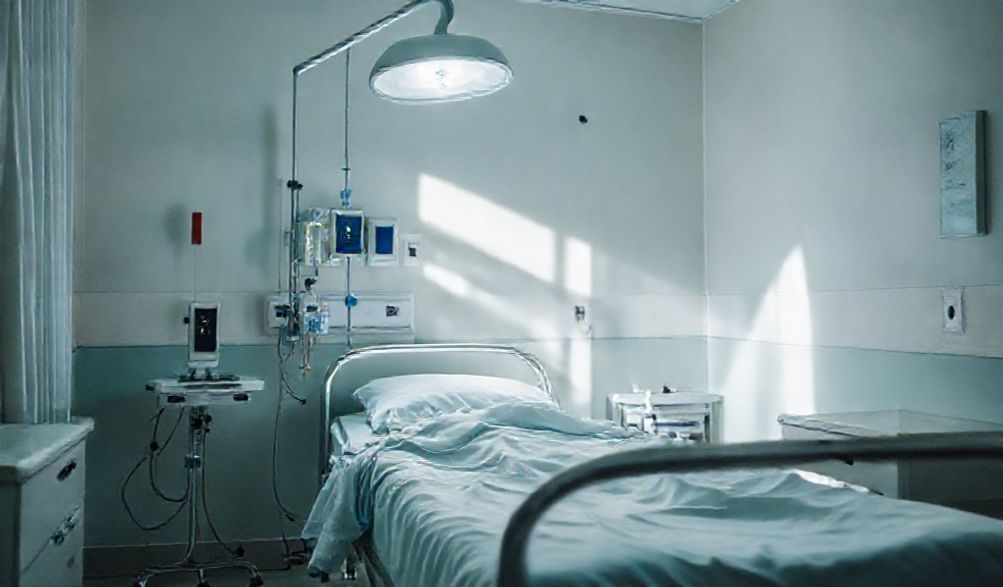
Hospital Bed Light: A Guide to Safety, Comfort, and Medical Functionality
In the intricate ecosystem of a hospital room, every element plays a role in patient outcomes. While advanced monitors and sterile equipment rightfully command attention, one of the most profoundly impactful—and often underestimated—tools is the humble hospital bed light. Far more than a simple source of illumination, it is a critical piece of medical technology that operates at the intersection of clinical efficacy, équipement de protection chirurgicale, and human comfort. The quality of light at the bedside can influence everything from a nurse’s ability to detect subtle changes in a patient’s condition to a patient’s ability to sleep and heal.
This comprehensive guide is designed to demystify the hospital bed light. Authored with an understanding of both clinical workflows and facility management imperatives, it provides an evidence-based look at why this equipment is non-negotiable in modern healthcare. Whether you are a hospital administrator overseeing a renovation, a nurse manager advocating for better tools, a facilities engineer specifying products, or a patient’s family member seeking to understand the care environment, this article will empower you with knowledge. We will detail the essential features, explore the different types available, and provide a practical checklist for selection, all to underscore one central thesis: choosing the right hospital bed light is a direct investment in enhanced safety, staff efficiency, and superior patient care.
What is a Hospital Bed Light? Core Functions and Importance
More Than Just Illumination: Defining the Medical Device
A hospital bed light is not a lamp you would find in a living room or office. It is a specialized medical device, engineered to meet stringent standards for safety, durability, and performance in a demanding clinical environment. Regulatory bodies like the International Electrotechnical Commission (IEC) and Underwriters Laboratories (UL) set specific standards (such as IEC 60601-1 for medical electrical equipment) that govern their design, ensuring they are safe for use around patients, oxygen, and in the presence of fluids. This classification underscores their role as essential medical equipment, akin to a vital signs monitor or an infusion pump, rather than mere room furnishings.
Key Roles in Patient Care and Clinical Outcomes
The strategic importance of a hospital bed light unfolds across three critical domains:
- Patient Safety & Comfort: Proper lighting is a primary safety feature. A well-placed, adjustable light can illuminate a patient’s path to the bathroom, significantly reducing the risk of falls—a major concern in healthcare settings. Furthermore, modern lights with precise beam control and dimming capabilities allow for nighttime observations without bathing the entire room in sleep-disrupting glare, supporting crucial rest. Some advanced systems even offer tunable white light to help regulate patients’ circadian rhythms, which can be disrupted by lengthy hospital stays.
- Clinical Accuracy: When a physician examines a wound, a nurse assesses skin integrity, or a technician draws blood, the quality of light is paramount. A high-quality hospital bed light provides bright, shadow-free, and color-accurate illumination. This allows clinicians to discern subtle details: the true color of tissue for signs of infection or oxygenation, the edges of a wound for debridement, or the faint markings on a syringe. Inaccurate, yellowish, or dim light can lead to misjudgments, directly impacting diagnostic and treatment decisions.
- Staff Efficiency & Ergonomics: Healthcare professionals perform countless precise tasks at the bedside. A light that requires awkward reaching, casts shadows from the clinician’s own body, or fails to stay in position creates inefficiency and physical strain. An articulating hospital bed light brings the light exactly where it’s needed, enabling staff to work comfortably and effectively, improving workflow and reducing occupational fatigue.
Key Features and Specifications of Modern Hospital Bed Lights
Today’s hospital bed lights are sophisticated devices. Understanding their core features is key to making an informed selection.
Lighting Technology: LED Advantages
The shift to Light Emitting Diode (LED) technology is now standard and for compelling reasons. LEDs generate very little heat, eliminating burn risks for patients and staff and reducing fire hazard—a critical safety consideration. They are exceptionally energy-efficient, cutting operational costs and environmental impact. Most importantly, LEDs have an extraordinarily long lifespan (often 50,000 hours or more), minimizing maintenance and replacement disruptions. Their inherent dimmability and excellent color rendering capabilities make them the ideal clinical light source.
Essential Mechanical Features
- Réglabilité : This is arguably the most important functional feature. Look for lights with multiple points of articulation—a long-reach arm, a mid-arm swivel, and a fully rotatable head. This allows the light beam to be positioned precisely over any part of the patient’s body or a work surface, from the foot of the bed to a side table, without moving the entire fixture.
- Durability & Cleanability: Hospital environments demand ruggedness. Housings are typically made from high-impact plastics or metals that can withstand accidental bumps. Crucially, surfaces must be seamless and non-porous, capable of withstanding daily cleaning and disinfection with harsh chemicals without degrading. Many feature anti-microbial coatings as an added layer of protection against Healthcare-Associated Infections (HAIs). Sealed housings (with specific Ingress Protection or IP ratings) prevent fluid and dust ingress, essential for infection control.
User-Centric Control Systems
Ease of use is vital for both staff and patients. Control systems range from:
* Manual Controls: Intuitive, tactile buttons, dials, or touch-sensitive panels located directly on the light head or arm. These are simple, reliable, and give immediate, direct control over on/off functions and dimming.
* Integrated Systems: Le hospital bed light can be connected to the room’s nurse call system or bed interface. This allows control from a bedside handset, a footswitch on the bed, or even a centralized room control panel. Integration streamlines the user experience and reduces clutter.
Types of Hospital Bed Lights and Their Applications
The mounting location defines the type of hospital bed light, each with distinct advantages for different settings.
Overbed Lights (Ceiling-Mounted)
These fixtures are suspended from the ceiling on a track or rigid mount, positioned directly over the patient bed.
* Avantages : They save crucial floor and wall space, keeping the area around the bed clear for equipment and staff. Being out of reach, they are less prone to patient tampering or damage. They offer excellent coverage for the entire bed area.
* Inconvénients : Installation is more complex, often requiring ceiling structural support. Their position is generally fixed in relation to the bed.
* Idéal pour : General medical-surgical patient rooms, where flexibility and space efficiency are key.
Headwall Lights (Wall-Mounted)
These lights are integrated into the patient headwall unit, alongside medical gas outlets, electrical sockets, and monitoring equipment.
* Avantages : They offer a sleek, streamlined, and organized appearance. The integration with other services is cohesive and can be planned during construction or renovation. They are typically very sturdy.
* Inconvénients : Their range of motion is limited by their fixed mounting point on the wall. They may not illuminate the foot of the bed as effectively.
* Idéal pour : New construction, ICU pods, and rooms where a unified, built-in look is desired.
Bed-Integrated Lights
These are lighting elements built directly into the frame of the hospital bed itself.
* Avantages : The light moves with the bed, ensuring perfect positioning regardless of how the bed is articulated or moved in the room. This is excellent for patient control and comfort. It eliminates any installation conflict with room architecture.
* Inconvénients : The light output and range may be more limited than dedicated overhead units. When the bed is replaced, the light is replaced with it.
* Idéal pour : Departments where beds are frequently moved (like Emergency Departments), pediatric units, or in rooms with space constraints.
How to Choose the Right Hospital Bed Light: A Selection Checklist
Selecting the optimal hospital bed light requires a multi-faceted assessment.
Assessing Clinical and Patient Needs
Start by consulting end-users. Ask:
* What specific procedures (wound care, IV insertion, examinations) are most common in this unit?
* Who is the patient population? Geriatric patients need brighter light for safety; pediatric units may benefit from softer, less clinical designs.
* How important is patient-controlled lighting for comfort and autonomy?
Evaluating Technical and Compliance Requirements
- Light Output & Color Rendering: Lumen output should be sufficient for clinical tasks. Prioritize a Color Rendering Index (CRI) of 90 ou plus. A high CRI ensures colors are rendered truthfully, which is critical for accurate clinical assessment.
- Infection Control Compliance: The fixture must have a smooth, cleanable design. Specify an appropriate IP rating (e.g., IP44 for splash resistance) if near sinks or in high-risk areas. For isolation or OR settings, confirm cleanroom compatibility.
- Safety Certifications: The light must carry relevant medical electrical safety certifications (like UL 60601-1 or IEC 60601-1) to ensure it is safe for use in a patient care vicinity.
Considering Operational and Budgetary Factors
Look beyond the purchase price. Calculate the Ne vous fiez pas uniquement au prix d'achat. Calculez le, factoring in:
* Energy consumption (LEDs drastically reduce this).
* Expected maintenance and lifespan (long-life LEDs reduce labor costs).
* Ease of installation and future serviceability.
* The reputation and support network of the manufacturer or vendor.
Installation, maintenance et bonnes pratiques de sécurité
Professional Installation is Key
Always use qualified biomedical or electrical technicians for installation. They ensure the fixture is securely mounted to handle the stress of constant adjustment, correctly wired to hospital-grade electrical systems, and properly grounded for patient safety.
Protocoles de Nettoyage et de Maintenance de Routine
Strictly adhere to the manufacturer’s cleaning instructions. Use only approved disinfectants that will not damage lenses or housings. Establish a clear protocol for cleaning between patients and as part of daily room turnover. This routine is a frontline defense against pathogen transmission.
Regular Safety Inspections
Incorporate the hospital bed light into the facility’s preventive maintenance schedule. Periodically inspect for:
* Mechanical Stability: Check arms and joints for looseness or wear.
* Electrical Integrity: Look for damaged cords or plugs.
* Performance : Verify that switches, dimmers, and the light output itself are functioning correctly. Proactively replace units as they near the end of their rated lifespan.
Section FAQ
Q1: Why can’t we use a regular lamp instead of a hospital bed light?
R : Regular lamps fail on multiple fronts. They lack the required safety certifications for medical environments, posing electrical and fire risks (especially with hot incandescent bulbs). Their surfaces are not designed for hospital-grade disinfection, harboring pathogens. They provide poor, often glaring light with low Color Rendering Index (CRI), compromising clinical accuracy. Finally, they are not durable enough to withstand the rigors of a healthcare setting.
Q2: How important is dimmable light in a hospital setting?
R : It is crucial. Dimmable lights allow for nighttime nursing checks, vital sign monitoring, or IV adjustments without fully waking the patient, protecting their sleep cycles essential for healing. It also lets patients control their environment for reading or relaxation, reducing anxiety and promoting a sense of normalcy.
Q3: What does a high Color Rendering Index (CRI) mean for patient care?
R : A high CRI (90+) means the light source reveals the true colors of objects. For clinicians, this translates to accurate assessment of skin tones (detecting pallor, jaundice, or cyanosis), wound bed condition (distinguishing between healthy granulation tissue and necrotic slough), bruising, and venous appearance. It removes guesswork, directly impacting diagnostic and treatment decisions.
Q4: Are there specific lights for different departments like ICU vs. Maternity?
R : Yes, needs vary. ICU lights often require very high-intensity, focused “exam mode” lighting for critical procedures. Maternity ward lights benefit from warmer, dimmable tones to create a calming, less clinical atmosphere for bonding, with excellent light for newborn assessments. Pediatric lights might incorporate friendly colors or shapes to reduce fear.
Q5: How often should hospital bed lights be replaced or serviced?
R : While LED units have long lifespans (50,000+ hours equating to years of service), they should not be used until failure. A proactive, planned replacement schedule as part of facility capital planning is ideal. Any light showing flickering, inconsistent dimming, physical damage, or mechanical failure should be serviced or replaced immediately to maintain safety and care standards.
Conclusion
Le hospital bed light stands as a silent guardian and an active participant in the delivery of quality healthcare. It is a vital tool that bridges the gap between technological necessity and human-centered care, impacting patient safety, clinical outcomes, staff well-being, and the overall healing environment. Its selection should never be an afterthought.
As you consider options for your facility, reinforce this knowledge by consulting directly with the multidisciplinary team: seek input from nurses and doctors on clinical needs, from infection control practitioners on cleanability, and from facilities management on installation and maintenance. Finally, engage with reputable medical equipment suppliers who can provide detailed specifications, compliance documentation, and real-world demonstrations.
Investing in the right hospital bed lighting technology is, fundamentally, an investment in patient-centered care. It is a commitment to providing the clarity needed for healing hands and the comfort required for resting minds. Take the next step: request a demo or a detailed specification sheet from a trusted provider to evaluate how the right light can illuminate a path to better care in your specific facility.
p>