
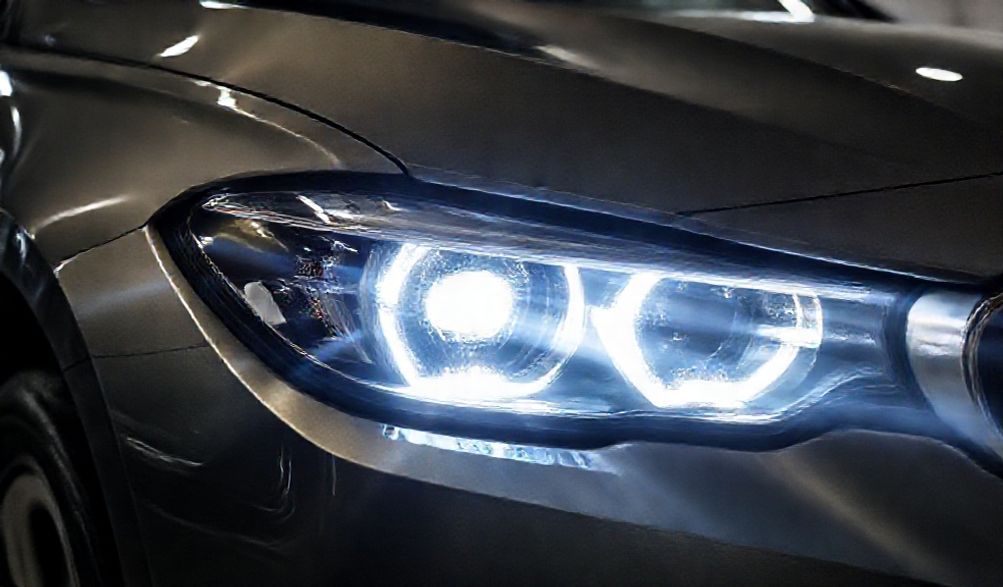
Adaptive Beam Headlights Explained: Safety, Technology & How They Work
Imagine driving on a dark, winding country road. Your high beams are essential to see the next curve, but a pair of oncoming headlights appears in the distance. You fumble for the stalk, switching back to low beams, and are suddenly plunged into near-darkness, straining to see the road’s edge. Just as you adjust, the other car passes, and you switch the high beams back on. This frustrating, all-too-common dance isn’t just annoying—it’s a safety compromise.
What if your headlights could intelligently see that oncoming car and, in a fraction of a second, dim seul the specific slice of light that would hit its windshield, while keeping the rest of the road—and the shoulder where a deer might be poised—fully illuminated? This isn’t science fiction; it’s the reality of adaptive beam headlights. As an automotive technology that has been transforming nighttime driving in Europe for over a decade and is now finally available in the United States, adaptive beams represent one of the most significant leaps in vehicle lighting since the sealed-beam headlight. This post will provide clear, factual information to demystify this intelligent system, explain how it enhances safety for you and others, and help you understand its role in the future of driving.
What Are Adaptive Beam Headlights? The Intelligent Lighting Solution
At its core, an adaptive beam headlight system is a dynamic lighting technology that automatically and continuously adjusts the headlight pattern in real-time to provide optimal forward illumination without dazzling other road users. Unlike static headlights, which have a fixed beam pattern, adaptive beams (often called Adaptive Driving Beams or ADB) are “aware” of their surroundings.
Core Definition and Function
Adaptive beam headlights are an advanced front-lighting system that uses sensors and electronic controls to modify the distribution of light from the headlamps. The primary goal is dual-purpose: to maximize the driver’s seeing distance and to minimize glare for other drivers. It achieves this not by simply turning beams on and off, but by actively shaping the light output, creating zones of high and low intensity within the beam pattern based on the precise traffic situation.
The Key Difference: Adaptive vs. Standard vs. Auto High-Beams
The terminology can be confusing, so it’s crucial to distinguish between these three common systems:
- Standard (Static) Headlights: These are traditional headlights with fixed low-beam and high-beam patterns. The driver manually switches between them. The low-beam pattern is dipped to avoid glaring others, inherently limiting forward and peripheral visibility.
- Automatic High-Beam Assist: This is a helpful but simpler system. A sensor (often a camera) detects headlights or taillights and automatically switches from high beams to low beams when traffic is present. It’s a binary on/off function.
- Adaptive Driving Beams (ADB): This is the intelligent evolution. ADB doesn’t just switch; it modulates. When it detects other vehicles, it dynamically creates a “shadow” or a zone of reduced intensity around those vehicles within the high-beam pattern. The areas not occupied by other cars remain fully illuminated with high-beam intensity. It provides the benefits of high beams almost all the time, without the associated glare.
How Do Adaptive Beam Headlights Work? The Technology Behind the Beam
The magic of adaptive beams is a symphony of hardware and software working in milliseconds. It transforms your headlights from dumb bulbs into perceptive, reactive tools.
The System Components: Sensors, Cameras, and Control Units
The system relies on a few key components, often shared with other advanced driver-assistance systems (ADAS):
- Forward-Facing Camera: Mounted typically behind the windshield near the rearview mirror, this is the “eyes” of the system. It identifies light sources (headlights, taillights), determines their position, distance, and movement, and can also read road signs and lane markings.
- Sensors & Data Integration: Additional sensors, like steering angle sensors, GPS data, and vehicle speed sensors, provide context. Is the car entering a curve? Climbing a hill? This data is crucial for anticipating where the light needs to be directed.
- Electronic Control Unit (ECU): This is the “brain.” It processes all the data from the camera and sensors in real-time, calculating the optimal headlight beam pattern dozens of times per second.
- Adaptive Light Modules: This is the “muscle.” The ECU’s commands are executed here. There are two primary technological approaches:
- Matrix LED Systems: These use an array of many individually controlled LED segments (e.g., 32, 84, or even over 100). The ECU can turn specific LEDs on or off or dim them to carve precise shadows around detected vehicles while others stay lit.
- Dynamic Shield Systems: These systems use a movable shade or shield (often with Digital Light Processing – DLP technology) placed in front of a high-intensity light source. The shield moves physically to block specific portions of the beam, creating the shaded zones.
The Adaptive Process in Action
The entire sequence happens seamlessly and continuously:
- Detection: The camera identifies light sources up to 800 meters away, classifying them as oncoming headlights, preceding taillights, or even roadside reflectors.
- Calculation: The ECU fuses this data with vehicle dynamics (speed, yaw, steering angle). It predicts the path of both your vehicle and the detected objects. It then generates a precise light map: “Illuminate zones A, C, and E at 100%; dim zones B and D around that car to 20%.”
- Adjustment: The command is sent to the headlight modules. In a matrix system, specific LEDs are deactivated. In a shield system, the shield moves to the calculated position. The result is a beam pattern that fluidly dances around other vehicles, bends into corners (cornering lights are often integrated), and broadens at intersections to illuminate crosswalks and sidewalks.
Proven Safety Benefits of Adaptive Beam Technology
The sophisticated engineering serves one paramount goal: safety. Studies and real-world evidence point to substantial benefits.
Enhanced Visibility and Reduced Driver Fatigue
By providing near-constant high-beam levels of illumination, adaptive beams dramatically extend the driver’s functional sight distance. This means earlier detection of potential hazards—a pedestrian stepping off the curb, debris in the road, or an animal at the roadside. The IIHS has noted that better lighting gives drivers more time to react, which is critical in avoiding collisions. Furthermore, the constant optimal light level reduces the severe eye strain and cognitive load associated with frequent manual switching between high and low beams. This leads to less driver fatigue on long nighttime journeys, keeping the driver more alert.
Preventing Glare for Oncoming and Preceding Traffic
This is the other side of the safety equation. Glare from oncoming high beams is not just an irritation; it causes temporary blindness and impairs the vision of other drivers for several seconds—a dangerous amount of time at speed. Adaptive beams are designed to be polite. By precisely shadowing other vehicles, they eliminate the primary safety trade-off of conventional high beams. The National Highway Traffic Safety Administration (NHTSA), in its ruling to allow ADB in the U.S., estimated that this technology could prevent thousands of crashes annually by improving visibility while controlling glare. It’s an active safety feature that protects not only the driver using it but everyone sharing the road.
Availability, Regulations, and Vehicle Considerations
For drivers interested in this technology, understanding the practical landscape is key.
Are Adaptive Beam Headlights Legal Where You Drive?
L'historique réglementaire est important. Les phares à faisceau adaptatif sont légaux et courants en Europe depuis le milieu des années 2000. Cependant, aux États-Unis, la norme fédérale de sécurité des véhicules automobiles (FMVSS) 108 imposait des exigences strictes et vieilles de plusieurs décennies concernant les motifs des phares, interdisant de fait la technologie à faisceau adaptatif. Après des recherches et un plaidoyer approfondis, la NHTSA a modifié la FMVSS 108 en février 2022, autorisant enfin les phares à faisceau adaptatif sur les nouveaux véhicules aux États-Unis. Cela signifie que les constructeurs automobiles peuvent désormais inclure cette fonctionnalité sur les modèles vendus aux États-Unis, et nous commençons à les voir apparaître sur les véhicules des années-modèles 2023 et suivantes.
Quelles marques et modèles de voitures proposent des faisceaux adaptatifs ?
Les réglementations américaines étant désormais alignées, la technologie se répand rapidement des marques de luxe aux marques plus grand public. Il s'agit souvent d'une fonctionnalité des packs technologiques ou d'éclairage premium. Voici quelques exemples de systèmes par marque :
* Audi : LED Matrix Design & LED Matrix Numérique (disponibles sur A4, A6, A8, Q5, Q7, modèles e-tron)
* BMW : Phares LED adaptatifs avec faisceau sélectif (disponibles sur Série 3, Série 5, X5, X7)
* Mercedes-Benz : DIGITAL LIGHT (disponible sur Classe S, EQS, GLE)
* Toyota/Lexus : Système BladeScan à faisceaux adaptatifs (disponible sur Lexus RX, NX, Toyota Mirai)
* Ford/Lincoln : Éclairage Pixel Adaptatif (Lincoln), Système d'Éclairage Avant Adaptatif (Ford)
* Volvo : Feux de route actifs avec technologie Pixel
* Hyundai/Genesis : Faisceau de Conduite Adaptatif (disponible sur Genesis GV70, GV80, Hyundai Ioniq 5/6)
* Porsche : Porsche Dynamic Light System Plus (PDLS+)
Foire Aux Questions (FAQ) sur les phares à faisceau adaptatif
Q : Puis-je installer des phares adaptatifs sur ma voiture plus ancienne ?
R : Presque certainement non. Les faisceaux adaptatifs ne sont pas un simple remplacement d'ampoule ou de bloc optique. Ce sont des systèmes de sécurité profondément intégrés qui nécessitent une caméra avant spécifique, des capteurs, des faisceaux de câblage, une intégration au réseau véhiculaire et un étalonnage en usine. La rétrofit n'est pas réalisable, rentable ou sûre, car elle pourrait compromettre les performances du système et d'autres fonctions ADAS.
Q : Les phares adaptatifs fonctionnent-ils par brouillard ou forte pluie ?
R : Leur fonction principale est de réagir aux autres sources lumineuses et à la géométrie de la route. Par brouillard ou forte neige, la lumière peut se refléter sur les précipitations, réduisant potentiellement son efficacité. Ils ne remplacent pas les feux de brouillard dédiés, qui utilisent un faisceau large et bas conçu pour éclairer la chaussée sans créer un “mur de lumière” réfléchissant. Les conducteurs doivent toujours actionner manuellement les feux de brouillard dans les conditions appropriées.
Q : Combien coûte la réparation des phares adaptatifs ?
R : Les coûts de réparation sont nettement plus élevés que pour des unités halogènes standard ou même LED. Un ensemble de phare adaptatif endommagé contient des composants électroniques complexes, des lentilles de précision et souvent un réseau de LED. Les unités de remplacement peuvent coûter plusieurs milliers de dollars chacune et nécessitent un étalonnage/pointage professionnel avec des outils de diagnostic spécialisés. Consultez toujours votre police d'assurance et un concessionnaire ou atelier de réparation agréé pour obtenir un devis précis.
Q : Éliminent-ils complètement le besoin d'utiliser le commutateur de feux de route ?
R : Dans la grande majorité des scénarios de conduite sur les routes publiques avec d'autres usagers, oui — le système est entièrement automatique et gère tous les ajustements de faisceau. Cependant, le commutateur manuel demeure généralement pour des cas particuliers, comme signaler sa présence à d'autres conducteurs dans des zones isolées ou si vous devez outrepasser le système pour une raison quelconque. Le véhicule peut également désactiver automatiquement la fonction adaptative dans certaines conditions météorologiques défavorables.
Conclusion
Les phares à faisceau adaptatif sont bien plus qu'une simple commodité ingénieuse ; ils représentent une avancée fondamentale en matière de sécurité automobile proactive. En maximisant intelligemment la visibilité du conducteur tout en protégeant la vision des autres, cette technologie s'attaque à un compromis fondamental et de longue date de la conduite nocturne. Soutenus par les recherches d'organismes autorisés comme l'IIHS et la NHTSA, et désormais enfin légaux dans tout le pays, les faisceaux adaptatifs passent d'un luxe européen à une norme de sécurité mondiale. Pour tout conducteur envisageant son prochain véhicule — en particulier celui qui voyage fréquemment après la tombée de la nuit — comprendre et privilégier cette technologie est une démarche intelligente et éclairée vers un trajet plus sûr pour tous les usagers de la route.
p>