
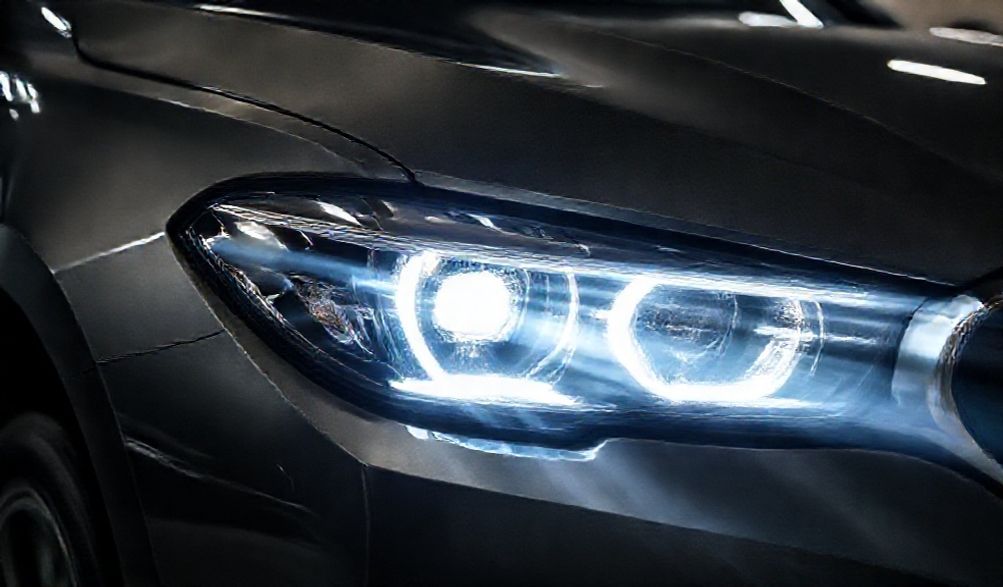
Dynamic Headlights Explained: Safety, Technology, and How They Work
For anyone who has driven on a dark, winding road, you know the tense dance of the high beams. You flick them on for a precious few seconds of clear vision, only to immediately flick them off as a pair of pinprick lights appears in the distance, returning you to the tunnel of your low beams. It’s a compromise as old as nighttime driving itself: see the road, or be courteous and safe for others. But what if you didn’t have to choose? What if your headlights could automatically and precisely light up the entire road ahead except for the exact spots occupied by other drivers, cyclists, and pedestrians?
This is no longer a futuristic concept. It’s the reality offered by dynamic headlights, one of the most significant—yet often overlooked—advancements in automotive safety technology in recent years. As an automotive technology analyst who has experienced these systems firsthand on everything from German autobahns to rural American backroads, I can attest to the transformative difference they make. This comprehensive guide will demystify dynamic headlights. We’ll explore how they work, their proven safety benefits, how they differ from other systems, and what you need to know as a driver considering this technology for your next vehicle.
What Are Dynamic Headlights? Beyond Basic High Beams
At their core, dynamic headlights are an intelligent lighting system designed to eliminate the fundamental compromise of traditional headlights. They go far beyond the now-common “auto high beam” feature, which is essentially a robotic switch that turns your high beams on and off.
The Core Principle: Selective Illumination
The fundamental idea is selective illumination. Instead of a simple on/off switch for a broad, fixed beam, dynamic headlights use an array of tiny, individually controllable light sources (like pixels on a screen). A forward-facing camera and a powerful computer constantly scan the road ahead. When the system detects the headlights of an oncoming car or the taillights of a vehicle ahead, it doesn’t just dim the entire headlight. Instead, it selectively dims or turns off only the specific “pixels” of light that would shine directly into that other vehicle’s cabin or mirrors. The rest of the high-beam pattern remains fully illuminated, lighting up the roadside, road signs, and potential hazards next to and beyond the other car.
Imagine using a spotlight with a piece of black tape perfectly placed to block only the eyes of the person you’re shining it on, while still illuminating everything around them. That’s the essence of dynamic beam shaping.
A Brief History of Headlight Evolution
To appreciate dynamic headlights, it helps to understand the journey:
* Halogène : The long-standing standard, using a tungsten filament in a halogen gas-filled bulb. Relatively inexpensive but inefficient and yellowish in color.
* HID/Xenon: Introduced brighter, whiter light using an arc of electricity between two electrodes in a xenon gas-filled capsule. Offered better visibility but with more potential for glare if not properly aimed.
* LED: Light-Emitting Diodes revolutionized automotive lighting. They are more energy-efficient, longer-lasting, and allow for more precise and complex light signatures. Their fast response time and small size are the foundational enablers for adaptive systems.
* Matrix LED / Laser / Dynamic Systems: This is the current pinnacle. By combining dozens or even millions of micro-LEDs with sensors and software, headlights become an active, responsive part of the vehicle’s safety suite, not just a passive light source.
Key Terminology: ADB, Matrix, Pixel, and Glare-Free
You’ll hear several terms used, often interchangeably by marketers, but they point to the same core technology:
* Adaptive Driving Beam (ADB): The technical, regulatory term for systems that actively shape the beam to avoid glare. This is the official name used in safety standards.
* Matrix LED: A common implementation, primarily from Audi and Volkswagen Group, using a cluster of individually controlled LED segments (e.g., 32, 84, or even over 1 million micro-LEDs in digital matrix systems).
* Pixel Light: A similar term emphasizing the precise, pixel-level control of the light output.
* Glare-Free High Beam: A descriptive consumer-facing term used by brands like Ford and BMW to explain the system’s benefit.
In this article, we use “dynamic headlights” as the overarching term for all these implementations of intelligent, shape-shifting light.
How Dynamic Headlight Technology Works
The magic of dynamic headlights is a seamless marriage of sophisticated hardware and intelligent software. It’s a real-time dance of perception, decision, and action.
The Hardware: Sensors, Cameras, and Micro-LED Arrays
Three key hardware components work in concert:
1. Forward-Facing Camera: Mounted typically near the rearview mirror, this is the system’s “eyes.” It’s a high-resolution camera, often the same one used for lane-keeping and traffic sign recognition, that continuously scans the road ahead for light sources.
2. LED Array (The “Matrix”): This is the light source itself. Instead of one or two bulbs per headlight, there is a dense cluster of individual LED segments. In premium systems like Audi’s Digital Matrix or Mercedes’ Digital Light, this can consist of over a million micro-mirrors or micro-LEDs, allowing for incredibly precise control.
3. Central Control Unit: This is the system’s “brain.” It’s a dedicated computer that processes the video feed from the camera at lightning speed, runs the object detection algorithms, and sends commands to each individual LED segment in the headlights.
The Software: Real-Time Data Processing
This is where the intelligence happens. The control unit’s software performs several critical tasks in milliseconds:
* Object Detection & Classification: It analyzes the camera feed to identify and classify objects. It can distinguish between the headlights of an oncoming car, the taillights of a car being followed, the reflectors of a bicycle, and even the silhouette of a pedestrian on the shoulder.
* Distance and Trajectory Calculation: It calculates how far away the detected object is and predicts its path relative to your vehicle.
* Beam-Shaping Algorithm: Based on this data, the algorithm creates a dynamic “shadow mask.” It determines exactly which LED segments need to be dimmed or turned off to prevent glare on the identified object, while keeping all other segments at full high-beam intensity.
A Step-by-Step Scenario: Passing a Car at Night
Let’s walk through a common scenario to see the system in action:
1. Detection: You’re driving on a dark country road with your dynamic high beams activated. The camera detects the taillights of a car several hundred meters ahead.
2. Initial Shadow Casting: The control unit immediately commands a vertical “wedge” of LEDs in your headlights to dim, creating a dark tunnel around the distant car’s rear end. Your high beams continue to fully illuminate the road signs, shoulders, and landscape to the left, right, and above the car ahead.
3. Dynamic Adjustment: As you close the distance, the system constantly adjusts this dark wedge, making it narrower and tracking the exact position of the other car. If you begin to overtake, the shadow will shift horizontally across your headlight array, always protecting the other driver’s mirrors.
4. Oncoming Traffic: Suddenly, an oncoming car appears around a bend. The system instantly detects its headlights and creates a second, separate shadow zone for that vehicle, all while maintaining high-beam light everywhere else.
5. Return to Full Beam: Once the oncoming car passes and the car ahead turns off, the shadows dissolve, and your road is once again flooded with the full, unobstructed light of your high beams—all without you ever touching the stalk.
Avantages démontrés en matière de sécurité des phares dynamiques
Il ne s'agit pas seulement d'une fonction de confort ; c'est une technologie de sécurité quantifiable. Des études et des données réelles confirment les avantages significatifs.
Maximiser votre champ de vision
L'avantage le plus évident est une visibilité considérablement améliorée. En maintenant les feux de route allumés presque constamment, les phares dynamiques éclairent une zone bien plus grande que les feux de croisement. Des recherches d'organisations comme l'Insurance Institute for Highway Safety (IIHS) et l'European New Car Assessment Programme (Euro NCAP) soulignent que ces systèmes révèlent mieux les piétons, les cyclistes, les animaux et les obstacles en bordure de route dans les virages — les dangers les plus susceptibles d'être manqués dans le faisceau limité des feux de croisement.
Réduire la fatigue et la charge cognitive du conducteur
L'effort mental pour constamment juger du moment où changer de faisceau est éliminé. Cette réduction de la charge cognitive est un véritable bénéfice pour la sécurité. Les conducteurs sont moins fatigués et peuvent maintenir leur attention plus pleinement sur la direction, la vitesse et la conscience globale de la circulation, plutôt que de gérer leurs feux. Cela rend les longs trajets nocturnes nettement moins stressants.
Améliorer la sécurité pour tous les usagers de la route
L'avantage pour la sécurité est double. Alors que vous voyez mieux, vous n'éblouissez pas non plus les autres. L'éblouissement causé par les feux de route des véhicules venant en sens inverse est un facteur majeur d'inconfort et de danger lors de la conduite nocturne, provoquant une cécité temporaire et augmentant les temps de réaction. En éliminant cet éblouissement, les phares dynamiques rendent la route plus sûre pour les conducteurs, motocyclistes et cyclistes venant en face, créant un écosystème plus sûr pour tous.
Phares dynamiques vs autres systèmes adaptatifs
Il est facile de confondre les phares dynamiques avec d'autres fonctions d'éclairage avancées. Voici comment ils diffèrent et se complètent.
Dynamique (ADB) vs Système d'Éclairage Avancé (AFS)
Ils sont souvent associés mais sont des technologies distinctes :
* AFS (Adaptive Front-lighting System) : Ce système fait physiquement pivoter les blocs optiques de vos phares (ou un réflecteur à l'intérieur) lorsque vous tournez le volant, courbant le faisceau dans un virage. Il améliore l'éclairage dans les virages. Cependant, le motif du faisceau lui-même (route/croisement) reste statique.
* ADB (Dynamique) : Ce système remodèle le contenu du motif du faisceau (créant des ombres) mais ne déplace pas nécessairement le bloc optique physique.
La relation : De nombreuses voitures de luxe modernes possèdent les deux. L'AFS oriente le faisceau dans le virage, et le système ADB façonne ensuite ce faisceau orienté pour éviter d'éblouir tout véhicule se trouvant à l'intérieur.
Dynamique vs Feux de Route/Croisement Automatiques Standard
C'est la comparaison la plus importante pour les consommateurs :
| Fonctionnalité | Feux de Route Automatiques Standard | Phares Dynamiques (ADB) |
| :— | :— | :— |
| Contrôle du faisceau | Binaire (Activé/Désactivé). Le feu de route entier est activé ou désactivé. | Pixel-Parfait. Des segments individuels sont atténués ou éteints pour créer des ombres. |
| Réduction de l'éblouissement | Élimine l'éblouissement en éteignant complètement les feux de route. | Gère l'éblouissement en bloquant sélectivement la lumière uniquement là où c'est nécessaire. |
| Zone d'éclairage | Intermittente. Vous ne bénéficiez de la pleine lumière des feux de route que lorsqu'aucune autre voiture n'est présente. | Quasi-constante. Vous obtenez un éclairage de niveau feu de route sur 90%+ du champ de vision, autour des autres véhicules. |
| Action du conducteur | Aucune, mais le système commute constamment. | Aucune, et la sortie lumineuse est continue et transparente. |
Le paysage réglementaire : États-Unis vs Europe
Pendant des décennies, un obstacle majeur a existé aux États-Unis. La norme fédérale de sécurité des véhicules automobiles (FMVSS) 108, rédigée à l'ère des phares à faisceau scellé, interdisait effectivement la technologie adaptative de façonnage du faisceau. L'Europe, avec des réglementations différentes, a adopté les phares dynamiques il y a des années.
Le changement majeur est survenu en février 2022, lorsque la National Highway Traffic Safety Administration (NHTSA) a modifié la FMVSS 108 pour enfin autoriser les systèmes de faisceau de conduite adaptatif sur les nouveaux véhicules aux États-Unis. Cela a ouvert les vannes, et les constructeurs automobiles introduisent maintenant rapidement des versions conformes aux normes américaines de leurs systèmes.
Disponibilité et considérations pour les conducteurs
Les phares dynamiques passent d'une exclusivité luxueuse européenne à une option disponible sur des véhicules plus grand public.
Quelles marques automobiles proposent des phares dynamiques aujourd'hui ?
La plupart des grands constructeurs proposent désormais une forme de cette technologie, généralement en option premium ou sur les finitions supérieures. Les implémentations notables incluent :
* Audi / Groupe Volkswagen : LED Matrix et un LED Digital Matrix (avec capacités de projection).
* BMW : Phares LED Adaptatifs avec Assistant Feux de Route Anti-Éblouissement.
* Mercedes-Benz : Digital Light (with ultra-high-resolution projection).
* Ford / Lincoln: Glare-Free adaptive headlights (now available on models like the F-150, Mustang Mach-E, and Navigator).
* General Motors: IntelliBeam ADB systems (on select Cadillac, GMC, and Chevrolet models).
* Volvo : Active High Beam technology.
* Hyundai / Genesis / Kia: Adaptive Driving Beam systems on various premium models.
Cost, Maintenance, and Repair Implications
As a cutting-edge feature, there are cost considerations:
* Coût Initial : It’s typically part of a premium lighting package or high trim level, adding to the vehicle’s price.
* Replacement Cost: If a headlight unit is damaged, replacing a matrix LED assembly is significantly more expensive than a standard halogen or LED unit—often costing several thousand dollars.
* Calibration is Crucial: After any front-end collision, windshield replacement (which can affect the camera), or headlight replacement, the system doit be professionally calibrated. This ensures the camera and headlights are in perfect alignment; otherwise, the beam-shaping will be inaccurate and potentially dangerous.
Can They Be Added to My Current Car?
The short and firm answer is non. A true, safe, and legal dynamic headlight system is not an aftermarket accessory. It requires deep integration with the vehicle’s high-speed data network (to get steering angle, speed, and camera data), the windshield-mounted camera, and the central computing architecture. “Retrofitting” is essentially impossible and attempting to do so would create serious safety and legal liabilities.
The Future of Automotive Lighting
Dynamic headlights are just the beginning. The integration of lighting with other vehicle systems points to an even smarter future.
Communication with Other Vehicles (V2X)
Future systems could use Vehicle-to-Everything (V2X) communication. Your headlights could receive data from an oncoming car around a blind corner before it’s visible, proactively shaping the beam to avoid glare. Or, they could react to signals from smart road infrastructure warning of hazards ahead.
Projection and Augmented Reality
We’re already seeing the first steps. Systems like Mercedes’ Digital Light can project symbols onto the road—such as navigation arrows, lane-keeping guides, or warning icons for pedestrians detected in the dark. This turns the road surface into an augmented reality display, providing intuitive cues to the driver.
The Path to Standardization and Wider Adoption
With U.S. regulations now aligned, the technology will follow the classic trajectory of automotive innovation: it will start in luxury vehicles and gradually trickle down to mainstream models as costs decrease and consumer awareness increases. Within a decade, dynamic headlights may well be as commonplace as rearview cameras are today.
Section FAQ
Q1: Are dynamic headlights legal in the United States?
R : Yes, absolutely. As of early 2022, updated federal vehicle safety standards (FMVSS 108) now permit Adaptive Driving Beam (ADB) systems. Manufacturers are actively bringing compliant models to the US market.
Q2: Do dynamic headlights work in all weather conditions?
R : Performance can be reduced in heavy rain, fog, or snow, as the camera’s ability to detect distinct light sources may be impaired. In these scenarios, the system will typically default to a safe, conventional auto high-beam or low-beam pattern.
Q3: If a single LED fails, does the whole system stop working?
R : Not usually. The systems are designed to be fault-tolerant. If a small number of individual LEDs fail, the system will likely remain functional, possibly reverting to a slightly less precise but still adaptive pattern. However, any headlight malfunction should be diagnosed by a qualified technician.
Q4: Are they worth the extra cost?
R : For drivers who frequently travel at night, especially on unlit rural or winding roads, the improvement in safety, visibility, and reduced driver fatigue can be substantial. It is a premium active safety feature, and its value should be weighed similarly to other advanced driver-assistance systems (ADAS).
Q5: How do I know if my car has dynamic headlights?
R : Check your owner’s manual or the vehicle’s detailed specifications sheet for terms like “Adaptive Driving Beam,” “Matrix LED,” “Pixel Light,” or “Glare-Free High Beam.” The most obvious tell-tale sign during a test drive is that your high beams appear to stay on constantly while driving, magically creating dark “shadows” around other vehicles without ever flashing or blinding them.
Conclusion
Dynamic headlights represent a genuine leap forward in automotive safety technology. They actively solve the century-old nighttime driving dilemma by using software intelligence to make hardware more courteous and effective. This isn’t just about brighter lights; it’s about smarter light—light that sees, thinks, and adapts to create a safer environment for the driver and everyone sharing the road.
While currently a premium feature, the combination of proven safety benefits, reduced driver workload, and recent regulatory approval signals a bright future. As the technology matures and costs come down, we can expect the comforting, protective glow of adaptive beams to become the new standard, finally ending the frustrating flicker of the high-beam switch and making every nighttime journey safer and less stressful. When evaluating the safety portfolio of your next vehicle, the question may well shift from “Does it have automatic emergency braking?” to “Does it have dynamic headlights?”
p>