
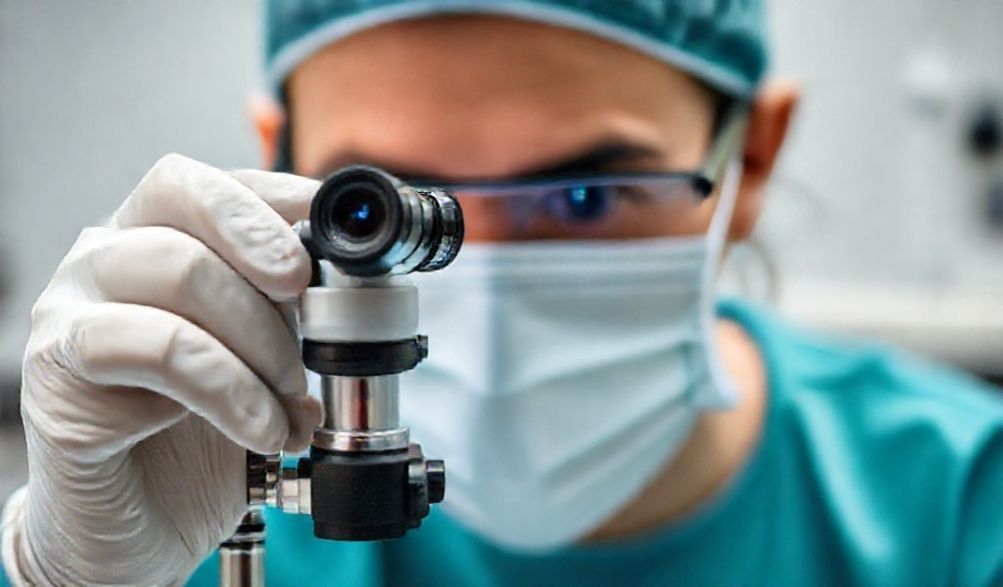
The Ultimate Guide to Eye Loupes for Dentists and Surgeons: Enhance Precision, Reduce Fatigue
Imagine performing a delicate root canal, suturing a microvascular flap, or preparing a sub-millimeter margin on a crown. Now, imagine doing it while hunched over, squinting, and battling a nagging ache in your neck and back that builds with each passing hour. For decades, this was the unspoken physical toll of precision-based medicine. Today, there is a fundamental tool that has redefined the standard of care, transforming not only what clinicians can see but also how they practice: the surgical or dental loupe.
This guide is not a sales pitch. It is a comprehensive, evidence-based resource synthesized from optical engineering principles, ergonomic research, and the collective wisdom of seasoned practitioners and optometric specialists. Our goal is to demystify the world of fonction de grossissement, providing you with the unbiased knowledge needed to make an informed decision. Choosing the right loupes is a deeply personal and critically important investment—one that directly impacts your clinical outcomes, your physical health, and the longevity of your career.
We will navigate the essential “why,” the detailed “how,” and the practical “what” of loupes. We’ll cover the undeniable benefits, decode key specifications like magnification and field of view, compare the major types of loupes, and underscore the non-negotiable importance of a professional fitting. Consider this your roadmap to seeing better, working smarter, and practicing longer.
Why Eye Loupes Are Essential for Modern Dental and Surgical Practice
Moving beyond a simple magnifying glass, modern medical loupes are sophisticated optical systems designed to integrate seamlessly with your posture and workflow. Their adoption is no longer a luxury for specialists but a cornerstone of contemporary, ergonomic practice for a multitude of reasons.
Enhancing Visual Acuity and Precision
The primary function of loupes is to make the small appear large. This simple act of magnification has a profound effect on clinical capability.
- Accuracy in Minute Tasks: In dentistry, this means identifying a hidden caries, precisely preparing a cavity without damaging adjacent tooth structure, or placing a composite restoration with perfect marginal adaptation. In surgery, it translates to identifying delicate nerve structures, placing sutures with minimal tissue trauma, and performing anastomoses with greater confidence.
- Error Reduction: A magnified view reduces perceptual errors. Studies in various surgical fields have consistently shown that magnification improves accuracy and reduces complication rates. It allows clinicians to operate at a higher standard of visual information, turning guesswork into certainty.
Promoting Ergonomic Health and Reducing Fatigue
Perhaps the most significant long-term benefit of loupes is their role in injury prevention. The human body was not designed to crane the neck forward for hours at a time.
- The Posture Problem: Without loupes, clinicians instinctively bend their neck and spine to bring their eyes closer to the work. This “forward head posture” places immense strain on the cervical vertebrae, trapezius muscles, and lower back. Over a career, this can lead to chronic pain, debilitating musculoskeletal disorders, and early burnout.
- The Ergonomic Solution: Properly fitted loupes are calibrated to a specific typique et un angle de déclinaison. This forces the user to sit or stand upright with a neutral spine, bringing the work into focus through magnification rather than contortion. The result is a dramatic reduction in neck and back strain, directly combating the most common occupational hazard in these professions.
Improving Clinical Outcomes and Patient Safety
The combination of enhanced vision and improved ergonomics creates a powerful synergy that elevates the entire standard of care.
- Superior Diagnostics: Early detection is key. Loupes allow for the identification of cracks, fractures, and early pathological changes that are invisible to the naked eye.
- Enhanced Procedural Quality: From ensuring complete caries removal to achieving a flawless surgical margin, the improved visualization leads to more predictable, higher-quality results. This translates directly to better healing, fewer revisions, and increased patient satisfaction.
- The Safety Link: Greater precision and control inherently mean greater safety. Seeing critical anatomical boundaries clearly minimizes the risk of iatrogenic damage to vital structures.
Key Specifications: How to Choose the Right Magnification & Field of View
Selecting loupes isn’t about getting the “strongest” magnification. It’s about finding the optimal balance of several interdependent optical characteristics for your specific work.
Understanding Magnification Power (e.g., 2.5x, 3.5x, 4.5x, 6x)
Magnification is expressed as a multiplier (e.g., 3.0x means the object appears three times larger).
- 2.0x – 3.0x (Low): Ideal for beginners and for procedures requiring a wider field of view. Excellent for general dentistry (exams, simple restorations), general surgery, and as a starting point for adaptation.
- 3.5x – 4.5x (Medium/High): The most popular range for established practitioners. Provides significant detail for complex restorative work, periodontics, endodontics (looking down canals), and many surgical specialties like plastic and hand surgery.
- 5.0x and above (Very High/Ultra-High): Used for microsurgery, endodontic microsurgery, and highly specialized procedures. Requires a very steady hand and excellent lighting, as the field of view is extremely small.
Beginner Advice: Most experts strongly advise starting in the 2.5x to 3.0x range. This allows you to adapt to the new posture and the magnified, slightly disorienting field without being overwhelmed. You can always upgrade later.
Depth of Field and Working Distance: Critical Measurements
- Distance de travail : This is the critical measurement from your eye to the patient’s treatment area while maintaining an upright, ergonomic posture. It is measured in inches or centimeters (typically 14″-20″ for dentistry, 16″-22″ for surgery). An incorrect working distance will force you back into poor posture.
- How to Self-Measure: Sit or stand in your typical working position with good posture. Have a colleague measure from the corner of your eye to the point where your instruments most frequently operate.
- Depth of Field: This is the “zone” within which objects remain in sharp focus, in front of and behind your primary focal point. Higher magnification typically reduces depth of field. A sufficient depth of field is crucial for working in a three-dimensional space like an oral cavity or surgical site.
Field of View: Balancing Detail and Awareness
Field of view (FOV) is the diameter of the area you can see through the loupes at your set working distance.
- The Trade-Off: As magnification increases, the field of view decreases. A high-power loupe might show incredible detail on a single tooth, but you lose sight of the adjacent teeth and the patient’s lips.
- Clinical Implication: You must choose a magnification that provides the detail you need while retaining enough peripheral awareness for safety and context. A surgeon needs to see beyond the immediate suture line; a dentist needs to be aware of the soft tissues.
Types of Eye Loupes: Pros, Cons, and Best Uses
There are two primary classifications: by mounting style (TTL vs. Flip-Up) and by optical design (Prismatic vs. Keplerian).
Through-The-Lens (TTL) Loupes
These loupes have the magnification lenses permanently fixed within the carrier lens, custom-built to your pupilary distance (PD) and declination angle.
- Avantages :
- Optimal Ergonomics: Lightweight and perfectly balanced on the face, as the optical center is aligned with your pupils.
- Consistent View: The optical path is fixed, providing a stable, reliable image.
- Less Bulk: No flipping mechanism makes them more streamlined.
- Disadvantages:
- Fixed Parameters: Working distance and magnification cannot be changed. If your posture or practice changes significantly, you may need a new pair.
- Not Shareable: Custom-made for one user.
- Idéal pour : Practitioners with a stable, defined practice style who want the lightest, most ergonomic daily-wear option.
Flip-Up Loupes
The magnification telescopes are mounted on a hinge above a standard prescription (or plano) lens frame, allowing them to be flipped up and down.
- Avantages :
- Flexibilité : You can look over them to speak to staff or a patient without removing them.
- Adjustable: Some models allow for minor adjustments to working distance.
- Shareable & Upgradeable: The frame can be used by others (with different flip-up units), and you can upgrade magnification without replacing the entire system.
- Disadvantages:
- Poids & Équilibre : The flip-up mechanism adds weight, which can sit on the bridge of the nose and cheeks.
- Potential for Misalignment: The hinges can wear or get knocked out of perfect alignment over time.
- Idéal pour : Students, educators, or professionals who perform a wide variety of procedures with different visual demands. Ideal for those who want the flexibility to look up frequently.
Prismatic (Galilean) vs. Keplerian (Telescopic) Loupes
This refers to the internal optical design.
- Prismatic (Galilean): Uses a simple lens system. They are generally lighter, more compact, and less expensive. However, they are typically limited to lower magnifications (up to about 3.5x) before image quality and depth of field suffer.
- Keplerian (Telescopic): Uses a more complex system of prisms to fold the light path. This allows for higher magnifications (3.5x and above) with a brighter image, superior depth of field, and better edge-to-edge clarity. The trade-off is increased weight and cost.
The Critical Importance of Professional Fitting and Ergonomics
Purchasing loupes online based on generic specs is one of the biggest mistakes a clinician can make. Ill-fitting loupes are worse than none at all.
Why a Generic Fit Can Cause More Harm Than Good
An improper fit leads to:
* Eye Strain and Headaches: If the optical centers don’t align with your pupils, your eye muscles must constantly work to converge the images.
* Compromised Posture: Incorrect declination angle or working distance will force you to tilt your head or move your body into an awkward position to find the “sweet spot,” negating the ergonomic benefit.
* Neck and Back Pain: The very injuries loupes are meant to prevent.
The Fitting Process: What to Expect
A certified fitter (often an optometrist or trained representative) should conduct a comprehensive fitting:
1. Pupillary Distance (PD): Precisely measuring the distance between your pupils.
2. Working Distance Verification: Confirming your measurement in a simulated working position.
3. Angle d’inclinaison : Measuring the angle from your eye to your work while in a neutral spine position. This is critical for TTL loupes.
4. Frame Selection & Adjustment: Ensuring the frame is comfortable and secure on your unique facial structure.
Integrating Loupes with Lighting: The Role of LED Headlights
Magnification is only half the equation. Loupes and a high-quality LED headlight are an inseparable system. Magnification without light simply magnifies shadows. Coaxial lighting (light aligned with your line of sight) eliminates shadows, dramatically increases contrast, and reduces eye fatigue. When budgeting for loupes, you must budget for a compatible light source.
Top Considerations for Your Investment
Budgeting: Cost vs. Value Over a Career
A high-quality loupe and light system is a significant investment, often ranging from $1,500 to over $5,000. Reframe this not as an expense, but as a long-term investment in:
* Your Physical Health: Preventing career-ending pain.
* Your Clinical Skill: Enabling a higher standard of work.
* Your Earning Potential: By allowing you to practice more efficiently and for more years.
Consider the cost per day over a 20-30 year career—it becomes one of your most valuable tools.
Reputable Brands and Manufacturers
Several established companies are known for quality, innovation, and service. It’s vital to try different brands, as fit and feel are subjective.
* Orascoptic : Known for innovative, lightweight designs and a strong focus on ergonomics.
* Zeiss: Un leader mondial en optique, offrant une qualité exceptionnelle de lentilles prismatiques et une ingénierie de précision.
* Designs for Vision : Réputés pour leurs systèmes keplériens de haute qualité et leur durabilité, très populaires en chirurgie.
* SurgiTel (General Scientific) : Propose une large gamme de systèmes à bascule et TTL, avec une solide réputation en dentisterie et en chirurgie.
* Heine : Respectés pour leur clarté optique et leur robuste ingénierie allemande.
Garantie, Service et Voies de Mise à Niveau
Avant d'acheter, demandez :
* Quelle est la durée de la garantie (généralement de 3 à 10 ans) ?
* Que couvre-t-elle (défauts mécaniques, traitements des lentilles) ?
* Quel est le processus de réparation et le délai de retour ?
* L'entreprise propose-t-elle une voie de mise à niveau si vos besoins évoluent ?
Foire Aux Questions (FAQ) sur les Loupes Dentaires et Chirurgicales
Q : Quel est le meilleur grossissement pour un débutant en dentisterie/chirurgie ?
R : De manière écrasante, les professionnels et les adaptateurs recommandent de commencer par un grossissement de 2,5x ou 3,0x.. Cela vous permet de vous adapter avec succès à la nouvelle posture et au champ visuel avant d'envisager des puissances plus élevées.
Q : Puis-je utiliser mes loupes dentaires pour des procédures chirurgicales, ou vice versa ?
R : Cela dépend. Les facteurs clés sont la typique et un stérilité. Les loupes dentaires sont généralement réglées pour une distance de travail plus courte (14″-18″). Si votre champ chirurgical se situe dans cette plage et que les loupes peuvent être correctement stérilisées ou protégées, elles peuvent convenir. Cependant, les procédures chirurgicales spécialisées nécessitent souvent des paramètres spécifiques. Consultez toujours un adaptateur.
Q : À quelle fréquence dois-je faire régler ou entretenir mes loupes ?
R : Faites-les vérifier professionnellement annuellement, ou à tout moment où vous ressentez un nouvel inconfort. Nettoyez les lentilles quotidiennement avec le chiffon en microfibre et le spray pour lentilles fournis — jamais avec des vêtements ou des matériaux abrasifs.
Q : Des verres correcteurs sont-ils disponibles pour les loupes chirurgicales ?
R : Oui, absolument. La meilleure pratique est de faire tailler votre correction directement dans les lentilles oculaires des loupes (pour les TTL) ou dans les lentilles porteuses (pour les systèmes à bascule). Cela offre une performance optique et un confort supérieurs par rapport au port de lentilles de contact ou de lunettes en dessous.
Q : Combien de temps faut-il généralement pour s'adapter à l'utilisation de loupes ?
R : La plupart des utilisateurs signalent une période d'adaptation de 2 à 4 semaines . Commencez par les porter pour des tâches plus courtes et moins critiques afin de développer la mémoire musculaire pour la nouvelle posture. Votre cerveau a également besoin de temps pour traiter l'image agrandie en 3D. La persévérance est la clé.
Conclusion
Choisir les bonnes loupes est l'une des décisions les plus importantes que vous prendrez pour votre pratique clinique et votre bien-être personnel. C'est un choix profondément personnalisé qui dépend de votre spécialité, de votre anatomie et de votre style d'exercice. L'objectif est de trouver un système qui devienne un prolongement naturel de vos sens — améliorant votre précision, protégeant votre corps et élevant la qualité des soins que vous prodiguez.
Nous vous encourageons à exploiter les principes d'E-E-A-T dans votre recherche : Recherchez une Expérience pratique grâce aux programmes d'essai des fournisseurs, consultez l' et l'Expertise Expertise de collègues chevronnés et d'adaptateurs certifiés, fiez-vous à l' Autorité des études ergonomiques évaluées par des pairs et des fabricants réputés, et construisez la Confiance.
dans votre décision finale en vous assurant qu'elle repose sur vos besoins cliniques spécifiques et mesurés. Votre appel à l'action final est le suivant :. Donnez la priorité à un ajustement professionnel.
p>