
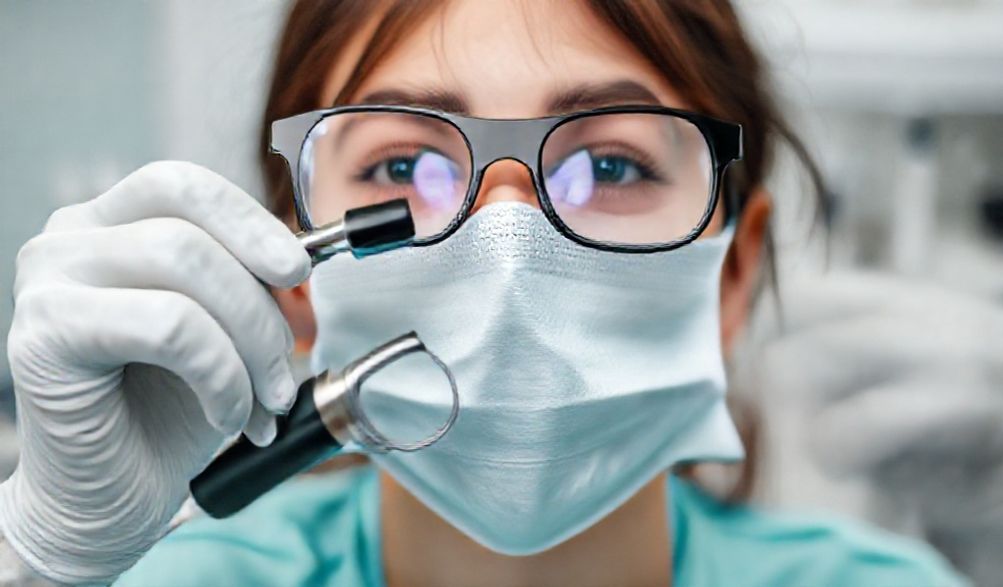
Dental Hygiene Loupes: A Complete Guide to Enhanced Vision, Ergonomics & Patient Care
Introduction
It’s 3 PM on a busy Thursday. You’ve just finished your fifth prophy of the day, and a familiar ache is settling into the space between your shoulder blades. Your neck feels stiff from hours of looking down, and your eyes are straining to focus on the fine details of the next patient’s dentition. You know there’s subgingival calculus hiding in that deep pocket, but visualizing it clearly feels like a struggle. If this scenario resonates, you’re experiencing the very challenges that dental hygiene loupes are designed to solve.
Far from being a niche gadget for specialists, loupes dentaires have become a cornerstone of modern clinical hygiene. They are not merely about making things look bigger; they are a critical investment in your clinical excellence, your long-term physical health, and the superior outcomes of your patients. This guide synthesizes insights from ergonomic research, optical engineering, and the firsthand, hard-won experience of seasoned clinical hygienists. Our goal is to move beyond marketing hype and provide a trustworthy, comprehensive resource you can rely on.
This guide will comprehensively explore the benefits, key features, selection process, and best practices for using dental hygiene loupes, empowering you to choose the right tool for a more sustainable and proficient clinical career.
What Are Dental Hygiene Loupes and Why Are They Essential?
Beyond Simple Magnification: The Core Function
At their most basic, dental hygiene loupes are a set of converging lenses that optically enlarge the operative field, bringing minute details into clear focus. However, to compare them to a simple drugstore magnifying glass is to miss their sophistication. Clinical loupes are engineered as a hands-free, binocular system that provides a stereoscopic (3D) view. They are typically mounted in a frame worn on the head, either as a Through-The-Lens (TTL) design, where the magnification is built into your prescription lenses, or as a un design system that can be moved out of the line of sight when not needed. This design allows for complete use of both hands while maintaining a consistent, aligned visual axis—a non-negotiable for precise clinical work.
The Triad of Benefits: Vision, Posture, Precision
The true power of loupes lies in a powerful triad of interconnected benefits.
-
Enhanced Visual Acuity: This is the most immediate advantage. Loupes illuminate a hidden world of detail. Suddenly, the faint white spot of incipient caries, the subtle gleam of residual subgingival calculus, tiny enamel microfractures, and the precise margin of the gingiva become unmistakably clear. This improved vision is not just about detection; it’s about verification. You can confidently confirm that a root surface is perfectly smooth and clean, elevating the standard of your care from adequate to exceptional.
-
Improved Ergonomics & Health: This is arguably the most life-changing benefit. Without loupes, the instinct is to hunch forward and bring your eyes closer to the patient’s mouth to see better—a recipe for chronic musculoskeletal disorders (MSDs). Loupes break this cycle. They have a fixed focal length. To see a sharp image, you doit maintain the correct working distance. This physically forces you to sit upright with your spine in a neutral position. Combined with a proper angle de déclinaison (the tilt of the lenses), loupes train you to look down with your eyes, not by bending your neck. The result is a dramatic reduction in the strain on your cervical spine, trapezius muscles, and lower back, directly combating the career-shortening pain so common in dentistry.
-
Increased Clinical Precision & Efficiency: The combination of superior vision and stable posture creates a powerful synergy for your clinical work. Your scaling strokes become more accurate and definitive, reducing the need for repetitive passes. Assessments are more thorough, and charting is more precise. When assisting with restorative procedures, your ability to see margins and place cord is enhanced. This precision naturally leads to greater efficiency—you accomplish more with less physical and visual fatigue, improving patient flow and your own job satisfaction.
Key Features to Consider When Choosing Loupes
Navigating the specifications of dental hygiene loupes can be daunting. Understanding these core features is key to finding your perfect match.
Magnification Power (Galilean vs. Prismatic)
Magnification strength, denoted by “x” (e.g., 2.5x), is the most discussed feature. For hygienists, the sweet spot typically lies between 2.0x and 4.0x.
- Systèmes Galiléens : These are the most common entry-level and mid-range loupes. They use a simple lens system to provide magnification up to about 3.5x. They are generally lighter, more affordable, and offer a wider field of view at lower magnification levels. They are an excellent starting point for most clinicians.
- Systèmes Prismatiques (Keplériens) : These are more advanced, using a series of prisms to fold the light path. This allows for higher magnification (3.5x and above) with a longer working distance and superior depth of field. However, they are typically heavier and more expensive.
Evidence-Based Guidance: For a first-time user in general hygiene practice, starting with 2.5x or 3.0x Galilean loupes is highly recommended. This provides a significant visual boost without an overly restrictive field of view. Seasoned hygienists focused on advanced periodontal therapy may later gravitate towards 3.5x or higher prismatic systems.
Working Distance and Declination Angle
These two custom-fitted measurements are the secret to loupes’ ergonomic magic.
- Distance de travail : This is the precise measurement from your eye to the point where your instruments focus in the patient’s mouth. It is non one-size-fits-all; it is determined by your sitting height, arm length, and clinical posture. An incorrect working distance will force you into a hunched or leaned-back position, nullifying the ergonomic benefits. A professional fitting is essential.
- Angle d’inclinaison : This is the angle at which the loupe barrels are tilted downward. Proper declination allows you to look at the oral cavity while keeping your head upright and your cervical spine neutral. An improper angle leads to neck strain.
Field of View and Depth of Field
These optical characteristics are intrinsically linked to magnification.
- Field of View (FOV): This is the diameter of the area you can see clearly through the loupes at one time. Higher magnification reduces the FOV. A hygienist performing a full-mouth assessment might prefer a slightly lower magnification with a wider FOV to maintain spatial awareness.
- Depth of Field: This is the “slice” of space that remains in focus in front of and behind your primary focal point. A greater depth of field is helpful when working on a curved arch, as more of the tooth stays in focus as you move. Prismatic loupes often boast a better depth of field.
Conception, poids et confort de la monture
You’ll wear this equipment for hours, so comfort is paramount.
- Frame Types: Eyeglass-integrated (TTL) frames are sleek and lightweight, with the magnification built in. Sport-style frames are durable and often have more adjustment points. Flip-up frames allow you to quickly look under the loupes without removing them, which some clinicians prefer for patient communication or checking radiographs.
- Materials: Look for lightweight materials like titanium or carbon fiber for all-day comfort. Adjustable features like silicone nose pads and temple tips enhance the fit and reduce pressure points.
The Integration of Loupes and Lighting
Why a Loupe Light is Non-Negotiable
Purchasing loupes without a light is like buying a high-definition television and never turning it on. Magnification reduces the amount of ambient light that reaches your eyes. Working in a shadowy, magnified field causes severe eye strain and defeats the purpose of enhanced vision. A coaxial LED light (one that projects light along your line of sight) floods the operative field with shadow-free illumination. This is critical for differentiating between calculus and stain, assessing tissue health, and ensuring every surface is flawlessly clean. It reduces diagnostic uncertainty and visual fatigue.
Choosing a Light Source: LED Features
Not all lights are created equal. Key factors to consider include:
- Température de Couleur : Measured in Kelvins (K). Daylight-mimicking light in the 5000K to 6000K range provides the most accurate tissue color rendition, crucial for identifying inflammation, caries, and restorative shades.
- Brightness & Beam Pattern: Measured in lumens. A bright, even, and diffuse beam is better than a super-bright spotlight that creates glare. Look for adjustable brightness settings.
- Battery Life & System: Cordless lights offer ultimate freedom of movement. Consider battery life (a full clinical day is ideal), charging time, and whether the battery is a belt-clip or a rear-headband counterweight. Corded systems provide unlimited power but have a tether.
A Step-by-Step Guide to Selecting Your First Pair
Step 1: Self-Assessment of Your Clinical Needs
Posez-vous les questions suivantes :
* What procedures constitute 80% of my day?
* Do I have existing neck, back, or shoulder pain?
* Do I wear prescription glasses or contacts?
* Is my operatory lighting good, or is it often shadowed?
Step 2: Research and Consultation
Research reputable brands (e.g., Orascoptic, Designs for Vision, SurgiTel, Heine, Q-Optics). The most critical step is to schedule an in-person consultation with a company representative. Online purchases for a first pair are strongly discouraged, as custom fitting is irreplaceable.
Step 3: The Fitting and Trial Process
A proper fitting should take 30-60 minutes. The rep will measure your Pupillary Distance (PD), determine your optimal est crucial pour aligner les lentilles avec vos pupilles afin d'obtenir une image unique et claire. et un Declination Angle, and have you try different models. Crucially, you must simulate your clinical posture—sit in a stool, hold a mirror and probe, and look at a typodont. Do not just stand and look at a wall chart.
Step 4: Budgeting and Considering the Investment
A quality Galilean loupe system starts around 800 € – 1 500 €, with prismatic systems and lights pushing the range to $2,000 – $3,500+. Frame this not as an expense, but as an investment in your most important asset: your ability to work pain-free. Consider it insurance against a career-ending MSD, a tool for higher-quality care, and a boost to professional confidence. Many companies offer financing plans.
Best Practices for Use, Maintenance, and Care
Developing Proper Clinical Ergonomics with Loupes
Loupes are a postural guide. The mantra is: “Move your patient and your chair, not your spine.” To look at a different quadrant, reposition the patient’s chair or your stool. Use the loupes’ focal length as a boundary—if the image is blurry, you are too close or too far; do not contort your body to compensate. Ensure your patient is positioned properly to minimize your own twisting.
Cleaning, Maintenance, and Safety
- Lentilles : Clean only with a clean, dry microfiber cloth. For smudges, use a lens spray designed for coated optics (never window cleaner or alcohol). Always wipe in a circular motion.
- Stockage : Always store loupes in their hard protective case when not in use. Never place them lens-down on a surface.
- Light & Battery: Follow manufacturer instructions for charging the battery to maximize its lifespan. Handle cords gently to prevent wire fatigue.
The Adjustment Period
Be patient. A 2 to 4-week adaptation period is normal. Your brain needs to rewire its hand-eye coordination in a magnified field. Start by wearing them for 30-60 minutes during simpler procedures like exams or supragingival scaling. Gradually increase wear time. Initial dizziness or nausea is common but fades as your vestibular system adapts. Consistency is key.
Section FAQ
Q: Are dental loupes worth it for hygienists?
R : Absolutely. The combination of improved clinical detection, profound ergonomic benefits that protect your career longevity, and increased professional confidence makes them one of the most valuable investments a hygienist can make. They pay for themselves in health and proficiency.
Q: What magnification is best for a dental hygienist?
R : 2,5x à 3,5x is the most common and recommended starting range for general hygiene practice. It provides an excellent balance of enhanced detail and a manageable field of view. Many find 3.0x to be the ideal “goldilocks” zone.
Q: Puis-je obtenir des verres correcteurs pour mes loupes dentaires ?
R : Yes, this is standard. For TTL loupes, your prescription is ground directly into the magnifying lenses. For flip-up systems, your prescription can be made in a carrier lens that sits behind the flip-up magnifiers. Always provide a current prescription to the loupe manufacturer.
Q : Combien de temps faut-il pour s'habituer à travailler avec des loupes ?
R : Most clinicians require a consistent Période d'adaptation de 2 à 4 semaines. Commencez par les porter pour des procédures plus courtes et moins complexes, puis augmentez progressivement l'utilisation. Votre cerveau a besoin de temps pour s'adapter à la nouvelle coordination visuo-motrice et à la perception de la profondeur.
Q : Ai-je vraiment besoin d'une lumière avec mes loupes ?
R : Ce n'est Fortement recommandée et considérée comme essentielle par la plupart des utilisateurs expérimentés. La magnification réduit la lumière disponible. Une lumière LED coaxiale élimine les ombres, réduit considérablement la fatigue oculaire et est nécessaire pour tirer pleinement parti des avantages diagnostiques et ergonomiques de votre investissement.
Conclusion
Les loupes d'hygiène dentaire sont bien plus qu'une aide visuelle ; c'est un outil transformateur qui améliore fondamentalement votre façon de voir, de travailler et de prendre soin de votre bien-être. Elles comblent l'écart entre ce qui est visible et ce qui est possible, protégeant votre santé physique des rigueurs de la pratique clinique tout en élevant le niveau de soins que vous prodiguez à chaque patient.
Choisir votre première paire est une décision professionnelle importante, qu'il est préférable de prendre en synthétisant les spécifications techniques, la science ergonomique et votre style clinique personnel. Ce guide vise à vous fournir les informations fiables et fondées sur l'expérience dont vous avez besoin pour entamer cette démarche en toute confiance.
Votre prochaine étape est de passer de la réflexion à l'action. Renseignez-vous sur des marques spécifiques, discutez avec vos collègues de leurs expériences et, surtout, planifiez une consultation et un ajustement professionnels. Voyez la différence par vous-même. C'est la première étape, et la plus impactante, que vous puissiez franchir pour construire une carrière clinique plus durable, compétente et épanouissante.
p>