
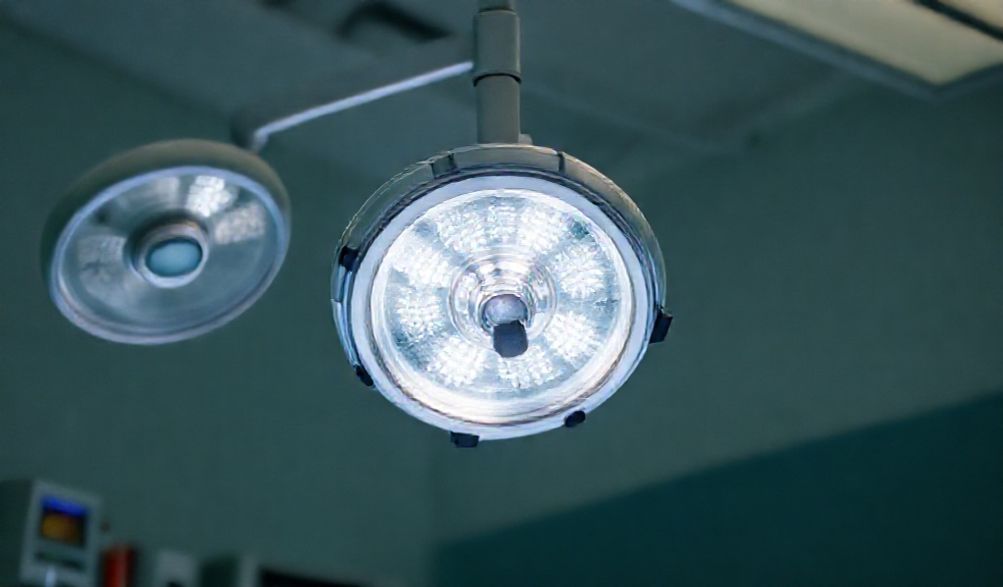
Surgery Lights: A Comprehensive Guide to Types, Features, and Selection for Optimal Outcomes
Introduction
In the high-stakes environment of the operating room, where millimeter precision can determine patient outcomes, one critical factor is often overlooked: light. It is the surgeon’s primary sensory tool. Studies suggest that up to 90% of surgical information is perceived visually, and inadequate illumination can directly contribute to procedural errors, increased operative time, and surgeon fatigue. Choosing the right surgery light is not merely an equipment purchase; it is a foundational investment in patient safety, surgical precision, and clinical efficiency.
This comprehensive guide is designed to empower surgeons, clinical staff, hospital administrators, and procurement teams with authoritative, in-depth knowledge. Synthesized from surgical standards, peer-reviewed clinical studies, and leading manufacturer specifications, this resource addresses the core needs behind the search for “surgery light.” We will demystify the technology, break down the critical features, and provide a structured framework for selection. From the evolution of the surgical luminaire to the smart, integrated systems of the future, this guide will illuminate the path to making an informed, long-term investment for your operating suite.
The Critical Role of Surgical Lighting in Modern Medicine
Beyond Illumination: How Lighting Impacts Surgical Precision and Patient Safety
Surgical lighting transcends simple visibility. It is a sophisticated tool engineered to create an optimal visual environment. Its primary objectives are threefold:
- Shadow Reduction and Control: Unlike a single-point light source that creates harsh, obstructive shadows, modern surgical lights are designed to eliminate them. This is achieved through multi-source optics, allowing surgeons to work deep within cavities without their hands or instruments casting debilitating shadows on the operative field.
- Accurate Tissue Differentiation: The ability to distinguish between arteries, veins, nerves, and subtle tissue variations in color and texture is paramount. Lighting with a high Color Rendering Index (CRI) and appropriate color temperature is crucial for this visual discrimination, reducing the risk of iatrogenic injury.
- Surgeon Ergonomics and Reduced Fatigue: Poor lighting forces surgeons to adopt strained postures, squint, or reposition constantly to see clearly. Optimal, homogeneous illumination reduces visual and physical strain, minimizing fatigue during long procedures and potentially lowering the incidence of musculoskeletal disorders among surgical staff.
A Brief History: From Sunlight to LED – The Evolution of the Surgical Light
The journey of surgical lighting mirrors the advancement of medicine itself:
* Pre-20th Century: Reliance on natural sunlight and simple lamps (oil, gas, kerosene), offering poor control and significant infection risk.
* Early 1900s: The introduction of the first electric surgical lamps, often single incandescent bulbs with rudimentary reflectors. Shadows and intense heat were major drawbacks.
* Mid-20th Century: The advent of halogen technology was a revolution. Paired with parabolic reflectors and multiple bulb configurations in a single head, these lights provided brighter, whiter, and more controllable light with improved shadow management.
* 21st Century – The LED Era: Light Emitting Diode (LED) technology has become the undisputed standard. LEDs offer superior benefits: exceptional luminous efficacy, minimal infrared/UV radiation (reducing tissue drying and heat), extremely long lifespan (50,000+ hours), and instant, flicker-free illumination. They represent the convergence of performance, efficiency, and durability.
Understanding the Core Types of Surgery Lights
Major Surgical Light Systems (Ceiling-Mounted)
These are the workhorses of the main operating room, offering powerful, adjustable illumination.
- Single-Arm vs. Dual-Arm Lights:
- Single-Arm: Features one articulated arm supporting a light head. It is a cost-effective solution for smaller ORs or less complex procedures. However, it offers less flexibility in positioning and limited backup if the primary bulb fails.
- Dual-Arm: Incorporates two independent arms, each with its own light head. This is the most common configuration in modern ORs. It provides unparalleled flexibility—surgeons can position two light fields from different angles to virtually eliminate shadows, or combine them for a single, intensely bright field. It also offers built-in redundancy.
- Multi-Arm/Cluster Systems: These systems feature three or more light heads on a central mounting. They are designed for the most complex procedures (e.g., major trauma, organ transplants, complex spinal surgeries) where large or multiple surgical sites require extensive, customizable illumination from several angles simultaneously.
Specialized and Supplementary Lighting
- Minor Procedure Lights: Smaller, mobile lights (often floor- or wall-mounted) used in outpatient surgery centers, emergency rooms, labor & delivery, and examination rooms. They prioritize flexibility and cost-effectiveness for lower-acuity procedures.
- Headlights and Loupe Lights: These wearable systems provide direct, coaxial illumination exactly where the surgeon is looking. Essential for deep-cavity surgeries (e.g., neurosurgery, ENT, dentistry) and microsurgery, they are the ultimate tool for portability and targeted light. Modern versions often use LED and fiber-optic technology.
- Endoscopic and Camera-Integrated Lights: In minimally invasive surgery, the light source is separate from the surgeon’s eyes. These specialized light generators produce intense, cool light that is channeled through a fiber-optic cable to the endoscope inside the patient’s body, illuminating the internal surgical site for the camera.
Key Technical Features and Specifications to Evaluate
Illumination Quality Metrics
- Lux/Lumen Output: Lux measures illuminance (light intensity on a surface). Surgical lights typically deliver between 40,000 to 160,000 lux at the center of the field. Deep-cavity or high-magnification procedures require higher intensities. It’s crucial to evaluate the light output at both the center and the periphery of the defined field diameter (e.g., at 75cm distance).
- Color Temperature (Kelvin): Measured in Kelvins (K), this describes the “warmth” or “coolness” of light. Surgical lights aim for a “daylight white” spectrum, typically between 4000K and 5000K. This neutral white light enhances contrast and supports accurate color perception of tissues and fluids.
- Indice de Rendu des Couleurs (IRC) : Perhaps the most critical metric. CRI (on a scale of 0-100) measures a light’s ability to reveal the true colors of objects compared to natural light. For surgery, a CRI of 90 or higher is considered essential. A high CRI allows surgeons to reliably differentiate between arterial blood (bright red) and venous blood (darker red), identify subtle tissue ischemia, or notice early signs of infection.
Design and Performance Characteristics
- Gestion des ombres : This is engineered through optical design. The best systems use a multi-point source design—dozens of small LEDs arranged in concentric rings behind a special diffusion lens. When a surgeon’s hand obstructs one set of LEDs, the others fill in the shadow, dramatically reducing its density. This is far superior to old-fashioned “single reflector” designs.
- Homogeneity of Light Field: A perfect light provides even intensity across the entire illuminated circle, with no hot spots or dark edges. Look for a homogeneity specification (e.g., “≥ 0.6” or “≥ 60%”), where a higher number indicates a more uniform field. This prevents the surgeon’s eyes from constantly adjusting to varying brightness.
- Heat Management: Traditional halogen lights emitted significant infrared radiation, which could dry out and damage exposed tissues (tissue desiccation). Advanced LED systems direct almost all energy into visible light, with minimal heat transfer to the surgical site. This improves patient safety and staff comfort.
How to Choose the Right Surgical Lighting System: A Procurement Guide
Assessing Clinical and Operational Needs
A one-size-fits-all approach fails in the OR. Selection must be driven by specific needs:
- Procedure Type: A high-volume ophthalmology suite has different needs than a level-1 trauma center.
- General/Soft Tissue: Require versatile dual-arm lights with excellent color rendering.
- Neuro/Spine: Often benefit from cluster lights or supplementary headlights for deep, narrow fields.
- Cardiac/Transplant: Need large, homogeneous fields with high intensity for deep cavities.
- Orthopedic: Require robust lights that can be easily positioned around large patients and C-arms.
- OR Layout and Infrastructure: Evaluate ceiling height, weight capacity, and the placement of other ceiling-mounted equipment (anesthesia booms, imaging displays). Ensure the light’s reach and articulation cover the entire potential surgical area from its mounting point.
- Technology Integration: The modern OR is a digital ecosystem. Consider lights that can integrate with OR control systems, allowing for preset lighting scenes, voice activation, or synchronization with surgical video recording.
Total Cost of Ownership (TCO) Analysis
Look beyond the initial price tag. A TCO analysis reveals the true value:
* Efficacité énergétique : LED systems consume 50-70% less power than equivalent halogen systems, yielding substantial utility savings.
* Lifespan and Maintenance: An LED module lasting 50,000 hours may outlive 20+ halogen bulbs. This drastically reduces replacement part costs, inventory, and labor for bulb changes.
* Sterilization and Service: Evaluate the ease of cleaning the light handle and head. Sealed, smooth surfaces are essential for infection control. Factor in the availability and cost of service contracts.
Authoritative Procurement Step: Decisions of this magnitude must be cross-functional. Consult actively with:
* Clinical Stakeholders: Surgeons and nurses who will use the light daily.
* Clinical Engineering/Biomedical Teams: For technical evaluation and lifecycle maintenance planning.
* Facilities Management: For infrastructure assessment.
* Finance: For TCO modeling.
Reference standards from authoritative bodies like the Association for the Advancement of Medical Instrumentation (AAMI), International Electrotechnical Commission (IEC 60601-2-41 for surgical lights), and accreditation organizations like DNV GL ou vos The Joint Commission.
The Future of Surgical Illumination: Trends and Innovations
Smart Lighting and Integration with the Digital OR
The surgical light is evolving into an intelligent OR hub. Future and current innovations include:
* Automated Presets: Lights that automatically adjust intensity and focus based on the procedure step or input from the surgeon’s console.
* Voice and Gesture Control: For sterile, touch-free adjustment of light position and settings.
* Data Integration: Lights with built-in 4K cameras streaming directly to recording systems or educational networks, or displaying patient vital signs via projected overlays.
Advanced Imaging and Visualization
Light is becoming a diagnostic tool:
* Imagerie par fluorescence : Specialized LED lights that switch to near-infrared wavelengths to excite injected dyes. This allows real-time visualization of blood flow (indocyanine green angiography) or identification of cancerous tissue margins, directly enhancing surgical decision-making.
* Augmented Reality (AR) Guidance: Future systems may project pre-operative scans (MRI, CT) as holographic overlays directly onto the surgical field, aligned and scaled by the lighting system itself, creating a powerful navigational aid.
Section FAQ
Q1: What is the typical lifespan of an LED surgical light compared to traditional halogen?
R : A high-quality LED module typically has a rated lifespan of 50,000 to 100,000 hours. In contrast, halogen bulbs last approximately 1,000 to 2,000 hours. This means an LED light may operate for over a decade without a bulb change, while a halogen system requires frequent, costly replacements.
À quelle fréquence les lampes chirurgicales doivent-elles être entretenues ou étalonnées ?
R : Beyond routine cleaning, professional preventive maintenance is recommended annually or per the manufacturer’s schedule. This ensures all mechanical arms move smoothly, electrical safety is verified, and light output metrics (lux, color temperature, homogeneity) are within specification. Calibration is crucial for maintaining optimal performance.
Q3 : Les systèmes d'éclairage halogène existants peuvent-ils être mis à niveau vers la technologie LED ?
R : Many manufacturers offer retrofit kits to convert older halogen light heads to LED technology. This can be a cost-effective way to gain LED benefits (efficiency, cool light, longevity) without replacing the entire ceiling mount and arm system. A feasibility assessment by a certified technician is required.
Q4 : Quelles sont les certifications de sécurité les plus importantes à rechercher ?
R : At a minimum, ensure the system complies with norme IEC 60601-1 (general medical electrical equipment safety) and l'IEC 60601-2-41 (particular requirements for surgical luminaires). Look for marks from recognized testing bodies (e.g., CE, UL). For optical safety regarding blue light, ISO 15004 (instruments ophtalmiques) est pertinent.
Q5 : Comment l'éclairage chirurgical contribue-t-il à réduire la fatigue du chirurgien ?
R : Un éclairage optimal réduit la fatigue visuelle en fournissant un éclairage homogène et sans éblouissement qui nécessite moins d'accommodation oculaire. Il réduit la fatigue physique en minimisant le besoin pour les chirurgiens de tendre le cou ou d'adopter des postures inconfortables pour voir dans les zones d'ombre. Cela conduit à une meilleure ergonomie et à une concentration soutenue pendant les interventions longues.
Clause de non-responsabilité : Les informations fournies sont à des fins éducatives. Avant tout achat, vérifiez toujours les spécifications techniques, la conformité réglementaire et les exigences institutionnelles directement auprès des fabricants et de vos responsables d'ingénierie clinique / conformité.
Conclusion
Le choix d'un luminaire chirurgical est une décision stratégique critique ayant des implications directes sur la qualité clinique, la sécurité des patients et l'efficacité opérationnelle pour les années à venir. Il s'agit bien plus qu'un simple équipement ; c'est un composant central des capacités de l'équipe chirurgicale. De la physique fondamentale de la réduction des ombres et de la restitution des couleurs aux aspects pratiques de l'intégration en salle d'opération et du coût total de possession, chaque détail compte.
Les décisions les plus fructueuses émergent du travail d'équipes pluridisciplinaires qui allient l'expertise clinique des chirurgiens et des infirmières à l'acuité technique des ingénieurs biomédicaux et à la perspective financière des administrateurs. Cette approche collaborative garantit que le système choisi répond aux exigences nuancées de la salle d'opération.
Appel à l'action : Avant de finaliser votre décision, allez au-delà des brochures et des fiches techniques. Demandez des démonstrations pratiques dans un environnement de salle d'opération simulée. Analysez les fiches de données de performance détaillées concernant le lux, l'homogénéité et l'IRC (Indice de Rendu des Couleurs). Plus important encore, consultez les utilisateurs actuels dans des établissements similaires pour comprendre la fiabilité sur le terrain, l'expérience de service et la satisfaction clinique. Éclairez votre voie vers une meilleure salle d'opération en investissant le temps nécessaire pour voir la lumière, clairement.
p>