
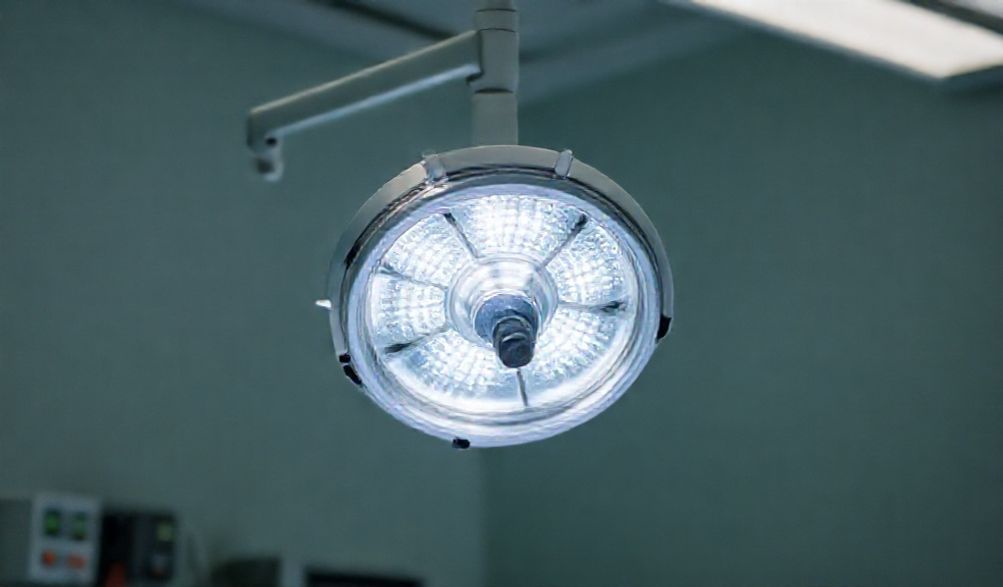
Surgical Lamps: A Complete Guide to Technology, Selection, and Best Practices
Introduction
In the high-stakes environment of an operating room, where millimeters can determine outcomes, one factor is so fundamental it’s often overlooked until it fails: light. What separates adequate overhead lighting from the optimal, life-saving illumination required for modern surgery? The answer lies at the intersection of advanced engineering, human physiology, and clinical precision. The modern surgical lamp is not a simple light fixture; it is a sophisticated piece of medical technology designed to create a visual environment where surgeons can perform at their peak.
This comprehensive guide is designed to distill complex technical specifications and clinical requirements into actionable insights for surgeons, nursing staff, hospital procurement teams, and biomedical engineers. By synthesizing industry standards, technical data, and ergonomic principles, we will illuminate the critical aspects of surgical lighting. Our goal is to equip you with the knowledge to understand the key technologies, compare essential features against specific surgical needs, and implement best practices for maintenance and safety. From the core principles of réduction supérieure des ombres et un tissue differentiation to the practicalities of , et une vision réaliste du, this guide will shine a light on everything you need to know about selecting and managing this vital piece of operating room equipment.
The Critical Role of Surgical Lighting in Modern Medicine
Beyond Basic Illumination: Impact on Surgical Outcomes
The quality of light in an OR has a direct and measurable impact on surgical performance. Optimal illumination reduces visual strain and mental fatigue, allowing surgeons to maintain focus and precision during lengthy procedures. Inadequate or poorly directed light can lead to increased error rates, longer operation times, and heightened surgeon fatigue. Studies and clinical observations consistently highlight that superior lighting enhances the surgeon’s ability to discern fine anatomical details, differentiate between similar-looking tissues, and accurately judge depth within a cavity. This isn’t just about seeing; it’s about perceiving with clarity and confidence, which directly contributes to procedural accuracy and, ultimately, patient safety.
Core Principles: What Defines Optimal Surgical Light?
Not all light is created equal, especially in surgery. Optimal surgical lighting is defined by several non-negotiable principles:
- High Illuminance: Measured in lux, this is the amount of light falling on the surgical field. Modern lights deliver intense, focused illuminance (often exceeding 40,000 to 160,000 lux) without causing thermal damage to tissue.
- Exceptional Shadow Management: The goal is not to eliminate all shadows (which can eliminate depth perception) but to drastically reduce the obstructive, “parasitic” shadows cast by the surgeon’s head and hands. This is achieved through sophisticated multi-source optical designs.
- Rendu des couleurs supérieur : The Color Rendering Index (CRI) measures a light’s ability to reveal the true colors of objects compared to natural light. A CRI >90 is essential for accurate differentiation between tissues, such as distinguishing arterial blood from venous blood or identifying subtle changes in tissue health.
- Homogénéité : The light field should be even, with minimal “hot spots” or dim areas. This ensures consistent visibility across the entire wound, from center to periphery.
- Minimal Heat Emission: The light must deliver intense brightness without transferring significant radiant heat to the sterile field or the patient, a key advantage of modern LED technology.
Key Technologies and Features of Modern Surgical Lamps
LED vs. Halogen: A Technology Breakdown
The shift from halogen to LED represents the most significant evolution in surgical lighting in decades.
- Halogène : Once the standard, halogen bulbs produce light via a heated filament. They offer good color rendering but are inefficient, generating substantial heat (infrared radiation) and having a short lifespan (typically 1,000-2,000 hours). Their color temperature can also shift as the bulb ages.
- LED (Light Emitting Diode): Now the unequivocal standard, LEDs offer dramatic advantages. They are highly energy-efficient, converting most energy into visible light with minimal heat output. Their lifespan is extraordinary, often rated at 50,000 hours or more, translating to over a decade of typical OR use. LED color temperature remains stable throughout their life, and they offer exceptional CRI values. While the initial investment may be higher, the Ne vous fiez pas uniquement au prix d'achat. Calculez le is lower due to negligible energy costs and no bulb replacement for years.
Understanding Lighting Performance Metrics
When evaluating a surgical lamp, understanding its specification sheet is crucial:
- Depth of Illumination: This indicates how effectively the light penetrates into deep cavities (e.g., in pelvic or thoracic surgery) without a significant drop in illuminance. A higher depth of illumination is critical for specialty procedures.
- Diamètre du champ : The size of the illuminated area at a given distance. Lights often allow adjustment from a small, intense spot to a wider field.
- Température de Couleur : Measured in Kelvin (K), this describes the “warmth” or “coolness” of the light. Surgical lights typically range from 4000K (neutral white) to 4500K (cool, daylight white), chosen for optimal contrast and reduced eye strain.
- Indice de Rendu des Couleurs (IRC) : As mentioned, a value above 90 is the benchmark for surgical use, with some premium lights achieving a CRI of 95+.
Advanced Design Features for Enhanced Utility
Beyond the light itself, design features dictate usability:
* Poignées Stériles : Allow the surgical team to reposition the light without breaking sterility. Ergonomic, responsive handles are a key user interface.
* Intuitive Control Panels: Touch or button controls for adjusting intensity, field size, and sometimes color mode.
* Camera Integration: Dedicated mounts or “beam-splitter” attachments for surgical documentation and teaching.
* Fail-Safe Systems: Backup LED modules or battery-powered emergency lights that activate during a power failure.
How to Choose the Right Surgical Lamp: A Procurement Checklist
Matching the Lamp to the Surgical Specialty
One size does not fit all. Lighting needs vary dramatically by procedure:
* General & Abdominal Surgery: Require a large, homogeneous field with good depth for open cavities.
* Neurosurgery & Spinal: Demand extremely high illuminance and shadow control for deep, narrow wounds. Articulating arms for precise positioning are key.
* ENT & Ophthalmology: Need very high-intensity, focused spot lighting for microstructures. Cool light with minimal heat is critical near sensitive tissues.
* Orthopedic: Benefit from lights that can illuminate both deep joint cavities and larger surface areas during reconstruction.
* Minimally Invasive/Laparoscopic: While the camera provides internal light, overhead lighting is still needed for external incisions and instrument handling.
Configuration Considerations: Ceiling, Wall, or Mobile?
- Ceiling-Mounted (Single or Multi-Arm): The most common and versatile. Offers the largest range of motion, keeps floors clear, and is permanently aligned. Ideal for dedicated operating rooms. Installation is complex and requires structural support.
- Monté au Mur : A space-saving solution for smaller or multi-purpose rooms. Offers good coverage but a more limited range than ceiling mounts.
- Mobile (Floor Stand): Provides ultimate flexibility, allowing a single light to be used across multiple rooms or in non-OR settings (e.g., ER, ICU). It consumes floor space and requires storage and charging.
Évaluation du Coût Total de Possession (CTP)
The purchase price is just the beginning. A true financial analysis includes:
* Coût Initial : The lamp and its installation.
* Consommation énergétique : LEDs can reduce OR lighting energy use by over 70% compared to halogens.
* Lifespan & Replacement Parts: The cost and frequency of replacing LED modules (after 50,000+ hours) vs. halogen bulbs (every few months).
* Maintenance & Service Contracts: Planned preventative maintenance and repair costs.
* Disposal Costs: Particularly for older halogen systems containing hazardous materials.
Installation, Maintenance, and Safety Protocols
Proper Installation for Performance and Safety
Ceiling-mounted surgical lights are heavy, complex devices. Professional installation by manufacturer-certified technicians is non-negotiable. This ensures:
* Intégrité Structurelle : The ceiling mount can support the dynamic load of the light in motion.
* Sécurité électrique : Proper grounding and compliance with hospital electrical standards.
* Optimal Performance: Correct alignment and calibration of the light head and balance systems for smooth, drift-free movement.
Routine Maintenance and Cleaning Procedures
A strict protocol preserves function and prevents infection:
* Quotidiennement / Après chaque intervention : Wipe down all external surfaces, especially sterile handles, with a hospital-grade, non-abrasive disinfectant compatible with the materials.
* Periodic Deep Cleaning: Follow the manufacturer’s schedule for cleaning optical lenses and vents. Never use abrasive cloths or harsh chemicals (e.g., acetone, chlorine) on lenses or plastics.
* La règle d'or : Always follow the device’s official Instructions for Use (IFU) for cleaning agents, methods, and sterilization compatibility.
Ensuring Compliance and Safety
Surgical lights are regulated medical devices. Key standards include:
* IEC 60601-2-41 : The international standard specifying safety and performance requirements for surgical lights.
* FDA Classification: In the U.S., they are typically Class II medical devices.
* Routine Safety Inspections: Should be part of the hospital’s biomedical engineering schedule, checking for mechanical stability, electrical safety, light output, and backup system function.
The Future of Surgical Illumination
Integration with the Digital OR and Imaging Systems
The future is connected. Surgical lights are becoming integrated nodes in the smart OR:
* Automated Tracking: Lights that automatically follow the surgeon’s head or the primary surgical instrument, maintaining optimal field illumination.
* Imaging System Sync: Integration with endoscopic and robotic camera systems to automatically adjust intensity to prevent overexposure in the monitor image.
* Connectivité des données : Lights reporting their usage, performance status, and maintenance needs to facility management systems.
Smart Lighting and Adaptive Technologies
Research points toward even more intelligent systems:
* Tissue-Spectrum Adaptive Lighting: Lights that can shift their spectral output to enhance contrast for specific tissues or procedures (e.g., highlighting biliary structures).
* AI-Assisted Illumination: Systems that learn from surgical video to predict and illuminate the area of interest before the surgeon moves there.
Section FAQ
Q1 : Quelle est la durée de vie typique d'une lampe chirurgicale LED ?
R : The LED modules themselves are typically rated for 50,000 to 100,000 hours of use. Under normal operating room schedules, this can translate to 15-20 years of service before light output degrades significantly. The overall system’s longevity also depends on other mechanical and electronic components.
Q2: How often should a surgical lamp be serviced?
R : It is imperative to follow the manufacturer’s recommended scheduled maintenance plan. This typically involves a comprehensive safety and performance inspection by an authorized service engineer at least annually. Daily visual checks by clinical staff are also recommended.
Q3: Can surgical lights be used in all types of operating rooms?
R : While most are designed for standard ORs, specific models exist for specialized environments. For example, MRI-compatible lights are built with non-magnetic materials for hybrid suites, and explosion-proof models are required for use with flammable anesthetics.
Q4: What is the most important factor when choosing a light for deep cavity surgery?
R : For deep cavity work like in neurosurgery or pelvic surgery, Depth of Illumination est la spécification technique suprême. Couplée à cela, une conception qui excelle en matière de Réduction des Ombres—souvent grâce à un système multipoints ou à réflecteurs—est tout aussi critique pour assurer une visualisation claire autour des instruments.
Q5 : Comment nettoyer correctement une lampe chirurgicale sans l'endommager ?
R : La règle la plus importante est de toujours consulter les Instructions d'Utilisation (IFU) spécifiques du fabricant. En général, utilisez des désinfectants doux de qualité hospitalière sur les surfaces non poreuses. Évitez de pulvériser des liquides directement sur la tête d'éclairage ; appliquez plutôt le désinfectant sur un chiffon doux. N'utilisez jamais de tampons abrasifs ou de solvants agressifs sur les lentilles optiques, car ils peuvent provoquer un ternissement permanent.
Conclusion
Le choix d'une surgical lamp est une décision stratégique qui a des répercussions sur les résultats cliniques, l'ergonomie de l'équipe chirurgicale et l'efficacité opérationnelle de l'hôpital. Elle nécessite un équilibre minutieux entre technologie avancée, exigences spécifiques à la spécialité et une analyse lucide des coûts totaux du cycle de vie. Ce guide a fourni un cadre fondamental pour comprendre les variables critiques—des principes fondamentaux de l'éclairage aux aspects pratiques de l'acquisition et de la maintenance.
Pour conclure, un point de guidance crucial : Consultez toujours directement des ingénieurs biomédicaux qualifiés, des fabricants de confiance et le personnel clinique qui utilisera l'équipement quotidiennement lors des décisions d'acquisition finales. Leur expérience pratique et leur expertise technique sont irremplaçables. Utilisez ce guide comme un outil pédagogique pour poser des questions éclairées, mais laissez l'évaluation professionnelle et spécifique au site être l'étape finale. Nous vous encourageons à prendre les prochaines étapes : téléchargez les fiches techniques détaillées des fabricants, demandez des démonstrations en direct dans un environnement de bloc opératoire simulé et parlez aux utilisateurs actuels des modèles que vous envisagez. La bonne lampe existe, prête à éclairer la voie vers de meilleurs soins chirurgicaux.
p>