
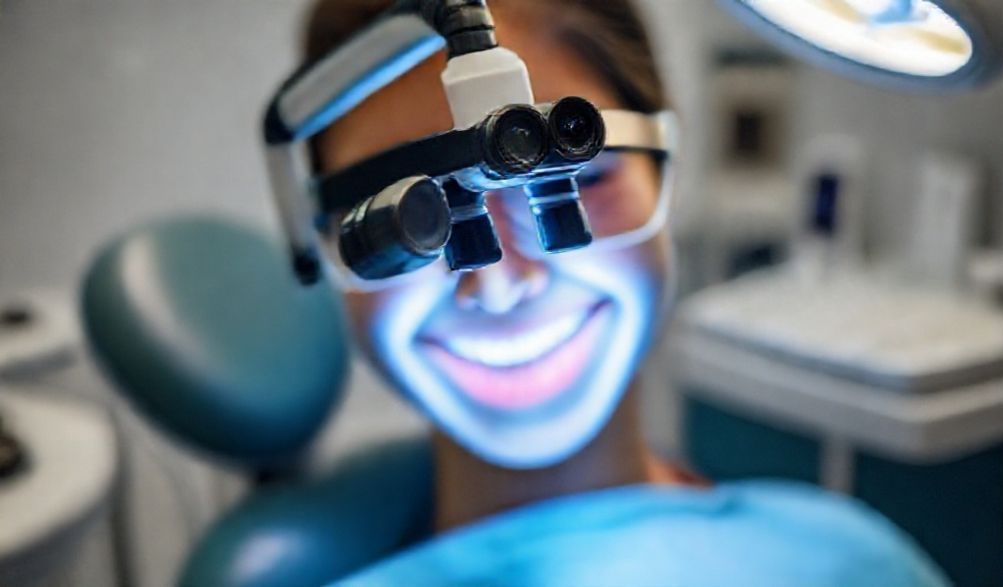
The Ultimate Guide to Dental Loupes with Wireless Light: Enhancing Precision and Comfort
You’ve just finished a complex Class II restoration. As you lean back, a familiar ache radiates from your neck to your lower back. You blink away the strain in your eyes, which were just moments ago squinting to see a distal margin under the inconsistent shadow cast by your overhead light. The cord from your loupe light, which you’ve unconsciously tugged at a dozen times, is now tangled around your chair controls. Sound familiar?
For dentists, dental specialists, and hygienists, optimal visualization is not a luxury—it’s the bedrock of precision, diagnosis, and successful patient outcomes. Yet, for decades, the very tools meant to enhance vision, like traditional loupes with corded lights, came with ergonomic compromises and workflow interruptions. Enter the transformative innovation: dental loupes with wireless light. This integrated system represents a paradigm shift, merging magnification with hands-free, cable-free illumination to fundamentally change the clinical experience.
This guide is designed to be your comprehensive, unbiased resource. We’ll move beyond marketing claims to explore the tangible benefits, break down the technical features you need to understand, and provide a practical framework for selecting a system that aligns with your specialty, ergonomic needs, and practice philosophy. Consider this your roadmap to making an informed, long-term investment in your most critical asset: your ability to see and work at your best.
We will cover:
* The game-changing benefits for your vision, posture, and mobility.
* The key technical features to evaluate, from optics to battery life.
* A step-by-step approach to selecting the perfect system for vous.
* Honest comparisons and crucial considerations for integration and care.
* Answers to the most common questions dental professionals have.
Why Dental Loupes with Wireless Light Are a Game-Changer
Moving from traditional magnification or corded systems to an integrated wireless solution isn’t just an upgrade; it’s a leap forward in clinical capability and personal comfort. The synergy of untethered light and precision optics delivers benefits that directly impact your work and well-being.
Unparalleled Visual Clarity and Illumination
The core purpose of any loupe system is to see better. Wireless loupe lights elevate this to a new standard.
* Elimination of Shadows: Traditional overhead lights or even poorly positioned corded loupe lights create shadows from your head, hands, and instruments. A wireless light source, mounted directly on your loupes, moves with you. It provides coaxial illumination—light that travels directly down your line of sight—flooding the operative field with shadow-free brightness. This is critical for discerning subtle cracks, assessing prep margins, or differentiating caries from stained grooves.
* Consistent, True-Color Light: High-quality wireless lights use advanced LEDs with a high L’Indice de Rendu des Couleurs (IRC) and a color temperature around 5500K-6000K, which mimics natural daylight. This ensures tissues, composites, and tooth structures appear in their true colors, enhancing diagnostic accuracy and improving the aesthetics of your restorative work. There’s no more guessing under the yellow tinge of an old halogen bulb.
Enhanced Ergonomics and Reduced Physical Strain
Dentistry is a physically demanding profession, with musculoskeletal disorders being a pervasive occupational hazard. Wireless loupe lights are a powerful ergonomic intervention.
* Promoting Neutral Posture: The primary ergonomic benefit of loupes themselves is allowing you to sit upright while bringing the patient’s mouth into focus. A wireless light reinforces this. With perfect illumination fixed to your visual axis, you are never tempted to crane your neck or hunch forward to get a better look in a poorly lit area. Your posture stays neutral, reducing strain on your cervical spine, shoulders, and back.
* Hands-Free Operation: Unlike headlamps or handheld lights, the wireless system is always on and perfectly aligned. There’s no fumbling for switches or adjusting angles mid-procedure. This seamless integration reduces cognitive load and physical micro-movements that contribute to fatigue.
Unrestricted Mobility and Efficiency
This is where the “wireless” aspect fundamentally changes your interaction with the operatory.
* Freedom from Drag and Tangle: The absence of a cord means no more feeling a tug on your head as you move, no more accidentally disconnecting a cable, and no more wrestling with cords that get caught on equipment. You can turn from your tray to the patient, lean in for a different angle, or even step back to consult a screen without a second thought.
* Streamlined Workflow: The efficiency gain is tangible. You start your procedure without plugging in a cord. You move through different quadrants without adjusting a light arm. The reduction in physical distractions allows you to maintain complete focus on the patient and the procedure, leading to smoother, more efficient appointments.
Key Features to Evaluate When Choosing Wireless Loupes
Not all wireless loupe systems are created equal. Understanding these core components will empower you to compare options and identify the system that best meets your clinical demands.
Magnification and Field of View
The optics are the foundation.
* Magnification Levels: Common ranges are 2.5x to 6x or higher.
* 2.5x-3.5x: Ideal for general dentistry, hygiene, and periodontics. Offers a wider field of view and greater depth of field, making it versatile for most procedures.
* 4.5x-6x+: Suited for high-precision work like endodontics, micro-dentistry, and surgery. Provides extreme detail but has a narrower field of view and shallower depth of field, requiring more practice to use effectively.
* Working Distance & Depth of Field: Votre typique (the distance from your eyes to the patient’s mouth) is custom-set during fitting. Depth of field is how much of that space remains in clear focus without moving your head. Higher magnification typically reduces depth of field. A good fitting balances these factors for your posture and comfort.
Wireless Light Source Specifications
This is the engine of your system. Look beyond “bright” and ask for specifics.
* Light Quality Metrics:
* Color Temperature (~5500K): Ensures daylight-balanced, true-color illumination.
* CRI (>90): A high Color Rendering Index means colors are rendered accurately, crucial for shade matching and tissue assessment.
* Lux Intensity: This measures light intensity at the working distance. Modern wireless LEDs often deliver 80,000 to 150,000+ lux, which is more than sufficient for any clinical task.
* Battery System:
* Technologie : Lithium-ion (Li-ion) is standard for its reliability and lack of “memory effect.”
* Run-time: Expect 4 to 8+ hours of continuous use on a full charge—enough for a full clinical day.
* Chargement : Most systems use a docking station for convenient drop-in charging, with many now also offering USB-C cable charging for flexibility.
Conception, poids et confort de la monture
You’ll wear this for hours. Comfort is non-negotiable.
* Fit & Adjustability: A professional fitting is mandatory. The frame must be adjusted for your Pupillary Distance (PD) et un Declination Angle (how much the lenses are tilted). Look for frames with multiple adjustment points (temples, nose pads, lens angle) for a personalized fit.
* Répartition du poids : The wireless light module, typically mounted on the bridge or top bar, acts as a counterweight. A well-designed system balances the weight of the light against the weight of the frames and lenses, preventing forward tilt and pressure on the nose and ears. Lightweight materials like titanium or high-grade polymers are common.
Durability and Warranty
This is a significant investment in your career.
* Qualité de construction : Frames and optics should feel robust. Inquire about lens coatings (anti-fog, anti-scratch, anti-reflective). Ask if the frame is resistant to autoclave chemicals and disinfectants.
* Warranty Coverage: A strong warranty reflects manufacturer confidence. Look for:
* Frames & Optics: 2 to 5 years is common for reputable brands.
* Light Engine & Battery: 1 to 2 years is typical. Understand what is covered (e.g., battery capacity degradation over time).
How to Select the Perfect System for Your Practice
Choosing the right system is a personal and clinical decision. Follow this framework to find your ideal match.
Assessing Your Clinical Needs and Specialty
Your daily procedures should dictate your specifications.
* General Dentist / Hygienist: A 3.0x to 3.5x magnification with a wide field of view and a light with excellent CRI for diagnostics and restorative work is often the perfect balance.
* Endodontist / Periodontist / Surgeon: Higher magnification (4.5x to 6x+) is key for fine detail. Prioritize a light with extremely high, focused lux output for deep cavities and surgical sites.
* Pedodontist / Orthodontist:** May prefer slightly lower magnification (2.5x-3.0x) for a wider field to manage moving patients, with a durable frame and reliable light.
The Critical Importance of a Professional Fitting
Do not skip this step. Ordering loupes online without a fitting is like ordering custom orthotics without an imprint. A proper fitting (in-person is best, virtual via guided video call is a good alternative) ensures:
1. Correct Working Distance: So you sit upright.
2. Accurate Pupillary Distance: For a single, clear image.
3. Optimal Declination Angle: So you aren’t straining your neck.
This process embodies et l'Expertise—it translates technical specifications into a tool customized for your unique physiology.
Budgeting and Considering Total Cost of Ownership
Be transparent about costs. A complete high-quality wireless loupe system typically ranges from $1,500 to $3,500+.
* Initial Cost vs. Long-Term Value: View this as a 5-10 year investment in your health and clinical quality.
* Hidden/Ongoing Costs: Factor in potential future expenses:
* Replacement batteries ($100-$300).
* Lens re-coating or repair.
* Warranty extensions.
* Accessories like flip-up loupe covers or camera adapters.
Top Considerations and Comparisons
Wireless vs. Traditional Corded Loupe Lights: A Balanced Look
| Feature | Wireless Loupe Lights | Traditional Corded Lights |
| :— | :— | :— |
| Mobility | Excellente. Complete freedom of movement. | Limited. Cord restricts range and can drag/tangle. |
| Weight & Balance | Slightly heavier on the head, but engineered as a balanced system. | Lighter on the head, but cord/battery pack adds weight to the body. |
| Setup & Convenience | Simple. Turn on and go. No cables to manage. | Requires connecting cable to power source, managing cord during procedure. |
| Maintenance | Battery management required. No cord wear. | No battery concerns, but cords can fray or connectors can fail. |
| Cost | Generally higher initial investment. | Often less expensive upfront. |
Verdict: Wireless is superior for ergonomics and workflow for most users. However, a corded system may still be preferable for someone who works in a single, fixed position all day and prioritizes minimal weight on the head.
Integrating with Dental Microscopes and Cameras
Many specialists use both loupes and microscopes.
* Microscope Compatibility: Some wireless light systems can be easily detached from the loupes, allowing you to switch to the microscope without removing your frame. Check for magnetic or quick-release attachments.
* Documentation Cameras: For patient education or case documentation, many loupe brands offer lightweight cameras that clip onto your loupes. Ensure the wireless light doesn’t obstruct the camera mount and provides enough light for good video quality.
Entretien et soins pour la longévité
Treat your system well, and it will serve you for years.
* Lentilles : Clean only with lens-specific microfiber cloths and spray. Avoid clothing, paper towels, or harsh chemicals.
* Doit être ≥90. Wipe the LED lens gently with a soft, damp cloth. Avoid touching the LED with your fingers.
* Battery Best Practices: Follow the manufacturer’s guidelines. Avoid letting the battery fully deplete regularly. Store in a cool, dry place.
* Stockage : Always use a hard protective case to prevent crushing or scratching.
Section FAQ
Q: Are wireless loupe lights really bright enough for all procedures?
R : Absolutely. Modern LED technology in premium wireless lights produces intense, focused light (often 100,000+ lux) that equals or surpasses most corded systems. The key is to evaluate the lux output at your working distance et les L'IRC for color accuracy.
Q: How long does the battery typically last, and how do I charge it?
R : Most systems offer 4-8 hours of continuous runtime on a full charge, covering a full clinical day. Charging is typically done via a dedicated docking station overnight, with many models now featuring fast-charge capabilities via USB-C in 1-2 hours.
Q: Is the wireless light system heavy and will it make my loupes uncomfortable?
R : The light module adds weight, but it is strategically placed to act as a counterbalance to the lenses. During a professional fitting, the entire system (frame, lenses, light) is adjusted to distribute weight evenly across your nose and ears, aiming for all-day comfort. An improper fit is the primary cause of discomfort, not the technology itself.
Q: What is the typical warranty for high-quality dental loupes with wireless light?
R : Reputable manufacturers typically offer a 2-5 year warranty on frames and optics against defects, and a 1-2 year warranty on the LED light engine and battery. Always read the warranty terms to understand what is covered (e.g., battery capacity drop over time).
Q: Can I retrofit a wireless light to my existing loupes?
R : It depends. Some manufacturers sell universal or brand-specific clip-on wireless lights that can attach to certain frame styles. However, for optimal balance, performance, and integration, purchasing a system designed from the ground up as a wireless unit is highly recommended. Contact your loupe manufacturer to explore compatible options.
Conclusion
Dental loupes with integrated wireless light represent more than just a new piece of equipment; they are a strategic investment in the future of your practice and your personal well-being. By delivering shadow-free, true-color illumination directly to your field of view while granting complete physical freedom, they address the core challenges of visualization, ergonomics, and workflow efficiency in one elegant system.
The choice, as we’ve emphasized, is deeply personal and clinical. The most critical step you can take is to prioritize a comprehensive, professional fitting. This ensures the tool is tailored to you. Following that, seek hands-on demonstrations from reputable vendors. Feel the weight, test the light, and simulate clinical movements.
Ultimately, this is an investment in your clinical capability, your physical health, and your career longevity. By making an informed decision, you’re choosing to see with unparalleled clarity and work with sustainable comfort for years to come. Your next step? Research trusted brands, schedule those demos, and start a conversation with colleagues about their experiences. Your future self—with less neck strain and more clinical confidence—will thank you.
p>