
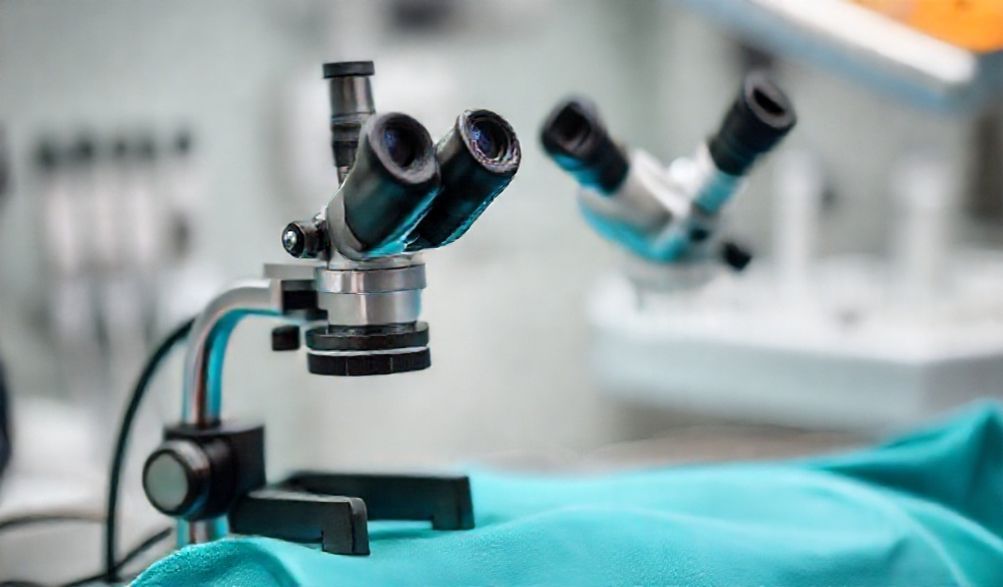
Dental Surgical Loupes: The Ultimate Guide to Enhanced Vision, Precision, and Ergonomics
It’s the middle of a complex composite restoration, or perhaps a delicate surgical extraction. You’re leaning forward, shoulders hunched, neck craned at an unnatural angle to get a better view of the operating field. A dull ache begins to creep between your shoulder blades, and a familiar fog of visual fatigue starts to blur the fine details. You know you need to see better, but the contorted posture is the only way to get your eyes close enough. This scenario is a daily reality for too many dental professionals, and it comes at a steep cost—not just to personal comfort, but to clinical outcomes and career longevity.
The foundation of exceptional dentistry is precision, and precision is fundamentally dependent on vision. Yet, the human eye has limits. Relying on unaided vision for intricate, sub-millimeter work forces the body into compensatory, damaging postures and the eyes into a state of constant strain. The solution is not to work harder, but to see smarter. Enter dental surgical loupes: far more than simple magnifying glasses, they are an essential, transformative tool that bridges the gap between human capability and clinical excellence.
This guide synthesizes technical optics, clinical ergonomie intuitive, and professional experience to move beyond the sales brochure. We’ll explore not just what loupes are, but why they are a non-negotiable investment for the modern practitioner, how to navigate the key features to find your perfect pair, and the best practices to integrate them seamlessly into your workflow. The goal is to empower you with the knowledge to make an informed decision that will enhance your care, protect your health, and elevate your practice for years to come.
Why Dental Surgical Loupes Are a Non-Negotiable Investment
Viewing loupes as a mere accessory is a critical mistake. They are a foundational piece of clinical equipment, as vital as a high-speed handpiece or a digital scanner. Their value proposition rests on three interconnected pillars: enhanced precision, enforced ergonomics, and reduced fatigue.
Unmatched Clinical Precision and Improved Outcomes
The primary clinical benefit of fonction de grossissement is the revelation of detail invisible to the naked eye. This isn’t about making things look bigger; it’s about making critical anatomy and pathology discernible.
- Error Reduction & Minimally Invasive Techniques: With loupes, you can identify early caries, visualize crack lines, and preserve maximum healthy tooth structure. In restorations, the ability to clearly see a prep’s margin line is paramount for ensuring a perfect seal and longevity of the final restoration. In endodontics, locating canal orifices and managing intricate anatomy becomes significantly more predictable.
- The Concept of “Working Diameter”: Unaided vision has a limited “working diameter”—the area you can see in sharp focus at your optimal working distance. Loupes expand this diameter, allowing you to see a broader field in detail without moving your head. This leads to smoother, more efficient movements and superior control.
- Enhanced Surgical Outcomes: In oral surgery and periodontics, loupes enable precise incision placement, gentle tissue handling, and thorough debridement. The ability to distinguish between healthy and diseased tissue at a microscopic level directly translates to better healing and patient outcomes.
The Critical Ergonomics Benefit: Protecting Your Career
If loupes only improved vision, they would be valuable. Their role in preventing career-ending injury makes them indispensable. Dental professionals suffer from among the highest rates of work-related musculoskeletal disorders (MSDs)—neck, back, and shoulder pain are endemic to the profession. The root cause is almost always poor, sustained posture.
Loupes are a primary ergonomic intervention. They are designed not to accommodate poor posture, but to enforce good posture. Here’s how:
- Neutral Spine Positioning: Properly fitted loupes have a customized typique (the set distance from your eyes to the patient’s mouth) and angle de déclinaison (the tilt of the oculars). To bring the magnified field into focus, you doit sit upright with your back against the chair, your head balanced neutrally over your shoulders. The “slouch and squint” posture becomes physically impossible. This alignment reduces compressive forces on cervical discs and strain on supporting muscles by up to 50%.
- A Preventative Tool: Investing in loupes is a proactive investment in your physical health. It’s not about managing pain later; it’s about preventing its onset altogether, safeguarding your ability to practice pain-free for decades.
Reducing Eye Strain and Mental Fatigue
The eyes are muscles, and holding focus on a small, close object for hours causes significant strain (accommodative fatigue). Unaided, your eyes are constantly making micro-adjustments to maintain focus, a process that leads to headaches, blurred vision, and general exhaustion.
Loupes with a fixed, focused working distance eliminate this constant accommodation. Your eyes relax into a distant viewing posture, even though you are working on a close object. This dramatic reduction in ocular effort, combined with the elimination of physical contortion, leads to a profound decrease in overall mental and physical fatigue. You finish your clinical day with greater focus, energy, and resilience.
Key Features and Terminology: How to Compare Dental Loupes
Navigating the world of loupes requires understanding a few key technical terms. These features determine the performance, comfort, and suitability of the system for your specific needs.
Galilean vs. Prismatic (Keplerian) Optical Systems
This is the fundamental choice in optical design, each with distinct advantages.
- Systèmes Galiléens : These use a simple lens arrangement. They are lighter, more compact, and generally more affordable. They offer excellent clarity and are ideal for entry-level users or those who prioritize minimal weight. Their practical magnification range typically caps at 3.5x.
- Systèmes Prismatiques (Keplériens) : These employ a more complex series of prisms to fold the light path. This design allows for higher magnification (3.5x to 8x and beyond) and provides a significantly greater depth of field—the vertical zone that remains in clear focus. This is crucial for procedures where the working plane changes, like surgery. The trade-off is slightly more weight and a higher price point.
Magnification Power: Finding the Sweet Spot
More power isn’t automatically better. It’s a balance.
- 2.0x – 3.5x (Low to Mid): Ideal for general dentists, hygienists, and pediatric dentists. Offers a wide field of view perfect for diagnostic exams, prophylaxis, and most direct restorative work.
- 3.5x – 4.5x (Mid to High): The sweet spot for many restorative dentists, endodontists, and periodontists. Provides excellent detail for crown preps, endodontics, and soft tissue management while maintaining a manageable field.
- 5.0x and above (High): Reserved for microsurgery, highly detailed endodontic work, or lab work. The field of view is very small, requiring exceptional stability and often a headlight for illumination.
Working Distance and Field of View
- Distance de travail : This is the custom-measured distance from your eye to the patient’s oral cavity where the image is perfectly in focus. It is determined by your posture, arm length, and chair position. An incorrect working distance will force you back into poor posture.
- Field of View: This is the diameter of the area you see through the loupes. A critical rule: as magnification increases, the field of view decreases. A 2.5x loupe might show you two adjacent molars, while a 6x loupe might only show you a single prep.
Declination Angle: The Key to Posture
The declination angle is the downward tilt built into the loupe’s oculars. A proper angle (typically between 25-45 degrees) is what physically allows you to look straight ahead with your head upright while your gaze is directed downward into the oral cavity. An insufficient angle is a common reason practitioners revert to hunching.
A Step-by-Step Guide to Selecting Your First (or Next) Pair
Purchasing loupes is a highly personal process. Follow these steps to ensure a successful investment.
Step 1: Conduct a Personal Ergonomic Assessment
Before looking at products, look at yourself. Ask:
* What procedures do I perform most? (General restorative, surgery, hygiene?)
* Where do I feel strain at the end of the day? (Neck, upper back, lower back?)
* Do I have any pre-existing vision conditions?
* What is my current working posture like? (Be honest.)
This self-assessment provides the “why” behind your purchase and guides your feature priorities.
Step 2: Get a Professional, In-Person Consultation
This step is non-negotiable. Buying loupes online or used is like ordering prescription glasses without an eye exam—it’s likely to cause more harm than good.
A certified consultant will:
1. Precisely measure your Pupillary Distance (PD).
2. Determine your optimal est crucial pour aligner les lentilles avec vos pupilles afin d'obtenir une image unique et claire. by observing you in a simulated clinical position.
3. Calculate the correct Declination Angle for your anatomy.
4. Let you try multiple models and magnifications. Spend at least 20-30 minutes looking at fine text or a typodont to assess comfort and clarity.
Step 3: Evaluate Additional Features & Integration
- TTL vs. Flip-Up: Through-The-Lens (TTL) loupes are custom-mounted to your prescription and offer a lighter, more streamlined design. Flip-up loupes allow you to look over the lenses easily and can be shared or used with a changing prescription, but can be bulkier.
- Frames: Choose lightweight, adjustable frames. Consider compatibility with your preferred personal protective equipment (PPE).
- The Essential Companion: LED Headlight: A coaxial LED headlight is almost mandatory. It provides shadow-free, brilliant illumination directly down your line of sight, completing the “enhanced vision” system by eliminating eye strain from overhead shadows.
Step 4: Consider the Total Cost of Ownership
Loupes are an investment, with quality systems ranging from ~$800 to over $3,500. Look beyond the sticker price:
* Garantie : What is covered and for how long?
* Service Plan: Is there a plan for cleaning, adjustments, and minor repairs?
* Future-Proofing: What is the cost to update the lenses if your prescription changes?
Maximizing Your Investment: Best Practices for Use and Care
The Adjustment Period: Building Muscle Memory
Expect a 1-2 week adaptation period. Your brain needs to re-calibrate hand-eye coordination in a magnified field. Start by using them for shorter, less complex procedures. Minor dizziness or nausea can occur initially but typically passes quickly.
Daily Use Protocols for Longevity
- Don/Doff Carefully: Always use both hands to put on or remove your loupes to avoid bending the frame.
- Clean Lenses Properly: Use only lens-specific microfiber cloths and spray. Never use paper towel, your coat, or alcohol on coated lenses.
- Store Securely: Always keep them in their hard protective case when not in use.
Maintaining Your Postural Gains
Loupes enable good posture, but you must support it. Ensure your patient is properly positioned (often lower than you think). Adjust your chair so your elbows are at 90 degrees and your feet are flat. Use your loupes as a biofeedback device—if the image is blurry, check your posture first.
Foire Aux Questions (FAQ)
Q: Are dental loupes worth the cost?
R : Absolutely. Frame the cost as a Return on Investment (ROI) in three areas: 1) Retour sur investissement clinique : Fewer remakes, better outcomes, ability to perform higher-level procedures. 2) Retour sur investissement santé : Drastically reduced risk of debilitating neck/back pain, potentially adding years to your career. 3) Quality of Life ROI: Less daily fatigue and more energy. The cost is amortized over a 5-10 year lifespan, making it a few dollars per clinical day.
Q: Puis-je acheter des loupes d'occasion ou en ligne sans ajustement personnalisé ?
R : Nous le déconseillons vivement. Les loupes sont des dispositifs médicaux personnalisés. Des paramètres comme la distance pupillaire, la distance de travail et l'angle d'inclinaison vous sont propres. Des réglages incorrects peuvent provoquer des maux de tête, une vision double et, ironiquement, aggraver les tensions cervicales en vous forçant à adopter des postures inadaptées pour trouver le point de focalisation. Un ajustement professionnel est essentiel pour la sécurité et l'efficacité.
Q : Quel grossissement est le meilleur pour un dentiste généraliste ?
R : Pour un utilisateur débutant ou un omnipraticien, 2,5x à 3,5x est la plage la plus recommandée et la plus adaptable. Elle offre une amélioration visuelle significative et un bénéfice ergonomique, sans la courbe d'apprentissage abrupte ou le champ de vision restreint des grossissements plus élevés.
Q: À quelle fréquence dois-je remplacer mes loupes chirurgicales ?
R : Avec un entretien approprié, le cadre optique peut durer 5 à 10 ans ou plus. Le remplacement est généralement motivé par un changement de correction visuelle, le souhait d'augmenter le grossissement ou des dommages physiques importants. Un entretien professionnel régulier peut considérablement prolonger leur durée de vie.
Q: Les loupes avec lumière intégrée sont-elles nécessaires ?
R : Bien que vous puissiez utiliser des loupes sans lumière, une lampe frontale LED coaxiale est fortement recommandée et considérée comme la norme de soin. Le grossissement sans un éclairage adéquat et sans ombre n'est qu'une solution partielle. La lampe frontale améliore considérablement le contraste, réduit la constriction pupillaire (diminuant ainsi davantage la fatigue oculaire) et est essentielle pour les travaux à fort grossissement.
Conclusion
Les loupes chirurgicales dentaires représentent un changement de paradigme dans la pratique clinique. Elles font passer le praticien d'une position de compromis physique à une position de précision renforcée et de santé préservée. La décision de les adopter dépasse un simple achat d'équipement ; c'est un engagement proactif envers la qualité de votre travail et la durabilité de votre carrière.
Le voyage commence par la connaissance, mais se concrétise par l'action. Les conseils fiables tout au long de ce guide convergent vers une prochaine étape cruciale : un ajustement personnalisé professionnel en personne. Nous vous encourageons à contacter une entreprise de loupes dentaires réputée, à planifier une consultation et à expérimenter par vous-même la différence transformative d'une vision améliorée. Vos patients, vos interventions et votre futur vous-même vous en remercieront.
p>