
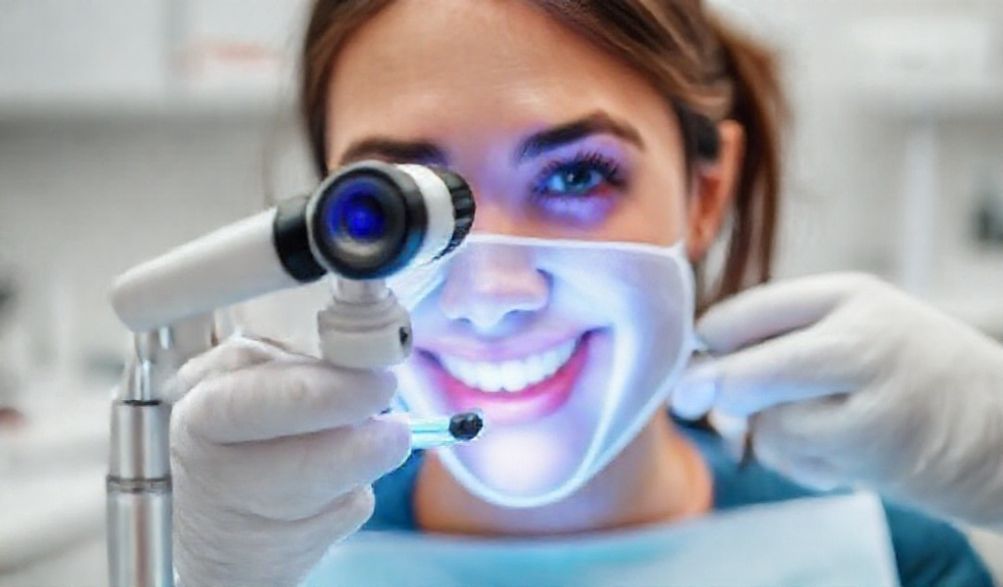
The Best Dental Loupes for Hygienists in 2024: A Complete Guide to Ergonomics & Precision
It’s 2:30 PM on a busy Thursday. You’ve been in a sustained, forward-flexed position for hours, your neck is a knot of tension, and a dull ache is settling between your shoulder blades. As you lean in, straining to differentiate between a shadow and a tiny piece of subgingival calculus on a lower molar, your eyes feel fatigued. You know the precision is critical, but the physical cost is mounting with every patient. If this scenario feels all too familiar, you’re not alone. The demanding visual and postural requirements of dental hygiene take a measurable toll.
But what if a tool could transform this daily reality? Not by adding strain, but by alleviating it. This guide isn’t just another product list. It’s built on industry research, consultations with seasoned hygienists and ergonomic experts, and a deep understanding of clinical workflow. Our goal is to empower you with the knowledge to choose a loupe system that serves as a true partner in care—enhancing your precision, protecting your body, and extending the longevity of the career you love.
We acknowledge you’re here seeking a solution. The “best loupe” isn’t a one-size-fits-all title; it’s a personal equation balancing magnification power, field of view, working distance, weight, frame style, and budget. This comprehensive guide will deconstruct each element, moving from the “why” to the “how,” and finally reviewing top contenders, so you can move from overwhelmed to informed and make a confident, personalized investment in your professional future.
Why Dental Loupes Are a Non-Negotiable Tool for Modern Hygienists
Gone are the days when magnification was a luxury for specialists. For the contemporary dental hygienist, high-quality loupes are as essential as a sharp scaler or a reliable cavitron. They are a fundamental tool that bridges the gap between standard care and exceptional, preventative-focused practice.
Enhancing Clinical Precision and Patient Outcomes
The primary superpower of loupes dentaires is, unequivocally, improved vision. The human eye has limitations, especially when tasked with identifying minute details in a dark, confined space.
- Superior Detection: Magnification allows you to see what you would otherwise miss. This includes subtle remnants of calculus (particularly tenacious subgingival deposits), early enamel demineralization (the earliest sign of caries), micro-fractures, defective margins on restorations, and the detailed topography of periodontal pockets. You transition from feeling calculus to truly seeing it, ensuring more complete removal.
- Elevated Care & Communication: This precision directly translates to higher-quality patient care. More thorough debridement promotes better healing and periodontal health. Furthermore, loupes become a powerful patient education tool. Being able to show a patient, in magnified detail, the buildup on their teeth or the early signs of decalcification makes your recommendations tangible and fosters greater case acceptance and compliance.
The Critical Role in Ergonomics and Career Longevity
While precision is the star, ergonomics is the critical supporting actor—and for many hygienists, the life-changing benefit. Dental professionals have one of the highest rates of work-related musculoskeletal disorders (MSDs), with studies suggesting over 60% will experience significant neck, back, or shoulder pain.
- Posture Revolution: Properly fitted loupes force an ergonomic revolution. The key is the angle de déclinaison—the angle of the oculars that allows you to look straight ahead at your patient while your back and neck are in a neutral, upright position. Without loupes, the instinct is to hunch forward and crane your neck down to get closer to the oral cavity. With loupes, you sit back, spine aligned, and let the optics bring the detail to you. This isn’t just about comfort; it’s about preventing career-ending chronic injuries.
- The Long Game: Investing in loupes is an investment in your ability to practice pain-free for decades. It’s a proactive measure to ensure you can continue the hands-on work you’re passionate about without sacrificing your physical well-being.
Reducing Eye Strain and Mental Fatigue
The constant effort of focusing on a small, poorly lit area for extended periods leads to significant eye strain and mental fatigue. Your ocular muscles work overtime, and your brain expends extra energy interpreting unclear visual data.
- Focused Vision: Loupes provide a relaxed, focused focal length. Your eyes are no longer straining to accommodate extreme close-up work.
- The Light Factor: When paired with an integrated LED light (which we’ll argue is non-optional), the visual environment is transformed. Shadow-free, bright, and color-accurate illumination eliminates the guesswork. This reduces the cognitive load dramatically, allowing you to concentrate on technique and assessment rather than squinting and interpreting shadows. The result? You finish your clinical day feeling less mentally drained and more visually fresh.
Key Factors to Consider Before Buying Dental Loupes
Navigating the technical specifications can be daunting. Let’s break down the key features into understandable concepts that directly relate to your daily work.
Magnification Power: Finding Your Sweet Spot (2.5x, 3.0x, 3.5x, etc.)
Magnification is the most obvious starting point, but more isn’t always better. It’s a trade-off.
- The Trade-Off: As magnification increases, the field of view (the area you can see at once) and the depth of focus (the vertical zone that remains in clear focus) decrease. Higher power (e.g., 4.5x or above) requires you to be extremely still and is often better suited for highly localized surgical procedures.
- Hygienist Recommendations: For dental hygiene, where you need a balance of detail and situational awareness during scaling and root planing, 2.5x to 3.5x is the typical sweet spot.
- 2.5x: An excellent starting point for beginners. Offers a very wide field of view and generous depth of focus, making adaptation easier and providing great context during instrumentation.
- 3.0x & 3.5x: The most popular choices for experienced hygienists. Provide noticeably more detail for detecting subtle calculus and early pathology while still maintaining a functional field of view for efficient workflow.
Field of View and Depth of Focus
- Field of View (FOV): Imagine this as the diameter of the circular “window” you see through your loupes. A wider FOV is generally advantageous for hygienists, as it allows you to see more of the tooth surface and surrounding tissue without moving your head as frequently, promoting smoother, more efficient instrumentation.
- Depth of Focus: This is the “slice” of space that appears in sharp focus from nearest to farthest. Greater depth of focus is forgiving, allowing for some natural movement during scaling. Traditional Galilean loupes (often found in 2.5x-3.0x) offer good depth. Prismatic (or expanded field) loupes, a more advanced design, can provide both higher magnification and a surprisingly wide, deep field.
Working Distance and Posture: Getting the Fit Right
This is the most critical ergonomic measurement. Working Distance (WD) is the distance from your eyes (specifically, the corneal plane) to your patient’s mouth when you are in your ideal, upright working posture.
- Professional Measurement is Mandatory: You cannot guess this. A trained representative will measure this while you are seated in your typical clinical position. An incorrect WD will force you into a poor posture, defeating the primary benefit of the loupes and potentially causing more harm than good.
- Angle d’inclinaison : This is the angle of the loupe barrels. It is customized based on your height, torso length, and how you sit. The correct declination angle is what enables you to look straight ahead with a neutral spine.
Frame Styles: TTL vs. Flip-Up Loupes
This is a major design choice with practical implications.
- Through-The-Lens (TTL):
- Avantages : Custom-built for your measurements (PD, WD, declination). They are typically lighter weight, more compact, and always in perfect alignment. No moving parts mean less to adjust or break.
- Inconvénients : Parameters are fixed. They cannot be adjusted for a colleague to use, and if your prescription changes significantly, they may need to be sent back to the manufacturer for adjustment.
- Loupes à relevage (Flip-Up) :
- Avantages : Highly adjustable. The interpupillary distance (IPD) can be changed, making them potentially shareable (though not ideal for long-term personal use). You can flip the magnification assembly up when not in use. They are often less expensive upfront for the optics and can be fitted to your own prescription glasses.
- Inconvénients : Tend to be heavier and bulkier on the frame. The flip-up mechanism can wear over time, and the loupes may require occasional re-alignment to ensure the oculars are perfectly parallel.
The Essential Companion: Integrated LED Lighting
Consider the light not as an accessory, but as half of the system. Overhead operatory lights cannot illuminate deep into the oral cavity without casting shadows from your head, hands, and instruments.
- Why It’s Non-Optional: A coaxial LED light (mounted at the center of your loupes) shines illumination directly down your line of sight. This provides brilliant, shadow-free visibility exactly where you are looking. It dramatically improves contrast, reduces eye strain, and is indispensable for detecting subtle differences in tooth structure and deposits.
- Key Specs: Look for a light with a high (IRC >90) for true tissue color, multiple intensity settings, and a battery life that can last a full clinical day. Lightweight, ergonomic battery packs are a significant comfort advantage.
Review of Top Dental Loupe Brands & Models for Hygienists
Here’s a balanced look at leading brands, focusing on their reputation and what makes them stand out for hygienists.
Orascoptic: Innovation and Ergonomic Focus
Orascoptic is renowned for its relentless focus on reducing weight and improving clinician comfort.
* Highlights: Leur Swift et un Avant series are famously lightweight TTL models. They offer “Ergo” and “XT” declination angles designed for optimal upright posture. Their LED lights are integrated seamlessly.
* Ideal For: Hygienists who prioritize a featherweight feel and modern, ergonomic design.
Designs for Vision: Durability and Optical Clarity
A long-established leader known for robust construction and exceptional glass optics.
* Highlights: DFV loupes are workhorses—durable and trusted for their crystal-clear, sharp image. They offer a wide range of magnification and frame options in both TTL and flip-up styles.
* Ideal For: Those seeking time-tested reliability, top-tier optical clarity, and a wide range of customization.
SurgiTel / General Scientific: A Legacy of Precision
Part of the General Scientific family, SurgiTel has a strong reputation for high-quality prismatic loupes and extensive customization.
* Highlights: Known for their “Advanced Prismatic” loupes that offer wider fields of view at higher magnifications. They provide very detailed fitting processes and numerous frame choices.
* Ideal For: Hygienists looking to move into higher magnification (3.5x+) without sacrificing too much field of view, and who value a highly customizable system.
Heine: German Engineering and Value
Heine offers a compelling blend of quality German optics at a often more accessible price point.
* Highlights: Provides excellent value with very good optical systems in both flip-up and TTL configurations. Their HR2 Pro loupes are a popular, well-rounded choice for hygienists entering the world of magnification.
* Ideal For: Budget-conscious professionals who do not want to compromise on optical quality and are seeking a solid, reliable entry or mid-tier system.
Admetec / Q-Optics: Pioneers in Expanded Field Technology
These brands are synonymous with “expanded field” or “prismatic” loupe technology.
* Highlights: Their proprietary designs provide a significantly larger, panoramic field of view and greater depth of focus compared to traditional loupes of the same magnification. This can be a game-changer for efficiency and comfort.
* Ideal For: Hygienists who want the maximum situational awareness and a “flatter,” more forgiving focal plane, especially at 3.0x and above.
Budget-Friendly & Starter Options
The initial investment can be a barrier. There are pathways.
* Entry-Level Brands: Companies like (DA-5), offer lower-cost flip-up systems. The optics may not match top-tier brands, and customization is limited, but they can introduce you to magnification.
* The Secondary Market: Some dealers offer certified pre-owned or re-certified loupes from major brands. Crucial Caveat: Ensure they can be professionally re-fitted to votre specific working distance and measurements. A poorly fitted loupe is a bad investment at any price.
The Investment: Cost, Financing, and ROI for Hygienists
Let’s address the elephant in the room: price. A quality loupe and light system is a significant professional investment.
Understanding the Price Range ($800 – $3,000+)
A typical system from a major brand (TTL loupes + LED light) often falls between $1,800 and $2,800. This includes:
* The Optics: The precision-engineered lenses and housing.
* Personnalisation : The labor and technology to build them to your unique measurements.
* The Frame: Often a choice of lightweight, durable frames.
* The Light System: LED light source, charger, and battery pack(s).
Financing, FSA/HSA, and Employer Sponsorship
- Financement : Most manufacturers and dealers offer interest-free or low-interest payment plans, making the cost manageable over 12-24 months.
- FSA/HSA: Dental loupes are almost always a qualified medical expense for Flexible Spending or Health Savings Accounts, allowing you to use pre-tax dollars.
- Employer Sponsorship: It never hurts to ask. Present it as a tool that improves the quality of care, increases productivity, and reduces your risk of injury (and potential workers’ compensation claims). Some employers offer contribution matches or full sponsorship.
Calculating Your Return on Investment
Think of ROI beyond the receipt.
* Retour sur investissement santé : The potential savings in chiropractic care, physical therapy, and pain management—and the priceless value of a pain-free career.
* Career ROI: The ability to practice longer, with more energy and less fatigue.
* Retour sur investissement clinique : The ability to provide a higher standard of care, which can lead to greater patient satisfaction, retention, and professional fulfillment.
The Fitting Process and Ongoing Care
Why a Professional Fitting is Mandatory, Not Optional
Cela ne saurait être trop souligné. Buying loupes online without a professional fitting is like ordering orthopedic shoes without measuring your feet. The fit is the function. A proper fitting ensures the loupes deliver on their promises of ergonomics and visual clarity.
A Step-by-Step Guide to Your Fitting Appointment
A good fitting should take 30-60 minutes. Expect the following:
1. Posture Analysis: The rep will observe how you sit at a mock operatory.
2. Working Distance Measurement: Using a specialized device, they will measure your unique WD in your ideal posture.
3. Pupillary Distance (PD) Measurement: The distance between your pupils.
4. Frame Selection & Adjustment: Trying on different frame styles for comfort and fit over your ears and nose.
5. Declination Angle Determination: Establishing the correct angle for your posture.
6. Magnification Demo: Looking through different powers to see what feels right for you.
7. Light Demo: Trying the light system for balance and brightness.
Maintenance Tips to Protect Your Investment
- Nettoyage : Utilisez uniquement des chiffons en microfibre et des sprays spécifiques pour lentilles. N'utilisez jamais de papier essuie-tout, de vêtements ou de produits chimiques agressifs.
- Manipulation : Always grasp by the frame, not the lens barrels. Store in a hard case when not in use.
- Entretien de la Lumière : Follow charging instructions to preserve battery life. Keep ports clean.
- Periodic Check-up: Have your fit and alignment checked annually or if you experience any discomfort.
Section FAQ
Q : Quel grossissement est le mieux adapté pour un hygiéniste dentaire qui débute avec les loupes ?
R : La plupart des hygiénistes commencent avec succès avec un un grossissement de 2,5x ou 3,0x. magnification. This provides a excellent balance of an enlarged view and a manageable, forgiving depth of focus and field of view, making the adaptation period smoother.
Q: Can I share my custom TTL loupes with a colleague?
R : Non. TTL loupes are custom-made for your specific pupillary distance, working distance, and declination angle. Sharing them will force the other person into an incorrect and potentially harmful posture, and the optics will not be aligned for their eyes, causing strain and defeating the purpose.
Q: Are flip-up loupes inferior to Through-The-Lens (TTL) models?
R : Not inherently. Flip-ups offer excellent optics and valuable flexibility (adjustable IPD, shareable in a pinch). TTL loupes are often lighter and always in perfect alignment. The “best” type depends on your personal preference, need for adjustability, and budget.
Q: How long does it take to adjust to working with dental loupes?
R : Most hygienists report an adaptation period of 2 à 4 semaines. It’s a new visual-motor skill. Start by using them for one or two prophies per day, or during specific procedures like scaling, and gradually increase usage. Your brain will adapt.
Q: Is the loupe light really necessary?
R: Absolument. Overhead lights create shadows. An integrated, coaxial LED light provides bright, shadow-free illumination directly in your line of sight. This is not a luxury; it is crucial for the precision required in detection and instrumentation, and it drastically reduces eye strain.
Conclusion
The journey to finding the best loupes for you culminates in a single, core principle: the “best” loupes are the ones that fit vous perfectly. They must align with your unique anatomy, your clinical style, and your long-term professional goals. This purchase is more than equipment; it’s an investment in the very foundation of your practice—your health, your precision, and your career longevity.
Empower yourself with the knowledge from this guide, but let it lead you to the most important step: experience. Votre prochaine étape n'est pas de cliquer sur “acheter” sur un site anonyme. Elle consiste à prendre rendez-vous avec des fournisseurs réputés ou à visiter les stands d'un congrès dentaire. Essayez différents modèles. Sentez le poids. Vérifiez l'optique. Posez des questions détaillées.
Votre futur vous – celui qui aura moins de maux de dos, un œil clinique plus aiguisé et une passion durable pour l'hygiène – vous remerciera d'avoir pris le temps de prendre cette décision avec sagesse. Ajoutez ce guide à vos favoris, établissez un