
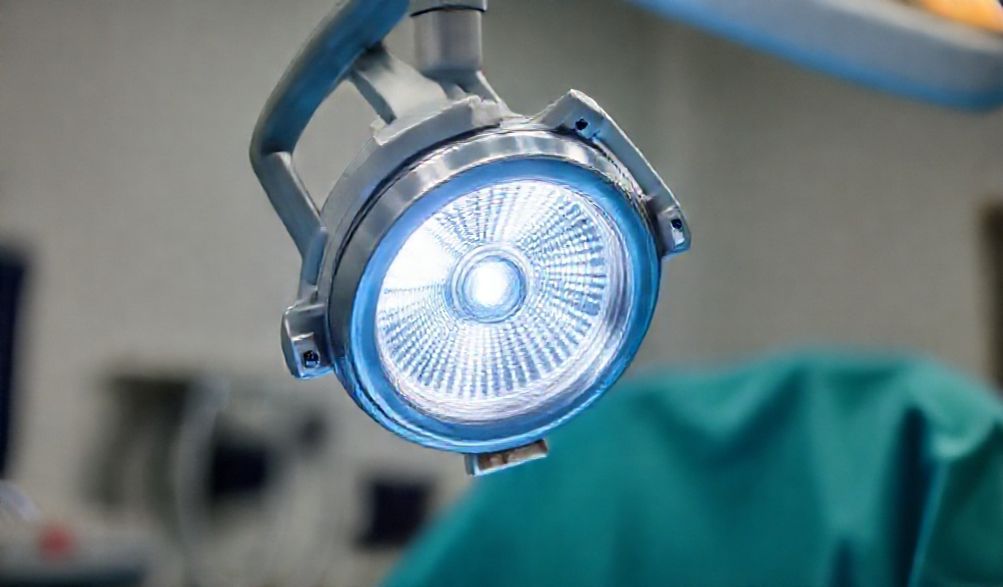
The Surgeon’s Guide to Choosing the Best Surgical Headlight
In the operating room, where millimeter precision dictates success, two factors reign supreme: the skill of the surgeon and the clarity of their view. We meticulously train for decades to hone the first, but often, we compromise on the second. What if one tool—often overlooked as a simple accessory—could dramatically enhance both your visual accuracy and your physical endurance? The reality is that it can. The modern chirurgicale générale is no longer just a bulb on a band; it is a sophisticated, ergonomically engineered extension of the surgeon’s senses, designed to illuminate not just the surgical field, but a path to better outcomes and a longer, healthier career.
Yet, many surgeons struggle with the consequences of inadequate lighting: debilitating eye strain after a long case, frustrating shadows obscuring critical anatomy, color distortion that misleads tissue assessment, and overall fatigue that can cloud judgment. These aren’t mere inconveniences; they are tangible risks to patient safety and surgeon well-being. This guide exists to eliminate that compromise. We will dissect the critical features of modern illumination systems to help you find the Le meilleur projecteur chirurgical pour vos besoins spécifiques.
This guide is built on a foundation of l'Expérience, l'Expertise, l'Autorité et la Fiabilité (E-E-A-T). It synthesizes collective decades of research, direct consultation with surgical teams across specialties, and a deep analysis of technical specifications and clinical ergonomics. We reference principles supported by bodies like the American College of Surgeons and findings from peer-reviewed journals on surgical performance. Our goal is purely educational: to provide you with an unbiased, comprehensive resource for making this critical investment in your practice. We compare brands based on published specifications, engineering principles, and documented clinical feedback, not on sponsored partnerships.
Why Surgical Lighting is Non-Negotiable for Patient Safety & Surgeon Ergonomics
Think of your headlight as your primary visual instrument, as fundamental as your loupes or microscope. Its quality directly interfaces with your most critical surgical tool: your vision.
The Direct Impact on Surgical Precision and Outcomes
Studies in fields from neurosurgery to microsurgery consistently draw a line between superior visualization and improved clinical results. Enhanced lighting reduces visual noise and error rates, allowing for more accurate dissection, more secure anastomoses, and more complete excisions. Key optical concepts are at play:
- Shadow Reduction & Depth Perception: A high-quality system provides coaxial illumination—aligning the light path closely with your line of sight. This minimizes the obstructive shadows cast by your own instruments and fingers, revealing the true topography of the surgical field. Improved shadow control directly enhances depth perception, a non-negotiable for working in deep cavities or performing delicate layered dissections.
- True Tissue Color Rendering: Is that tissue ischemic, inflamed, or healthy? Accurate color discrimination is vital. The Color Rendering Index (CRI) of a light source measures its ability to reveal true colors. A light with a high CRI (90+ is excellent) and an appropriate color temperature (often 4500-5500K, mimicking daylight) ensures that subtle differences in tissue color, vascularity, and pathology are unmistakably clear, supporting faster, more accurate intraoperative decisions.
Protecting the Surgeon: Reducing Eye Strain and Physical Fatigue
The cost of poor lighting is paid by the surgeon’s body. Struggling to see through glare, shadow, or dimness forces the ciliary muscles in your eyes to constantly work overtime, leading to headaches, blurred vision, and accelerated visual fatigue. This often triggers a cascade of poor ergonomics: craning the neck, hunching the shoulders, and adopting strained postures to “chase the light.”
A well-designed Le meilleur projecteur chirurgical is an ergonomic intervention. It delivers bright, uniform, and focused light exactly where you are looking, eliminating the need for compensatory movements. By reducing this cognitive and physical load, it allows you to maintain focus and fine motor control throughout lengthy procedures, protecting your long-term health and extending your surgical career.
Key Features to Evaluate in a Surgical Headlight System
Choosing a system requires looking beyond mere brightness. It’s about the harmonious integration of several key technologies.
Light Source Technology: LED vs. Xenon
The battle is over, and LED has decisively won for new systems. Here’s why:
- LED (Light Emitting Diode): The modern standard. LEDs offer exceptional energy efficiency, converting most power into light, not heat. This means cool operation at the source. They have an extraordinarily long lifespan (often 50,000+ hours), virtually eliminating bulb replacements. They provide instant, flicker-free illumination at a stable de couleur. High-end LED systems now match or exceed the luminous intensity of old xenon systems while being more compact and reliable.
- Xenon: The previous generation. Xenon bulbs produce a very bright, broad-spectrum light but are highly inefficient, wasting significant energy as heat, which can be uncomfortable for the surgeon. They have a short lifespan (typically 500-1000 hours), requiring frequent and costly replacements. They also require a warm-up time and can degrade in color output over their life.
Verdict: For any new purchase, a high-performance LED system is the only recommended choice.
Optical Clarity and Beam Characteristics
This is where premium systems separate themselves. It’s not just about being bright; it’s about delivering that light with precision.
- Spot Size & Depth of Field: The spot size is the diameter of the illuminated circle at your typical working distance (e.g., 16 inches). A microsurgeon may need a tiny, precise spot (e.g., 40mm), while a spine surgeon may prefer a broader field (e.g., 120mm). The profondeur de champ is how much of that spot remains in focus above and below the focal plane. A large depth of field is crucial in deep wounds where instrument tips and the wound base are at different levels.
- Uniformity & “Hot Spots”: A poor beam will have a intensely bright center (“hot spot”) that causes glare, surrounded by a rapidly fading ring. The Le meilleur projecteur chirurgical systems use advanced optics (like reflector or fiber-optic systems) to create a uniform, homogenous disk of light with smooth edges. This eliminates distracting glare and provides consistent illumination across the entire field of view, reducing eye strain.
Conception du confort et de la portabilité
You will wear this system for hours. Comfort is a performance feature.
- Weight Distribution & Headband: The total system weight (light source, battery, cables) should be balanced and low. Look for a fully adjustable headband with a secure, padded fit that doesn’t rely on tightness for stability. A 4-point or 5-point suspension system often provides the best balance and weight distribution.
- Cable Management & Battery Systems: The cable should be lightweight, flexible, and routed to minimize tugging.
- Belt-Pack Battery: The traditional choice. It places the battery weight on your hip, keeping the head unit very light. This is often preferred for very long procedures or by those sensitive to head weight.
- Battery-on-Head (BOH): Integrates a rechargeable battery directly into the headband. This offers superior freedom of movement with no cable tether but adds weight to your head. Newer lithium-ion batteries have made BOH systems more viable than ever.
- Runtime: Ensure the battery life exceeds your longest typical case, with a comfortable margin. 4-8 hours of runtime at full power is a common range for professional systems.
Compatibility and Sterilization
- Loupes & PPE Compatibility: The headlight must integrate seamlessly with your surgical loupes and not interfere with your face mask or protective eyewear. Many manufacturers offer integrated loupe/light systems or specific mounts for popular loupe frames.
- Sterilization Protocol: Understand what can and cannot be sterilized. The light source module itself is almost never autoclaved. It is typically protected by a single-use or wipeable sterile barrier sleeve. The headband may be wipeable or have removable, autoclavable padding. Always follow the manufacturer’s specific IFU (Instructions for Use) to avoid damaging expensive components.
Comparing Top Surgical Headlight Systems
Note: This comparison is based on publicly available specifications, engineering principles, and widely documented clinical reputations. It is intended for educational benchmarking.
Enova Illumination (by Orascoptic) – The Optical Precision Leader
- Idéal pour : Microsurgeons, ophthalmologists, and any specialist requiring the absolute smallest, most precise spot size and flawless uniformity.
- Avantages :
- Renowned for its fiber-optic cable-free design and proprietary optics that deliver an exceptionally uniform, shadow-free beam.
- Extremely lightweight head unit, especially in the belt-pack configuration.
- Excellent color temperature and high CRI for true tissue differentiation.
- Inconvénients :
- Often positioned at a premium price point.
- The specific beam characteristics, while superb for focused work, may be narrower than some general surgeons prefer.
Keeler – The Versatile All-Rounder
- Idéal pour : General surgeons, orthopedic surgeons, and proceduralists seeking a powerful, reliable, and adaptable workhorse system.
- Avantages :
- Offers a wide range of spot sizes and intensities within a single system, making it highly versatile.
- Robust construction and a reputation for durability in high-volume environments.
- Strong support for both belt-pack and battery-on-head options, with good battery life.
- Inconvénients :
- Some models can be slightly heavier on the head than newer ultra-light competitors.
- The range of options requires careful configuration to match your exact needs.
Heine – The Value & Durability Champion
- Idéal pour : High-volume practices, dental surgeons, and institutions needing a cost-effective, rugged, and high-performing system.
- Avantages :
- Exceptional value, offering high lumen output and good optical quality at a competitive price.
- Legendary German-engineered durability and simple, reliable mechanics.
- Wide, bright field of illumination well-suited for many general and cavity procedures.
- Inconvénients :
- The design can be bulkier than some of the more minimalist modern systems.
- May lack some of the ultra-refined optical uniformity of the highest-tier specialized systems.
How to Properly Fit and Maintain Your Surgical Headlight
A perfect system, poorly fitted, becomes a mediocre one.
Step-by-Step Fitting Guide for Optimal Performance
- Balance the Headband: Before attaching the light, put on the headband. Adjust the crown and temporal straps so it sits securely but comfortably, without pressure points. It should not rely on tightness to stay put.
- Mount and Position the Light Source: Attach the light module. Its position should be centered just above your eyebrows. The goal is to align the light path as coaxially as possible with your visual axis. Look straight ahead at your intended working distance.
- Focus the Beam: With a target at your standard working distance, adjust the focus ring to create a sharp, clearly defined circle of light. The entire circle should be uniformly bright.
- Route the Cable: If using a belt-pack, route the cable behind you and down to your hip, securing any slack with the provided clip. Ensure it doesn’t pull on the headset when you turn.
Routine Maintenance and Safety Checks
- Inspection pré-utilisation : Visually check cables for fraying. Ensure the battery is charged. Confirm the sterile barrier sleeve is intact and correctly installed.
- Nettoyage : After each use, wipe down the non-sterile headband and light module (when sleeve is removed) with a hospital-grade disinfectant wipe. Never submerge the electronics.
- Entretien de la batterie : Follow manufacturer guidelines. Avoid fully depleting lithium-ion batteries regularly. Store in a cool, dry place.
- Annual Check-up: Consider sending the system to the manufacturer or authorized dealer for a professional inspection every 1-2 years to ensure optimal performance and safety.
Foire aux questions (FAQ) sur les projecteurs chirurgicaux
Q: What is the typical cost range for a professional surgical headlight system?
R : A complete professional-grade LED system typically ranges from $2,500 to $7,000+.
* Value Tier ($2,500 – $4,000): Robust systems with excellent brightness and core features, ideal for general use.
* Performance Tier ($4,000 – $6,000): Systems offering superior optics (better uniformity, depth of field), lighter weight, and more advanced features like adjustable spot size.
* Premium/Specialty Tier ($6,000+): Systèmes haut de gamme offrant la meilleure clarté optique absolue, un poids minimal et des fonctionnalités conçues pour la microchirurgie ou d'autres spécialités exigeantes. Le coût est influencé par la technologie, la marque, les loupes incluses et les options de batterie.
Q : De combien de lumens ai-je réellement besoin pour la chirurgie de cavité profonde ?
R : Bien qu'un plus grand nombre de lumens puisse aider à pénétrer en profondeur, la conception optique est souvent plus importante que la puissance brute. Un système bien conçu de 40 000 lux peut surpasser un système mal conçu de 100 000 lux. Pour les cavités profondes, privilégiez un système reconnu pour son excellente profondeur de champ et un uniformité. En règle générale, les systèmes dans la plage de 100 000 à 200 000+ lux sont courants pour les travaux profonds, mais un essai pratique est le seul moyen de savoir ce qui convient à vos yeux et à votre spécialité.
Q : Puis-je utiliser ma lampe frontale chirurgicale avec mes loupes chirurgicales existantes ?
R : Dans la plupart des cas, oui, mais la compatibilité n'est pas universelle. De nombreuses lampes frontales utilisent un support à queue d'aronde standard (comme la norme Keeler/Designs for Vision), accepté par de nombreux montures de loupes. D'autres peuvent nécessiter un clip ou un adaptateur spécifique. Il est crucial de s'assurer que le trajet lumineux de la lampe frontale peut être positionné correctement sans être obstrué par le cadre ou les verres de vos loupes. L'approche la plus sûre est de consulter à la fois le fabricant de vos loupes et le fabricant de la lampe frontale.
Q : Combien de temps durent les lampes frontales chirurgicales à LED, et qu'est-ce qui tombe en panne en premier ?
R : Le Le moteur d'éclairage LED lui-même est incroyablement durable, souvent évalué à 50 000 heures - essentiellement une durée de vie d'utilisation clinique. Les composants qui subissent une usure sont :
1. Batteries : Les batteries rechargeables se dégradent sur 2 à 5 ans, selon l'utilisation et l'entretien. Leur remplacement est un coût d'utilisation standard.
2. Câbles : Soumis à des flexions répétées et à la stérilisation, les câbles peuvent finir par s'effilocher ou tomber en panne.
3. Rembourrage/Bandes de tête : La mousse et l'élastique se dégradent avec le temps, la transpiration et le nettoyage.
Un système de haute qualité d'une marque réputée devrait durer 5 à 10 ans ou plus avec un entretien approprié et le remplacement occasionnel de pièces.
Q : Où puis-je obtenir une démonstration pratique ou un essai avant l'achat ?
R : Cela est fortement recommandé.
* Salons professionnels médicaux : Les grandes conférences (ACS, AANS, AAOS, etc.) ont des halls d'exposition où vous pouvez essayer les systèmes.
* Représentants des fabricants : Contactez directement les entreprises. La plupart ont des représentants cliniques qui peuvent organiser un prêt d'essai d'une semaine dans votre propre bloc opératoire.
* Distributeurs de matériel médical : Les distributeurs établis proposent souvent plusieurs marques et peuvent faciliter les comparaisons et les essais.
Conclusion
Choisir la Le meilleur projecteur chirurgical est une décision profondément personnelle et aux conséquences majeures. C'est l'outil qui éclairera chaque décision critique que vous prendrez à la table d'opération. Le choix optimal n'est pas le plus lumineux ou le plus cher, mais celui qui fusionne harmonieusement un éclairage supérieur, sans ombre avec un confort ergonomique toute la journée et un une fiabilité éprouvée, parfaitement adapté aux exigences de votre spécialité chirurgicale.
Pour finaliser votre décision, hiérarchisez les caractéristiques les plus importantes pour vous : S'agit-il de la plus grande précision optique pour les micro-anastomoses ? D'un champ large et profond pour le travail abdominal ou rachidien ? Ou d'une robustesse simple pour une pratique à fort volume ? N'oubliez pas qu'il s'agit d'un investissement à long terme, non seulement dans un équipement, mais aussi dans votre performance chirurgicale, les résultats de vos patients et votre propre bien-être physique.
Nous vous encourageons à utiliser ce guide comme base pour vos recherches. Consultez des collègues de confiance, échangez avec des spécialistes du matériel compétents et, surtout, insistez pour un essai clinique. Expérimentez la lumière sur un champ simulé ou, idéalement, lors d'une véritable intervention. Vos yeux et vos mains vous fourniront les données les plus importantes. En faisant un choix éclairé et réfléchi, vous vous munissez de l'un des outils les plus puissants pour perfectionner votre art et protéger votre carrière.
p>