
Clinical Lighting in Hospitals: Enhancing Patient Outcomes and Healthcare Efficiency
Imagine a simple, non-invasive intervention that can simultaneously improve patient sleep, reduce staff errors, and lower energy costs. It’s not a new drug or a piece of high-tech equipment—it’s light. Research from institutions like the Lighting Research Center (LRC) indicates that appropriate lighting in healthcare settings can reduce patient delirium by up to 50% and shorten average hospital stays. This isn’t just about seeing better; it’s about fostering an environment where healing is accelerated, precision is enhanced, and well-being is prioritized.
This pillar page serves as the definitive guide to normes d'éclairage in healthcare settings, exploring its critical role in patient recovery, staff performance, and operational safety, grounded in the latest research and expert design principles. Synthesizing guidelines from leading institutes like the Facility Guidelines Institute (FGI), insights from peer-reviewed studies, and the practical knowledge of clinical lighting engineers, we will dissect why lighting is a critical component of modern healthcare infrastructure. This guide will navigate the science behind light’s impact, its key applications across a hospital, the technologies making it possible, and a practical framework for selecting the right solutions.
The Science Behind Clinical Lighting: More Than Just Illumination
In a hospital, light is a fundamental tool. Moving far beyond the simple goal of visibility, clinical lighting is designed with a deep understanding of human biology, psychology, and the demanding visual tasks of healthcare. This evidence-based approach transforms lighting from a utility into a therapeutic agent.
Circadian Rhythms and Patient Health
At the core of clinical lighting science is the human circadian system—our internal 24-hour biological clock regulated by light-sensitive cells in the eyes. This system controls the production of hormones like melatonin (which promotes sleep) and cortisol (which promotes alertness).
- Impact of Light Parameters: The intensity (measured in lux), spectral content (color temperature, measured in Kelvin), and timing of light exposure are crucial. Bright, cooler light (5000K+) in the morning suppresses melatonin, promoting alertness and resetting the circadian clock. Conversely, warm, dim light (2700K-3000K) in the evening supports melatonin production for restful sleep.
- Clinical Evidence: Disruption of this cycle, common in windowless ICUs or with constant bright light, is linked to “ICU delirium,” poor sleep, and longer recovery times. Studies, such as those cited in the IESNA RP-29-20 Lighting for Hospitals and Healthcare Facilities, demonstrate that implementing circadian-effective lighting can significantly improve patient sleep quality, reduce agitation, and even decrease the need for pain medication.
Visual Performance for Medical Staff
For clinicians, lighting is a precision instrument. Inadequate or poorly designed lighting can lead to visual fatigue, eyestrain, and—most critically—increased risk of error.
- Task-Specific Requirements: Different procedures demand different lighting. A nurse assessing a wound for infection requires high illuminance and excellent color rendering (CRI >90) to accurately distinguish between shades of red, yellow, and pink. A phlebotomist finding a vein benefits from specialized task lights that enhance vascular contrast.
- Reducing Fatigue and Error: Glare, shadows, and flicker from poor-quality fixtures contribute to cognitive fatigue. Properly designed ambient and task lighting that provides uniform, shadow-reduced illumination on critical surfaces (like a surgical site or medication preparation area) is a key factor in supporting staff accuracy and endurance during long shifts.
Psychological and Emotional Impacts
Lighting profoundly influences mood and perception. A sterile, harshly lit room can heighten anxiety, while a thoughtfully lit space can promote calm and a sense of control.
- Reducing Anxiety: Soft, indirect lighting with warm tones can create a more residential, less institutional feel, helping to alleviate patient and family stress.
- Population-Specific Strategies:
- Pediatrics: Dynamic, colorful lighting can be used to create playful, engaging environments that distract from fear.
- Geriatrics: Higher light levels are often needed to compensate for age-related vision changes, while minimizing glare to prevent falls.
- Behavioral Health: Robust, tamper-resistant fixtures with diffused light that eliminates harsh shadows and concealed ligature points are essential for safety and comfort.
Key Applications of Clinical Lighting in Hospital Settings
Translating science into practice requires tailoring lighting solutions to the unique demands of each hospital zone. Here’s how expert lighting design manifests across key areas.
Patient Room Lighting Systems
The patient room is a multi-functional space requiring a layered lighting approach:
* Ambient Lighting: Provides general, low-glare illumination, often from indirect coves or ceiling fixtures.
* Task Lighting: Focused light for reading, eating, or staff documentation, typically integrated into the headwall or overbed lights.
* Examination Lighting: A high-intensity, high-CRI light source, often on a flexible arm, for detailed patient assessments by staff.
* Night Lighting: Low-level, warm-toned pathway lighting for safety during nighttime checks without disrupting sleep.
* Patient Control: Empowering patients with intuitive controls for light level and, ideally, color temperature enhances their sense of autonomy and comfort, directly contributing to satisfaction scores.
Surgical Suite and Procedure Lighting
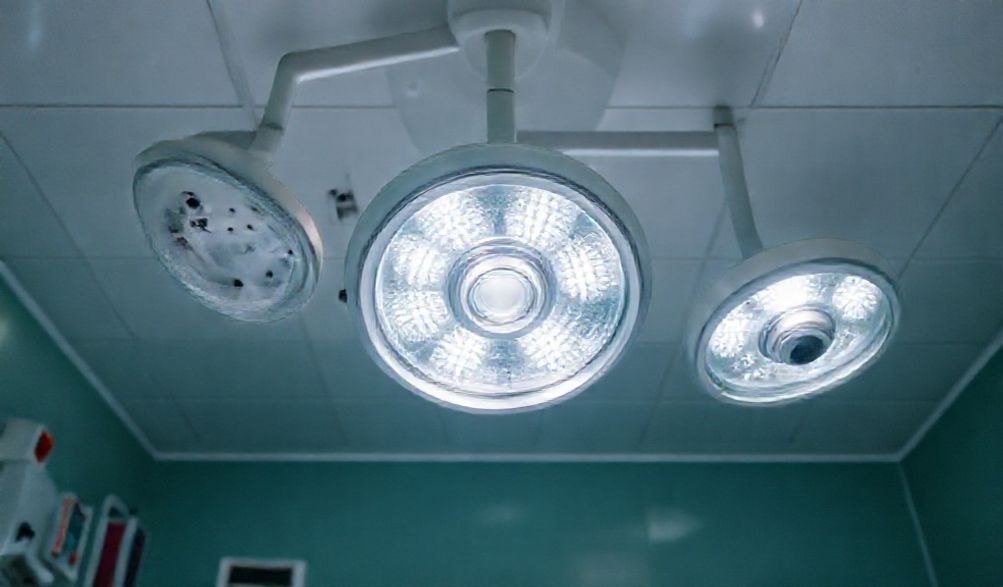
The operating room demands the pinnacle of clinical lighting performance. Surgical luminaires are engineered to:
* Eliminate Shadow: Through multiple light sources and large diameters, they provide deep-cavity illumination with minimal shadow.
* Ensure Sterility: Fixtures are often sealed, smooth, and designed for easy cleaning to meet stringent infection control protocols.
* Offer Precise Control: Surgeons need instant, tool-free adjustment of intensity and beam size. Modern systems integrate with imaging technologies, allowing lights to dim automatically during endoscopic procedures.
Diagnostic and Examination Areas
Accuracy in diagnosis is paramount, and lighting is a key variable.
* Radiology Reading Rooms: Lighting must be dimmable and consistent to prevent screen glare and ensure radiologists can perceive subtle contrasts on monitors without eye strain.
* Pathology Labs: Consistent, high-CRI (95+) lighting is non-negotiable for accurately identifying tissue and cell sample colors under microscopes.
* Bedside Examination: Portable or ceiling-mounted exam lights must deliver true color rendition to help clinicians accurately assess skin tone, jaundice, cyanosis, and wound status.
Staff Areas and Corridors
Supporting the healthcare team in non-clinical spaces is vital for 24/7 operations.
* Nurse Stations: Lighting must balance computer work (reducing screen glare) with chart reading and medication preparation, supporting alertness during night shifts.
* Corridors: Safe, uniform illumination is required for patient transport and navigation. Circadian-aware lighting in staff corridors can help mitigate the effects of shift work by providing brighter, cooler light during night shifts to promote alertness.
Modern Technologies and Innovations in Healthcare Lighting
Today’s lighting technology provides the tools to meet the complex demands of healthcare environments intelligently and efficiently.
LED Technology and Tunable White Systems
The shift to solid-state LED lighting has been transformative:
* Core Benefits: LEDs offer exceptional energy efficiency (often cutting lighting energy use by 50%+), long lifespans reducing maintenance disruptions, and minimal radiant heat.
* Tunable White Systems: This is a game-changer for circadian health. These LED systems can automatically adjust their color temperature and intensity throughout the day to mimic the natural progression of sunlight—cool and bright in the morning, warm and dim in the evening—directly supporting patient and staff circadian rhythms.
Smart Lighting Controls and IoT Integration
Lighting is becoming an intelligent part of the hospital’s central nervous system.
* Automatisation : Occupancy and vacancy sensors turn lights off in unoccupied spaces. Daylight harvesting dims electric lights near windows in response to natural light levels.
* Advanced Integration: Lighting systems can connect to the Building Management System (BMS) for holistic energy management. More innovatively, they can interface with Electronic Health Records (EHR). Imagine a patient room where the lighting automatically enters a calm, warm “pre-sleep” scene at 8 PM based on the care plan in the EHR.
Hygienic and Safety-Centric Design
Clinical environments demand fixtures that support infection control and life safety.
* Hygienic Design: Sealed, gasketed fixtures with smooth, cleanable surfaces prevent dust and pathogen accumulation. In cleanrooms and ORs, fixtures are rated for rigorous wash-downs.
* Safety Compliance: All lighting must integrate with emergency egress lighting systems compliant with Le code de sécurité incendie NFPA 101. Medical-grade electrical safety, per Les normes IEC 60601, is critical for fixtures in patient care vicinities.
How to Select the Right Clinical Lighting: A Framework for Decision-Makers
Navigating the selection process requires a balanced, strategic approach. Here is a framework for facility managers, architects, and clinical stakeholders.
Assessing Needs: Clinical Task vs. Healing Environment
Start with a department-by-department lighting audit.
1. Identify Critical Visual Tasks: What is the staff doing? (e.g., suturing, reading charts, assessing skin).
2. Define Patient & Staff Experience Goals: What is the desired atmosphere? (e.g., calming, alerting, residential).
3. Balance the Two: The solution for an ICU patient room might prioritize circadian-friendly, patient-controllable ambient light et un a high-performance, staff-controlled exam light. The specification must satisfy both healing and clinical needs.
Key Specifications and Standards to Understand
Speak the language of lighting. Key metrics include:
* Illuminance (Lux): The amount of light on a surface. A medication station may need 1,000 lux, while a night light may be < 50 lux.
* Indice de Rendu des Couleurs (IRC) : A measure of a light source’s ability to reveal object colors accurately vs. natural light. Aim for CRI 90+ for clinical task areas.
* Température de couleur corrélée (TCC) : The perceived “warmth” or “coolness” of light, measured in Kelvin (K). 2700K is warm; 5000K is cool daylight.
Relevant Standards:
* IESNA RP-29-20: The essential guideline for lighting in hospitals.
* FGI Guidelines: Provides minimum requirements for healthcare facility design.
* WELL Building Standard: Offers a performance-based framework for enhancing human health, with an entire section on Light.
Évaluation du Coût Total de Possession (CTP)
Look beyond the initial fixture cost. A high-quality, efficient system offers a compelling long-term ROI:
* Energy Savings: LED and control systems can slash energy bills.
* Maintenance Savings: Long LED lifespans reduce labor and parts costs for bulb changes.
* Outcome-Based Value: Bien que plus difficile à quantifier, considérez la valeur potentielle des séjours hospitaliers plus courts, de la réduction de l'utilisation des médicaments, de l'amélioration de la rétention du personnel et de la diminution des erreurs. Demandez aux fournisseurs des études de cas ou des preuves cliniques étayant ces avantages.
Foire Aux Questions (FAQ) sur l'Éclairage Hospitalier
Q: Quelle est la température de couleur idéale pour une chambre de patient standard ?
R : La solution idéale est un système réglable qui varie d'un blanc plus froid (par exemple, 5000K) pendant les heures diurnes pour favoriser la vigilance, à un blanc plus chaud (par exemple, 2700K) le soir pour favoriser le sommeil. Si vous utilisez une CCT fixe, un neutre 3500K-4000K est souvent recommandé comme compromis, bien que les directives FGI soulignent l'importance de la flexibilité et du contrôle par le patient.
Q : En quoi l'éclairage clinique diffère-t-il de l'éclairage commercial standard ?
R : L'éclairage clinique privilégie l'impact biologique, la performance des tâches et l'hygiène par rapport à l'esthétique générale. Il doit soutenir les tâches visuelles critiques (IRC élevé, éclairement spécifique), fonctionner 24h/24 et 7j/7 avec fiabilité, être conçu pour le contrôle des infections et influencer directement les résultats de santé — des considérations qui vont bien au-delà du cadre de l'éclairage standard de bureau ou commercial.
Q : Un meilleur éclairage peut-il vraiment réduire les coûts hospitaliers ?
R : Oui, par de multiples voies. Les économies directes proviennent de réductions significatives de la consommation d'énergie. Les économies indirectes, mais très précieuses, sont liées à l'amélioration des résultats des patients (par exemple, réduction de la durée du séjour), à l'amélioration des performances et de la rétention du personnel (réduction des coûts de recrutement/formation) et à une maintenance à long terme réduite. Le ROI est holistique.
Q : Quels sont les domaines les plus critiques pour la modernisation de l'éclairage dans un hôpital plus ancien ?
R : Priorisez les zones ayant l'impact le plus élevé sur les résultats et la sécurité :
1. Chambres des patients & USI : Où la perturbation circadienne est la plus forte et l'expérience du patient est primordiale.
2. Blocs opératoires : Où la précision visuelle est critique pour la sécurité des patients.
3. Services des urgences & Salles d'examen : Où un diagnostic visuel précis est constamment requis.
Une approche progressive, service par service, basée sur un audit d'éclairage est recommandée.
Conclusion
L'éclairage clinique est bien plus qu'un simple service de base du bâtiment. Comme nous l'avons exploré, c'est un outil thérapeutique multifacette qui régule le sommeil et la récupération des patients, un amplificateur de performance qui améliore l'acuité et réduit la fatigue du personnel, et un système de sécurité critique qui garantit la précision et la conformité. La science est claire, les technologies sont avancées et les applications sont éprouvées.
Investir dans un éclairage clinique avancé est, fondamentalement, un investissement dans la mission fondamentale des soins de santé : de meilleurs résultats pour les patients, un bien-être accru du personnel et l'excellence opérationnelle. Cela nécessite une approche collaborative, unissant les connaissances des cliniciens, le pragmatisme des gestionnaires d'installations et l'expertise spécialisée des concepteurs et ingénieurs en éclairage.
Si vous planifiez une nouvelle construction, une rénovation ou une modernisation, consultez des spécialistes qui comprennent les exigences uniques de l'environnement des soins de santé. Pour approfondir des sujets spécifiques, explorez nos ressources connexes sur la conception de l'éclairage chirurgical, les stratégies de modernisation LED pour les hôpitaux et la mise en œuvre de systèmes d'éclairage circadien.
p>