
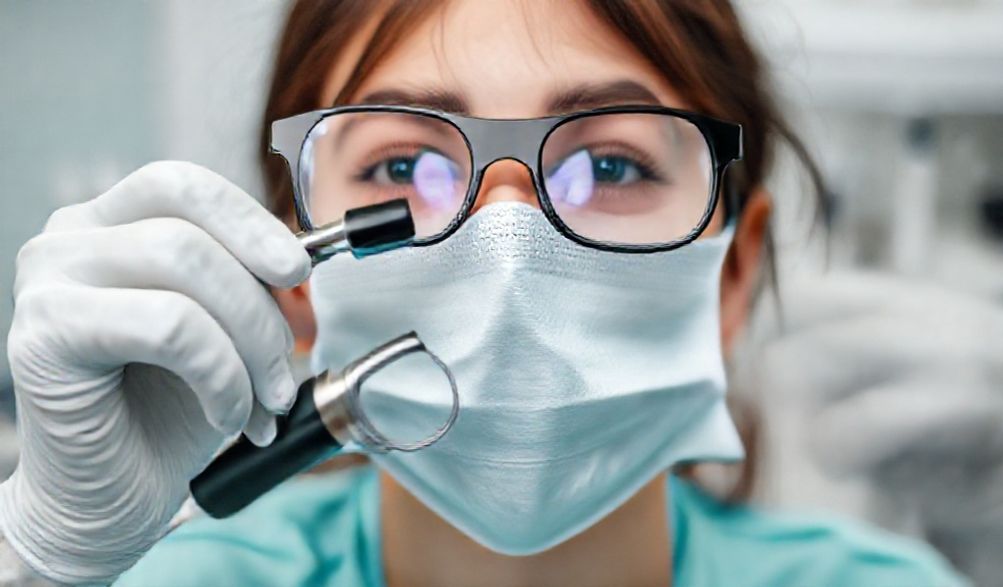
Dental Hygiene Loupes: A Complete Guide to Enhanced Vision, Ergonomics & Patient Care
You’ve just finished your last prophy of the day. As you straighten up, a familiar ache radiates from your neck, down between your shoulder blades. Your eyes feel strained, and you wonder if you missed a fleck of subgingival calculus on that tricky distal of #19. If this scenario is a daily reality, you’re not alone. The physical demands of dental hygiene are immense, often coming at a cost to the clinician’s own body.
But what if there was a tool that could simultaneously alleviate that strain, sharpen your clinical vision, and elevate the standard of care you provide? Enter dental hygiene loupes—far more than simple magnifying glasses. They are a sophisticated, career-transforming investment in your professional longevity and clinical excellence.
This comprehensive guide is built not on speculation, but on the l'Expérience of seasoned hygienists, the Expert technical knowledge of master opticians, and a review of Authoritative clinical studies on ergonomie intuitive and outcomes. Our goal is to provide trustworthy, actionable information to help you navigate the world of loupes, ensuring you make an informed choice that benefits your health, your patients, and your career for years to come.
We’ll explore the undeniable why behind using loupes, break down the key features in a detailed buyer’s guide, walk you through a step-by-step selection process, and offer practical tips for integrating this powerful tool into your daily practice.
Why Dental Hygienists Need Loupes: Beyond Simple Magnification
For the uninitiated, loupes might seem like a luxury or a tool reserved for surgeons. In modern dental hygiene, they are rapidly becoming a standard of care. The benefits extend far into three critical areas: clinical precision, personal health, and patient relationships.
Uncompromising Clinical Precision and Improved Outcomes
The primary function of loupes is to enhance what you can see. This isn’t just about making things bigger; it’s about making the invisible, visible.
- Enhanced Visualization: With quality magnification, subtle details come into sharp focus. You can more easily identify the texture and margins of subgingival calculus, distinguish between plaque and early demineralization, spot microfractures in enamel, and detect the earliest signs of caries or oral pathology that might be missed with the naked eye.
- Improved Debridement & Documentation: Seeing better directly translates to cleaning better. You can be more confident in your scaling and root planing, ensuring complete calculus removal. This precision also leads to more accurate periodontal charting and documentation, as you can visualize and measure pocket depths and tissue conditions with greater clarity.
- Early Intervention: By spotting problems earlier, you become a more effective partner in the patient’s preventive care plan, facilitating timely intervention and better long-term health outcomes.
E-E-A-T Element: Clinical studies, such as those published in the Journal of Dental Hygiene, have demonstrated that magnification significantly improves calculus detection and removal efficacy. This isn’t just an opinion; it’s an evidence-based practice.
The Ergonomic Imperative: Protecting Your Career
This is perhaps the most compelling reason for a dental hygienist to invest in loupes. The statistics on musculoskeletal disorders (MSDs) in dentistry are staggering, with a high percentage of professionals experiencing career-limiting neck, back, and shoulder pain.
Loupes are a powerful ergonomic intervention. Here’s how:
- Promoting Neutral Posture: Without loupes, the natural tendency is to hunch forward, craning your neck and rounding your shoulders to get closer to the oral cavity. Loupes are custom-designed with a specific typique. This forces you to sit back in your chair, keeping your spine straight and your neck in a neutral, upright position. Your eyes, through the lenses, do the “leaning in” for you.
- Reducing Injury Risk: By maintaining this proper posture throughout the day, you dramatically reduce the chronic strain on your cervical spine, trapezius muscles, and lumbar region. This is a proactive measure to prevent the debilitating pain that has ended too many dental careers prematurely.
E-E-A-T Element: Talk to any hygienist who made the switch to loupes after years of practice. The l'Expérience-based testimonial is nearly universal: “I wish I had done this sooner. My neck and back pain are gone.” This tool is a direct investment in your ability to practice pain-free for decades.
Enhanced Patient Communication and Trust
Loupes don’t just improve your view; they can improve your patient’s understanding.
- Visual Education: When integrated with an intraoral camera, what you see through your loupes can be displayed on a monitor for the patient. Suddenly, you can show them the hidden calculus, the bleeding sulcus, or the early stain. This transforms abstract advice into tangible evidence.
- Établir la Confiance : This transparency demonstrates a level of thoroughness and expertise that patients notice. It shows you are using advanced tools to provide the best care possible. When a patient sees you wearing loupes, they perceive a higher standard of care, which builds immense trust and facilitates case acceptance for necessary treatments.
Key Features of Dental Hygiene Loupes: A Buyer’s Guide
Understanding the components of loupes is crucial to making the right choice. Think of it as assembling a system tailored uniquely to you.
Magnification Power: Finding Your Sweet Spot (2.5x, 3.0x, 3.5x, etc.)
Magnification is a balance. More power isn’t always better.
- 2.5x: An excellent starting point for beginners. Offers a wide field of view, making adaptation easier. Suitable for general prophylaxis and periodontal maintenance.
- 3.0x – 3.5x: The most popular range for experienced hygienists. Provides a great balance of detail and field of view for detailed scaling, root planing, and caries detection.
- 4.0x and above: Typically used for highly specialized procedures. The field of view narrows significantly, and the depth of field (the range of clear focus) decreases, requiring very steady head and patient positioning.
Recommendation: Most experts suggest starting at 2.5x or 3.0x. You can always increase magnification later as your skill adapts.
Working Distance and Field of View
These two custom measurements are the heart of your loupes’ ergonomic benefit.
- Distance de travail : This is the precise distance from your eyes to your patient’s mouth when you are sitting in a perfect, upright, neutral posture. It is measured in inches or centimeters. Getting this wrong means you will still be hunched over or straining your arms.
- Field of View: This is the diameter of the area you can see clearly through the lenses at a given distance. Higher magnification reduces the field of view. A good loupes system maximizes both.
E-E-A-T Element: This is non-negotiable. Authoritative guidance from all reputable providers insists on a professional, in-person measurement for working distance and pupillary distance. An off-the-shelf guess can cause more ergonomic harm than good.
Lens Quality and Coating Options
Not all optics are created equal. High-quality lenses are made from precision-ground glass or polymer.
- Clarity & Depth of Field: Premium lenses offer a sharper image across a wider depth of field, meaning more of your view stays in focus without constant re-adjustment.
- Traitements :
- Anti-reflets : Reduces glare from operatory lights.
- Anti-buée : Essential for preventing lens fogging during patient exhalation.
- Blue Light Filter: May help reduce eye strain from long-term exposure to LED loupe lights and operatory lighting.
Frame Styles: TTL vs. Flip-Up
- Through-The-Lens (TTL):
- Avantages : Lenses are permanently mounted in the frame, offering perfect, consistent alignment. They are generally lighter and more streamlined.
- Inconvénients : They are custom-made for one person and cannot be shared. Adjusting the prescription later can be more complex.
- Loupes à relevage (Flip-Up) :
- Avantages : The magnification barrels flip up, allowing you to quickly switch between magnified and normal vision. They are adjustable and can sometimes be shared between users with similar prescriptions (though not ideal). Upgrading magnification is often easier.
- Inconvénients : The flip mechanism can make them slightly heavier and bulkier. The barrels can potentially get knocked out of alignment.
The Critical Role of Lighting: Loupes are Incomplete Without It
Magnification without light is like driving at night with binoculars. A dedicated loupe light is non-negotiable.
- Eliminates Shadows: Your head blocks the overhead light, creating shadows in the mouth. A coaxial light source (aligned with your line of sight) illuminates the depths of pockets and sulci.
- Doit être ≥90. Modern LED lights are bright, cool, and long-lasting.
- Power Options: Cordless lights with rechargeable battery packs offer maximum freedom of movement. Filaire lights connect to a battery pack on your waist, never needing a recharge mid-day. Consider your practice flow.
- Intensity Settings: Multiple brightness settings allow you to adjust for different procedures.
How to Choose the Right Loupes for Your Practice
Selecting loupes is a personal journey. Follow these steps to find your perfect match.
Step 1: Conduct a Personal Ergonomic and Clinical Needs Assessment
Posez-vous les questions suivantes :
* Where do I feel pain or fatigue at the end of the day? (Neck, back, shoulders?)
* What procedures do I find most visually challenging? (Deep scaling, detecting subgingival calculus?)
* What are my primary clinical goals? (Improved detection, faster debridement, better ergonomics?)
Step 2: Get a Professional Measurement and Trial
This is the most important step.
* Do Not Buy Online Unfitted: Reputable companies send trained representatives to your office.
* The Fitting: They will measure your pupillary distance, determine your ideal working distance while you simulate clinical posture, and let you try different magnifications and frame styles.
* Période d'essai : Many offer a trial period (e.g., 30 days) to use the loupes in your own operatory.
E-E-A-T Element: This is Expert advice. A professional fitting ensures the tool is an asset, not a liability. It’s a safety and efficacy issue.
Step 3: Evaluate Budget and Consider Long-Term Value
Quality loupes with a light are a significant investment, often ranging from $1,000 to $3,000+.
* Reframe the Cost: This is not an expense; it’s an investment in your most valuable asset—your ability to work pain-free. Calculate the cost over the 5-10+ years they will last.
* Consider: Warranty (often lifetime on frames), service plans, and the company’s reputation for customer support.
* Employer Support: Some practices offer stipends, financing, or payroll deductions for loupes, recognizing their benefit to both employee health and practice production.
Maximizing Your Investment: Tips for New Loupes Users
Congratulations on your new loupes! Here’s how to ensure a smooth transition.
The Adaptation Period: Building Muscle Memory
There is a learning curve, typically 1-2 weeks.
* Soyez patient : Your hands need to learn to work in the magnified space. Things may feel clumsy at first.
* Start Simple: Use them for an hour the first day, perhaps during charting or a simple prophy, and gradually increase.
* Practice: Utilisez-les pour prendre des notes ou manipuler les instruments sur votre bureau afin de développer votre coordination main-œil.
Protocoles d'Utilisation Quotidienne et de Maintenance
Traitez vos loupes comme les instruments de précision qu'elles sont.
* Nettoyage : Utilisez uniquement le chiffon en microfibre et le spray pour lentilles fournis (ou une goutte de liquide vaisselle doux avec de l'eau). N'utilisez jamais de serviettes en papier, de vêtements ou de produits chimiques agressifs.
* Stockage : Rangez-les toujours dans leur étui de protection rigide lorsqu'elles ne sont pas utilisées ou pendant les cycles de stérilisation au cabinet.
* Entretien de la Lumière : Suivez les instructions de charge pour la batterie et nettoyez délicatement la lentille de la lumière.
Intégration des Loupes avec d'Autres Technologies
- Caméras intra-orales : De nombreux systèmes de caméra sont conçus pour être “ compatibles avec les loupes ”, vous permettant de capturer exactement ce que vous voyez.
- Scanners Numériques : L'amélioration de la vision et de la posture peut également accroître votre efficacité et votre précision avec les systèmes d'empreinte numérique.
Foire Aux Questions (FAQ) sur les Loupes d'Hygiène Dentaire
Q : Les loupes valent-elles vraiment l'investissement pour un hygiéniste ?
R : Absolument. Le retour sur investissement est triple : 1) Longévité de carrière : En prévenant les douleurs musculo-squelettiques invalidantes. 2) Résultats Cliniques : En améliorant l'exhaustivité et la précision de vos soins. 3) Développement Professionnel : En élevant votre standard de pratique et la confiance des patients. C'est un investissement à la fois dans les soins personnels et les soins aux patients.
Q : Quel grossissement est le meilleur pour un débutant ?
R : La plupart des experts recommandent de commencer par un grossissement de 2,5x ou 3,0x.. Cela offre un champ de vision gérable et des détails suffisants, rendant la période d'adaptation initiale plus facile. Vous pourrez toujours passer à une puissance supérieure plus tard.
Q : Puis-je partager mes loupes TTL avec un collègue ?
R : Non. Les loupes TTL sont fabriquées sur mesure pour la distance pupillaire et la distance de travail spécifiques d'un individu. Les partager forcerait l'autre personne à adopter une posture incorrecte et potentiellement nocive, provoquant une fatigue oculaire, des maux de tête et annulant tous les bénéfices ergonomiques. Les loupes à bascule peuvent être ajustables pour un partage limité, mais ce n'est toujours pas idéal.
Q : Comment nettoyer et entretenir mes loupes ?
R : Utilisez uniquement un chiffon propre en microfibre avec un spray pour lentilles approuvé ou une goutte de savon doux et d'eau tiède. Essuyez délicatement les lentilles. Évitez tous les produits en papier, les manches de chemise et les produits chimiques agressifs. Rangez-les toujours dans leur étui rigide.
Q : Ai-je encore besoin d'un éclairage général si j'ai une lumière sur mes loupes ?
R : Oui. La lumière des loupes est un spot focalisé et sans ombre sur votre champ de travail spécifique (par exemple, une seule dent). L'éclairage général du cabinet est toujours nécessaire pour une visibilité d'ensemble, le confort du patient, et pour vous permettre de voir au-delà du champ magnifié immédiat lorsque vous levez les yeux.
Conclusion
Les loupes d'hygiène dentaire sont bien plus qu'une aide visuelle ; c'est un outil transformateur qui comble le fossé entre l'excellence clinique et le bien-être personnel. Elles vous permettent de voir avec une clarté inégalée, de travailler avec une posture durable et de vous connecter avec les patients à un niveau plus profond. Les preuves issues d'études cliniques et l'expérience vécue l'Expérience de milliers d'hygiénistes sont claires : les loupes sont une pierre angulaire d'une carrière moderne, durable et épanouissante en hygiène dentaire.
Choisir la bonne paire est une décision importante qui mérite une considération attentive et des Expert conseils experts. Ce n'est pas un achat à faire légèrement en ligne, mais un ajustement professionnel à entreprendre avec un fournisseur réputé.
Faites le prochain pas pour votre carrière. Planifiez une consultation avec une entreprise de loupes dentaires de confiance pour une mesure et une démonstration professionnelles. C'est la première étape, la plus importante, vers un avenir d'acuité visuelle accrue, d'un corps en meilleure santé et de soins aux patients supérieurs.
p>