
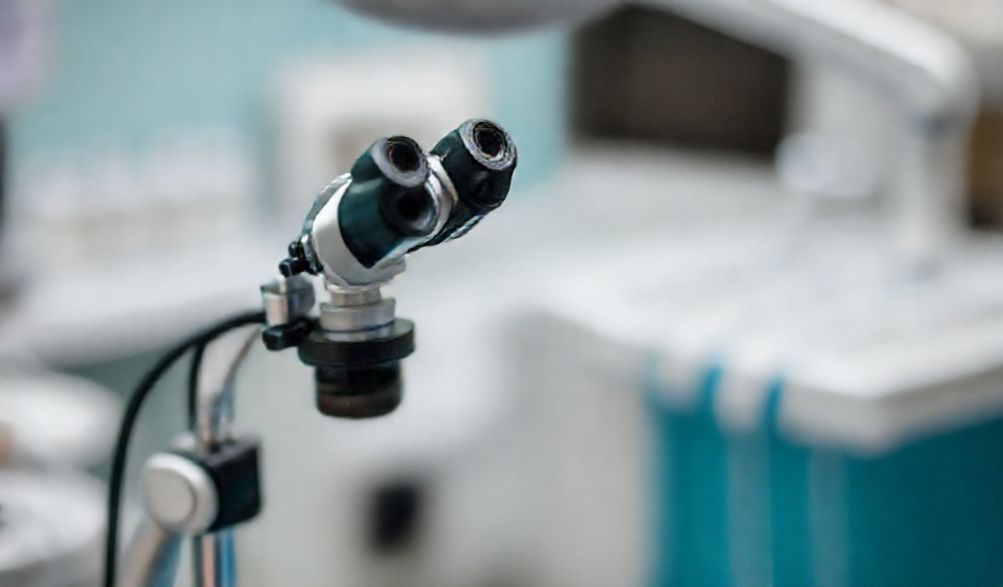
The Ultimate Guide to Dental Loupes: Enhancing Precision, Ergonomics, and Patient Care
Introduction
For dental professionals, visual acuity is not just a convenience—it’s the bedrock of accurate diagnosis and successful treatment. The human eye, remarkable as it is, has inherent limitations. When tasked with discerning sub-millimeter cracks, identifying the precise hue of dentin, or navigating the intricate anatomy of a root canal system within the confined, shadowy space of the oral cavity, our natural vision often falls short. This gap between what we need to see and what we can see is where loupes dentaires perform their transformative magic.
Far more than simple magnifying glasses, modern dental loupes are sophisticated, ergonomically-engineered optical systems. They are a fundamental tool that bridges the gap between clinical intention and execution. Their adoption represents a paradigm shift in practice, moving from straining to see to seeing with effortless clarity. This comprehensive guide will explore the indispensable role of loupes dentaires, delving into their science-backed benefits, providing actionable criteria for selection, and illustrating how they form the core of a modern, high-precision clinical ecosystem. We’ll examine this essential technology through the dual lens of safeguarding practitioner health and delivering uncompromising, patient-first care.
Section 1: Understanding Dental Loupes: Core Principles and Benefits
To appreciate the value of loupes dentaires, one must first understand their fundamental operation and the multifaceted advantages they offer, which extend far beyond mere enlargement.
1.1 What Are Dental Loupes and How Do They Work?
Dental loupes are compound magnification systems, typically based on either Galilean (two-lens) or Keplerian (multi-lens, prism-based) optical designs. These systems are mounted onto a frame (eyewear or headband) and are engineered to provide a clear, magnified image at a specific, fixed working distance.
Here’s the core principle: unlike a simple magnifying glass you hold over an object, loupes dentaires converge light rays to create an enlarged, stereoscopic (3D) image of the operative field. The lenses are aligned to your eyes’ interpupillary distance and set at a specific declination angle. This design allows you to sit in a healthy, upright posture while your visual axis is directed downward into the patient’s mouth, bringing minute details into sharp focus without hunching or craning your neck.
1.2 The Multifaceted Benefits for the Dental Professional
The benefits of integrating loupes dentaires into your practice are profound and interconnected, impacting clinical outcomes, personal health, and professional satisfaction.
-
Enhanced Visual Acuity & Precision: This is the most immediate benefit. Magnification reveals a hidden world of detail. You can identify:
- Micro-fractures and craze lines invisible to the naked eye.
- Minute caries at restoration margins, enabling truly conservative dentistry.
- Canal orifices in endodontics with greater certainty.
- Subgingival calculus remnants during periodontal therapy.
- Marginal integrity of restorations, ensuring perfect seals.
This heightened vision translates directly to more accurate diagnoses, superior preparation finishes, and higher-quality restorative and surgical outcomes.
-
Ergonomics and Postural Health: The Career-Saving Advantage. This benefit cannot be overstated. Dentistry is notorious for its high prevalence of musculoskeletal disorders (MSDs)—chronic neck, back, and shoulder pain that can cut careers short. Dental loupes are a primary preventive tool. By enforcing a correct working distance (typically 14-18 inches), they physically prevent you from leaning forward. The customized declination angle allows you to look straight ahead through the lenses while your patient is fully reclined. This promotes a neutral spine position. Studies consistently show that loupe users report significant reductions in neck and back pain, making them a critical investment in long-term professional longevity.
-
Improved Clinical Outcomes & Efficiency: Better vision inherently leads to better dentistry. With enhanced precision, you reduce the likelihood of procedural errors, remakes, and postoperative complications. Furthermore, by eliminating constant visual refocusing and strain, you can work with greater consistency and potentially improve efficiency over time. Tasks become less fatiguing, allowing you to maintain a high standard of care throughout the day.
-
Professional Confidence and Reduced Eye Strain: Straining to see fine details is mentally and physically exhausting. Dental loupes reduce the accommodative demand on your eyes, minimizing fatigue. This fosters a greater sense of control and confidence during delicate procedures, from placing a Class V restoration to suturing a surgical site. You are no longer guessing; you are actively seeing and verifying.
Section 2: A Buyer’s Guide: Key Factors in Selecting Dental Loupes
Choosing your first or next pair of loupes dentaires is a significant decision. Here’s an expert breakdown of the critical factors to consider for an informed investment.
2.1 Magnification Power: Finding the Right Level
Magnification is a balance between detail and field of view. Common ranges include:
- 2.5x – 3.0x (Low Magnification): Ideal for beginners, dental hygienists, and general dentists performing routine procedures. This range offers a wide field of view and generous depth of field, making adaptation easier while still providing a clear visual upgrade.
- 3.5x – 4.5x (Medium Magnification): Often considered the “sweet spot” for restorative dentists, periodontists, and endodontists. It provides excellent detail for crown preps, composite artistry, and surgical procedures without an overly restrictive field of view. This is the most popular range for full-time clinical use.
- 5.0x and above (High Magnification): Reserved for micro-dentistry, advanced endodontic surgery (apicoectomies), and detailed laboratory work. At this level, the field of view is narrow, depth of field is shallow, and a coaxial LED headlight is mandatory. It requires a very steady hand and significant experience.
2.2 Critical Optical and Fit Considerations
- Distance de travail : This is the single most important measurement. It is the distance from your eyes (specifically, the ocular lens) to your primary operating point in the patient’s mouth while you are sitting in a correct, upright posture. An incorrect working distance will force you back into poor posture. Measure this carefully, often with the help of a representative during a fitting.
- Champ de Vision & Profondeur de Champ : Le field of view is the width of the area you can see through the loupes at once. Depth of field is the range of distance (front-to-back) that remains in clear focus. Higher magnification reduces both. Consider the types of procedures you do; a restorative dentist may prioritize a wider field, while an endodontist might favor higher magnification despite a narrower view.
- Angle d’inclinaison : This is the tilt of the ocular barrels. It must be customized so that when you are sitting upright and looking straight ahead, your visual axis passes directly through the center of the lenses to your operative field. An improper angle causes neck strain.
- Frame Fit and Adjustability: Comfort is key for all-day wear. Look for lightweight, adjustable frames. You’ll choose between:
- Through-The-Lens (TTL): Lenses are permanently mounted in a custom alignment. They are lighter and more durable but cannot be adjusted later if your prescription changes.
- À bascule : The loupe binoculars flip up on a hinge. They are more versatile (can be shared, easier to adjust) and allow you to use your regular prescription glasses underneath, but the assembly can be slightly heavier.
- Traitements des Verres : Anti-reflective coatings are essential to reduce glare. Scratch-resistant and hydrophobic (water-repellent) coatings add durability and ease of cleaning.
Section 3: Integrating Loupes with Modern Dental Technology
Dental loupes are not a standalone tool; they are the foundational component of a modern visual enhancement system.
3.1 The Essential Companion: Dental LED Headlights
As magnification increases, shadows become your enemy. A dental loupe headlight provides coaxial illumination—light that travels parallel to your line of sight, eliminating shadows from your hands or instruments. Key features:
* Brightness (Lumens): 30,000+ lumens is common for clinical use.
* Color Temperature (Kelvin): A temperature of 5000K-6000K provides “daylight” white light, crucial for accurate color matching of composites and assessing tissue health.
* Battery Systems: Lightweight lithium-ion battery packs offer hours of cordless operation.
3.2 From Magnification to Documentation: Loupes & Cameras
The logical evolution of loupes dentaires is integration with digital imaging. Camera systems can be attached directly to the loupe frame, allowing you to capture still photos and video from your unique magnified perspective. This is invaluable for:
* Enhanced patient records and treatment planning.
* Patient education, showing them exactly what you see.
* Case documentation for referrals, insurance, or professional portfolios.
* Live guidance for dental assistants.
3.3 Loupes as a Foundation for Advanced Procedures
Proficiency with loupes dentaires builds the visual and ergonomic discipline required for the next level: the dental operating microscope. For specialists in endodontics or micro-surgery, loupes are the essential training ground that makes the transition to the microscope’s higher magnification and enhanced illumination more intuitive.
Section 4: Implementation, Care, and Best Practices
Success with loupes dentaires depends on proper adoption and maintenance.
4.1 The Adjustment Period: Training Your Brain and Body
There is a learning curve, typically 2-4 weeks. Your brain must adapt to new hand-eye coordination at a fixed focal length. Tips for success:
* Start by using them for examinations and simple procedures like sealants or supragingival scaling.
* Practice “tracking” with your head movement rather than just your eyes.
* Be patient with depth perception; it will recalibrate. The postural benefits, however, are often felt immediately.
4.2 Daily Care, Maintenance, and Safety
Votre loupes dentaires are precision optical instruments. Treat them as such.
* Nettoyage : Use only the provided microfiber cloth or lens-specific wipes. Avoid paper towels, clothing, or harsh chemicals, which can scratch coatings.
* Stockage : Rangez-les toujours dans un étui de protection rigide lorsqu'elles ne sont pas utilisées. Ne les laissez jamais sur une chaise ou un plan de travail.
* Inspection: Periodically check for loose screws at the hinges and frame. Have them professionally serviced if they are knocked or dropped.
4.3 Developing an Ergonomic Operatory Setup
Dental loupes are most effective within a holistic ergonomic strategy:
* Patient Position: The patient should be fully reclined, bringing the oral cavity up to you.
* Operator Stool: Use an ergonomic stool that supports a neutral spine. Your elbows should be at a 90-degree angle, close to your body.
* Instrument Delivery: Utilize 12 o’clock delivery or assistant-passed instruments to minimize twisting and reaching.
Foire Aux Questions (FAQ)
Q: Are dental loupes worth the investment for a new graduate or hygienist?
R : Absolutely. View them as a non-negotiable investment in your clinical capability and physical health, similar to a quality handpiece. Early adoption instills proper ergonomic habits that can prevent decades of pain and career-limiting injury. The improvement in care quality is immediate.
Q: Can I use my dental loupes with my existing prescription glasses?
R : Oui. Vous avez deux options principales : 1) Custom TTL Loupes: Your exact prescription is ground into the loupe’s ocular lenses. 2) Loupes à relevage (Flip-Up) : These are designed to be worn over your regular prescription glasses. A professional fitting is crucial for both to ensure proper alignment and comfort.
Q : Combien de temps faut-il pour s'habituer à travailler avec des loupes ?
R : La plupart des cliniciens signalent une période d'adaptation de 2 à 4 semaines pour que leurs habiletés motrices s'ajustent complètement. Il est fortement recommandé de commencer par un grossissement plus faible (2,5x-3,0x) pour les tâches plus simples. L'impact positif sur la posture et la réduction de la tension cervicale, cependant, est souvent perceptible dès le premier jour d'utilisation.
Q : Quelle est la durée de vie typique d'une paire de loupes dentaires ?
R : Avec un entretien approprié, une paire de loupes de haute qualité loupes dentaires peut durer de 5 à 10 ans ou plus. Les raisons les plus courantes de remplacement sont un changement significatif de votre correction visuelle, le désir d'un grossissement différent ou des dommages physiques à la monture ou aux composants optiques.
Q : Ai-je besoin d'une ordonnance séparée pour des loupes dentaires ?
R : Oui. Vous devez fournir une ordonnance ophtalmique récente. Il est important de noter que de nombreux fabricants exigent un formulaire spécial “ d'ordonnance pour loupes ”. Ce formulaire demande à votre optométriste de mesurer votre Distance Interpupillaire (DIP) à votre distance de travail prévue, qui diffère de la DIP pour la vision de loin. Cela garantit un alignement optique parfait.
Conclusion
Dental loupes Les loupes dentaires représentent bien plus qu'un outil de grossissement ; elles signifient une évolution fondamentale de la philosophie clinique. La décision de les adopter est un engagement envers la précision, une mesure proactive de protection du bien-être physique à long terme et un investissement direct dans l'obtention de résultats supérieurs pour les patients. En dépassant les limites de l'œil nu, vous débloquez un nouveau standard de soins — défini par la confiance, la durabilité ergonomique et une attention méticuleuse aux détails.
Comprendre les spécifications critiques — le grossissement, la distance de travail et l'intégration avec l'éclairage — et s'engager dans un ajustement professionnel adéquat sont les premières étapes. Accepter la brève période d'adaptation débloque des bénéfices pour toute une carrière. Dans l'ère actuelle de la dentisterie mini-invasive et de haute précision, loupes dentaires les loupes dentaires sont passées d'un accessoire utile à une extension essentielle des sens du clinicien compétent. Elles sont, tout simplement, une pierre angulaire de la pratique professionnelle moderne.
p>