
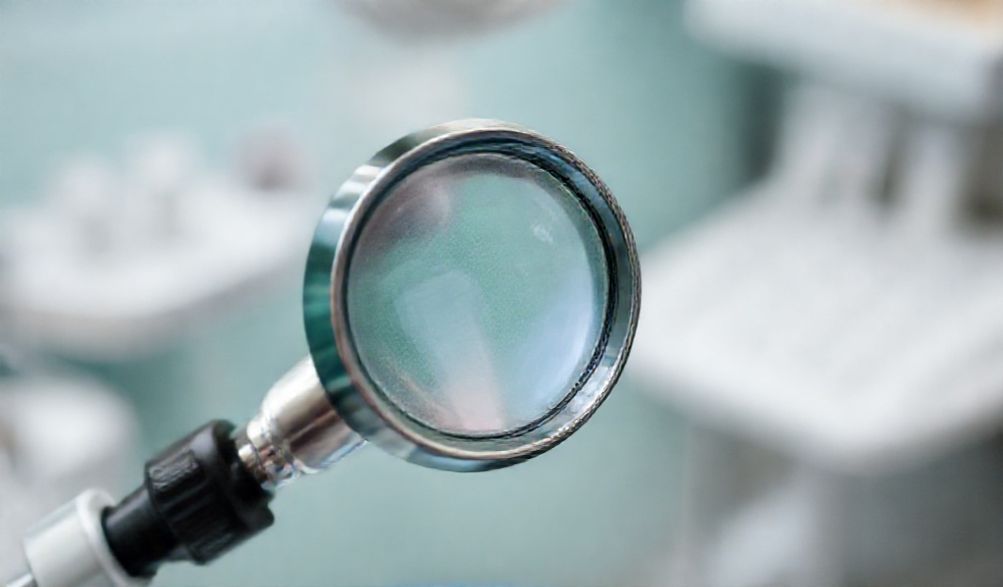
Dental Magnifying Loupes: A Complete Guide to Enhanced Vision & Precision
You’re halfway through a complex composite restoration. The prep is perfect, but as you try to place the final, hair-thin margin, you find yourself hunching forward, squinting, and holding your breath. Your neck tightens, and a familiar ache begins to radiate between your shoulder blades. By the end of the day, your eyes feel gritty and fatigued, and you’re left wondering if there was a better way to achieve the precision you know your patient deserves.
This scenario is all too common in dentistry, a profession built on minute details and microscopic tolerances. For decades, the standard of care relied on the naked eye, but today, that standard has evolved. Dental magnifying loupes are no longer a luxury for a select few; they have become a critical, practice-transforming tool for clinicians who prioritize excellence, ergonomie intuitive, and their own long-term career health.
This comprehensive guide moves beyond viewing loupes as simple magnification devices. We will explore them as a foundational investment in your clinical capability and personal well-being. We’ll demystify the terminology, break down the key components, and provide a clear, step-by-step framework to help you select the right system. Our goal is to provide authoritative, experience-based guidance—grounded in the principles of E-E-A-T (Experience, Expertise, Authoritativeness, and Trustworthiness)—to empower you to make an informed decision that elevates patient care and safeguards your most important asset: you.
Why Dental Loupes Are Essential: Beyond Simple Magnification
At first glance, loupes are about seeing more. But their true value lies in what that enhanced vision enables: a fundamental shift in how you practice, from your clinical outcomes to your physical health.
Uncompromising Clinical Precision and Accuracy
Magnification is the gateway to a new level of diagnostic and procedural acuity. What appears acceptable to the naked eye can reveal subtle flaws under magnification.
- Enhanced Detection: Early carious lesions, micro-fractures, and subtle cracks become visibly apparent. You can differentiate between stained and active caries with greater confidence.
- Superior Restorations: Margin adaptation reaches a new standard. You can visually verify the complete seating of a crown, ensure the seamless blending of a composite resin, and remove every trace of excess cement without damaging the surrounding gingiva.
- Improved Soft Tissue Management: Periodontal probing, calculus detection (especially subgingival), and assessment of tissue health become significantly more accurate. For hygienists, this means more thorough debridement; for surgeons, it means cleaner incisions and more precise suturing.
Ultimately, this precision translates directly to superior patient outcomes, increased restoration longevity, and a higher standard of care that defines a modern, quality-focused practice.
The Foundation of Clinical Ergonomics
Perhaps the most profound benefit of loupes is their role in preventing career-ending musculoskeletal disorders. Without loupes, clinicians instinctively contort their bodies—hunching their backs, craning their necks, and bringing their eyes closer to the oral cavity—to see detail. This “turtle posture” places immense strain on the cervical and lumbar spine.
Properly fitted loupes are an ergonomic intervention. They enforce a correct typique, allowing you to sit upright with your back supported against the chair. Your neck remains in a neutral, aligned position. By bringing the magnified image to you, loupes eliminate the need to move your body toward the patient. The long-term benefit is clear: a dramatic reduction in chronic neck, back, and shoulder pain, preserving your ability to practice pain-free for decades.
Reducing Eye Fatigue and Cognitive Load
The human eye is not designed for the constant, minute focusing required in dentistry. Shifting gaze from the patient’s mouth to a distant instrument tray or monitor forces your ciliary muscles to work overtime, leading to significant eye strain and headaches.
Loupes provide a fixed focal length. Once you are positioned at your correct working distance, everything in the magnified field of view is in sharp focus. This eliminates the constant refocusing effort, allowing your eyes to relax. This reduction in visual fatigue also lowers cognitive load, freeing up mental energy to focus on the procedure itself rather than the strain of seeing it.
Key Components and Terminology of Dental Loupes
Understanding the language of loupes is essential to making a smart choice. Let’s break down the core components.
Magnification Power: Finding Your Sweet Spot (Galilean vs. Prismatic)
Magnification power (e.g., 2.5x, 3.5x, 5.0x) indicates how much larger an object appears. But the optical system behind that number is crucial.
- Systèmes Galiléens : These are the most common entry-level and mid-range loupes. They use a simple lens arrangement.
- Avantages : Lighter weight, more affordable, wider field of view, good depth of field. Excellent for general dentistry and hygiene.
- Typical Range: 2.0x to 3.5x.
- Systèmes Prismatiques (Keplériens) : These use a more complex series of prisms to fold the light path.
- Avantages : Capable of higher magnification (3.5x to 8.0x+), offer a longer working distance at a given magnification, and provide superior optical clarity and edge-to-edge sharpness.
- Inconvénients : Heavier, bulkier, and more expensive. The field of view is narrower.
- Ideal For: Specialists like endodontists, periodontists, and surgeons, or any clinician performing highly detailed micro-dentistry.
Working Distance and Field of View: Your Posture Parameters
- Distance de travail : This is the measured distance from your eyes to your patient’s oral cavity when you are sitting in a healthy, upright posture. It is typically measured in inches or centimeters (e.g., 14”, 16”, 18”). An incorrect working distance will force you back into poor posture.
- Field of View: This is the diameter of the area you can see through the loupes at your working distance. As magnification increases, the field of view decreases. A balance must be struck between seeing more detail (higher mag) and seeing a useful area (wider field).
Depth of Field: The Zone of Clarity
Depth of field is the vertical “slice” of space that remains in sharp focus without you moving your head. A greater depth of field is forgiving, allowing you to see the top and bottom of a prep clearly. Higher magnification generally reduces depth of field, requiring more precise head positioning. High-quality optics maximize depth of field for their given magnification.
Declination Angle and Frame Options
- Angle d’inclinaison : This is the angle of the oculars (the eyepieces) relative to the frame. It is custom-set during fitting to align the optics perfectly with the natural angle of your downward gaze, ensuring comfort and a full field of view without tilting your head.
- Frame Types:
- Through-The-Lens (TTL): The magnification barrels are permanently fixed to the lens of the frame, offering a lightweight, low-profile design. They are custom-made for you.
- À bascule : The magnification assembly flips up on a hinge, allowing you to quickly switch between magnified and unmagnified vision. They are often more adjustable and can be used with different frames.
- Custom Frames: Many suppliers offer a range of stylish, durable frames that can be fitted with your prescription.
How to Choose the Right Loupes: A Step-by-Step Evaluation
Selecting loupes is a personal and clinical decision. Follow this framework to find your ideal system.
Assessing Your Clinical Specialty and Procedures
- General Dentists & Hygienists: Often start with 2.5x to 3.5x Galilean loupes. This provides an excellent balance of enhanced vision, wide field, and comfort for restorative work, exams, and perio therapy.
- Endodontists & Micro-dentists: Typically require higher magnification (4.0x to 6.0x+ Prismatic) to visualize canals, locate MB2s, and perform ultra-precise adhesive procedures.
- Periodontists & Oral Surgeons: Benefit from 3.5x to 5.0x Prismatic loupes for detailed soft tissue management, implant placement, and suturing.
The Critical Importance of a Professional Fitting
This cannot be overstated: Loupes are a custom medical device, not an off-the-shelf product. A proper fitting is non-negotiable and should include:
1. Pupillary Distance (PD) Measurement: For perfect optical alignment.
2. Working Distance Assessment: Measured while you simulate your ideal clinical posture.
3. Posture Analysis: A trained consultant will observe your seated position to set the correct declination angle.
4. Frame Selection & Adjustment: Ensuring a secure, comfortable fit.
5. Trial with Different Magnifications: To experience the field of view and depth of field firsthand.
Balancing Budget with Features and Quality
Loupes represent a long-term investment. While entry-level Galilean systems can start in the $800 – $1,200 range, high-end prismatic systems with integrated lighting can range from $2,000 to over $3,500. Consider:
* Qualité optique : Superior lenses with anti-reflective coatings provide brighter, sharper, and more color-true images, reducing eye strain.
* Durability & Warranty: Look for robust construction and a strong manufacturer’s warranty.
* Lighting Bundles: Often, the best value is found in purchasing a loupe-light system together.
Integrating Loupes with Dental Lighting
Magnification is only half the equation. Shadowless, focused illumination is what turns enhanced vision into true clinical clarity.
Why Coaxial Light is a Game-Changer
A standard overhead operatory light casts shadows from your hands and instruments into the deep, narrow oral cavity. Coaxial lighting refers to a light source whose path is aligned with your line of sight through the loupes. Because the light travels with your vision, it illuminates exactly what you are looking at, dramatically reducing shadows and glare. This is a transformative upgrade for visibility.
Evaluating Light Source Features
- LED Technology: The standard for its bright, white light, cool temperature, and long lifespan.
- Température de Couleur : Measured in Kelvin (K). A light around 5500K is considered “daylight white” and provides excellent color rendering for accurate shade matching and tissue assessment.
- Battery Life & System: Look for lightweight battery packs with a full-shift runtime (6-8 hours). Convenient charging docks are a plus.
The Learning Curve: Adaptation and Best Practices
Adopting loupes requires a short period of adjustment, but the payoff is lifelong.
Initial Adjustment Period: What to Expect
- Motor Skills: Your hand-eye coordination will feel different. Start with simple procedures like exams and supragingival scaling before moving to restorative work. Most clinicians feel comfortable with basic tasks after 2-3 weeks.
- Spatial Awareness: You may experience mild dizziness or a “fishbowl” effect when moving your head quickly. This subsides as your brain adapts to the new visual input.
- Posture Reinforcement: Remember to trust the loupes and resist the urge to hunch forward. Use your first few weeks to cement your new, healthy posture.
Daily Use, Maintenance, and Care Tips
- Nettoyage : Utilisez uniquement des chiffons en microfibre et des sprays spécifiques pour lentilles. N'utilisez jamais de papier essuie-tout, de vêtements ou de produits chimiques agressifs.
- Manipulation : Always grasp by the frame, not the magnification barrels.
- Stockage : Keep them in a hard, protective case when not in use. Never leave them on a chair or counter where they can be sat on or knocked to the floor.
When to Consider Upgrading Your System
Signs it might be time for a new pair include: a change in your optical prescription, a shift in your clinical focus (e.g., taking on more implant surgery), or physical wear and tear that compromises the optics or fit.
Section FAQ
Q: What is the best magnification for a general dentist starting with loupes?
R : Most professionals and fitters recommend starting with 2.5x or 3.0x Galilean loupes. This provides a significant visual boost while maintaining a wide field of view and a manageable depth of field, making the adaptation period smoother.
FAQ 4 : Puis-je porter mes lunettes de prescription avec des loupes dentaires ?
R : Yes. You have two main options: 1) Get your exact prescription ground into the ocular lenses of your TTL or flip-up loupes (the ideal solution for clarity and comfort). 2) Wear contact lenses. A professional fitting consultant will help you determine the best path forward.
Q: À quel investissement dois-je m'attendre pour un système de loupes de bonne qualité ?
R : Un système Galiléen fiable, d'entrée de gamme, commence autour de $800-$1,200. Un système Galiléen milieu de gamme avec un bon éclairage coaxial se situera dans la fourchette des $1,500-$2,200 . Les systèmes prismatiques à fort grossissement avec un éclairage intégré haut de gamme commencent généralement autour de $2,500 et peuvent être plus élevés. Considérez cela comme un investissement de 5 à 10 ans pour vos résultats cliniques et votre santé physique.
Q: Les loupes dentaires sont-elles adaptées aux hygiénistes ?
R: Absolument. Les hygiénistes sont parmi les plus grands bénéficiaires. Les loupes améliorent la détection du tartre sous-gingival, optimisent l'évaluation des marges de couronne et des caries récurrentes, et offrent un soutien ergonomique crucial lors des longues séances de détartrage et de surfaçage radiculaire.
Q : Combien de temps faut-il pour s'habituer à travailler avec des loupes ?
R : La plupart des utilisateurs déclarent se sentir à l'aise avec les procédures de base après 2-3 weeks d'utilisation quotidienne et régulière. Une maîtrise complète, où les loupes deviennent un prolongement naturel de votre vision, peut prendre 4 à 8 semaines. La clé est la persévérance — ne les retirez pas pendant les premiers jours difficiles.
Conclusion
Les loupes grossissantes dentaires sont bien plus qu'un outil ; elles représentent un changement de paradigme dans la dentisterie moderne. Elles vous permettent d'atteindre un niveau de précision qui définit l'excellence clinique, tout en fournissant les bases ergonomiques nécessaires à une carrière longue, saine et sans douleur. En réduisant la fatigue oculaire et cognitive, elles vous permettent de vous concentrer sur l'essentiel : votre patient.
N'oubliez pas que choisir le bon système de loupes est l'une des décisions professionnelles les plus importantes que vous prendrez. Cela mérite une recherche approfondie et, surtout, un ajustement professionnel en personne avec un fournisseur ou un conseiller réputé. Votre vision, votre posture et votre niveau de soins ne méritent rien de moins.
Faites le prochain pas dans votre parcours professionnel. Planifiez une consultation avec un spécialiste des loupes, participez à une démonstration pratique lors de votre prochain congrès dentaire, ou discutez avec vos collègues de leurs expériences. Investissez pour voir la dentisterie sous un jour entièrement nouveau.
p>