
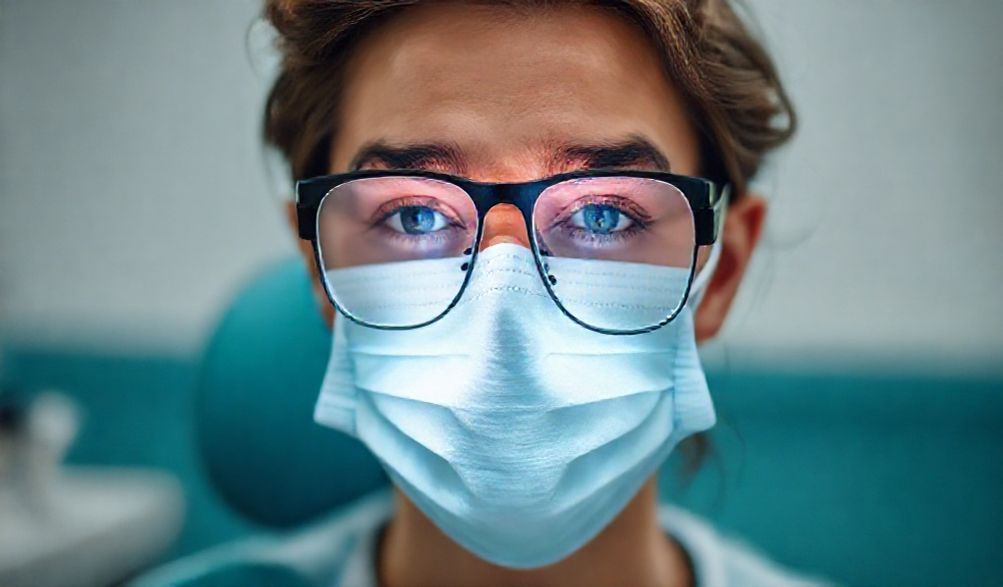
Dentist Glasses with Light: A Guide to Loupes, Headlamps & Optimal Vision for Dental Professionals
For dental professionals, precision is non-negotiable. Every procedure, from a routine cleaning to a complex restoration, demands exceptional visual acuity. Yet, for decades, dentists have contorted their bodies, craning their necks and squinting into the dark, shadowy recesses of the oral cavity. This daily struggle isn’t just uncomfortable—it’s a primary contributor to chronic eye strain, debilitating neck and back pain, and even procedural errors.
The modern solution to this age-old problem is illuminated magnification systems, commonly referred to as dentist glasses with light. This guide is not a sales pitch; it’s a foundational resource built on dental ergonomics research, optician expertise, and practitioner experience. We will dissect the world of surgical loupes et un Une lampe frontales, exploring how the right system can transform your clinical performance, improve patient outcomes, and become your most crucial investment in long-term career longevity. Your eyes and your physical health are your most valuable professional assets. It’s time to equip them properly.
Why Dentist Glasses with Light Are Essential for Modern Practice
Moving beyond traditional overhead lights is not an upgrade in luxury; it’s a fundamental shift towards ergonomic, evidence-based practice. Here’s why integrating a personal illumination and magnification system is now considered standard for the health-conscious dentist.
Enhancing Precision and Accuracy
The human eye has limitations. Dentist glasses with light shatter these barriers, bringing a new dimension of clarity to your work.
* Magnification for Minute Detail: Whether you’re discerning a subtle fracture line, detecting incipient caries, or evaluating a marginal seal, magnification reveals what is invisible to the naked eye. This isn’t about making things look bigger; it’s about achieving diagnostic and operative certainty.
* Shadow-Free, Focused Illumination: Overhead lights are blocked by your head and hands, creating frustrating shadows. A headlamp or frame-mounted light provides co-axial illumination—light that travels directly down your line of sight—banishing shadows and flooding the operative field with brilliant, focused light.
* Reducing Errors, Improving Quality: The combined effect is a dramatic reduction in procedural errors. You place margins more precisely, prepare teeth more conservatively, and finish restorations to a higher standard. The result is consistently superior clinical work.
Promoting Ergonomic Health and Reducing Fatigue
The physical toll of dentistry is well-documented. Dentist glasses with light are your first line of defense against work-related musculoskeletal disorders (MSDs).
* Enabling an Upright Posture: To see clearly without magnification, dentists instinctively hunch forward, bringing their eyes closer to the patient. Loupes enforce a proper working distance, allowing you to sit back with your spine in a neutral, upright position. This alone can prevent a lifetime of chronic back and neck pain.
* Eliminating Eye Strain: Squinting for hours under inadequate light causes significant ocular fatigue. A bright, focused light source eliminates the need to strain, reducing headaches and tired eyes at the end of a long clinical day.
* Investing in Career Longevity: By promoting a healthy posture and reducing physical strain, you are directly investing in the length and quality of your career. Preventing pain and injury is far more effective and less costly than treating it later.
Improving Patient Experience and Trust
Your patients may not understand the technical specs of your loupes, but they perceive their benefits.
* Demonstrating Advanced Technology: Using a sophisticated visual aid signals a commitment to precision and modern care. It builds immediate trust and confidence.
* Increasing Efficiency: With better visibility, procedures can often be completed more efficiently and smoothly, reducing chair time—a benefit every patient appreciates.
* Enhancing Patient Education: With a dental mirror, you can often show patients the conditions in their own mouth through your magnified view, making explanations clearer and more impactful.
Types of Illuminated Magnification Systems for Dentists
Not all dentist glasses with light are created equal. Understanding the two primary configurations is key to finding your perfect match.
Surgical Telescopic Loupes with Integrated LED Headlamps
This is a traditional and highly effective system where two components work in tandem.
* Description : It consists of a pair of surgical loupes (Galilean or Prismatic) worn like glasses, paired with a separate, powerful LED light source mounted on a flexible headband. A wire typically runs from the battery pack (often worn on a waistband) to the light.
* Avantages : Headlamps often offer the highest lumen output and longest battery life. The light beam is highly adjustable, and the light source is completely independent of the loupe frame, which some prefer.
* Inconvénients : The system can feel heavier and more cumbersome due to the headband and wires. The light is not always perfectly co-axial, which can sometimes cast slight shadows.
Through-The-Lens (TTL) or Frame-Mounted Lighting Systems
This represents the sleek, integrated evolution of dental lighting.
* Description : Here, compact, powerful LED lights are mounted directly onto the loupe frame itself, just above or below the lenses. The battery is either a small pack attached to the frame temple or integrated directly into it.
* Avantages : The system is incredibly lightweight and streamlined with no headband or dangling wires. The light is perfectly co-axial with your line of sight, providing optimal shadow-free illumination. It’s simple to don and doff.
* Inconvénients : Battery capacity is smaller due to size constraints, though modern LEDs are so efficient this is rarely an issue for a full day. The light position is fixed relative to the lenses.
Choosing Between Galilean and Prismatic (Keplerian) Loupes
The optical design of the loupes themselves is a critical choice.
* Systèmes Galiléens : These use a simple lens arrangement. They are plus légers, plus compacts et moins chers. They are excellent for lower magnification levels (2.0x to 3.5x) and are the go-to choice for many general dentists and hygienists starting with magnification.
* Prismatic Systems: These use a more complex series of prisms to fold the light path. They are capable of higher magnification (3.5x to 8x+) while maintaining a wider field of view and longer depth of field at those higher powers. They are preferred by specialists in endodontics, periodontics, and oral surgery, or any dentist seeking maximum detail.
* The Decision: Your specialty and required procedures will guide you. A general dentist might start with a 2.5x or 3.0x Galilean system, while an endodontist would likely choose a 4.5x or higher Prismatic system.
Key Features to Consider When Buying
Selecting your dentist glasses with light involves several technical considerations. Don’t rush this process.
Magnification Power and Working Distance
- Determining Working Distance: This is the critical first step. Your working distance is the space from your eyes to your patient’s mouth when you are sitting in a healthy, upright posture. A certified consultant will measure this accurately. Never guess.
- Choosing Magnification: Start conservatively. For general dentistry, 2.5x or 3.0x is the most common and recommended starting point. It provides a significant visual boost without an overly narrow field of view that can cause disorientation. You can always move to higher power later as your brain adapts.
Light Source Specifications
The “light” in your dentist glasses with light matters immensely.
* LED Type & Color Temperature: Look for high-CRI (Color Rendering Index) LEDs. Color temperature is key: a light around 5000-5500 Kelvin (cool, daylight white) is standard and reduces eye strain by mimicking natural light, providing true color rendition for accurate shade matching.
* Lumen Output & Beam Focus: Lumens measure total light output. For TTL systems, 40-100+ lumens is common; headlamps can be brighter. More important is a focusable beam—the ability to change from a wide flood to a concentrated spot—which is invaluable when switching from quadrant dentistry to a single prep.
* Battery Life & Charging: Cordless freedom is essential. Ensure the battery can last a full clinical day (6-8 hours). Modern systems often feature USB-C charging for convenience. A swappable backup battery is a wise investment.
Frame Fit, Weight, and Customization
If it’s not comfortable, you won’t wear it.
* Professional Fit Assessment: This is non-negotiable. A certified optician or loupe specialist must measure your Pupillary Distance (PD), angle de déclinaison (how much the lenses tilt down), and ensure the frame fits your face without pressure points. An improper fit causes neck strain and defeats the ergonomic purpose.
* Réglabilité : Look for frames with adjustable nose pads and temple lengths. Some offer adjustable declination angles for a perfect fit.
* Prescription Integration: If you wear corrective lenses, your prescription can and should be ground directly into the loupe lenses. This provides crystal-clear vision at your working distance without the hassle of contacts or wearing glasses underneath.
Top Brands and Models Overview
Navigating the market can be daunting. Here is an authoritative overview of leading manufacturers known for quality and innovation. The best choice is the one that fits vous best after a live demonstration.
- Orascoptic : A leader in innovation, known for their ergonomic, lightweight designs and pioneering lighting systems like the Twilight (a TTL light) and Ergo prismatic loupes. They offer excellent customer service and a wide range of customizable options.
- Carl Zeiss: Synonymous with optical excellence. Zeiss Prismascopic loupes are renowned for their exceptional clarity, brightness, and virtually distortion-free wide field of view, especially in their high-magnification prismatic models. They represent the pinnacle of optical engineering.
- Designs for Vision (DFV) : A pioneer in the field, trusted for decades in surgical specialties. Known for robust, durable construction, exceptional prismatic optics, and their Sunlight halogen (and now LED) headlamps. They have a strong focus on clinical performance.
- Heine : A German optics company respected for high-quality Galilean systems. Their Omega series loupes are known for being lightweight, comfortable, and providing brilliant, sharp images. They are a superb choice for those seeking excellent Galilean optics.
Crucial Advice: This comparison is a starting point. You must consult with certified dealers for multiple brands. Schedule live, in-person fitting and demonstration sessions. Look through the lenses, feel the weight, and test the light. The right system will feel like a natural extension of your vision.
Entretien, Soins et Bonnes Pratiques
Your investment deserves proper care to ensure years of reliable service.
Daily Cleaning and Storage Protocols
- Lens Cleaning: Use only a microfiber cloth and lens cleaner designed for coated optics. Never use paper towels, clothing, or harsh chemicals, as they will scratch the delicate anti-reflective coatings. Blow off debris first to avoid grinding it into the lens.
- Safe Storage: Always store your dentist glasses with light in the provided hard case when not in use. Never leave them on a chair, counter, or in a drawer where they can be crushed or scratched.
Battery Care for Longevity
- Charging Cycles: Follow the manufacturer’s instructions. Most modern lithium-ion batteries do not have a “memory,” but it’s good practice to avoid letting them fully deplete regularly. Charge them after use.
- Alimentation de secours : Pour les systèmes de lampe frontale avec batterie externe, posséder une seconde batterie est une assurance peu coûteuse contre une panne en cours d'intervention. Pour les systèmes TTL, connaissez le temps de charge et adoptez une routine (par exemple, rechargez chaque nuit).
Recalibration Professionnelle Périodique
Votre posture et votre vision peuvent évoluer avec le temps. Un contrôle annuel avec votre fournisseur de loupes ou un opticien certifié est recommandé. Ils peuvent vérifier l'alignement, nettoyer les optiques professionnellement et ajuster l'ajustement si nécessaire, garantissant que votre système continue à offrir un bénéfice ergonomique optimal.
Foire Aux Questions (FAQ)
Q: Les lunettes de dentiste avec lumière valent-elles l'investissement ?
R : Indéniablement, oui. Ce n'est pas un accessoire mais un outil ergonomique et clinique fondamental. L'investissement se justifie par l'amélioration des résultats cliniques, la réduction drastique de la fatigue physique (qui peut prévenir des blessures mettant fin à une carrière) et l'augmentation de l'efficacité. La plupart des praticiens constatent un retour sur investissement rapide et substantiel.
Q: Puis-je obtenir des verres correcteurs dans mes loupes chirurgicales ?
R : Oui. Tous les grands fabricants proposent une intégration de verres correcteurs sur mesure. Votre correction exacte est intégrée aux verres grossissants, offrant une vision parfaite à votre distance de travail spécifique sans avoir besoin de lentilles de contact ou de lunettes supplémentaires.
Q: Combien de temps faut-il pour s'habituer à porter des loupes avec une lumière ?
R : La plupart des dentistes connaissent une période d'adaptation de 2 à 4 semaines. Commencez par les porter pour des interventions plus courtes et moins complexes afin de développer la mémoire musculaire pour la nouvelle posture droite et la perception de la profondeur. La persévérance est essentielle. Presque tous ceux qui s'adaptent déclarent ne plus pouvoir pratiquer sans elles.
Q: Quel est le fourchette de prix typique ?
R : Un système complet et de qualité (loupes + lumière) coûte généralement entre 1 500 € et plus de 4 000 €. Les facteurs incluent le grossissement (les prismatiques coûtent plus cher que les galiléennes), la marque, le type de lumière (TTL vs. lampe frontale) et la personnalisation (verres correcteurs, traitements spéciaux). Considérez cela comme un investissement à long terme dans votre santé et la qualité de votre pratique, et non comme une dépense.
Q: Comment choisir le bon grossissement ?
R : Un grossissement plus élevé n'est pas automatiquement meilleur. C'est un compromis entre le détail et le champ de vision/la profondeur de champ. Un consultant certifié est essentiel. En règle générale, de nombreux dentistes généralistes commencent avec succès avec un grossissement de un grossissement de 2,5x ou 3,0x. 2.5x à 3.5x . Les spécialistes dans les procédures nécessitant un détail extrême utilisent souvent du.
Conclusion
Choisir la bonne paire dentist glasses with light 4.0x et plus.
Choisir le bon système de loupes et d'éclairage est l'une des décisions professionnelles les plus importantes que vous prendrez. C'est un investissement qui rapporte quotidiennement en précision accrue, en protection de la santé physique et en amélioration des soins aux patients. Cette technologie vous permet non seulement de voir ce qui vous échappait, mais aussi de travailler d'une manière qui préserve votre passion et vos compétences pour les décennies à venir.
p>