
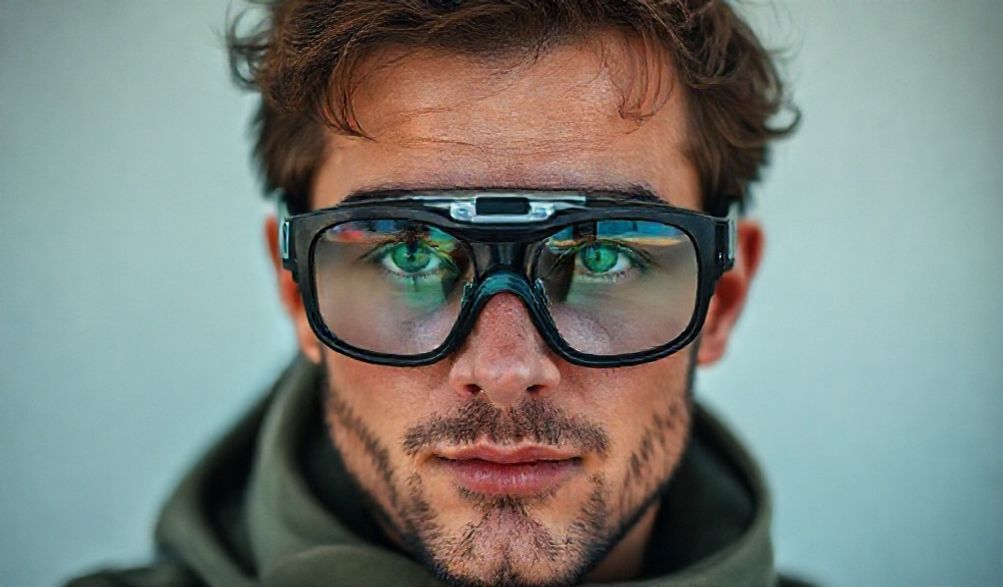
Ergo Loupes: The Essential Guide to Better Vision, Posture, and Performance
For professionals whose work lives in the millimeter—dentists, surgeons, micro-assemblers, artists—precision is the currency of success. Yet, the relentless pursuit of detail has a hidden, often painful, cost. Years spent hunched over a patient, a circuit board, or a canvas can manifest as chronic neck and back pain, debilitating eye strain, and career-threatening fatigue. This isn’t just discomfort; it’s a systemic occupational hazard.
The traditional solution has been magnification, in the form of through-the-lens (TTL) or flip-up loupes. But what if the tool designed to help you see better was inadvertently causing physical harm? This is the paradigm shift introduced by ergo loupes. More than just a magnifying device, ergo loupes are a revolutionary ergonomic intervention. They are engineered not only to bring the minute into focus but to fundamentally transform your working posture, safeguarding your long-term health and performance.
This comprehensive guide delves into the world of ergonomic magnification. Built on expert design principles and real-world user experience, we will explore how ergo loupes work, the science behind their benefits, and provide a clear roadmap for selecting the perfect system. Consider this your handbook for investing in your most valuable professional asset: your ability to work pain-free, with clarity and stability, for years to come.
What Are Ergo Loupes? Redefining Magnification
At first glance, ergo loupes might look unconventional. Unlike standard loupes where you look straight ahead through the lenses, ergo loupes appear angled downward. This is not a design quirk; it’s the core innovation that makes all the difference.
The Core Design Principle: Declination Angle
The secret lies in the angle de déclinaison. Traditional loupes have a relatively shallow declination, meaning the optical path is only slightly tilted downward from your line of sight. To see through them and onto your work, you must tilt your head and neck forward—the classic “head-down” posture.
Ergo loupes feature a significantly steeper declination angle, typically 45 degrees or more. This critical design allows you to keep your head upright and your spine in a neutral, aligned position while your eyes gaze downward through the lenses. The work comes into view without the need to crane your neck. It’s the difference between looking at your shoes by bending your waist (ergo) versus craning your neck to look straight down (traditional).
Ergo Loupes vs. Traditional TTL Loupes: A Postural Comparison
Imagine two professionals performing the same intricate task:
- With Traditional TTL Loupes: The practitioner’s head is tilted forward, often 20-40 degrees. The cervical spine (neck) is flexed, the shoulders round forward, and the thoracic spine curves. This position places immense static load on the neck and upper back muscles, compresses spinal discs, and restricts blood flow. It’s a posture sustained for hours, leading to the all-too-common “loupes neck.”
- With Ergo Loupes: The practitioner’s head is upright, ears aligned over the shoulders. The spine maintains its natural ‘S’ curve. The declination angle of the loupes does the work, allowing for a direct view of the workspace. This “eyes-down, head-up” posture distributes weight efficiently along the spinal column, minimizing muscular strain and supporting long-term musculoskeletal health.
Key Components of an Ergo Loupe System
An ergo loupe system is a sophisticated integration of optics and ergonomics:
1. Optics: They utilize either Galilean (lower magnification, lighter, wider field) or Prismatic (Keplerian) lens systems (higher magnification, greater depth of field, but slightly heavier). Prismatic optics are common in higher-power ergo models.
2. The Frame: Lightweight, durable frames (often titanium or high-grade plastic) are essential to support the optical assembly comfortably.
3. The Mounting System: This is the engineering marvel. It involves a custom bracket or arm that securely attaches the optical barrel to the frame at the precise, custom-fitted declination angle. This mount ensures the optics remain perfectly aligned with your eyes in your neutral head position.
The Proven Benefits: More Than Just Magnification
The advantages of ergo loupes extend far beyond simple magnification, creating a cascade of benefits for health and performance.
Ergonomic Benefit #1: Preventing Musculoskeletal Disorders (MSDs)
This is the primary and most impactful benefit. Studies in dentistry, a field plagued by work-related pain, consistently show a high prevalence of neck, back, and shoulder disorders. The static, flexed posture enforced by traditional loupes is a direct contributor. Ergo loupes attack this problem at its root.
By promoting a neutral spine, they dramatically reduce the compressive forces on cervical vertebrae and the constant strain on the trapezius, levator scapulae, and erector spinae muscles. This isn’t just about comfort; it’s about career preservation. Preventing chronic MSDs means avoiding forced early retirement, reducing sick days, and eliminating the chronic pain that can cloud judgment and focus.
Ergonomic Benefit #2: Reducing Eye Strain and Fatigue
Posture and vision are intimately connected. The strained “head-down” position can affect the convergence and accommodation of your eyes—the mechanisms that allow you to focus on close objects. Ergo loupes, by aligning your visual axis more naturally, can reduce this “accommodative stress.”
Furthermore, high-quality prismatic ergo loupes often offer a superior profondeur de champ. This means a larger portion of your field of view remains in clear focus at once, so your eye muscles aren’t constantly working to refocus as you move slightly. The result is less visual fatigue at the end of a long day.
Performance Benefit: Enhanced Field of View and Stability
An upright, balanced posture is a stable posture. When your head is not precariously balanced forward, you minimize subtle postural tremors. This translates to steadier hands—a critical advantage in any precision task.
Additionally, many users report that the ergo design, particularly with prismatic optics, provides a more consistent and sometimes wider field of view. Because your head is still, the working area within the loupes’ view is more stable, improving spatial awareness and procedural flow. You see more, with greater stability, and with less physical effort.
Who Needs Ergo Loupes? Key Professions and Use Cases
While beneficial to anyone in detail work, these professions gain particularly transformative advantages:
Dental Professionals (Dentists, Hygienists, Surgeons)
The quintessential users. The confined oral cavity and need for absolute precision make ideal posture nearly impossible with standard loupes. Ergo loupes are invaluable for:
* Endodontics: Navigating intricate root canal systems.
* Periodontics: Performing delicate soft tissue and bone surgery.
* Restorative Work: Prepping and placing margins with extreme accuracy.
* Hygiene: Performing thorough cleanings and assessments over a full schedule.
Surgical and Medical Fields
Any specialty requiring fine motor skills under magnification can benefit:
* Plastic & Reconstructive Surgeons: For microsurgery and delicate tissue handling.
* Veterinary Surgeons: Especially in small animal or exotic practice.
* Otolaryngologists (ENT): For procedures in the ear, nose, and throat.
Technical and Industrial Professions
Where precision meets assembly and quality:
* Watchmakers & Jewelers: Working with tiny gears, springs, and gem settings.
* Electronics Assemblers & Repair Technicians: Soldering micro-components and inspecting circuit boards.
* Quality Control Inspectors: Identifying microscopic flaws in manufacturing.
Artists and Conservators
For those who create or preserve fine details:
* Miniature Painters & Illustrators: Achieving fine brushwork on small scales.
* Tattoo Artists: Ensuring line precision and detail.
* Art Conservators: Performing meticulous restoration work on historical artifacts and paintings.
How to Choose the Right Ergo Loupe System: A Buyer’s Checklist
Selecting ergo loupes is a personalized process. Here’s a step-by-step guide to making an informed decision.
Step 1: Determining the Correct Magnification
Magnification is a balance between detail and field of view/work distance.
* 2.5x – 3.5x: Excellent for general procedures, offering a wider field of view and longer working distance. Ideal for dental hygiene, initial examinations, and larger assembly work.
* 4.0x – 6.5x+: For high-detail tasks like endodontics, microsurgery, or intricate soldering. Provides extreme detail but has a narrower field and shorter working distance. Start lower; you can often increase magnification later as your skill adapts.
Step 2: Getting Fitted: Working Distance and Declination Angle
This is the most critical step. Ergo loupes are not an off-the-shelf purchase.
A professional, in-person fitting by a certified distributor or optician is non-negotiable. They will meticulously measure:
* Pupillary Distance (PD): The distance between your pupils.
* Distance de travail : The exact distance from your eyes to your primary work point, measured with you in a perfect, upright posture.
* Angle d’inclinaison : The optimal angle for your specific anatomy and tasks to achieve a neutral spine.
Skipping this step risks an ineffective system that could cause more harm than good.
Step 3: Considering Additional Features
- Éclairage : Integrated LED lights are almost essential. They provide shadow-free, cool, bright illumination directly in your line of sight. Look for adjustable intensity and good battery life.
- Frame Material: Titanium is the gold standard for its strength, corrosion resistance, and featherlight weight. High-quality polymers are a durable, cost-effective alternative.
- Verres Correcteurs : If you wear glasses, your prescription can and should be ground into the loupe’s ocular lenses during manufacturing for a seamless visual experience.
Step 4: Evaluating Top Brands and Models
Research brands known for their ergo technology. A professional fitter will guide you, but it helps to know the landscape:
* Q-Optics: Known for their proprietary “Q-Factor” fitting system and very lightweight frames.
* SurgiTel (General Scientific) : Offers a wide range of ergo models (like the “Ergo”) with a strong reputation in surgical and dental fields.
* Designs for Vision (DFV) : A pioneer in prismatic loupes, offering high-magnification ergo systems with excellent depth of field.
* Heine : Provides robust ergo loupe systems with a focus on German optical engineering.
Focus on the features, warranty, and service model rather than seeking a single “best” brand. The best loupe is the one fitted perfectly to vous.
Addressing Common Concerns and Maximizing Your Investment
The Cost Factor: Why Ergo Loupes Are a Long-Term Investment
The upfront cost of a high-end ergo loupe system with lighting can be significant. It’s vital to reframe this not as an expense, but as a strategic investment:
* Health Insurance: Preventing a single neck surgery or years of physical therapy can outweigh the cost.
* Career Insurance: Extending your able-bodied career by years or decades is invaluable.
* Performance ROI: Enhanced stability, reduced fatigue, and better outcomes can improve efficiency and patient/client satisfaction.
The Adaptation Period: What to Expect When You First Use Them
There is a learning curve, typically 2 à 4 semaines. Your brain needs to rewire the connection between your upright head position and what your hands are doing in the magnified field. Spatial judgment may feel off initially.
* Start Slow: Use them for shorter, less complex tasks first.
* Soyez patient : Une utilisation quotidienne et régulière est essentielle pour développer une nouvelle mémoire musculaire et une coordination visuelle. Le confort à long terme vaut l'adaptation à court terme.
Entretien et soins pour la longévité
Traitez vos loupes comme les instruments de précision qu'elles sont.
* Nettoyage : Utilisez uniquement des chiffons en microfibre et des sprays spécifiques pour lentilles. N'utilisez jamais de papier essuie-tout, de vêtements ou de produits chimiques agressifs.
* Stockage : Rangez-les toujours dans un étui rigide et protecteur lorsqu'elles ne sont pas utilisées.
* Manipulation : Tenez-les par la monture, et non par les barillets optiques. Faites vérifier l'alignement annuellement par votre opticien.
Section FAQ
Q : Les loupes ergonomiques sont-elles plus lourdes que les loupes traditionnelles ?
R : Pas nécessairement. Bien que l'optique prismatique de certains modèles ergonomiques à fort grossissement contienne plus de verre, les montures sont conçues avec des matériaux ultralégers comme le titane. Le poids est également réparti différemment, et lorsqu'on le met en balance avec l'élimination des tensions cervicales, elles sont presque toujours perçues comme plus confortables pour un port prolongé.
Q : Puis-je obtenir des loupes ergonomiques avec ma correction ?
R : Oui, absolument. C'est un élément standard et crucial du processus de personnalisation. Votre correction exacte est intégrée aux verres oculaires lors de la fabrication, garantissant une acuité visuelle parfaite sans avoir besoin de lunettes séparées.
Q : Combien de temps faut-il pour s'habituer à travailler avec des loupes ?
R : La plupart des professionnels rapportent une période d'adaptation complète de 2 à 4 semaines d'utilisation quotidienne et régulière. La clé est de persévérer durant la phase initiale de perception spatiale altérée. Commencer par des sessions de 30 à 60 minutes et augmenter progressivement est une stratégie fortement recommandée.
Q : Le processus d'adaptation est-il compliqué ?
R : Le processus est précis, mais pas compliqué pour l'utilisateur. Un opticien formé utilise des outils spécialisés pour prendre toutes les mesures nécessaires (DP, distance de travail, déclinaison) tandis que vous êtes assis dans une posture appropriée. Votre rôle est de vous laisser mesurer et de fournir des retours. Une bonne adaptation est minutieuse et constitue le fondement du succès du système.
Q : Les loupes ergonomiques sont-elles compatibles avec un microscope chirurgical ?
R : Ce sont des outils complémentaires pour différentes applications. Les loupes ergonomiques offrent un grossissement (généralement jusqu'à 6,5x) avec une mobilité totale et une vision directe. Un microscope chirurgical offre un grossissement variable bien plus élevé (10x-40x+) pour un travail stationnaire et ultra-précis. De nombreux chirurgiens et endodontistes utilisent les deux : les loupes pour la majorité de l'intervention et le microscope pour les étapes les plus critiques.
Conclusion
Choisir d'investir dans des ergo loupes loupes ergonomiques est une décision profonde qui priorise la pérennité de votre art et la santé de votre corps. Elles vont au-delà d'un simple aide-visuel pour devenir un outil ergonomique fondamental, s'attaquant à la cause profonde de l'impact physique inhérent au travail de précision. Les bénéfices — une réduction spectaculaire de la douleur et de la fatigue, associée à une meilleure clarté visuelle et une stabilité manuelle accrue — créent une synergie puissante qui améliore à la fois l'expérience du praticien et le résultat final.
Bien que le parcours nécessite une recherche attentive, une adaptation professionnelle et une courte période d'ajustement, le bénéfice à long terme est indéniable. C'est un investissement pour préserver votre passion, votre compétence et votre bien-être. Faites le premier pas vers un avenir sans douleur et plus précis en prenant rendez-vous pour une consultation avec un fournisseur certifié de loupes ergonomiques. Expérimentez par vous-même comment voir différemment peut fondamentalement changer votre façon de travailler, et votre ressenti, pour le reste de votre carrière.
p>